
Builder Bedtime Stories
By

Dennis Wang, Bedtime Story Expert
16 min 35 sec
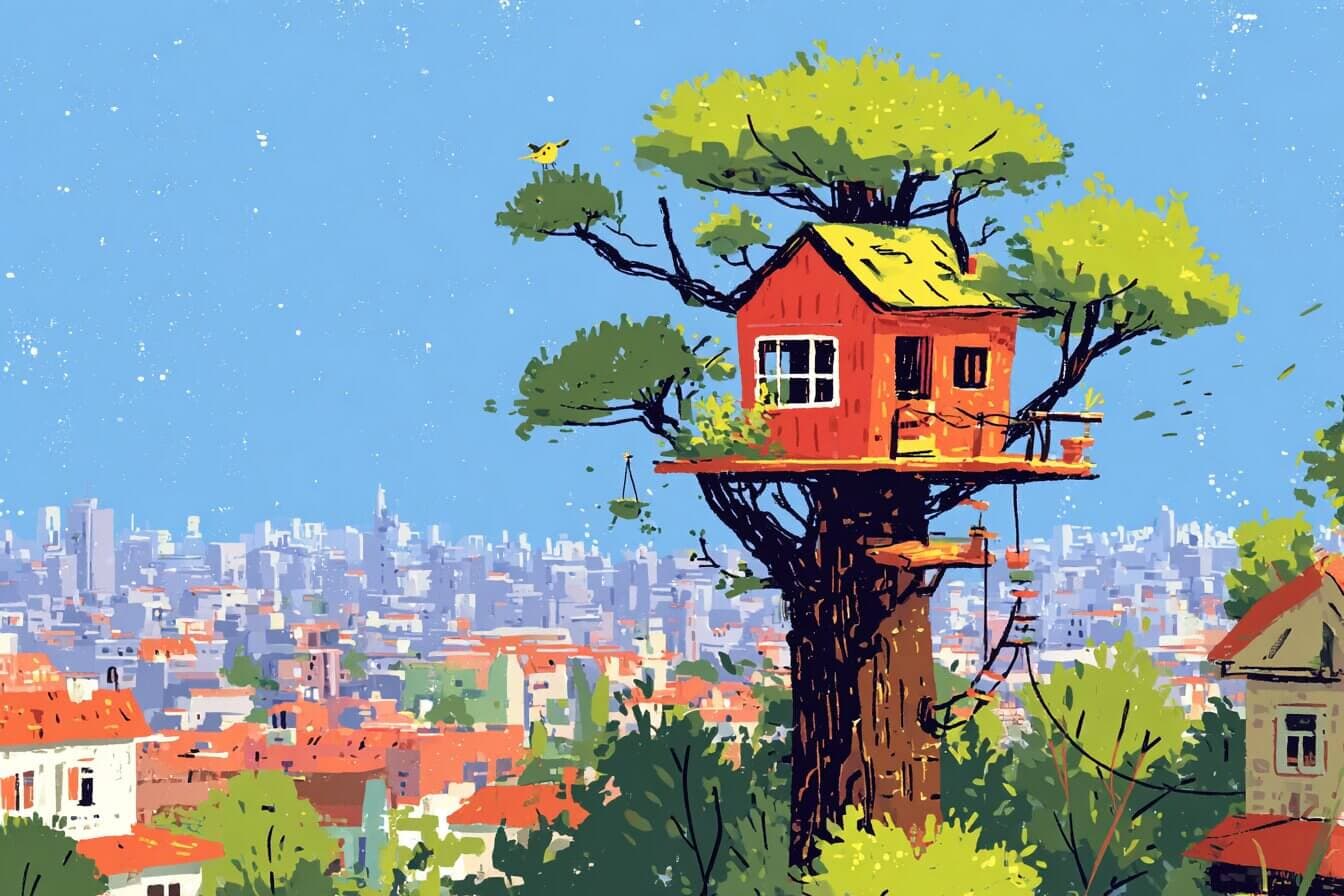
There is something about the sound of gentle hammering and the smell of fresh wood shavings that makes kids feel safe enough to close their eyes. Maybe it is the steady rhythm, or the idea that someone capable is nearby, making something good. In this story, a friendly builder named Carl decides to turn a backyard oak into a clubhouse, and the neighborhood kids who show up to help end up building something bigger than any of them expected. It is one of our favorite builder bedtime stories, and if your child loves it, you can create your own version with Sleepytale.
Why Builder Stories Work So Well at Bedtime
Building things follows a natural arc that mirrors the rhythm kids need before sleep: plan, work steadily, finish, rest. There is no sudden chaos in a construction story, just one board after another, one nail at a time. That predictable pace calms the nervous system the same way a lullaby does. Kids can picture the steps in their heads, and each completed step feels like settling one layer deeper into the pillow.
A bedtime story about a builder also gives children a quiet sense of agency. Carl does not fight a dragon or race against time. He measures, he sands, he invites friends over. The world in the story is orderly and kind, and nobody is in danger. For a child lying in the dark, that kind of world is exactly the right place to fall asleep inside.
Carl's Treehouse of Friends 16 min 35 sec
16 min 35 sec
Carl loved the smell of fresh sawdust. Not in an abstract way. He loved it the way some people love coffee or rain on hot pavement, the kind of love that made him stop what he was doing and breathe in with his whole chest.
Each morning he tied his tool belt, tucked a pencil behind his ear, and walked into his workshop humming something he could never quite name.
One spring day he stood in his backyard staring at the oak tree. It was massive, older than anyone on the block, with branches that reached out like arms waiting for something to hold.
"That tree needs a house," he said, to nobody in particular.
He sketched a plan on a scrap of wood because paper felt too easy to throw away. A square floor. Four walls. A crooked roof he liked the look of. And a rope ladder that curled at the bottom like a cat's tail.
He measured twice. Cut once. Hammered until the sun dropped behind the hills and the yard filled up with that thin blue light that comes right before dark.
When the first board went up, a robin landed on a branch above him and let out one sharp chirp, like a tiny foreman approving the work.
Carl smiled so wide his cheeks ached.
He worked every spare hour after that, sanding the railing until it felt like river stone under his palm and painting the shutters a blue that matched the sky at about four in the afternoon. Not noon blue. Not dusk blue. Four o'clock blue.
Neighborhood kids started stopping by. They would stand at the fence with their fingers hooked through the chain link, watching.
Carl waved. "You'll all get a turn to decorate," he called. "I promise."
Emma, who lived three doors down, showed up first with a jar of buttons she had been saving for exactly this kind of emergency.
Leo came next, carrying fabric scraps from his mom's sewing basket in a plastic grocery bag that kept slipping out of his hands.
They glued and stitched and laughed until the plain walls turned into a patchwork collage that looked like a quilt somebody had stapled to a tree.
The treehouse was starting to look like it had opinions.
Carl nailed a sign above the doorway: "Clubhouse of Dreams."
He stepped back, wiped sawdust from his forehead with the back of his wrist, and just stood there for a minute. The windows caught the last light. The sign hung a little crooked, but he left it that way on purpose.
That night the oak creaked in the breeze, slow and satisfied, like it was stretching after a long nap.
Carl fell asleep picturing laughter bouncing off wooden walls.
The next morning he invited the whole neighborhood for a grand opening.
Kids arrived with drawings, stuffed animals, cookies wrapped in napkins, and one boy brought a harmonica he did not actually know how to play.
Carl handed each child a paintbrush and let them press handprints onto the ceiling. Red, green, purple, yellow. A constellation made of palms and fingers.
When the last print dried, the clubhouse felt different. Warmer. Like it was breathing.
Emma said it was the best place in the world, and the cheer that followed was loud enough to bring the robin back with three friends. They sat on the roof in a row, tilting their heads.
Carl knew the real project had just started, because the heart of the clubhouse was not wood or nails. It was whatever was happening between these kids when they forgot to be shy.
Saturday morning, sunshine cut through the leaves in long bright stripes.
Kids scrambled up the ladder, shoes thumping a drumroll.
Inside, cushions formed a lopsided circle. A tin can on the shelf held daisies that were already starting to wilt, but nobody minded.
Emma said they needed a club constitution and pulled out a sheet of paper so large it curled at the edges.
"I want a secret handshake," Leo said immediately.
Carl grinned. "I'll build shelves for whatever treasures we find."
Ideas came fast and overlapping, like popcorn hitting the lid of a pot. They voted to call themselves the Oak Avenue Adventurers and promised to explore, create, and look out for each other.
Then Carl pulled out a wooden box he had been carving during quiet evenings at his kitchen table. Inside were friendship bracelets, braided from leftover paint roller strings, each one a different tangle of color.
He tied one around each wrist while the kids took turns saying a dream they hoped would come true.
Emma wished for a garden where butterflies could rest.
Leo wished to invent a board game that did not take four hours.
Carl wished the clubhouse would always be noisy.
When every wrist was done, they held hands in a circle and went quiet for a second. The bracelets seemed to hum, or maybe that was just the fridge in Carl's house kicking on through the open kitchen window. Either way, something felt warm and right.
They decided to meet every week, keep a shared journal, and take turns leading activities. Carl's chest felt tight, but the good kind of tight.
That afternoon they painted the tree's roots across the floor in thick brown and green strokes. A reminder that friendships, like roots, hold things up even when you cannot see them.
When parents called everyone home for supper, kids tumbled down the ladder with bracelets flashing.
Carl stayed behind and swept sawdust into a neat pile.
He pressed his palm against the trunk. The bark was rough and warm from the day's sun.
"Thanks," he said quietly. Then the fireflies showed up, blinking on one at a time like someone was flipping tiny switches across the yard.
The following weekend it rained, steady and gray, but the clubhouse stayed dry under its canopy of leaves.
Carl arrived early with a thermos of cocoa and a plate of cinnamon muffins that were slightly lopsided because he always forgot to fill the tin evenly.
Emma appeared in a yellow raincoat she had painted ladybugs onto herself. Some of them had too many legs.
Leo brought a shoebox of bottle caps that rattled when he walked.
They spread paper across the floor and designed a friendship board game. The pathway spiraled like tree rings, and each space held a challenge: "Give someone a compliment," "Share your snack," "Tell a joke, but it has to be bad."
Carl carved tokens from scrap wood. A cat for Emma. A rocket for Leo. A hammer for himself, naturally.
Outside, rain tapped on the roof in no particular pattern, and inside, the three of them barely spoke for a while, just drawing and cutting and humming.
When thunder cracked, they counted the seconds between flash and rumble. Carl explained how trees talk to each other underground through their roots, passing nutrients and warnings.
"Like us," Emma said.
"Exactly like us," Carl said.
Emma started a kindness chain, adding a paper link for every helpful thing anyone did. By the time the rain stopped, it stretched across the ceiling like a caterpillar made of confetti.
Sunlight broke through and sent steam curling up from the wet leaves. The trio climbed down, boots squelching, and searched the yard for shelf treasures: a feather, a smooth stone, a sprig of mint that Leo kept sniffing.
Each item got a tiny tag with a story written on it. The clubhouse was becoming a museum of ordinary things that mattered.
Before they split up, they practiced the secret handshake. Snap, clap, twirl, and then fingers forming a heart. Leo kept getting the twirl backwards and laughing so hard he had to start over.
Carl watched them jog home through puddles and felt something expand inside his ribs, steady and warm, like bread rising.
Summer came in gold and cricket songs.
The Oak Avenue Adventurers grew. New kids heard about the clubhouse and showed up, nervous and curious.
Carl greeted each one with a bracelet and a job. They built a zip line from a reclaimed clothesline pulley, painted birdhouses, and planted butterfly bushes beneath the oak. One of the birdhouses ended up looking more like a spaceship, but the birds did not seem to mind.
Carl taught the older kids to use tools safely, guiding small hands as they measured and sawed. Younger children strung beads onto doorframe curtains that chimed when the wind blew.
One afternoon a boy named Milo stood at the bottom of the ladder holding a broken toy car. He did not say anything. Just stood there.
Carl knelt down and held out his hand. "Want to fix it together?"
They replaced the wheels with bottle caps, and when Milo rolled the car across the clubhouse floor and it actually worked, his whole face changed. Not a grin exactly. More like something tight letting go.
Emma ran a lemonade stand to raise money for saplings. She made a sign that said "Lemonade for Trees" and underlined "Trees" three times.
Leo designed scavenger hunts that sent kids searching for heart-shaped leaves, striped feathers, and rocks with holes in them.
One evening they camped on the clubhouse floor, sleeping bags in a pile. Carl pointed out constellations through the window and told them that Orion and Sirius were old friends who walked the sky together every winter.
The children whispered wishes at a streak of light that might have been a shooting star or might have been a plane, but it did not matter.
Carl played soft tunes on a harmonica, just three or four notes repeated, slow and easy.
Fireflies drifted through the open window. The clubhouse creaked gently. One by one, eyelids dropped.
In the hush, Carl looked around at the sleeping kids, the paper chain overhead, the crooked sign on the door, and he thought: this is what it feels like when something is exactly right.
Autumn turned the leaves into confetti, and the clubhouse prepared for its first birthday.
Carl suggested a harvest festival, and the excitement was immediate and loud.
Kids made garlands from acorns and paper leaves and draped them along the railing. They practiced gratitude songs that did not totally rhyme and painted tiny pumpkins to give as gifts.
Emma proposed a friendship feast, so every family brought their best dish.
Carl built a long table from reclaimed planks. He sanded it until it was smooth enough to slide a napkin across without snagging.
On the day of the celebration, golden light fell through the branches and made the clubhouse glow from the inside out.
Children arrived wearing maple leaf crowns and carrying baskets of apples, jars of honey, and one enormous bowl of popcorn that kept spilling.
They laid it all out: carrot muffins, berry tarts, popcorn balls, warm cider that smelled like cinnamon wrapped in sunshine.
Carl climbed onto a sturdy branch and thanked everyone. He tried to say something wise, but his voice cracked a little, so he just said, "I'm really glad you're all here."
They played the friendship board game. Grown-ups kept landing on "Dance like a squirrel," and the kids would not let them skip it.
Emma held up the kindness chain, which now wrapped around the room twice. Every paper link had someone's handwriting on it.
Leo presented Carl with a handmade medal cut from cardboard and wrapped in foil. "Chief Friendship Builder," it said.
Carl's face went red. He put it on anyway.
As the sun dipped, they released paper lanterns into the sky. Each one wobbled upward, glowing, carrying a wish.
Carl pressed his palm to the oak and felt the bark pulse with something that might have been sap, or might have been something else entirely.
When the last lantern vanished, kids hugged goodnight. Bracelets clicked softly against each other.
Carl stayed behind and swept fallen leaves into a pile. He did not mean to shape it like a heart, but it turned out that way.
He whispered to the tree: "I'll keep going. One plank, one nail, one laugh."
Winter arrived quietly, with frost on the grass and skies the color of old paper.
The clubhouse wore snow on its roof, and icicles hung from the eaves like glass wind chimes that rang in a pitch almost too high to hear.
Carl installed reclaimed windows and brought scraps of wool for the kids to weave into small rugs. The rugs were lumpy. Nobody cared.
Emma brought cocoa and storybooks. Leo brought a crank-powered lantern that threw warm orange light across the walls.
They met more often now, huddled together while wind rattled the shutters.
Carl taught them to carve whistles from fallen twigs. It took Leo seven tries. The sound his finally made was closer to a wheeze than a whistle, but he wore it around his neck like a trophy.
One gray afternoon a squirrel appeared in the doorway, shivering, fur puffed out.
Carl built a small shelter beneath the lowest branch, lined it with fleece scraps, and the kids named the squirrel Nutmeg.
They took turns leaving seeds on the ledge. Within a week, Nutmeg would sit on Carl's boot while he worked, unbothered. It made everyone feel chosen somehow.
On the shortest day of the year they held a light festival. Neighbors hung homemade lanterns around the yard. Carl strung colored bulbs along the ladder, and the treehouse glowed against the dark like a lighthouse at the end of a country road.
Kids sipped cocoa and sang carols that floated upward and disappeared into stars.
As the night stretched on, they sat inside the clubhouse in a circle, holding hands, sharing memories from the year. Milo's first real laugh. Emma's butterfly garden finally blooming. Leo winning his own scavenger hunt by accident.
Carl's eyes stung. He blinked hard and looked at the ceiling full of handprints.
He realized the clubhouse had become a living box of memories, proof that when you share ordinary moments with people who care, they stop being ordinary.
When spring came back, buds would swell and new adventures would start. But the warmth from this winter would stay in the walls.
Carl fastened the last bulb, stepped off the ladder, and stood in the yard looking up at the glowing oak.
Inside, something hummed. Every promise kept, every laugh let loose, every hand held in a circle.
And in that steady sound, Carl understood that the greatest thing he would ever build was not made of wood at all.
The Quiet Lessons in This Builder Bedtime Story
This story is full of small, steady lessons that settle in without any lecturing. When Carl kneels down and offers to fix Milo's toy car without being asked, children absorb what welcome looks like, the idea that you do not have to earn a place somewhere. Emma's kindness chain and Leo's seven attempts at carving a whistle show kids that generosity and persistence matter more than getting things perfect the first time. The harvest festival scene, where Carl's voice cracks and he just says what he feels, gives children permission to be sincere without being polished. At bedtime, these moments work as quiet reassurance: tomorrow you can try again, you can show up as you are, and the people who matter will be glad you did.
Tips for Reading This Story
Give Carl a warm, unhurried voice, the kind of person who never seems to be in a rush. When Leo keeps getting the secret handshake twirl backwards, pause and let your child giggle before moving on. During the rainy afternoon scene, try tapping your fingers lightly on the bed frame to mimic the rain on the clubhouse roof, and slow your pace when Carl plays the harmonica at the campout so the words feel as drowsy as the fireflies drifting through the window.
Frequently Asked Questions
What age is this story best for?
It works well for kids ages 3 to 8. Younger listeners enjoy the sensory details, like Nutmeg the squirrel sitting on Carl's boot and the sound of buttons clinking in Emma's jar, while older kids connect with the friendship bracelets, the secret handshake, and the idea of building a club with real traditions and rules.
Is this story available as audio?
Yes. Press play at the top of the story to listen. The audio version brings out the rhythm of Carl's hammering scenes and makes the quiet campout section, where the harmonica plays and the fireflies drift in, feel especially cozy. Character voices for Emma, Leo, and Milo give each kid a distinct personality that younger listeners love to recognize.
Does the story explain real building techniques kids can learn from?
Carl models simple, real concepts like measuring twice and cutting once, sanding wood smooth for safety, and repurposing materials such as bottle caps and clothesline pulleys. While the story does not serve as a tutorial, the details are accurate enough that curious kids may ask to try sanding a scrap of wood or braiding cord, which makes for a wonderful daytime follow-up activity.
Create Your Own Version
Sleepytale lets you turn your child's interests into a personalized bedtime story in minutes. You could swap Carl's oak tree for a rooftop garden, replace the friendship bracelets with painted stones, or change the builder into a grandparent, an older sibling, or even a helpful robot with a tool belt. Every version keeps the cozy, steady rhythm that helps little ones drift off feeling safe and connected.
Looking for more job bedtime stories?

Spy Bedtime Stories
Quiet halls glow before sunrise as a student agent follows kind clues in short spy bedtime stories. A gentle mystery ends with secret teamwork and warm notes.

Detective Bedtime Stories
Detective Daisy follows crumbs and a chocolatey scent in short detective bedtime stories, then finds the missing cookies in a surprising place. A cozy case for winding down.

Astronaut Bedtime Stories
Looking for short astronaut bedtime stories that feel calm and wondrous at lights out? Read Astrid's gentle starlight parade and learn how to make your own version.

Vet Bedtime Stories
A tender clinic visit turns into a thank you lick and a tiny keepsake in short vet bedtime stories. A small thorn becomes a big lesson in trust and calm care.
Teacher Bedtime Stories
Want short teacher bedtime stories that feel cozy and kind for winding down after school? Discover a gentle classroom adventure you can read aloud tonight.

Scientist Bedtime Stories
Preston turns a quiet flight into a gentle lesson for curious kids in short scientist bedtime stories. Clouds, wind, and light become soothing wonders as everyone settles down.