
Bee Bedtime Stories
By

Dennis Wang, Bedtime Story Expert
7 min 40 sec
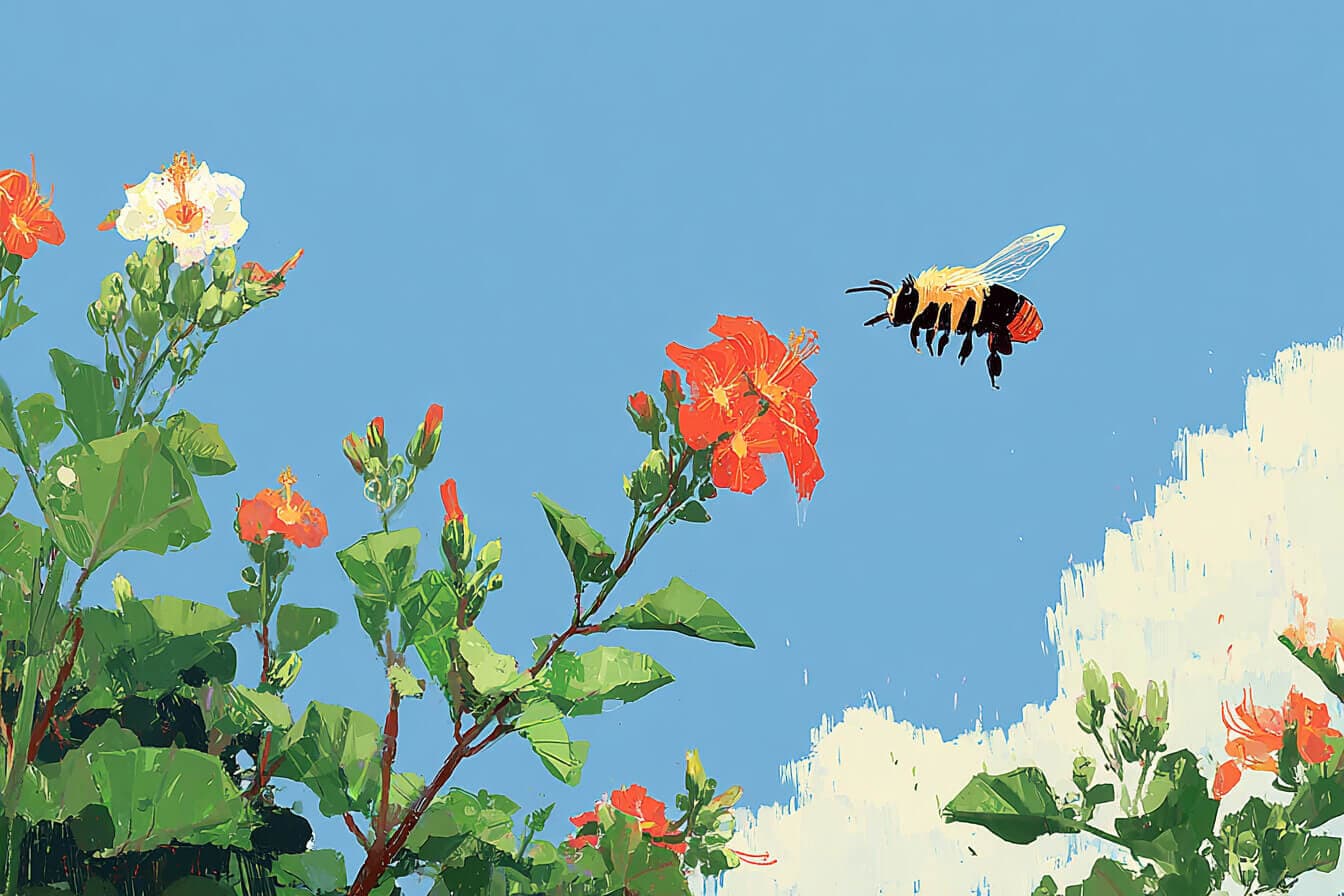
There is something about the low, steady hum of bees that can settle a child the way few other sounds can. It is the sound of a garden doing its work, unhurried and warm, and it pairs perfectly with the slow slide toward sleep. In this story, a little bee named Bonnie invites her bug friends on a tour of the meadow to learn how nectar turns into honey, making it one of those bee bedtime stories that teaches as gently as it soothes. If your child loves gardens, insects, or the idea of tiny wings doing big work, you can create your own personalized version with Sleepytale.
Why Bee Stories Work So Well at Bedtime
Bees live by rhythm. They move from flower to flower in slow, repeating loops, and their hives run on cooperation and quiet routine. For children winding down at night, that repetition feels safe. A bedtime story about bees gives kids a world that operates on small, purposeful steps, where every action connects to the next, much like the steps of a bedtime routine itself.
There is also something deeply comforting about the idea that tiny creatures can do enormous things together. Kids sense that. A bee story reassures them that being small does not mean being powerless, and that the work you do, even if nobody sees it, still matters. That is exactly the kind of thought worth carrying into sleep.
Bonnie the Bee and the Garden Lesson 7 min 40 sec
7 min 40 sec
In a meadow where the wildflowers grew thick enough to hide a cricket, a small bee named Bonnie zipped from blossom to blossom. Her wings made that particular sound, not quite a buzz, more like the hum of someone remembering a song they only half know. She landed on a daisy, brushed pollen from her legs the way you might dust flour off your hands, and looked down at a group of young bugs who had gathered in the grass below.
"Hello, friends," she called. "I'm going to show you something today. How flowers grow, how honey gets made, and why my job matters more than you'd think."
A ladybug named Dot wiggled her antennae. "But Bonnie, how does a bee make something sweet? You're so small."
"Good question." Bonnie sat back on the daisy's petals. "But small doesn't mean simple."
She explained it step by step. First, she visits hundreds of flowers and sips nectar, a sugary liquid pooled deep inside each bloom. As she drinks, pollen sticks to her legs and her fuzzy back, and when she flies to the next flower, she carries it along. That transfer is called pollination. It is how plants make seeds so new flowers can sprout the following spring.
The bugs watched her demonstrate. She dipped her tongue into the daisy's center and pulled back with tiny golden grains clinging to her. Then she flew, a little wobbling line through the air, to a purple coneflower nearby and pressed herself against it.
"See?" she said. "The pollen from the daisy just met this coneflower. Cross-pollination. It makes stronger, healthier plants."
A shy caterpillar named Milo inched forward from behind a blade of grass. He had been listening this whole time but had not wanted to interrupt. "What about the honey, though?" he whispered.
Bonnie led them to a patch of white clover. The flowers were so small and pale they almost looked like tufts of cloud that had fallen and decided to stay. She showed them how she stored nectar in a special stomach called a crop.
"I add enzymes that start changing the sugars," she said. "Back at the hive, I pass the nectar to my sisters, and they fan it with their wings until it thickens. We seal it in wax cells to feed the colony when winter comes and there is nothing left to bloom."
The bugs went quiet.
Then Bonnie told them the numbers: one pound of honey requires visiting about two million flowers and flying fifty thousand miles. "That is like circling the earth twice," she said, and she let that sit for a moment.
Dot clapped her spots together. "So without bees, we would have fewer flowers?"
"Fewer flowers. Fewer fruits, nuts, and vegetables too." Bonnie's voice was steady, not dramatic. She was stating a fact the way a teacher states a fact. "About a third of our food depends on pollinators like me."
She guided them to a patch of strawberries where green fruits had started to swell. The berries were lumpy and imperfect, some bigger on one side than the other, the way real strawberries always are before they ripen.
"These formed because bees visited the tiny white blossoms," Bonnie said. "Each berry needs at least twenty visits."
Milo's eyes went wide. "Twenty? For one strawberry?"
"For one strawberry. And I haven't even told you about watermelons yet." She showed them a chart she had painted on a leaf: little drawings of foods with the number of bee visits scribbled beside them. A watermelon needed a thousand. Milo stared at the leaf for a long time, like he was trying to count to a thousand in his head and kept losing his place.
The bugs decided, right then, to become bee helpers.
Bonnie taught them which flowers to plant: bee balm, purple coneflower, goldenrod, the kind that bloom from spring through fall so there is always something open. She showed them how to leave patches of bare soil for ground-nesting bees, and how to set out shallow dishes of water with pebbles in them so bees could land and drink without drowning. Together they stacked hollow stems and pine cones into tiny bee hotels, lining them up along a fallen log.
One beetle, who had not said a word the entire afternoon, carefully placed the last pine cone and then stepped back and nodded once, satisfied.
As the sun slid low and the light turned that particular shade of gold that only lasts about ten minutes, Bonnie gathered everyone around a single sunflower. The head of it was enormous, wider than Bonnie's whole body ten times over.
"Watch," she said, and she climbed inside the brown center. "Each tiny bump here is a future seed. But only if pollen traveled down each thread." She traced one of the paths with her foot. "When you eat sunflower seeds someday, thank a bee. Or at least think of one."
Dot raised her wing like a student. "How do we tell our friends about all this?"
Bonnie handed out little scrolls she had made from curled bark. "Draw what you learned. Tell your families. Ask them not to spray the stuff that hurts us."
The bugs practiced saying it together, a ragged little chorus: "Save the bees, save the garden!" It was not perfectly in unison. Milo was always half a beat behind.
"Will you teach us more tomorrow?" he asked.
"Tomorrow we learn the dances," Bonnie said. "The ones that tell my sisters exactly where the best flowers are."
Milo smiled. He had not known bees danced.
That night, under the dim, drifting glow of fireflies, the meadow settled. The bugs understood now that every blossom, every fruit, every drop of honey was connected to tiny wings and steady work. Bonnie hummed something low and tuneless, about petals and pollen, about the golden sweetness that comes from sharing. The young bugs listened, and one by one they drifted off, dreaming of gardens thick with life.
Far above, the moon hung over the meadow, pale and patient.
The next morning, Bonnie found the meadow changed. Dot had painted arrows on leaves pointing toward the best flowers. Milo and his caterpillar friends had woven a banner from grass blades that read "Bee Kind," the letters wobbly but readable. Even the beetles had organized themselves into a water-carrying crew, ferrying droplets to tired foragers.
Bonnie hovered in the middle of it all and said nothing for a moment. She just looked.
Together they formed a living chain from blossom to blossom, passing pollen along as a relay. A young bee who had been nervous about flying far found her courage when Milo offered to ride on a nearby leaf and call out directions. It was an odd partnership, a caterpillar navigating for a bee, but it worked.
By afternoon, the hive's storage cells gleamed with nectar, and the queen laid eggs in cells surrounded by the new bounty. Bonnie gathered everyone on the sunflower for a celebration, not a formal one, just some dancing and a few songs about giving and receiving and the sweetness that comes from doing your part.
As twilight turned the sky a soft purple, Bonnie whispered toward the first star she could see. "May every child who tastes honey wonder, even for a second, about the wings that made it."
And somewhere not too far away, a human child who had been learning about pollinators in school lay in bed, thinking about meadows and flowers and the sound of humming, carrying the thought forward the way pollen travels on the wind.
The Quiet Lessons in This Bee Bedtime Story
This story weaves together curiosity, patience, and the power of small contributions, all wrapped inside a single afternoon in a meadow. When Milo finally speaks up after hiding behind a blade of grass, children absorb the idea that shyness does not have to mean silence, that your question still matters even if your voice shakes. The moment the bugs decide to build bee hotels and carry water to tired foragers shows kids that helping does not require being big or important; it just requires showing up. And the quiet beetle who places the last pine cone without saying a word is a reminder that not every act of kindness needs an announcement. These are the kinds of reassurances that settle well at bedtime, when a child needs to believe that tomorrow they can do something small and still have it count.
Tips for Reading This Story
Give Bonnie a warm, matter-of-fact voice, the kind of teacher who never talks down to anyone, and let Milo sound soft and hesitant until his confidence grows near the end. When Bonnie reveals the number of flowers needed for one pound of honey, pause and let your child react to the size of it. During the evening scene where the fireflies appear and Bonnie hums her tuneless song, slow your pace way down and drop your volume so the room feels like the meadow settling in.
Frequently Asked Questions
What age is this story best for? This story works well for children ages 3 to 7. Younger listeners will enjoy the characters, especially shy Milo finding his courage and Dot clapping her spots together, while older kids will latch onto the real science of pollination, the surprising bee-visit numbers, and the idea of building little bee hotels from stems and pine cones.
Is this story available as audio? Yes. Press play at the top of the story to hear it read aloud. The audio version brings out the rhythm of Bonnie's patient explanations and the ragged little chorus of bugs chanting "Save the bees, save the garden!" The shift from daytime teaching to the quiet firefly scene at night works especially well in narration, letting the pacing guide your child toward sleep.
Do kids actually learn real facts about bees from this story? They do. Bonnie's explanations about nectar, pollen transfer, crops, and the fanning process inside the hive are all based on how honeybees actually work. The detail about two million flower visits per pound of honey is a real figure, and the list of foods that depend on pollinators, from strawberries to watermelons, gives children a concrete sense of why bees matter beyond the meadow.
Create Your Own Version
Sleepytale lets you build a personalized story inspired by bees, gardens, and the quiet magic of pollination. Swap Bonnie's meadow for your own backyard, replace the bug friends with your child's stuffed animals or siblings, or add a favorite flower your family grows each summer. In just a few moments, you will have a cozy, one-of-a-kind story ready to replay whenever bedtime needs a gentle landing.
Looking for more animal bedtime stories?
Polar Bear Bedtime Stories
A shimmering palace appears the sea ice, and a small wish turns into shared laughter. Drift into short polar bear bedtime stories with a bright, gentle twist.
Bear Bedtime Stories
Drift off with short bear bedtime stories that feel warm and soothing, plus a simple way to create your own cozy version in Sleepytale.
Tropical Fish Bedtime Stories
Sunlight paints golden paths across a coral reef as a brave little fish leads a pattern parade. Drift into short tropical fish bedtime stories with gentle pride and calm sea sounds.
Pufferfish Bedtime Stories
Drift under turquoise waves with short pufferfish bedtime stories where a jumpy little fish turns surprise bounces into a brave stage dance. A conch charm makes the twist feel tender.
Piranha Bedtime Stories
Drift into the Amazon with short piranha bedtime stories where a toothy fish hosts a leafy picnic and wins hearts one crunch at a time.
Pigeon Bedtime Stories
Ease into comfort as Pablo delivers tiny folded notes tied with a sky blue ribbon to lift lonely hearts. Settle in with short pigeon bedtime stories that bring warmth, hope, and easy sleep.