
Baba Yaga Bedtime Story
By

Dennis Wang, Bedtime Story Expert
6 min 32 sec
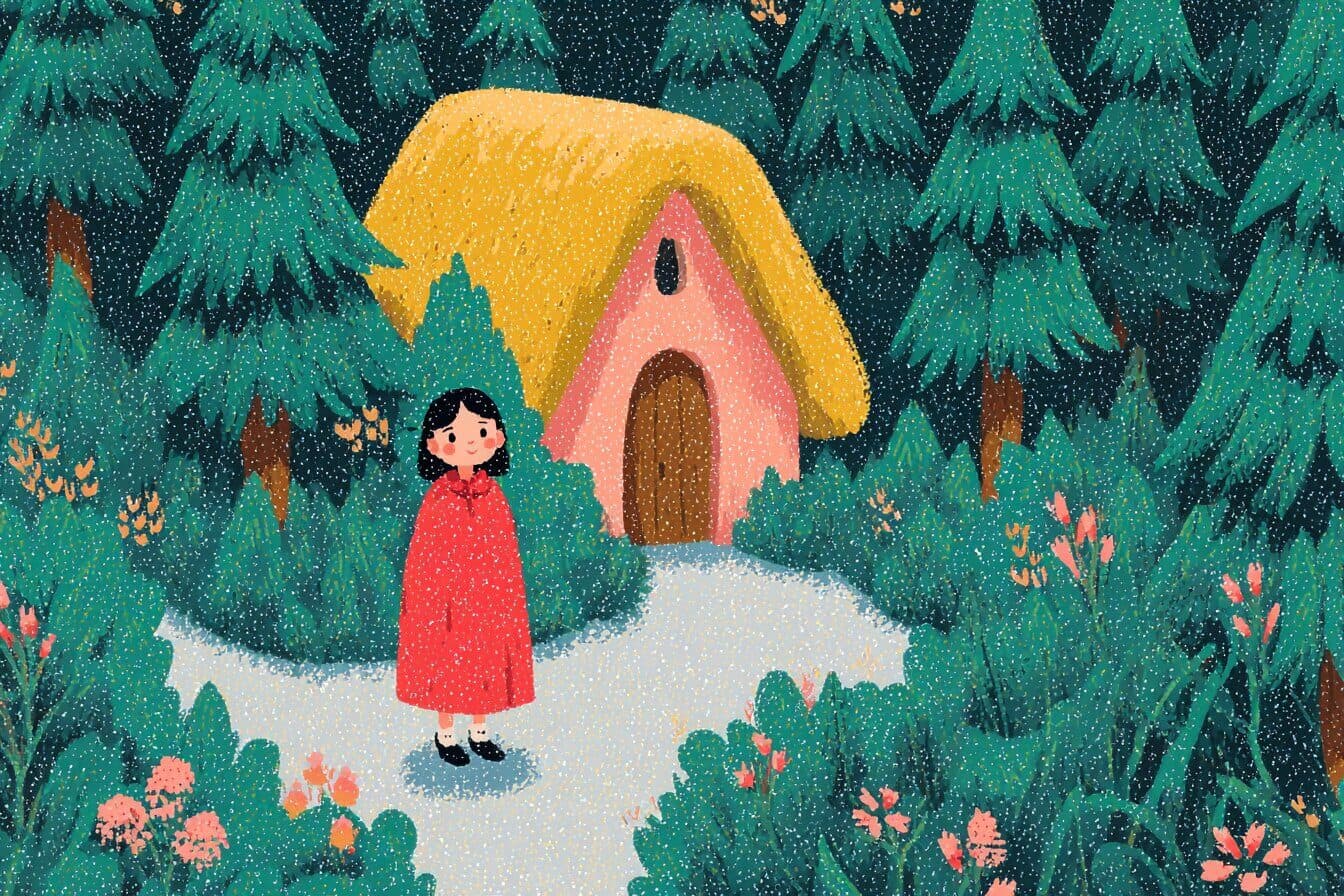
There is something about a dark forest, snow crunching underfoot, and the faint glow of a lantern that makes kids pull the covers up a little tighter and lean in closer to listen. This story follows Vasilisa, a brave girl sent through the winter woods to face a witch in a hut that walks on chicken legs, all for a single flame to light her hearth. It is the kind of Baba Yaga bedtime story that turns real fear into something a child can hold, examine, and set down gently before sleep. If you would like to reshape the setting or characters into something all your own, you can create a personalized version with Sleepytale.
Why Baba Yaga Stories Work So Well at Bedtime
Baba Yaga is frightening, and that is exactly the point. Children carry small fears to bed every night, and a story that names those fears out loud, places them inside a bony fence with glowing skulls, and then walks a kind character safely through them gives kids a way to rehearse bravery from the comfort of a warm blanket. The witch's hut is strange enough to feel like a real adventure, yet contained enough that the world never spirals out of control.
What makes a bedtime story about Baba Yaga especially calming is the rhythm of the tasks. There is sweeping, cooking, spinning. These are repetitive, quiet activities, the kind of slow motion that lowers a child's heart rate the same way a lullaby does. By the time the fire is won, the tension has already been replaced by warmth, soup, and the familiar path home.
Vasilisa and the Dancing Hut 6 min 32 sec
6 min 32 sec
Vasilisa lived at the edge of the village where the pine trees grew so tall their tips scratched the underside of the clouds.
Her stepmother did not like her bright eyes or her gentle songs. One winter dusk, the woman handed the girl a lantern with barely any flame left inside and pointed toward the black forest.
"Go to Baba Yaga," she hissed.
"Ask for fire to warm our hearth, or never come back."
Vasilisa wrapped her shawl tight. She tucked the lantern's last coal inside a hollow turnip, feeling the faint heat against her palm, and stepped onto the snowy path.
The forest listened.
Snowflakes landed on her lashes. Every twig seemed to whisper her name, though it might have been the wind shouldering through the branches. She walked until moonlight turned the snow the color of old silver, and then she saw it.
A wooden hut spinning slowly on two enormous chicken legs.
The legs scratched at the frozen ground the way a hen scratches for seeds, and the hut turned round and round as though it danced to music only it could hear. Vasilisa's heart hammered. But she slipped her hand into her pocket and found her mother's last gift: a tiny wooden doll, worn smooth from years of holding.
She whispered, "Little mother, what shall I do?"
The doll answered in a voice like wind through dry leaves. "Speak kindly and keep walking."
So she did.
The fence was made of bones. Skulls with glowing eye sockets grinned down at her from the posts, their jaws slightly open as if they had just finished saying something rude.
She bowed. "Good evening, skulls. May I enter?"
The jaws creaked wider, and the gate swung open with a groan that sounded almost relieved, like a door that had been waiting all night for someone with manners.
Inside the yard, the hut stopped spinning. The door yawned.
Baba Yaga stood there, tall as a young birch, her nose hooked like a thorn on a rosebush. Her fingernails tapped the doorframe.
"Who dares disturb my night?"
Vasilisa curtsied.
"I am Vasilisa. My stepmother sent me for fire."
The witch sniffed, long and deliberate, like she was checking whether Vasilisa was worth the trouble.
"Fire is not free. You must work."
She handed the girl a spindle, a basket of dirty corn, and a rusty kettle with a dent in the side.
"Spin this corn into silk, sweep the yard, and cook my supper before dawn. Fail, and I will eat you."
Then the witch climbed into her giant mortar, pushed off the ground with her pestle, and flew into the starry dark. The sound of the pestle scraping stone faded until there was only silence and the hum of the skulls' pale light.
Vasilisa looked at the impossible tasks. A tear froze halfway down her cheek.
She drew the doll from her pocket. "Little mother, help."
The doll grew warm, hopped to the ground, and began to spin the corn. Golden thread shimmered through its wooden fingers, each strand finer than spiderweb.
While the doll worked, Vasilisa swept the yard with a broom of birch twigs. She sang softly, nothing fancy, just a tune her mother used to hum while kneading bread. The skulls along the fence leaned closer.
When the yard was clean enough to see the stars reflected in the packed snow, she hauled water from the icy well, chopped onions until her eyes stung, and stirred a thick soup. She found wild mushrooms and barley in the witch's pantry, lined up in jars that looked like they had not been opened in years. Soon the kettle bubbled, and the whole yard smelled like someone's kitchen on a good night.
Dawn's first blush touched the sky just as the doll snapped the last thread onto the spindle.
Vasilisa tucked the doll away, set the table with carved wooden bowls, and sat down to wait. Her hands were sore. She flexed them open and closed.
Baba Yaga stormed back on a gust of wind that smelled like pine sap and iron.
She tasted the soup, one slow spoonful. She peered at the gleaming yard. She held the silk up to what remained of the moonlight and rubbed it between her fingers.
"You had help," she growled.
Vasilisa did not lie.
"My mother's love lives in the doll."
The witch's eyes narrowed. For a long moment neither of them moved. Then something shifted, like ice cracking on a pond in early March.
"Love is stronger than fear. You may take fire, but first ask me a question."
Vasilisa thought of her stepmother's hard stare, and of other people she had met whose voices never softened.
"Why do some hearts grow cold?"
Baba Yaga stirred the coals in her stove. Sparks rose and disappeared.
"Hearts freeze when they forget how to give. Take this knowledge with you."
She plucked a skull from the fence, set it on a stick, and flames leaped from its hollow grin.
"Carry this fire. It will burn only for the kind."
Vasilisa thanked the witch. She meant it.
As she left the yard, the hut began to spin again, and the chicken legs scratched a slow farewell into the snow. The forest path opened before her like a ribbon unwinding from a spool.
When she reached home, the skull's light filled every corner of the dark cottage.
Her stepmother lunged for it. The fire blazed hot and drove her stumbling backward. Cold ashes scattered across the floor, and the woman fled into the night without a word.
Vasilisa placed the skull on the hearth, where it glowed softly, warming soup and bread, never scorching anything that did not deserve it.
She set the little doll in a pot by the window and watered it with leftover tea, just to see what would happen. In spring, cornflowers pushed up through the soil where the doll had stood, their blue petals trembling whenever the door opened.
Villagers came to hear her story, bringing seeds and songs and a loaf of bread that was still warm in the middle. Together they replaced the old fence with one of living willow, not of bones. Children played in the yard. Vasilisa spun silk so fine it caught the first light of sunrise and held it like dew.
Whenever the wind rattled the shutters at night, she remembered the spinning hut and the talking skulls and the witch who stirred her coals alone. She smiled, because she knew that even the darkest forest hides paths lit by something stubborn and warm.
Years later, travelers still spotted the chicken-legged hut turning in the distance. But they also saw a steady glow from Vasilisa's window, a small beacon guiding the kind home through the long night.
The Quiet Lessons in This Baba Yaga Bedtime Story
This story is woven through with honesty, courage, and the stubborn warmth of kindness even when the world feels cold. When Vasilisa tells Baba Yaga the truth about her doll instead of making up a clever excuse, children absorb the idea that honesty can disarm even the most frightening figure in the room. When she hauls water and chops onions through the freezing night, the story shows that patience and steady effort matter more than magic, even though the magic is right there beside her. And the moment the fire refuses the stepmother's grabbing hands, kids see that gentleness carries its own quiet protection. These are reassuring ideas to fall asleep with, the sense that tomorrow's hard moments can be met with calm hands and a truthful voice.
Tips for Reading This Story
Give Baba Yaga a low, scratchy voice that sounds like she has been talking to no one but skulls for years, and let the doll's replies come out small and papery, almost a whisper. When Vasilisa bows to the skulls and says "Good evening," pause and let your child laugh or react before the gate creaks open. During the section where Vasilisa is sweeping and cooking, slow your pace down to match the rhythm of the chores, then speed up just slightly when Baba Yaga storms back on the gust of wind.
Frequently Asked Questions
What age is this story best for?
This version works well for children ages 4 through 8. Younger listeners enjoy the repeating rhythm of the tasks and the talking doll, while older kids are drawn to the standoff between Vasilisa and Baba Yaga and the question about why hearts grow cold. The scarier images, like the skull fence, are softened by Vasilisa's politeness and the cozy kitchen scenes.
Is this story available as audio?
Yes. You can press play at the top of the story to hear it read aloud. The audio version brings out the contrast between the quiet snow scenes and Baba Yaga's growling dialogue especially well, and the moment when the doll hops to the ground and begins spinning has a rhythm that sounds almost musical when read by a narrator.
Is this story too scary for bedtime?
The witch and her skull fence sound intense on paper, but the story balances every spooky detail with something warm. Vasilisa politely greets the skulls, the yard fills with soup smells, and the doll hums along in her pocket. By the end, the fire itself protects only the kind, so children leave the story feeling safer than when they entered it, which is exactly what you want before lights out.
Create Your Own Version
Sleepytale lets you reshape this tale into something that fits your child perfectly. You can swap the snowy Russian forest for a rainy jungle, trade the skull lantern for a jar of fireflies, or turn Vasilisa into a different brave kid, a curious fox, or even a robot with a warm heart. In just a few minutes you will have a cozy story with pictures and a soothing rhythm, ready to replay whenever you need a calm night.
Looking for more bedtime story classics?

Once Upon A Time Stories
What happens when June opens a golden book with no title? One of the sweetest short once upon a time stories about a forest, a hedgehog, and a blank page.

Fairy Tales Written By Hans Christian Andersen
Anders discovers short fairy tales written by Hans Christian Andersen as his grandmother reads from a soft brown book by lamplight.

Bluebeard Fairy Tale
In this short bluebeard fairy tale, the forbidden room holds not horror but a music box and memories of the people Lord Corvus loved most.

Red Shoes Fairy Tale
What happens when Karen's magical red shoes refuse to stop dancing? Discover this short red shoes fairy tale tonight.
Twinkle Twinkle Little Star Bedtime Story
Lily watches a kind star and floats up to help deliver dreams in this short twinkle twinkle little star bedtime story. A warm, quiet tale for sleepy nights.
Through The Looking Glass Bedtime Story
Step into a calm, magical short through the looking glass bedtime story and drift toward sleep with gentle wonder. Enjoy a soothing retelling that feels cozy from start to finish.