
Astronaut Bedtime Stories
By

Dennis Wang, Bedtime Story Expert
8 min 26 sec

There is something about floating in silence, far from streetlights and alarm clocks, that makes a child's breathing slow before a single page is turned. In this story, a young astronaut named Astrid discovers an old, forgotten satellite while orbiting Earth aboard the Starhopper, and what she does next is the kind of gentle adventure that belongs right at the edge of sleep. If your little one loves astronaut bedtime stories full of starlight and quiet wonder, this one is worth reading tonight. You can also craft a version starring your own child with Sleepytale.
Why Astronaut Stories Work So Well at Bedtime
Space is already quiet. There are no honking cars, no barking dogs, no siblings arguing over the last cookie. When a child imagines floating weightless past stars and watching Earth turn slowly below, they are picturing a world stripped down to hush and gentle motion. That natural calm is why a bedtime story about an astronaut can settle a restless mind faster than almost any other setting.
There is also the sense of being held. A spaceship cabin is small and snug, instruments humming, sleeping bags zipped tight. Kids who feel anxious at night often respond to the idea of a safe, enclosed space where someone brave is looking out the window and everything is under control. Astronaut stories give children both vastness and coziness at the same time, which is a rare and powerful combination for winding down.
Astrid's Starlight Parade 8 min 26 sec
8 min 26 sec
Astrid pressed her nose to the cool window of the spaceship Starhopper and wiggled her fingers at the bright blue marble of Earth far below. From up here, the clouds looked like swirls of white frosting on a birthday cake so enormous you could never find the candles.
She floated weightless, hair drifting around her in slow motion, and giggled. Not because anything was funny. Just because her heart felt lighter than moon dust and there was no one around to tell her giggling for no reason was weird.
Mission Control crackled through her headset, reminding her to log the daily photo for schoolchildren. She aimed her camera, leaned left to get a sliver of ocean in the frame, and snapped. Somewhere down there, kids in Mrs. Lopez's class were probably drawing rockets with the flames going the wrong direction. Astrid promised herself she would wave extra big in tomorrow's picture so they could spot her gloved hand.
She twirled, sneakers tapping the wall with a soft rubber squeak, and pushed off toward the observation bubble.
Outside, space stretched like a canvas someone had spilled a jar of glitter across and never cleaned up. Every speck seemed to pulse with its own rhythm. Astrid whispered hello to the constellations the way you greet neighbors at the mailbox. Orion tipped his belt. The Pleiades blinked back like shy sisters who were not sure they had been invited.
She logged star coordinates for the science team, but in her private notebook she connected the dots into her own shapes: a cosmic turtle, a flying sandwich, a smiling cat with one ear bigger than the other. The cat was her favorite. She named it Doug.
Hours passed in the quiet hum of fans and gentle beeping of instruments. The beeping had a rhythm she had memorized by now, almost like a song with no lyrics.
When the onboard clock showed it was nearly bedtime on Earth, Astrid prepared her sleeping bag, tethering it to the wall so she would not drift into the control panels while dreaming. She zipped herself inside, feeling like a caterpillar in a cocoon, and watched the universe revolve past the window. Earth slid away, replaced by the moon's silver smile, then by velvet dark.
She counted meteors. One. Two. Seven. Fourteen.
Somewhere around twenty, her eyelids gave up, and just before sleep took her she made a wish on a streak of green light: to share this sky parade with someone else someday.
Tomorrow she would wake, exercise, run checks, and photograph storms swirling over oceans. But tonight she simply floated, wrapped in starlight, the ship humming a lullaby of steady systems around her.
In her dream she skipped across craters on Mars wearing magnetic boots that sparked with every step, leaving little orange flashes in the red dust. Phobos and Deimos played tag above, two tiny moons chasing each other like brothers who had forgotten what they were arguing about. She collected meteorites shaped like hearts and tucked them into her pockets for kids she had never met. One of the meteorites was warm, and she held it against her cheek for a moment, just because.
A gentle alarm chimed and pulled her back.
She rubbed her eyes, smiled at the familiar hum, and began her morning routine. Toothpaste floated from the tube in a pearly blob that wobbled like it had opinions, and she caught it on her brush before it escaped toward the air vent. Breakfast was a pouch of warm cocoa and a bar of crunchy space granola that tasted of cinnamon and something she could never quite name. She had decided weeks ago that the mystery flavor was starlight, which was not a real flavor but felt true anyway.
Through the window, Earth greeted her again, turning slowly, clouds rearranging themselves like furniture in a room that could never decide on a layout. She spoke to Mission Control, reporting systems green and spirits bright, then opened her journal to sketch the dream garden from Mars. The tip of her marker floated away. She chased it in slow motion, both of them spinning, and she laughed at the silly ballet that nobody would believe if she described it.
Back at the window, she noticed something new.
A tiny silver glint moving against the stars. Brighter than debris. Dancing like a firefly that had taken a very wrong turn.
She adjusted the external cameras and zoomed. The glint resolved into a small satellite, old and long silent. Its panels were cracked, but it still clung to orbit like a stubborn kite whose string had snapped years ago. There was something about the way it tumbled, slow and unhurried, that made Astrid's chest tighten.
She sent a gentle radio ping across the emptiness. A digital hello.
No reply. She had not really expected one. But she imagined the satellite receiving the signal somewhere in its dead circuits, a flicker of recognition after decades of silence, like hearing your name called in a crowd when you thought everyone had forgotten it.
She recorded its position for space junk trackers and added a note: "Historical artifact, handle with care." Through her lens she could see faded flags and mission patches, reminders of scientists who once cheered its launch from a room full of coffee cups and calculators.
"Thank you," she whispered, "for going first."
She pressed record so classrooms on Earth could see the drifting time capsule. Mission Control suggested a small engine burn to lift the Starhopper into a slightly higher orbit, avoiding the relic. Astrid complied with gentle thruster taps, precise as a pianist touching the softest keys.
The ship eased upward. The satellite slipped behind, glinting one last wink before disappearing into shadow.
She sat with that for a while, not writing anything, just thinking about how many silent stories circled the planet. Each one a chapter nobody was reading anymore.
The day's tasks waited. Filter checks, sample cataloging, and a live video call with students who would ask if astronauts ever feel scared. She thought about that question honestly, then wrote her answer in big colorful letters on a notepad: "Yes, but courage is doing the scary thing while your heart drums salsa."
During the call she held the sign to the camera. Twenty third graders giggled back, and something loosened in each of them, some small knot of worry they had been carrying around without knowing it.
They asked if she had seen aliens. She described the glowing auroras that sometimes snake above Earth like friendly serpents made of green light. They asked what snacks she missed most. She admitted she longed for an apple so crunchy you could hear it across the room, but that freeze-dried mango was its own kind of magic. One kid in the back row asked if it was lonely up there. She paused, looked at the camera, and said, "Right now it isn't."
When the session ended she blew a kiss at the lens, hoping some small dream would take root in a kid who needed one.
Alone again, she floated to the cupola, the ship's glass crown, and buckled in to watch the next sunset. Darkness crept across Earth's face. City lights bloomed, scattered like seeds of glow thrown by a careless gardener.
She searched for the long thread of the Florida coast and traced it until she found the tiny sparkle of Cape Canaveral, where her journey had begun. Memories of roaring engines and pressing G-forces felt both distant and near, like a story someone told her once that turned out to be her own.
She closed her eyes and replayed the countdown, feeling the trembling excitement of ten, nine, eight, seven.
A meteor zipped past, a brief scratch on the cosmic chalkboard, and she added it to her tally.
The cabin lights dimmed on schedule, coaxing her toward rest. She resisted for a minute, pressing her palm to the glass. Faint warmth from the sun's rays, unfiltered by atmosphere, traveled through to her skin. Somewhere inside that warmth she felt connected to everyone who had ever looked up and wondered.
Tomorrow would bring reentry planning and system checks. Tonight belonged to quiet gratitude.
She drifted to her sleeping bag, climbed in, zipped the stars inside with her. As her eyes closed she pictured children lying on lawns, pointing and smiling because they knew a friend soared above.
In that shared sky she found comfort. Dreams could travel both directions.
The ship sailed on, a tiny lantern in the vast night, carrying her hopes around and around the glowing Earth. Astrid smiled softly, surrendered to weightless sleep, and the universe tucked her in with a blanket of hush and shimmer.
The Quiet Lessons in This Astronaut Bedtime Story
This story carries a few gentle ideas without ever pausing to announce them. When Astrid pings the old satellite and whispers "thank you for going first," children absorb the value of gratitude toward people and things that came before them, even ones they will never meet. Her honest answer about fear, that courage is doing the scary thing while your heart drums salsa, shows kids that bravery does not mean the absence of worry. And the moment when one student asks if she is lonely and Astrid says "right now it isn't," children sense that connection can cross enormous distances. These are reassuring ideas to carry into sleep: that it is okay to be scared, that kindness reaches farther than you think, and that someone out there is always looking down and waving.
Tips for Reading This Story
Give Astrid a calm, slightly amused voice, the kind of person who talks to constellations and means it. When she chases the floating marker, speed up your words a little and let your child laugh at the image before settling back into the slower pace. At the moment Astrid whispers "thank you for going first" to the satellite, drop your voice almost to a murmur and leave a pause afterward. During the video call scene, you can do quick squeaky voices for the third graders and let your child guess what questions they would ask an astronaut. Slow everything down once the cabin lights dim, stretching each sentence a little longer to match the drift toward sleep.
Frequently Asked Questions
What age is this story best for? Children between ages 4 and 8 tend to enjoy this one the most. Younger listeners love the sensory moments, like chasing floating toothpaste and spotting shooting stars, while older kids connect with Astrid's video call with the third graders and her thoughtful reaction to the old satellite. The language is simple enough for preschoolers to follow but layered enough to hold a second grader's attention.
Is this story available as audio? Yes. You can press play at the top of the story to hear it read aloud. The audio version brings out the rhythm of Astrid's quiet observations, especially the countdown memory and the soft moment when she presses her palm to the glass. The hum of the spaceship and the gentle pacing make it a natural fit for listening with eyes closed.
Why do kids love space stories before bed? Space gives children permission to be still. There is no running, no shouting, just floating and watching. Astrid's orbit, where days loop gently from window gazing to sleeping bag to window gazing again, mirrors the rhythm of a child's own bedtime routine. The vastness of the setting also puts small daily worries into perspective, which can help a restless mind settle.
Create Your Own Version
Sleepytale lets you build a personalized space adventure with your child's name, favorite details, and the exact tone that helps them relax. Swap the Starhopper for a moon station, turn the old satellite into a friendly comet, or set the whole journey on a trip to Saturn's rings. In a few taps you will have a cozy story ready to replay every night.
Looking for more job bedtime stories?

Spy Bedtime Stories
Quiet halls glow before sunrise as a student agent follows kind clues in short spy bedtime stories. A gentle mystery ends with secret teamwork and warm notes.

Detective Bedtime Stories
Detective Daisy follows crumbs and a chocolatey scent in short detective bedtime stories, then finds the missing cookies in a surprising place. A cozy case for winding down.

Vet Bedtime Stories
A tender clinic visit turns into a thank you lick and a tiny keepsake in short vet bedtime stories. A small thorn becomes a big lesson in trust and calm care.

Teacher Bedtime Stories
Want short teacher bedtime stories that feel cozy and kind for winding down after school? Discover a gentle classroom adventure you can read aloud tonight.

Scientist Bedtime Stories
Preston turns a quiet flight into a gentle lesson for curious kids in short scientist bedtime stories. Clouds, wind, and light become soothing wonders as everyone settles down.
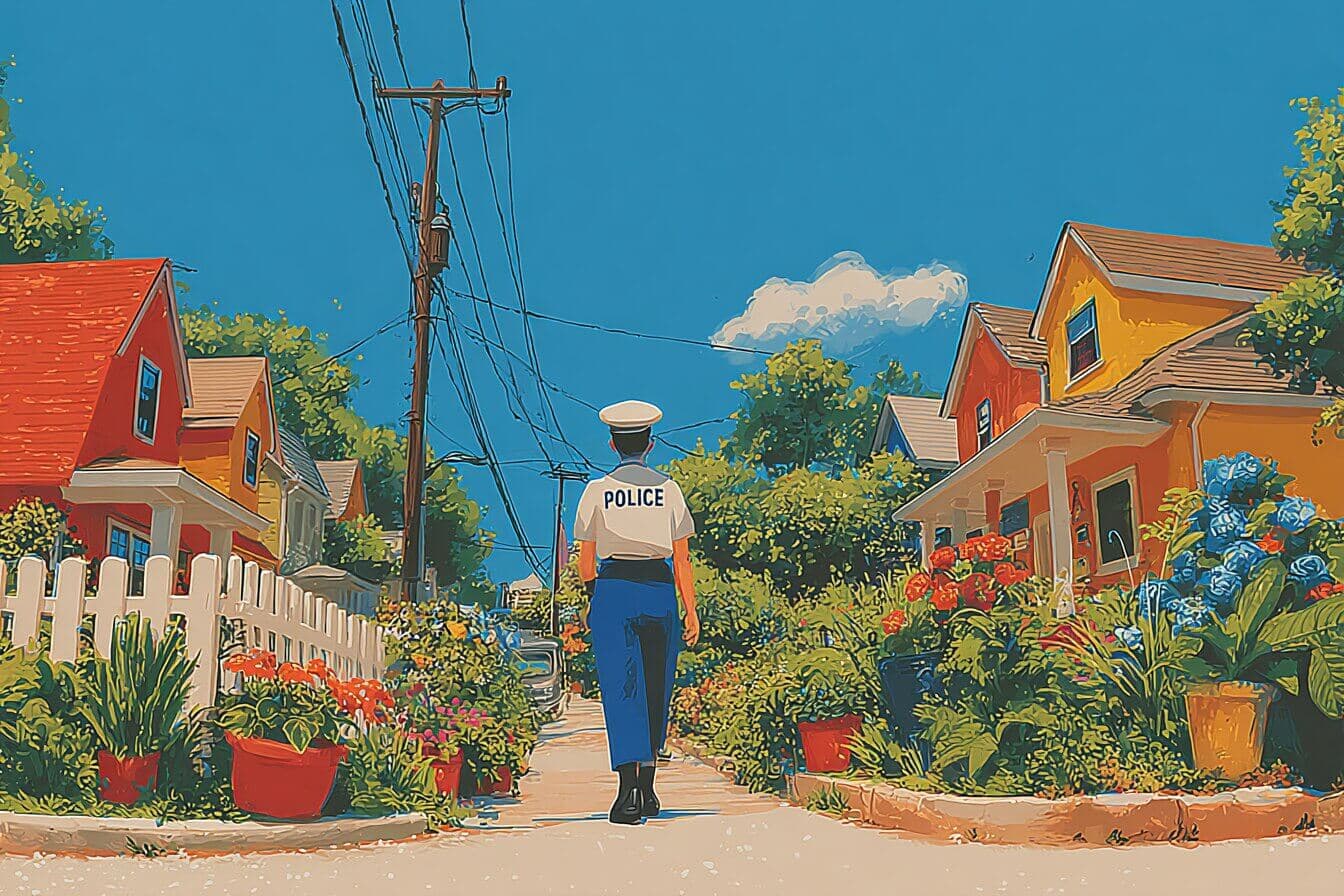
Police Bedtime Stories
Looking for short police bedtime stories that feel gentle, kind, and safe for little listeners? Want one you can read aloud in just a few minutes at bedtime.