
Anne Of Green Gables Bedtime Story
By

Dennis Wang, Bedtime Story Expert
10 min 26 sec
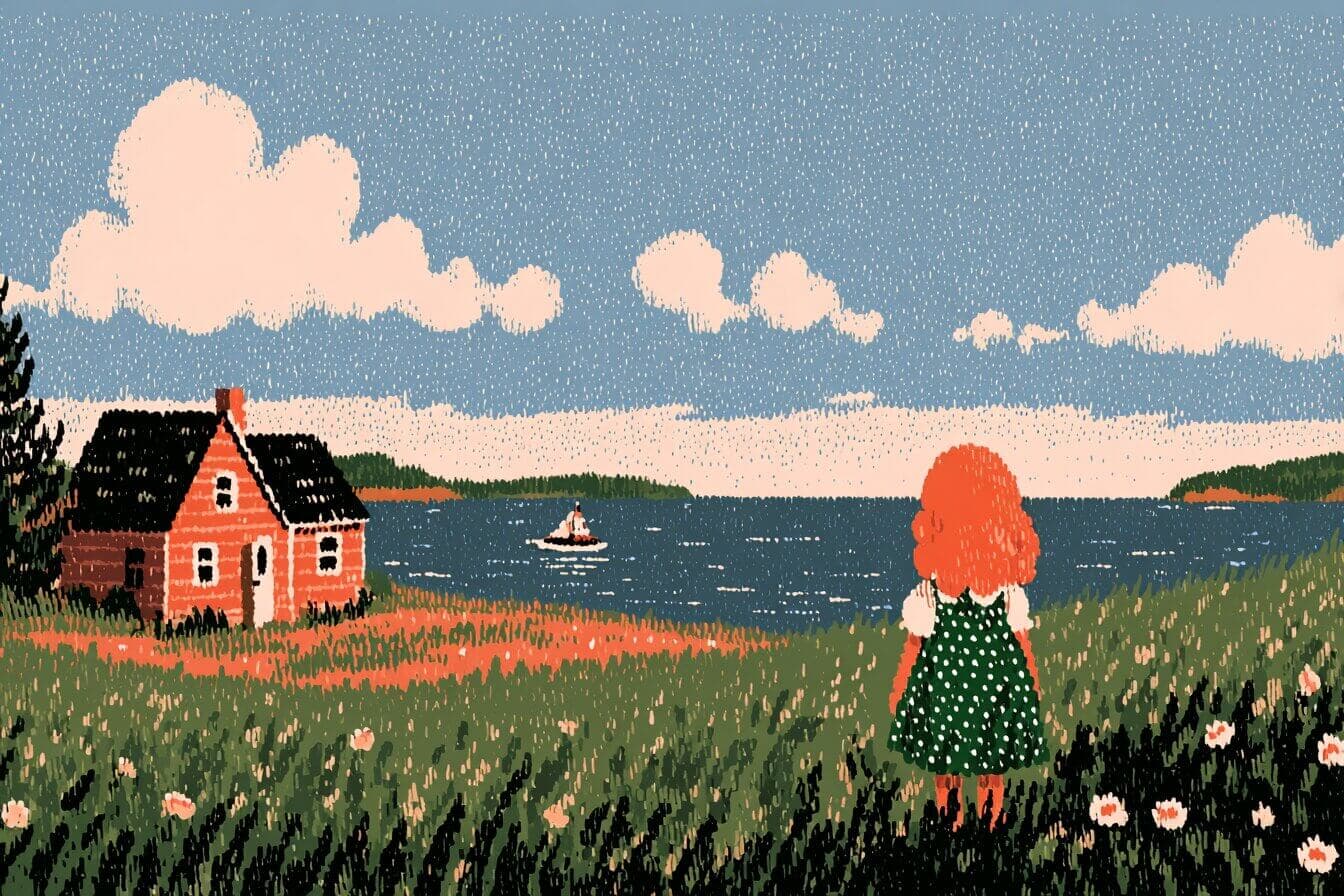
There's something about the smell of old wood and spring blossoms that makes a child's eyes go heavy in just the right way. This gentle retelling follows Anne Shirley, the talkative, red-haired orphan who arrives at a quiet Prince Edward Island farm expecting welcome and finds, instead, a misunderstanding that could send her right back where she came from. It's the kind of Anne of Green Gables bedtime story that winds down slowly, settling into belonging the way a quilt settles around small shoulders. If your child loves Anne's world, you can shape your own version with Sleepytale and make every detail feel like home.
Why Anne of Green Gables Stories Work So Well at Bedtime
Anne's world moves at the pace of seasons. Chores get done before supper, walks happen on dirt roads instead of sidewalks, and the biggest drama of the week might be a dyed curtain or a cracked slate. For children winding down at night, that unhurried rhythm feels like permission to slow their own thoughts. The landscape itself, quiet ponds, birch lanes, fields turning gold, gives kids something calm and beautiful to picture as they close their eyes.
What makes a bedtime story about Anne especially comforting is the theme underneath all her adventures: she is looking for a place to belong, and she finds it. That arc mirrors what children feel every night when they crawl into bed, the reassurance that they are safe, wanted, and exactly where they should be. Anne's voice, imaginative and warm, wraps around that feeling and holds it steady.
The Red Haired Girl of Green Gables 10 min 26 sec
10 min 26 sec
The train hissed to a halt at Avonlea station, sending curls of steam into air that smelled like wet grass and something faintly sweet, apple blossoms maybe, or the mud along the tracks warming in the late afternoon.
A pale girl with red hair and freckles scattered across her nose stepped down, clutching a carpetbag so worn the leather had gone soft as cloth.
She had expected a family. Smiling faces, warm arms, someone calling her name.
Instead the station master greeted her alone, looking puzzled.
"You must be the orphan sent to help Matthew and Marilla Cuthbert," he said. His brow furrowed. "They asked for a boy."
The girl lifted her chin. Her green eyes caught the light.
"I'm Anne Shirley," she declared, pronouncing it with an emphatic 'e.' "I may not be a boy, but I am full of imagination, and I think that counts for something."
At that moment Matthew Cuthbert arrived in his wagon, a shy farmer who looked like he'd rather talk to horses than people. One look at the talkative child and something in him shifted, quiet and certain, the way snow gives way to spring without anybody marking the exact minute.
He drove her along the Lake of Shining Waters. Blossoms drifted across the road like pink snowflakes. Anne spoke nonstop, naming every grove and curve, turning ordinary woods into kingdoms, the crooked birch near the bridge into a knight standing guard. Matthew did not interrupt once.
Marilla waited on the porch, stern as the poplars lining the lane.
She had prepared for a sturdy boy to help with chores. What she got was a thin chatterbox who called wildflowers "dusty souls" and asked whether the porch railing had a name.
Still, she let Anne stay. A fair trial, she called it.
That night Anne knelt by the window of the spare room. The curtain smelled like starch and cedar. She whispered thanks for a place with linoleum and a real porch and a view of the sky that nobody could take from her.
She dreamed of being called "our Anne" instead of "just the orphan."
Morning came with chores and lessons. Anne washed dishes while composing ballads about dishpans, her voice going high on the dramatic bits and low when the soap bubbles popped. She swept the yard and apologized to the broom for its monotonous life.
Marilla tried to scold. Laughter kept getting in the way.
One afternoon Anne accidentally dyed Marilla's prized white lace curtain sky blue.
She stood in the kitchen, fingers stained indigo, heart hammering. She confessed before Marilla even had to ask, certain she'd be sent back on the next train.
Marilla looked at the curtain. She looked at Anne. She sighed the kind of sigh that lives somewhere between exasperation and affection, and then she taught Anne how to use the dye vat properly, measuring the powder with a tin spoon and stirring in slow circles.
Later, Matthew slipped Anne a peppermint from his coat pocket. "Blue's a fine color," he whispered. "Reminds me of robin eggs."
Spring ripened into summer. Anne's vocabulary bloomed alongside the cabbages.
She met Diana Barry across the fence, a girl with raven hair and a laugh that came easily. They became bosom friends within the hour, sharing secrets and raspberry cordial that stained their lips red. Anne composed oaths of eternal friendship, swearing by the moon, the brook, and a specific ladybug that happened to land on Diana's sleeve at the crucial moment.
One evening they played in the hayloft, pretending it was a castle under siege. Anne spun tales of knights who rescued dreams from ogres, pacing back and forth on the hay bales with her arms flung wide.
Diana listened, cross-legged, eyes huge. "You are," she said, "the most interesting person alive."
Word got around.
Children wandered to Green Gables to hear stories. Anne obliged, giving each listener a role. The cow became a duchess. The geese were a chorus of philosophers who argued about the weather. Even the Cuthberts' ancient horse, Jolly, pricked his ears when Anne described his ancestor Pegasus galloping through clouds that smelled, she insisted, like warm bread.
Marilla told Anne she would attend Avonlea school. Anne arrived wearing a homespun dress and a wreath of buttercups that shed petals every time she moved her head.
She spelled "chrysanthemum" correctly on the first try but forgot the "i before e" rule two words later, which caused giggles she pretended not to hear.
Gilbert Blythe, a boy with teasing eyes and the confidence of someone who had never once been lost, pulled her braid and called her "Carrots."
The crack of her slate over his head silenced the room.
A rivalry sparked that would smolder for years. Anne vowed never to speak to him again, though apples kept appearing on her desk, and she kept not eating them, and they kept appearing anyway.
Autumn painted the island crimson and gold.
Anne walked through the Haunted Wood collecting kindling, reciting Tennyson to crows who did not seem impressed. She imagined herself the Lady of Shalott, weaving bright threads of dreams, her skirt catching on spruce branches.
One twilight she lost her way. The trees closed in, their shadows blurring together, and panic fluttered in her chest like a moth bumping against glass.
She stopped. Closed her eyes. Thought of Matthew's quiet kindness, the way he cleared his throat before saying anything gentle. She followed the scent of woodsmoke home.
Marilla wrapped her in quilts without a single lecture. "Brave hearts find the path," she whispered, and that was all.
Winter arrived on sleigh runners.
Anne skated on the pond, skirts whirling. She organized a snowman pageant, sculpting figures from Shakespeare, though her Julius Caesar looked more like a turnip with a laurel wreath.
The minister declared it the most instructive display of outdoor literature he had ever seen. Anne curtsied so deeply she nearly fell over.
At Christmas she crafted gifts with more heart than skill. Sachets of clover for Mrs. Barry. A carved whistle for Diana that only played one note but played it well. A poem for Matthew comparing his smile to sunrise, written on paper she had pressed flat with a warm iron.
For Marilla, a hand-stitched apron sprinkled with embroidered stars. "Stars remind me of you," Anne told her. "Steady and always there, even when clouds get in the way."
Marilla folded the apron carefully and said nothing, but her hands trembled just slightly.
Snow melted into April showers. Seedlings pushed through the dark earth. Anne planted marigolds along the path, naming each one after heroines: Cordelia, Ophelia, Guinevere. She spoke to them daily, believing encouragement helped roots drink deeper.
Matthew watched from the porch, humming a tune he probably didn't know he was humming.
Marilla pretended not to notice the brightness in her own eyes when Anne declared Green Gables the most beautiful place in the world.
Years passed. Study, picnics, moonlit walks where nobody said much and everything felt full anyway.
Anne's red hair darkened to auburn, but her spirit stayed as it was. She won the Avery scholarship, which promised college and futures far beyond the island.
Yet when Matthew's heart faltered one afternoon among the potato rows, Anne set aside her books without hesitating. She worked the fields, sold her stories to newspapers for small but real money, and kept the farm standing.
Marilla, humbled by a love she had once been too careful to name, finally called her "our Anne." Just like that, two words, said over porridge on a Tuesday.
On the evening Anne decided to stay, the sky blushed rose over the gable roof.
She sat between Matthew and Marilla on the porch steps, her hands rougher than they used to be, her heart so full it felt like the ache before laughter.
She told them she would teach at the local school. Close enough to watch the sunsets together.
Matthew squeezed her fingers. "Green Gables needs its own," he said.
Anne smiled.
The brook sang below the hill, the birches rustled in a way that sounded like approval, and the moon rose, silver and slow, sealing the promise of tomorrow over a house that had become, at last, exactly hers.
The Quiet Lessons in This Anne of Green Gables Bedtime Story
This story is quietly layered with lessons about honesty, patience, and the courage it takes to keep hoping when you've been disappointed before. When Anne confesses to dyeing the curtain instead of hiding the evidence, children absorb the idea that owning a mistake makes it smaller, not bigger. When she stops panicking in the Haunted Wood and follows the familiar scent of woodsmoke, kids see that fear doesn't have to win if you hold on to something you trust. And throughout the story, Anne's willingness to keep being herself, imaginative, talkative, a little too much, even when it doesn't fit what people expected, teaches children that belonging doesn't mean changing who you are. These are exactly the kind of reassurances that settle well at bedtime, when tomorrow feels big and a child needs to believe they're enough.
Tips for Reading This Story
Give Anne a bright, quick voice that tumbles over itself when she's excited, and let Matthew's lines come out slow and soft, like he's choosing each word carefully. When the slate cracks over Gilbert's head, pause for a beat of silence before continuing, because your child will probably gasp or laugh, and that moment deserves room. During the scene where Anne gets lost in the Haunted Wood, lower your voice and read more slowly, then let it warm back up as the scent of woodsmoke guides her home.
Frequently Asked Questions
What age is this story best for?
This retelling works well for children ages 4 to 9. Younger listeners will love Anne's funny habit of naming everything, from marigolds to geese, while older kids will follow the deeper thread of Anne earning her place at Green Gables and the quiet weight of Marilla finally calling her "our Anne."
Is this story available as audio?
Yes. Press play at the top of the story to hear it read aloud. This version works especially well in audio because of how the rhythm shifts between Anne's rapid, excited speeches and the slower, quieter moments with Matthew and Marilla. The scene where Anne describes Jolly the horse's ancestor Pegasus is a highlight when heard out loud, and the final paragraph feels like a lullaby when narrated in a gentle voice.
Why does Anne crack a slate over Gilbert's head?
Gilbert pulls Anne's braid and calls her "Carrots," which touches a nerve about her red hair, something she's always been self-conscious about. Her reaction is big and impulsive, and the story doesn't pretend it's the right thing to do. But it does show that strong feelings are real, and that a rivalry born from a mistake can soften over time, even if Anne isn't ready to forgive just yet.
Create Your Own Version
Sleepytale lets you reshape this story into something that fits your child's world perfectly. You could swap Avonlea for your own town, give Anne a best friend with your child's name instead of Diana, or add a beloved pet waiting on the porch of Green Gables. In just a few minutes you'll have a cozy, personalized retelling ready to read or listen to at bedtime.
Looking for more bedtime story classics?

Once Upon A Time Stories
What happens when June opens a golden book with no title? One of the sweetest short once upon a time stories about a forest, a hedgehog, and a blank page.

Fairy Tales Written By Hans Christian Andersen
Anders discovers short fairy tales written by Hans Christian Andersen as his grandmother reads from a soft brown book by lamplight.

Bluebeard Fairy Tale
In this short bluebeard fairy tale, the forbidden room holds not horror but a music box and memories of the people Lord Corvus loved most.

Red Shoes Fairy Tale
What happens when Karen's magical red shoes refuse to stop dancing? Discover this short red shoes fairy tale tonight.

Twinkle Twinkle Little Star Bedtime Story
Lily watches a kind star and floats up to help deliver dreams in this short twinkle twinkle little star bedtime story. A warm, quiet tale for sleepy nights.
Through The Looking Glass Bedtime Story
Step into a calm, magical short through the looking glass bedtime story and drift toward sleep with gentle wonder. Enjoy a soothing retelling that feels cozy from start to finish.