
Anansi The Spider Bedtime Story
By

Dennis Wang, Bedtime Story Expert
6 min 31 sec
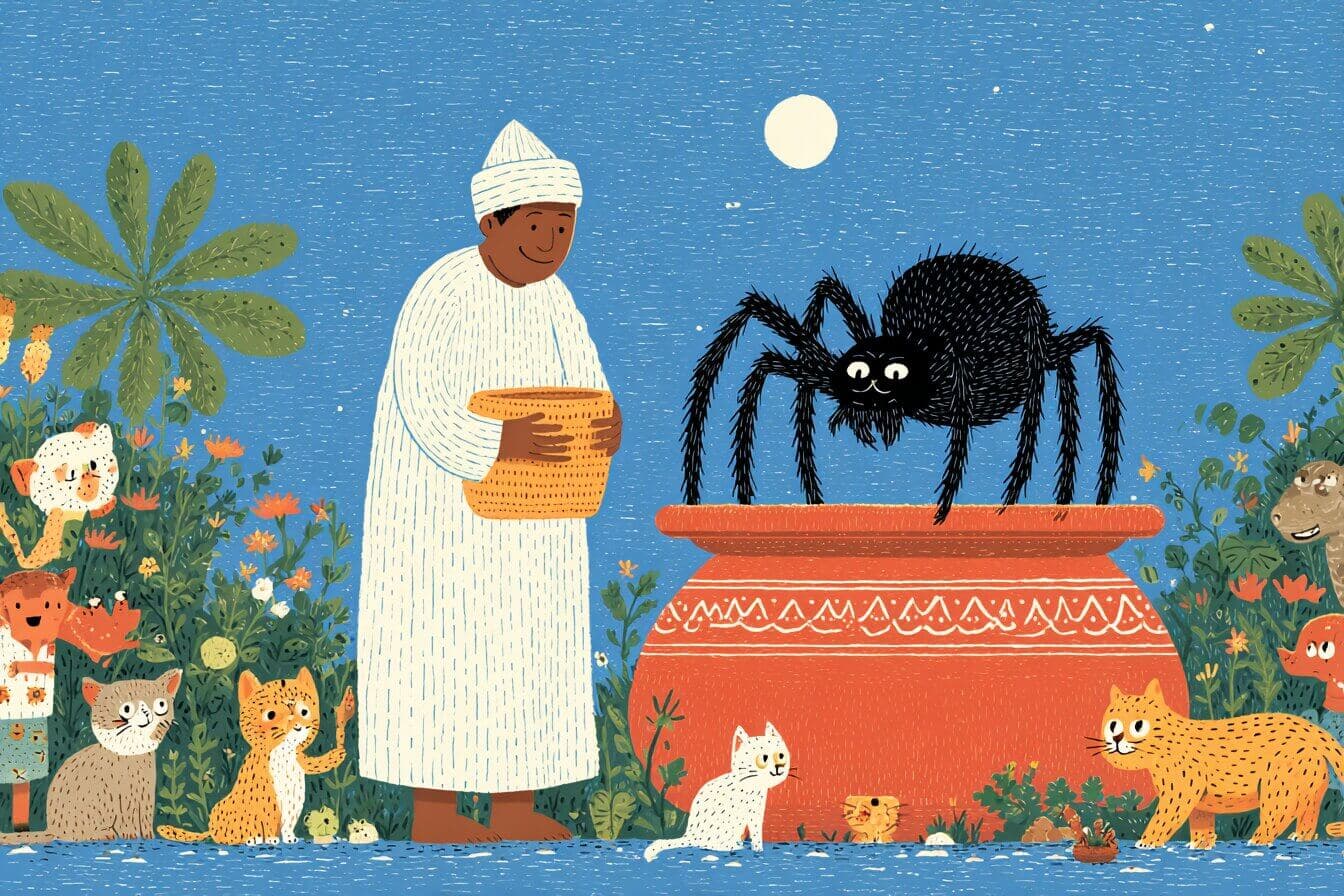
There's something about a trickster tale that makes the whole room slow down, like the air itself wants to listen. In this Anansi the spider bedtime story, a tiny spider with more nerve than sense sets out to outsmart a hornet, a fairy, and a leopard, all to win a clay pot holding every story ever told. It's funny, warm, and just clever enough to keep little eyes open until the very last line tips them shut. If your child loves folktales you can reshape with their own details, try building a version together in Sleepytale.
Why Anansi Stories Work So Well at Bedtime
Anansi is small. That matters more than anything else when you're three feet tall and the world keeps reminding you of it. Kids gravitate toward characters who win not by being the biggest or loudest but by thinking their way through trouble, and a bedtime story about Anansi does exactly that. The stakes feel real enough to be exciting, but the tone stays playful, so tension never tips into fear.
There's also something deeply calming about the rhythm of a trickster tale. Each challenge arrives, gets solved through a clever plan, and resolves before the next one begins. That predictable loop, problem then solution then forward motion, mirrors the way a child's breathing steadies as sleep approaches. By the time Anansi reaches the sky, listeners are already halfway to dreaming.
Anansi and the Pot of All Stories 6 min 31 sec
6 min 31 sec
Long ago, when the world was still young and the sky was learning how to hold itself up, a small brown spider named Anansi lived at the edge of the forest. He was no bigger than a thumb. But his dreams, well, those stretched past the moon and kept going.
Every day he watched the lions roar, the elephants stomp, and the crocodiles snap their jaws at nothing in particular just to hear the sound. They all laughed at the tiny spider.
"What can you do with those skinny legs?" they teased.
Anansi only smiled. He had learned long ago that a smile costs nothing and reveals even less.
One evening, Nyame the Sky God appeared on a cloud that smelled, oddly, like rain on warm stone. His voice rumbled like gentle thunder.
"I have grown tired of keeping all the world's stories in my pockets," he said. "They itch. I will give them to whoever brings me the three fiercest creatures: Mmoboro the hornet, Mmoatia the forest fairy, and Osebo the leopard."
The big animals shoved forward immediately, the way big animals always do. Elephant raised his trunk. Lion showed his claws. Crocodile opened his jaws so wide you could count every tooth, and nobody wanted to.
Nyame shook his head. "The contest is for everyone," he said, and winked at Anansi.
Anansi bowed politely, which is easy when you have eight legs to fold, and hurried home to his web. He told his wife, Oya, the news while polishing a little clay pot that had a chip on the rim he kept meaning to fix.
"If I win," he said, "every tale ever told will live in this pot, and no one will call spiders weak again."
Oya packed him a lunch of fried plantain and kissed his forehead. "Use your head, not your hustle," she said. Then she added, quieter, "And eat the plantain before it gets cold."
Anansi tied the pot to his belly and set off at sunrise.
First, he needed Mmoboro the hornet, whose sting could drop a buffalo flat. He found the hornet sipping nectar from a blossom, wings catching the early light like two scraps of cellophane.
"Good morning, mighty Mmoboro," Anansi called. "Do you know the forest is arguing about who is the quickest flier?"
Mmoboro buzzed so hard his whole body vibrated. "I am faster than lightning!"
"Lightning disagrees." Anansi shrugged, just one shoulder, very casual. "Lightning says it can reach the river before you can even hide inside a gourd."
The hornet snorted. "Bring a gourd and see!"
Anansi pulled out a calabash with a hole barely wider than a coin. Mmoboro zipped inside to prove his speed. Anansi plugged the hole with cotton before the hornet even finished bragging.
"One creature caught," he sang, and dropped the gourd into his pot with a satisfying thunk.
Next came Mmoatia, the forest fairy no bigger than a grain of rice. She could vanish between heartbeats, which made her very difficult to invite to dinner.
Anansi carved a tiny doll from cassava and smeared it head to toe with sticky tree glue. He set the doll beside a ripe banana and crouched in the bushes. A beetle walked over his foot. He held still.
Soon Mmoatia drifted down, drawn by the sweetness. "Good day, pretty doll," she chirped. "May I have a bite of your banana?"
The doll said nothing, obviously.
Mmoatia huffed. She slapped the doll's cheek and stuck fast. She pulled. She pushed. She said a few words that forest fairies probably should not say.
Anansi popped out, grinning so wide it used his whole face. "That's two." He tucked the fairy into a matchbox, set it gently in the pot, and kept walking.
Last was Osebo the leopard, whose spots could dissolve into shadows like ink dropped in dark water. Anansi dug a pit near the river, covered it with branches and a thin layer of leaves, and then sat down to beat a small drum.
"Come dance, Osebo, for the moon is full!"
The leopard bounded over, eyes gleaming. He never could resist a drum.
"Dance with me," Anansi said, and while they leaped and spun he tied a vine around both their waists, as if it were the most natural thing in the world.
One, two, three more steps. Osebo's paw found empty air where the ground should have been.
Down he crashed, tangled in the vine, growling and confused. Anansi lowered a log for the leopard to grip, then dropped a woven basket over him and pulled the drawstring tight.
"Three creatures caught." He did a little dance of his own, right there on the riverbank, with nobody watching but the frogs.
At the sky palace, Nyame opened the gourd, the matchbox, and the basket. Out flew Mmoboro, buzzing furiously. Out fluttered Mmoatia, shaking glue from her fingers. Out roared Osebo, still picking leaves from his fur.
The Sky God laughed until the stars rattled in their places. "Tiny spider, you have done what the mighty could not."
He poured every story ever told into Anansi's clay pot, the one with the chipped rim. Tales of bravery and foolishness, of kindness and mischief and long rainy afternoons, swirled inside like rainbow smoke.
Anansi thanked Nyame and started home.
On the path he met Elephant, Lion, and Crocodile. They blocked the way, demanding to know his secret.
Anansi set the pot on a stump. "The stories are heavy," he said, wiping pretend sweat from his brow. "I will rest a moment. But none of you must touch this pot, or the stories will vanish."
The big animals promised. They lasted about forty seconds.
While Anansi pretended to nap, Elephant's trunk crept toward the lid. He nudged it open, just a crack.
A river of stories burst out, rushing everywhere at once. Some tales landed in birds. Some dropped into rivers and swam downstream. Some settled into the mouths of people sitting around fires they hadn't lit yet.
The animals lunged and grabbed, but stories are quicker than fireflies and twice as hard to hold.
Anansi opened one eye and chuckled.
Now every creature, big or small, owned a story to tell. That was the trick, of course. Anansi had known all along that stories don't belong in pots. They belong in the air, in voices, in the space between a question and a laugh.
From that day on, whenever children gather at dusk, they hear how a spider no bigger than a thumb used cleverness, nerve, and a little tree glue to bring the world's stories home. And if you ever see a web catching the last light of evening, look closely. Anansi might be listening, ready to weave your laughter into the next tale he tells.
The Quiet Lessons in This Anansi Bedtime Story
This story is built around the idea that size and strength are not the same as capability, and Anansi proves it three times over. When the big animals laugh at his skinny legs, he doesn't argue; he just gets to work, showing kids that confidence doesn't need to be loud. Each capture requires a different kind of thinking, from flattery with Mmoboro to patience with Mmoatia to rhythm and timing with Osebo, so the story gently reinforces that problems aren't all solved the same way. And the ending, where the stories scatter free rather than staying locked in a pot, carries a quiet message about generosity that lands without a lecture. At bedtime, that's exactly the kind of reassurance a child can carry into sleep: you're clever enough, you're generous enough, and tomorrow has room for whatever you dream up tonight.
Tips for Reading This Story
Give Anansi a light, slightly conspiratorial voice, like he's always about to let your child in on a secret, and make Mmoboro's dialogue fast and buzzy by speeding up your delivery when the hornet brags about beating lightning. When Osebo crashes into the pit, pause for a beat of silence before you say "tangled in the vine" so your child can gasp or giggle. At the very end, when the stories burst from the pot, try opening your hands wide like something is escaping, and slow your voice way down for the final lines about the web catching the evening light.
Frequently Asked Questions
What age is this story best for? Children ages 3 to 8 tend to enjoy it most. Younger listeners love the repetition of Anansi catching one creature after another, each with a different trick, while older kids appreciate the cleverness behind each plan, especially the sticky doll trap for Mmoatia. The humor is gentle enough for toddlers but the plot has enough twists to hold a second grader's attention.
Is this story available as audio? Yes, you can press play at the top of the story to hear it read aloud. The audio version really shines during the three capture scenes, where the pacing shifts from Anansi's casual setup to the quick snap of each trap closing. Mmoboro's buzzing dialogue and Osebo's drumming scene both come alive with narration in a way that makes the whole room feel like a forest clearing at dusk.
Why does Anansi let the stories escape at the end? Anansi knows that stories grow when they are shared, not hoarded. By letting Elephant open the pot, he ensures every creature gets a tale of its own, which is why West African storytelling tradition credits Anansi with spreading stories across the world. It is also a sly final trick: Anansi gets the fame of winning the contest and the love of everyone who receives a story, all without having to carry that heavy pot home.
Create Your Own Version
Sleepytale lets you reshape this West African folktale into something that fits your family's bedtime perfectly. You could move Anansi's adventure to a rooftop garden, swap the leopard for a friendly bear your child already loves, or dial the humor up so every trap ends with a silly sound effect. In a few minutes you'll have a personalized trickster tale ready to read tonight, with a cozy ending that settles in a little differently each time.
Looking for more bedtime story classics?

Once Upon A Time Stories
What happens when June opens a golden book with no title? One of the sweetest short once upon a time stories about a forest, a hedgehog, and a blank page.

Fairy Tales Written By Hans Christian Andersen
Anders discovers short fairy tales written by Hans Christian Andersen as his grandmother reads from a soft brown book by lamplight.

Bluebeard Fairy Tale
In this short bluebeard fairy tale, the forbidden room holds not horror but a music box and memories of the people Lord Corvus loved most.

Red Shoes Fairy Tale
What happens when Karen's magical red shoes refuse to stop dancing? Discover this short red shoes fairy tale tonight.

Twinkle Twinkle Little Star Bedtime Story
Lily watches a kind star and floats up to help deliver dreams in this short twinkle twinkle little star bedtime story. A warm, quiet tale for sleepy nights.
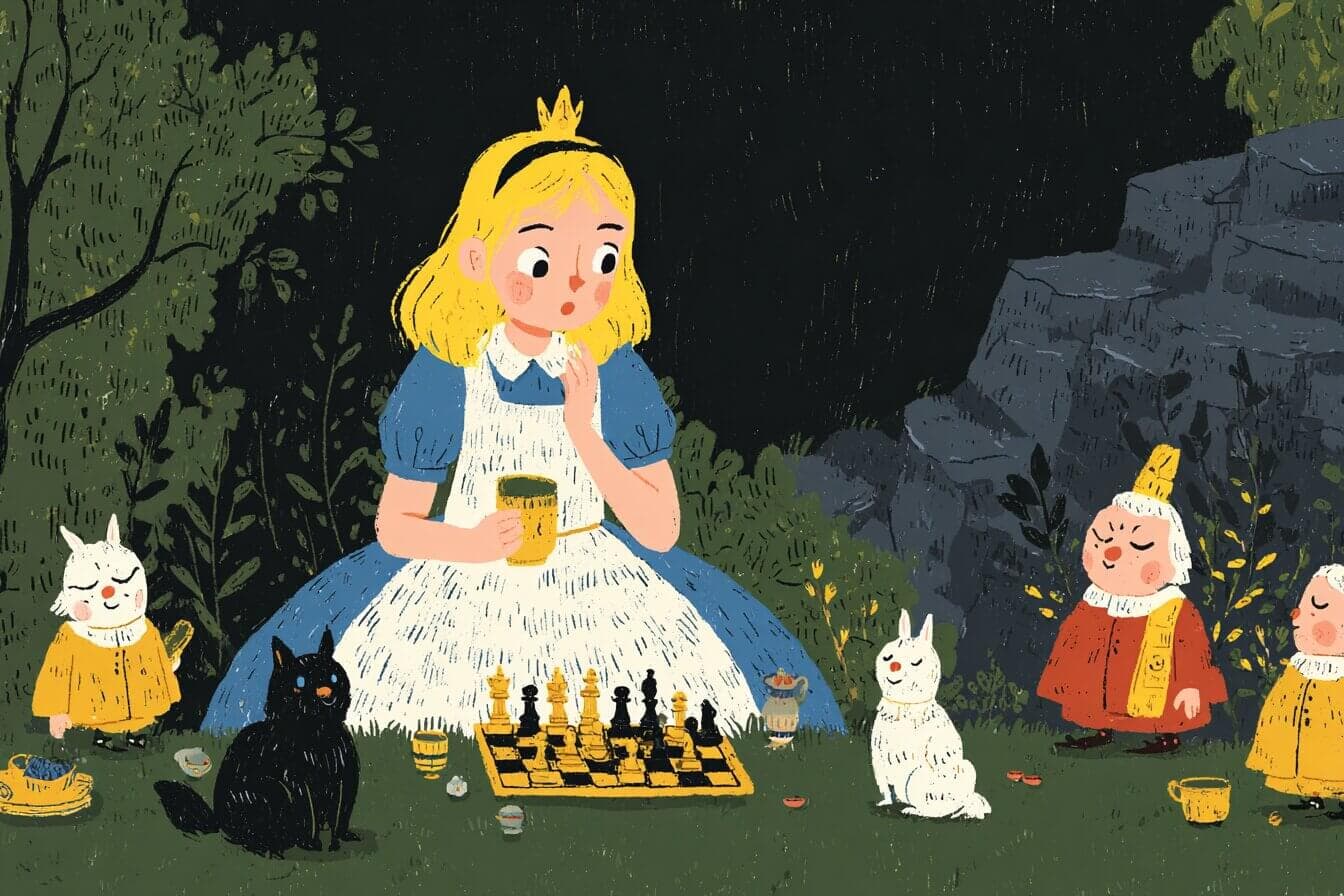
Through The Looking Glass Bedtime Story
Step into a calm, magical short through the looking glass bedtime story and drift toward sleep with gentle wonder. Enjoy a soothing retelling that feels cozy from start to finish.