
Ali Baba And The Forty Thieves Bedtime Story
By

Dennis Wang, Bedtime Story Expert
7 min 32 sec
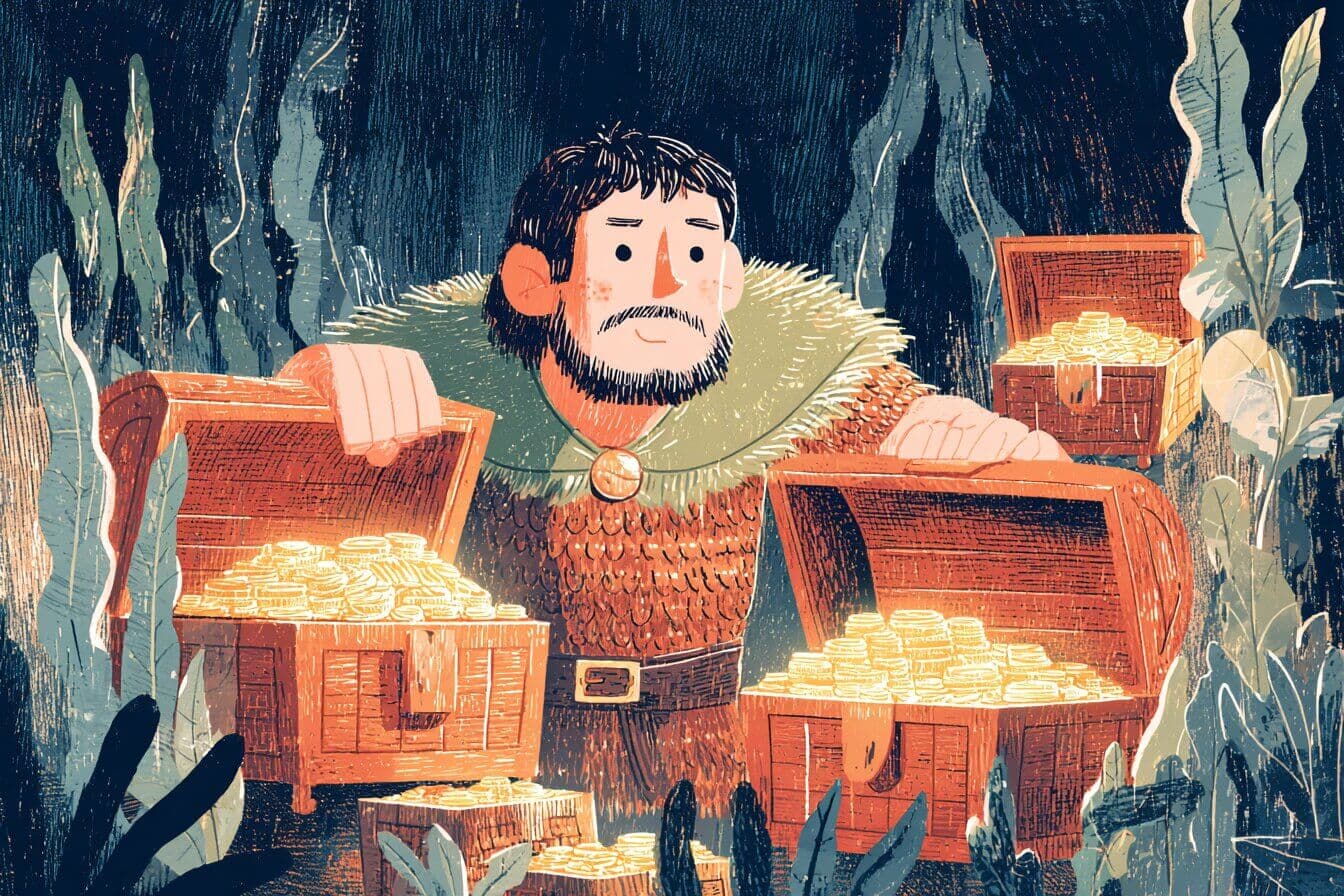
There's something about old folktales with secret passwords and hidden caves that makes kids pull the blanket a little higher and lean in close. This retelling follows Elias, a quiet woodcutter who stumbles on a thieves' cave and has to outwit forty dangerous men using nothing but bees, honey, and the advice of a clever neighbor. It's exactly the kind of Ali Baba and the Forty Thieves bedtime story that trades sword fights for gentle strategy and ends with everyone safe under the stars. If you'd like to reshape the characters and setting into something your child loves even more, you can make your own version with Sleepytale.
Why Ali Baba Stories Work So Well at Bedtime
The Ali Baba tale has lasted centuries for a reason: it hands a small, ordinary person an enormous secret and lets them figure out what to do with it. For kids lying in bed, that setup mirrors the feeling of holding a thought too big for the day, something exciting or slightly scary that the quiet of nighttime finally makes room to process. A bedtime story about Ali Baba gives children a character who stays calm when the world gets loud, and that steady presence is deeply reassuring right before sleep.
There's also the sensory richness built into the story's bones. Caves that open with whispered words, treasure glinting in torchlight, the hum of bees in a moonlit garden. These images invite kids to close their eyes and picture the scene rather than fight to stay awake. The whole arc moves from discovery to worry to safety, which mirrors the natural rhythm of settling down for the night.
The Woodcutter and the Whispering Cave 7 min 32 sec
7 min 32 sec
In the gentle folds of the Emerald Valley lived Elias, a woodcutter who sang while he worked. Not well, mind you. His wife said he sounded like a gate hinge that had learned to carry a tune. But the trees didn't complain, and neither did the birds, so every dawn he swung his axe against the kindly trunks, taking only what the forest could spare, and every dusk he trudged home to a cottage glowing with lamplight and the thick, salty smell of bean stew.
One crisp afternoon in autumn, while gathering windfall branches near a thicket of myrtle, Elias heard voices.
He crouched behind a boulder furred with moss and held his breath. Forty men in dark cloaks clustered around a cliffside, their boots shuffling in the dry leaves. Their captain, tall with a silver beard that looked like it had been ironed, pressed his palm flat against the rock and spoke three quiet words: "Open Sesame."
The cliff split with a grinding sigh.
Beyond the gap, torchlight flickered on stone walls. The thieves marched inside, their arms dragging with bulging sacks, and the rock slid shut behind them with a sound like a yawn.
Elias's heart beat so hard he could feel it in his teeth. He waited until the last echo faded, then crept forward and repeated the phrase. The stone obeyed. Inside, a cavern glittered, mountains of coins, goblets crusted with jewels, silk carpets rolled into columns, carved chests with their lids cracked open so rubies spilled out like berries. He stuffed a single small pouch with enough gold to buy warm blankets and sturdy shoes for his family, then backed out, sealed the rock, and hurried home. He told no one.
Night after night, he tossed on his straw mattress.
He carved wooden toys for the children, a horse with one ear longer than the other, a duck whose beak kept snapping off. He sang lullabies to hush his own mind. But the cave's glow haunted his dreams, and some mornings he woke with gold-colored light behind his eyelids even though the sun hadn't risen.
A week later, while stacking split cedar, he heard hoofbeats on the valley path.
The forty thieves had discovered that someone had been inside their hideout. They galloped through farms, questioned every villager, turned over market stalls and peered into rain barrels. Eventually they reached Elias's cottage. The captain dismounted, sniffed the air like a wolf testing the wind, and asked, "Humble woodcutter, have you seen a man carrying a golden pouch?"
Elias steadied his voice. "Good sir, I see only woodchips and autumn leaves."
The thieves searched his shed, found nothing but sawdust and a half-finished duck toy, and rode away. But the captain glanced back with eyes that didn't blink nearly enough.
That evening, Elias realized the danger had merely paused, the way a cat pauses before it pounces. He kissed his wife and children, tucked the pouch beneath the hearthstone where the warmth would hide it, and walked to the village square to find clever old Alma, the beekeeper.
She listened without interrupting, humming the way her hives hummed, low and constant.
Then she handed him a clay jar. "Fill this with honey. Follow my instructions exactly, and do not improvise."
Elias obeyed. He trudged under moonlight back toward the cave, the jar heavy in his arms, the honey sloshing with a thick, golden sound. Halfway there, he hid the jar beneath a stump where beetles had carved tiny highways through the bark, then approached the cliff.
The thieves waited in a semicircle, blades drawn. Silver Beard stepped forward. "We know you carry our gold, woodcutter. Surrender or perish."
Elias lifted his empty hands. "Kind sirs, I took nothing. But let me fetch my axe from that stump so you can search me as you wish."
Two thieves escorted him. When they reached the stump, Elias knelt, pretending to tug at an embedded axe handle while his fingers found the cork.
Bees burst out like a fist of smoke.
The thieves shrieked, flailing, tripping over their own cloaks. One man ran straight into a thorn bush. Another swatted at his own hat, which only made things worse. Elias sprinted into the forest, following Alma's directions until he found a hidden grove where she stood waiting beside a second jar.
She smiled. "Bees always come home when the moon is high."
She whistled, one clear note, and the swarm drifted back and settled into the jar like they were tired of the whole adventure. The valley went silent.
But the thieves regrouped. Angrier than hornets, which was saying something given the evening they'd had, they vowed to return the next night and burn Elias's cottage to cinders.
A shepherd boy who had been lying on a hillside counting shooting stars overheard their plotting and ran to warn Elias. Elias packed his family's belongings, only the things that mattered: the stew pot, the blankets, the duck toy (beak glued on crooked), and led his wife and children through secret deer paths to Alma's stone house. Bees droned in the garden, and the sound was oddly comforting, like a lullaby sung in a language nobody needed to translate.
The thieves arrived at dawn, torches blazing, and found nothing but cold cookfire ashes and one wooden horse with mismatched ears. They ransacked the cottage, kicked the walls, then galloped toward the cave to guard their hoard.
Elias, hidden among the beehives, watched them go.
He borrowed Alma's donkey, a stubborn creature named Fig who only walked in a straight line if you pretended you didn't want him to. Together they loaded two dozen clay hives into a cart and drove them toward the cave under cover of dusk.
At the entrance he set the hives in a wide arc, smeared their openings with honey, and climbed onto a ledge above. The stone was cold under his palms. A cricket chirped somewhere behind him, completely unbothered.
When the thieves emerged to hunt for Elias, moonlight caught the edges of their drawn scimitars.
He waited.
They stepped among the hives. Elias dropped a pebble. The nearest hive toppled with a hollow thud, and bees poured out like living smoke, humming a note so low you could feel it in your ribs. More hives tipped. The humming became a roar.
The thieves dropped their torches, rolled on the ground, stumbled over each other, and fled shrieking into the night. They did not stop. They did not look back. They did not return.
The cave door stood open, echoing with their fading curses until even those dissolved into silence.
Elias climbed down. He spoke the words, stepped inside, and looked at the treasure. It still glittered, but now it just looked cold, like jewelry left in a drawer too long. He filled a small wheelbarrow with coins, enough to rebuild the village school and buy winter grain for every family.
The rest he left. He rolled a boulder across the entrance and sealed it shut.
At sunrise, villagers followed a trail of scattered coins back to Elias's cottage, where they found him splitting wood and humming that gate-hinge tune of his. He told them about the thieves, the bees, and the cave, then poured the coins into the communal granary fund. Children danced. Mothers pressed their hands to their mouths. Fathers thumped Elias's back until his shoulders ached and he had to sit down on a stump.
The village prospered. Elias kept cutting only what the forest could spare, but now his songs carried deeper notes, ones he couldn't quite name.
Each evening, when lamplight glowed yellow in the windows, he sat beside his wife while the children counted fireflies and invented constellations that didn't exist on any map. Sometimes, right on the edge of sleep, Elias would hear distant buzzing and smile, knowing the valley was safe.
He kept the axe sharp, the bees content, and the secret words tucked silently in his heart, ready if danger ever rode that way again. The cliffside cave lay buried beneath thorns and forgetting, but its story hummed onward like a hive in the garden, quiet and steady and warm.
The valley grew green. The children grew tall. And Elias's songs drifted through the trees long after the stars blinked awake.
The Quiet Lessons in This Ali Baba Bedtime Story
This story is quietly loaded with ideas kids absorb without realizing it. When Elias takes only one small pouch from the cave instead of filling a cart, children see restraint rewarded, the idea that wanting less can keep you safer than wanting more. When he walks to Alma's door and asks for help instead of trying to face forty armed men alone, kids pick up on the courage it takes to admit you can't do everything yourself. And the moment Elias pours the coins into the village fund rather than keeping them hits differently at bedtime, when the world feels small and generous, a reminder that sharing doesn't mean losing. These threads land gently right before sleep, planting the notion that tomorrow is a safe place to be honest, ask for help, and think of others.
Tips for Reading This Story
Give Elias a low, easygoing voice and let Silver Beard sound clipped and suspicious, almost whispering when he says "Open Sesame." When the bees burst from the jar, speed up your pace and raise your pitch just slightly, then drop back to a slow murmur once the swarm settles. At the very end, when Elias hears distant buzzing on the edge of sleep, let your own voice get softer and slower with each word so the sound of the story fades the same way his valley does.
Frequently Asked Questions
What age is this story best for? It works well for children ages 4 to 8. Younger listeners love the repeated "Open Sesame" moment and the buzzing bees, while older kids appreciate Elias's clever planning and his decision to share the treasure. The tension with the thieves is present but never graphic, so it stays exciting without becoming scary at bedtime.
Is this story available as audio? Yes. Press play at the top of the story to listen. The audio version brings the bee scenes to life, especially the moment the first hive topples and the low hum builds into a roar. Elias's calm voice and the repeated cave phrase also have a rhythmic quality that works beautifully as a listen-along while your child settles in.
Why does Elias use bees instead of fighting the thieves? In this retelling, Elias is a woodcutter, not a warrior. He doesn't have weapons or training, so he leans on Alma's knowledge of bees and his own patience. It's a way of showing children that cleverness and the right help can solve problems that brute strength cannot, and it keeps the story's resolution gentle enough for bedtime.
Create Your Own Version
Sleepytale lets you reshape this classic folktale into something built just for your child. Swap the Emerald Valley for a desert oasis or a snowy mountain pass, trade Alma's bees for fireflies or friendly foxes, or rename Elias after your little one's favorite person. In a few moments you'll have a cozy, personalized retelling you can read or listen to any night, with the same safe feeling at the finish.
Looking for more bedtime story classics?

Once Upon A Time Stories
What happens when June opens a golden book with no title? One of the sweetest short once upon a time stories about a forest, a hedgehog, and a blank page.

Fairy Tales Written By Hans Christian Andersen
Anders discovers short fairy tales written by Hans Christian Andersen as his grandmother reads from a soft brown book by lamplight.

Bluebeard Fairy Tale
In this short bluebeard fairy tale, the forbidden room holds not horror but a music box and memories of the people Lord Corvus loved most.

Red Shoes Fairy Tale
What happens when Karen's magical red shoes refuse to stop dancing? Discover this short red shoes fairy tale tonight.

Twinkle Twinkle Little Star Bedtime Story
Lily watches a kind star and floats up to help deliver dreams in this short twinkle twinkle little star bedtime story. A warm, quiet tale for sleepy nights.
Through The Looking Glass Bedtime Story
Step into a calm, magical short through the looking glass bedtime story and drift toward sleep with gentle wonder. Enjoy a soothing retelling that feels cozy from start to finish.