
A Little Princess Bedtime Story
By

Dennis Wang, Bedtime Story Expert
7 min 59 sec

There is something about a chilly attic and a stubborn, brave girl that makes children pull the covers a little closer and listen harder. This story follows Rosamund, a once-wealthy student who loses everything and discovers that kindness and imagination are worth more than velvet coats. It is our favorite kind of a little princess bedtime story, one that ends with a single star and a quiet sense of safety. If your child would love a version with their own name or a different setting, you can create one with Sleepytale.
Why Little Princess Stories Work So Well at Bedtime
Children are drawn to princess characters who earn their crowns through goodness rather than birthright, especially at the end of a long day. A story about a little princess facing hardship gives kids a safe way to explore big feelings like loneliness, loss, and resilience while tucked under warm blankets. The contrast between a cold attic and inner warmth mirrors the way bedtime itself works: the world outside goes quiet, and the child's imagination fills the stillness.
These stories also remind kids that dignity is something you carry with you, not something that depends on circumstances. That idea settles into a child's mind like a lullaby. When the last page turns and the room goes dark, they fall asleep believing they are brave enough for whatever tomorrow brings.
The Attic Princess 7 min 59 sec
7 min 59 sec
In a tall brick building on the edge of London, twelve-year-old Rosamund lived like a storybook heroine.
Her father, a wealthy merchant, had sent her to Miss Minchin's Select Seminary for Young Ladies, where she wore velvet coats, learned French verbs, and slept in a room with a crackling fireplace.
Every night she told herself tales of brave queens and kindly dragons. Every morning she woke to silken sheets and a maid who brushed her dark curls exactly one hundred strokes, never ninety-nine.
Yet one gray November afternoon, the headmistress called her out of arithmetic class.
Miss Minchin did not sit her down. She stood in the doorway and spoke words that cracked Rosamund's world like thin ice.
Her father had died of fever in India. His fortune, sunk into a diamond mine, was gone. Rosamund was penniless.
Before sunset she was climbing the narrow stairs past the kitchens, past the servants' quarters, up to the drafty attic where the ceiling sloped so low she could press her palm flat against it. The girl who had been the school's pride carried her trunk up those steps herself, because no one offered to help.
Still, when she wrapped herself in the thin blanket that first night, she pretended it was a royal cloak lined with ermine.
She swept the steps while whispering multiplication tables in pretend Arabic. She fed the stoves while picturing herself as a scientist tending dragons. She scrubbed pots while composing thank-you letters in her head to an imaginary duchess who admired her perseverance.
The other servants mocked her for talking to the soot-blackened doll she had rescued from the rubbish pile.
Rosamund merely curtsied to the little figure and named her Lady Seraphina, companion to a princess in hiding.
On the coldest evening of December, her fingers too numb to hold the scrub brush, she discovered a broken skylight above her mattress. Through the cracked glass she could see one star. Just one.
She curtsied to it. She promised it she would remain kind.
The star said nothing, obviously, but its light held steady, and that felt like enough.
The next morning she found half a bun left on the corner of the bake table, still warm from the oven. She could have eaten the whole thing. Her stomach begged her to. Instead, she tore it in two and set one piece on the floor for a mouse she called Duke Whiskers, declaring that even monarchs must care for their smallest subjects.
Duke Whiskers twitched his nose, grabbed the bread in both paws, and disappeared behind the skirting board so fast that Rosamund laughed out loud for the first time in weeks. The sound startled her.
Word spread among the mice and sparrows that the attic girl offered crumbs and stories. Every dawn, creatures gathered on the slate roof for her gentle voice describing palaces made of clouds and rivers that ran with warm milk.
One January afternoon, while she hauled coal through the courtyard, a lame beggar child watched from the gate. The child's eyes were bright with hunger, the kind of brightness that is not really brightness at all.
Rosamund slipped her own crust of bread into the child's ragged pocket and whispered, "Remember, you are secretly royalty in disguise."
The child grinned as if crowned.
Rosamund walked back to the coal pile, and something warm bloomed inside her chest like roses pushing through snow.
February brought cruel winds and crueler words from Miss Minchin, who took special pleasure in reminding Rosamund that princesses did not exist in attics.
Rosamund answered only by humming lullabies her father once sang, the ones where the melody dipped low on every third note. She believed music could weave invisible armor around a heart, and maybe she was right, because Miss Minchin always turned away first.
She mended the other servants' aprons with neat stitches, turning frayed edges into tiny embroidered crowns.
Soon every maid in the basement wore secret royalty beneath patched cotton, and not one of them mocked her anymore.
March rain leaked through the attic roof, soaking her mattress. She dragged it directly beneath the skylight and let the drops land on her face.
"Silver patience," she told Lady Seraphina. "That is what rain is."
While the water drummed, she told the doll tales of desert caravans and jungle parrots with feathers the color of limes, until the painted cheeks of Lady Seraphina seemed flushed with life.
On the first April dawn, the skylight swung open.
A familiar face peered down. The beggar child, now wearing a clean but simple dress, grinned that same grin from the courtyard.
Behind the child stood a gentleman with kind eyes and a leather portfolio tucked under his arm. He was the brother of Rosamund's father, an uncle who had spent months searching the city for her.
He had traced her through the bread she shared. The beggar child's family now worked in his kitchens, and they spoke every evening of the attic girl who fed birds and hope.
Within an hour, Miss Minchin was bowing and stammering while Rosamund descended the grand staircase in a new blue coat, carrying Lady Seraphina like a scepter of endurance.
The uncle explained that the diamond mine had struck riches after all. Monsoon floods had delayed the news for months. Rosamund's fortune now surpassed even her father's wildest hopes.
She could live in a mansion. She could wear silk. She could order toys shipped to every child in London.
She asked only to keep the attic room.
Years later, she opened a school for orphans in that very attic. She taught every small scholar to bow to stars, speak to dolls, and remember that every girl, boy, and mouse carries a crown inside.
On graduation nights she led them to the roof, where city smog parted just enough to reveal one bright star. Together they curtsied, promising the sky they would remain noble.
Rosamund never forgot the chill of poverty. She heated the attic with stories instead of coal, and somehow the warmth traveled down through the chimneys into every room of the old seminary, turning bricks to gold with memory.
Children who learned arithmetic among rafters painted with moons and crowns grew up to be bankers, bakers, and sailors who carried invisible scepters into every port.
Whenever life felt heavy, they closed their eyes, pictured an attic girl sharing bread with a mouse, and straightened their shoulders.
Dignity needs no diamonds.
And the star above the skylight held steady, as it always had, waiting for the next child brave enough to curtsy back.
The Quiet Lessons in This Little Princess Bedtime Story
Rosamund's story weaves together resilience, generosity, and the stubborn power of imagination without ever turning them into a lecture. When she shares her only bread with Duke Whiskers and the beggar child despite her own hunger, children absorb the idea that giving does not require having plenty. When she hums her father's lullabies to drown out Miss Minchin's cruelty, kids see that grief and courage can live side by side. These are exactly the feelings that need a safe landing place before sleep, reassurance that being kind and being strong are the same thing, and that tomorrow is worth facing even after a hard day.
Tips for Reading This Story
Give Miss Minchin a clipped, tight voice and let Rosamund's lines come out softer and steadier by contrast, so your child can hear the difference between coldness and warmth. When Rosamund discovers the single star through the skylight, pause for a beat and look upward yourself; kids almost always follow your gaze and it makes the moment feel real. During Duke Whiskers' quick grab-and-run with the bread, speed up the sentence and then slow right down for Rosamund's surprised laugh.
Frequently Asked Questions
What age is this story best for?
This version works well for children ages 5 through 10. Younger listeners connect with the mice, the star, and Rosamund's doll Lady Seraphina, while older kids appreciate the emotional arc of losing everything and rebuilding through kindness. The vocabulary is rich enough to stretch a first-grader without losing a preschooler who is simply following the adventure.
Is this story available as audio?
Yes. You can press play at the top of the story to hear it read aloud. The audio captures moments like the rain drumming on the attic roof and Rosamund's curtsy to the star especially well, because the pacing lets those quiet scenes breathe. It is a good option for nights when you want to lie beside your child and listen together.
Why does Rosamund keep pretending she is a princess even after losing everything?
For Rosamund, "princess" is not about wealth or titles. It is a promise she makes to herself to stay kind, dignified, and imaginative no matter what happens. Children often use pretend play the same way, turning a cardboard box into a castle or a stuffed animal into a loyal companion. The story shows them that this instinct is something to trust, not outgrow.
Create Your Own Version
Sleepytale lets you reshape this tale into something that feels like it was written just for your child. You could move Rosamund's attic to a lighthouse, swap Lady Seraphina for a stuffed bear, or set the whole adventure in a snowy mountain village instead of London. In just a few taps, you will have a cozy, personalized story ready to read aloud or play on repeat at bedtime.
Looking for more bedtime story classics?

Once Upon A Time Stories
What happens when June opens a golden book with no title? One of the sweetest short once upon a time stories about a forest, a hedgehog, and a blank page.

Fairy Tales Written By Hans Christian Andersen
Anders discovers short fairy tales written by Hans Christian Andersen as his grandmother reads from a soft brown book by lamplight.

Bluebeard Fairy Tale
In this short bluebeard fairy tale, the forbidden room holds not horror but a music box and memories of the people Lord Corvus loved most.

Red Shoes Fairy Tale
What happens when Karen's magical red shoes refuse to stop dancing? Discover this short red shoes fairy tale tonight.

Twinkle Twinkle Little Star Bedtime Story
Lily watches a kind star and floats up to help deliver dreams in this short twinkle twinkle little star bedtime story. A warm, quiet tale for sleepy nights.
Through The Looking Glass Bedtime Story
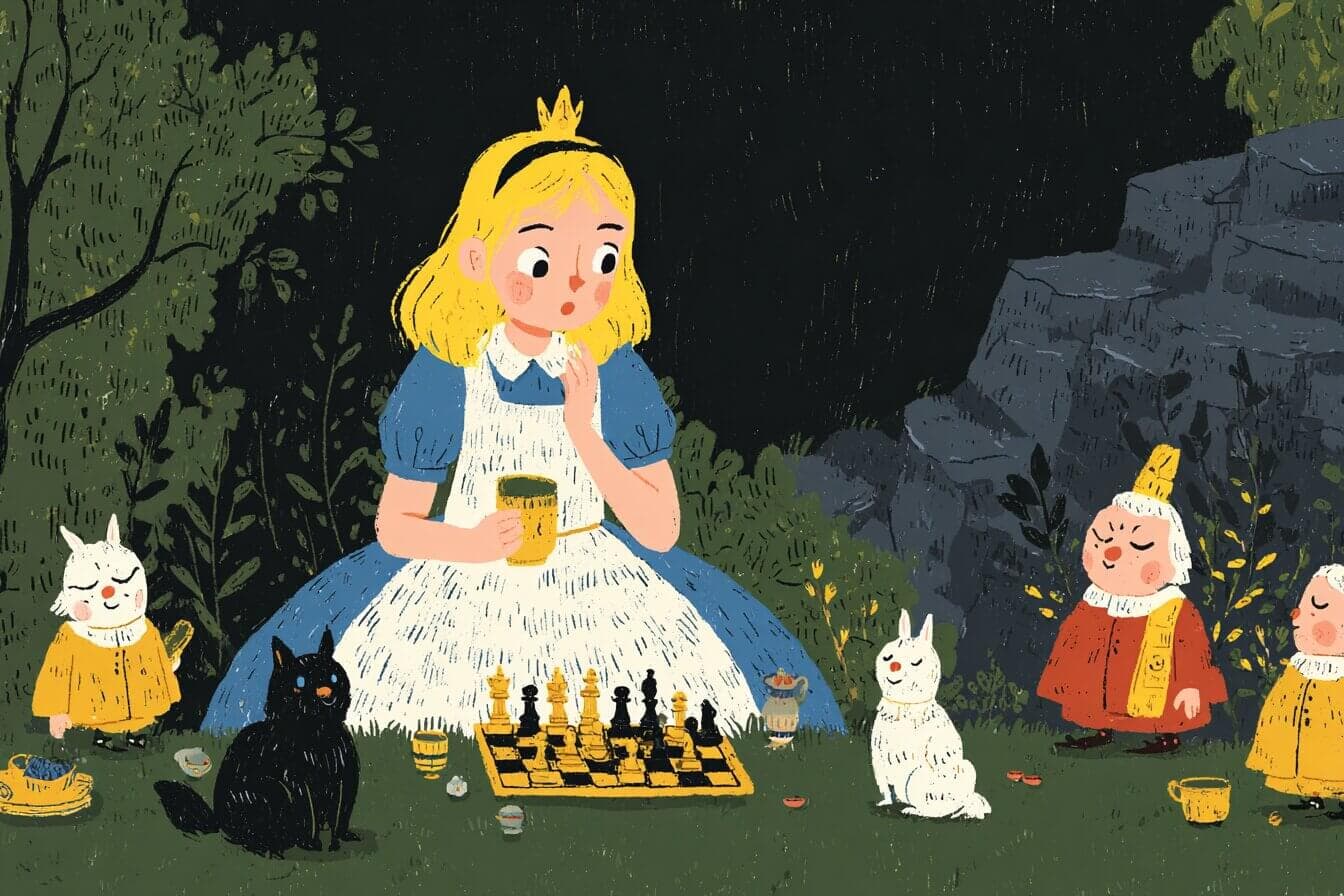
Step into a calm, magical short through the looking glass bedtime story and drift toward sleep with gentle wonder. Enjoy a soothing retelling that feels cozy from start to finish.