
Treasure Bedtime Stories
By

Dennis Wang, Bedtime Story Expert
8 min 28 sec
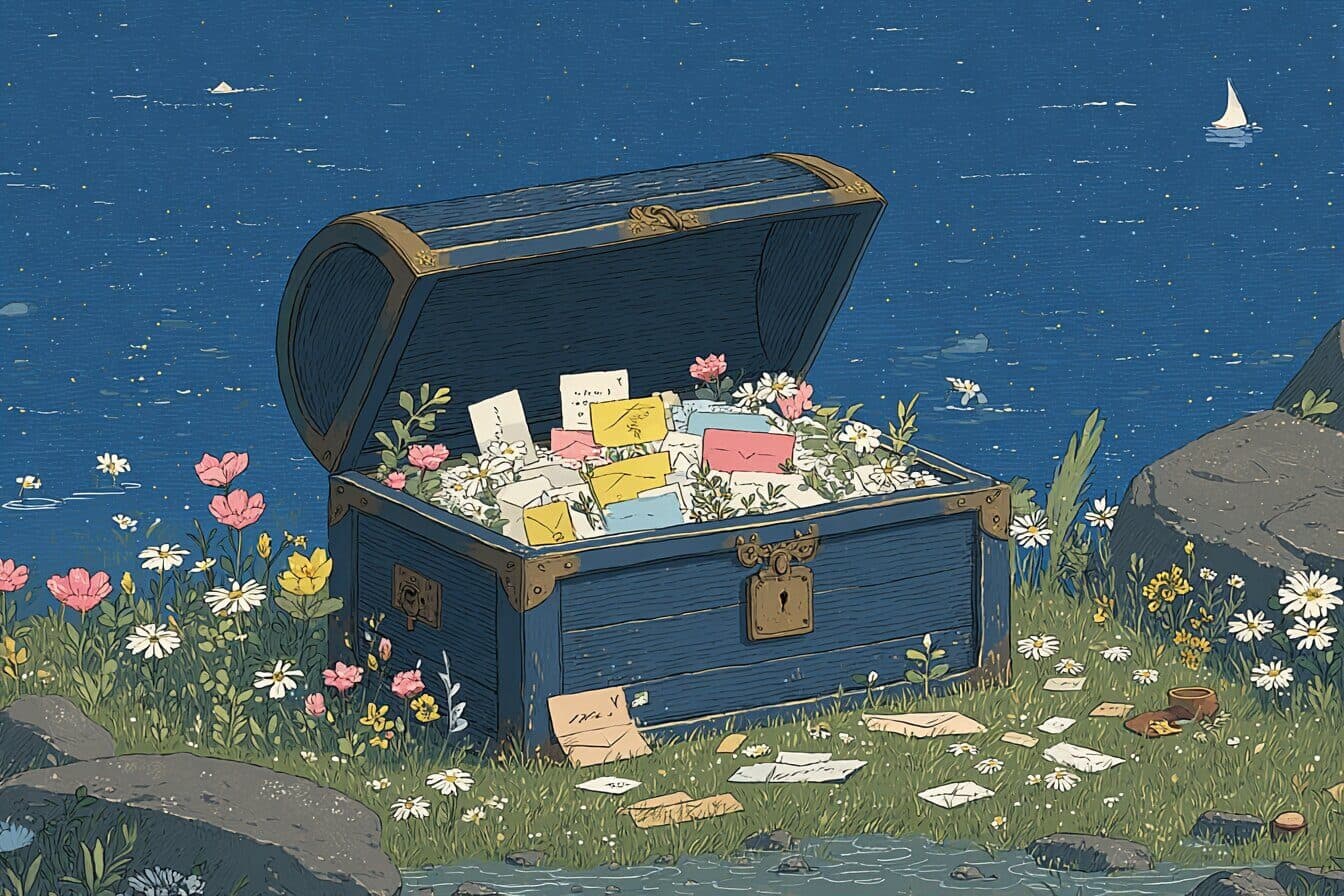
There is something about a buried chest that makes a child's whole body lean forward, even when their eyelids are already heavy. In this story, a girl named Mira follows a warm brass key to a chest hidden in the dunes, only to discover that the real riches inside are handwritten letters full of kindness. It is one of those treasure bedtime stories that trades gold coins for something softer, something that settles into the heart right before sleep. If you want to craft your own version with your child's name and favorite details, try Sleepytale.
Why Treasure Stories Work So Well at Bedtime
A treasure hunt gives a story natural forward motion without any real danger. The child listening knows something wonderful is waiting at the end of the search, and that quiet certainty feels a lot like being tucked in. There is anticipation, but the gentle kind, the kind that slows breathing rather than speeding it up.
Stories about treasure also let kids practice the idea that valuable things are not always loud or shiny. A bedtime story about treasure can reframe the whole day: the small, overlooked moments, a friend's laugh, a warm roll from the bakery, become worth collecting. That shift from "more" to "enough" is exactly the feeling a child needs before closing their eyes.
The Chest of Whispered Hearts 8 min 28 sec
8 min 28 sec
In the hush before sunrise, when the sky still wore its indigo blanket, eight year old Mira tiptoed across the dunes behind Grandmother's sea cottage.
She clutched a brass key that felt warm, the way a mug feels after someone else has been holding it.
Grandmother had whispered, "That key opens the chest that holds no gold, only words that shine brighter."
Mira did not entirely believe her. She half expected coins anyway.
Her bare toes sank into cool sand. Gulls spun overhead. She had waited seven whole nights for the moon to shrink enough to let the stars guide her, and now the dunes smelled of salt and sun dried shells, and each footprint she left behind filled with a tiny pool of dawn light.
Ahead, half buried beneath beach grass, waited an old wooden chest bound by green tinged iron.
Its lid had a single heart shaped knot carved into the wood, worn smooth by years of thumbs pressing it for luck.
Mira knelt. She pressed the key into the lock and heard a soft click, the kind of sound a latch makes when it has been waiting to be opened.
She lifted the lid expecting glitter.
Instead: neat stacks of folded letters tied with faded ribbon the color of blush.
The first envelope felt lighter than a feather.
Written on it in looping ink were the words, "To the future finder of this love."
Mira unfolded the page and read aloud, whispering because nothing else seemed right. "Dear Reader, I am Elara, a lighthouse keeper's daughter. I wrote this in 1899, the year the great storm took my father's boat. My heart was cracked like a clam shell, but writing to strangers who might one day smile helped the cracks fill with light."
Mira pressed the letter against her chest. She did not have a word for the feeling yet, but it was warm.
She read another. "To whoever needs sweetness, I baked honey cakes today and thought of you, though we may never meet. Love travels farther than the eye can see."
Letter after letter unfolded with stories of picnics, lost kittens, first snowfalls, and bedtime songs someone's mother used to hum off key. Some writers painted pictures with words: "Imagine a garden where forget me nots whisper your name." Others offered courage: "If today feels sharp, remember tomorrow is a softer shape."
One tiny envelope held only a pressed violet and a single sentence: "I kept this for you because purple means I thought of you with wonder."
Mira traced the petals. They were papery and almost nothing, but they made her own worries drift off like sand caught in breeze.
She realized these papers were treasure chests inside a treasure chest. Each one held an ember of someone's care, still glowing after all this time.
The sun peeked over the horizon and painted the letters in peach light. Mira tucked them into her satchel, closed the chest, and ran back to the cottage where Grandmother was humming over oatmeal, the spoon tapping the edge of the pot in a rhythm that had no tune but felt like one.
Between spoonfuls of raisins and cinnamon, Mira spread the letters across the kitchen table.
Grandmother's eyes misted.
"Ah, the Heart Post," she said. "Long ago, lovers, parents, and friends who were far apart would write their feelings and hide them for strangers to find, so love could keep traveling even when boats were slow."
"May I deliver them?"
Grandmother nodded and produced an old bicycle basket lined with sea cloth that smelled faintly of lavender and engine oil, a strange combination Mira never forgot.
That afternoon Mira pedaled along the shell road to the tiny seaside library where Mrs. Alder the librarian was dusting jars of sea glass. Mira offered her a letter sealed with wax shaped like a starfish. Mrs. Alder read it to herself, moving her lips: "To the keeper of stories, thank you for every shelf that holds a world."
Her smile wobbled. She pressed a bookmark stitched with library hours into Mira's palm and whispered, "Pass it on."
Next Mira visited the baker, whose sourdough smelled less like campfires and more like the memory of campfires, warm but already fading. She handed him a letter that began, "To the magician of morning bread, your loaves remind me I am part of something rising."
The baker's cheeks went pink. He tucked a warm roll into Mira's pocket. "Give this to someone who needs softness," he said, and then he looked embarrassed for being so sincere, which made Mira like him more.
She rode to the dock where old Captain Wren was mending nets. His letter told him, "Your knots keep more than boats together; they hold memories of every tide." His eyes shone like polished compass brass. He gave Mira a conch whose spiral sounded like distant laughter when she blew into it, though it also sounded a bit like the wind complaining, depending on how you tilted your ear.
By sunset Mira had delivered eleven letters and collected eleven small gifts: a marble painted like planet Earth, a feather from a parrot who sang lullabies, a recipe for cloudberry jam, a candle scented with pine, a button carved from driftwood, a poem about dragonflies, a tiny jar that someone swore held the sound of rain, a paper crane folded from a star chart, a seashell that hummed when held just right, a red ribbon that smelled of peppermint, and a smooth stone etched with the word BRAVE.
She returned home feeling like a lantern filled with something she could not name.
Grandmother brewed cocoa. "What did you learn?"
Mira stirred marshmallows shaped like tiny hearts and thought for a long moment. "Love is the only treasure that grows when you give it away."
That night she placed the gifts in the chest beneath the letters she had yet to deliver, and she dreamed of invisible threads connecting every doorstep she had visited, thin as spider silk and glowing faintly gold.
The next morning she awoke to find the chest lid ajar. Inside sat a single new letter addressed to her, in her own handwriting, though she had not written it.
It said, "Dear Mira, thank you for carrying us. You have added your own light to the chain."
Beneath the signature was a map of the village dotted with tiny hearts. Each heart marked a doorstep where a letter waited to be discovered by someone else. Mira realized the chest was not just old. It was alive, growing new letters the way trees grow rings.
She spent the whole summer delivering messages. Children who feared the dark received letters about brave fireflies. Mothers who missed faraway sons received letters about the wind that carries lullabies across oceans. Elderly gardeners received letters about seeds that sprout memories.
Every time Mira gave a letter, the giver received a spark that made them kinder, and Mira collected new stories to fold into her heart.
On the last day of August, Mira opened the chest and found it empty except for a mirror tucked at the bottom. Written across the glass were the words, "The letters have all gone home to stay, but look here to see the love you gave away."
Mira peered in. She saw reflections of every smile she had sparked: Mrs. Alder reading aloud to toddlers on a wool blanket, the baker teaching shy twins to knead dough with flour on their noses, Captain Wren telling young sailors to help mend a stranger's sail before their own.
The images glowed, then floated up like bubbles and disappeared into the morning.
Grandmother said quietly, "The chest has finished its journey for now, but its work lives on in every kindness you set free."
Mira placed the mirror on her windowsill where sunrise could reach it. She kept the brass key on a ribbon around her neck, a quiet promise that she could unlock love wherever she went.
Years later, when Mira grew tall and the cottage grew new creaks, children still knocked on her door. She would smile, invite them for cocoa, and hand them paper and pens. Together they would write new notes to hide in tree trunks, between library pages, beneath bakery napkins, and inside seashells along the dunes.
And every night, when the moon climbed like a silver cat over the roof, Mira would tap the tiny key against her heart. The click still sounded the same. Somewhere, she knew, someone was unfolding a letter and realizing that the greatest treasure is a kind word still traveling.
The Quiet Lessons in This Treasure Bedtime Story
This story explores generosity, patience, and the surprising idea that giving something away can make you richer. When Mira delivers each letter and watches the baker blush or Captain Wren's eyes shine, children absorb the notion that kindness is not a loss but a multiplication. There is also a thread of courage running through the plot: Mira walks into the dark dunes alone, trusts a key she has never tested, and knocks on doors without knowing what will happen. These are exactly the kinds of reassurances a child needs before sleep, the feeling that small brave acts are rewarded, that the world is full of good people, and that tomorrow is, as one letter puts it, "a softer shape."
Tips for Reading This Story
Give Grandmother a low, unhurried voice that stretches vowels, and let Mrs. Alder sound slightly breathless when her smile wobbles after reading the starfish sealed letter. When Mira opens the chest and finds letters instead of glitter, pause for a beat and let your child react to the surprise before you continue. The list of eleven gifts near the end works beautifully if you slow down and give each item its own little moment, especially "a tiny jar that someone swore held the sound of rain," which is a perfect place to whisper.
Frequently Asked Questions
What age is this story best for?
It works best for children ages 4 through 9. Younger listeners will love the sensory details like cool sand between Mira's toes and marshmallows shaped like hearts, while older kids will connect with the idea of letters traveling through time and the mystery of the chest producing new messages on its own.
Is this story available as audio?
Yes. You can press play at the top of the story to listen. The audio version brings out the rhythm of Mira's bicycle deliveries and makes each letter reading feel like a small, personal reveal. Captain Wren's conch moment and the soft click of the brass key are especially satisfying to hear aloud.
Why does the chest contain letters instead of gold?
The story uses letters to show that connection and kindness carry more lasting value than material riches. When Mira reads Elara's note from 1899 or the one about honey cakes baked for a stranger, children see that words can travel across years and still make someone feel cared for, which is a comforting thought to carry into sleep.
Create Your Own Version
Sleepytale lets you build a bedtime adventure around hidden treasure using your own child's name, favorite setting, and the details that make them feel safe. Swap the seaside dunes for a forest clearing, trade the brass key for a glowing acorn, or give Mira a loyal dog who sniffs out each letter. In a few moments you will have a cozy, personalized story ready to read or play whenever the lights go down.
Looking for more kid bedtime stories?
Bedtime Poems For Kids
Discover short bedtime poems for kids through a story where a boy says goodnight to kettles, slippers, stars, and a goldfish named Planet.
Scary Story Ideas For Kids
Looking for short scary story ideas for kids that feel cozy, not overwhelming? Meet Sir Boop, a bow tie wearing ghost who judges spooky slips from an Idea Jar.
Interactive Children's Stories
Discover short interactive children's stories where a girl named Wren makes choices guided by a paper fox bookmark called Flip.
Ghost Stories For Kids
The scariest thing about Puddle the ghost is his giggle, not his boo, in one of the sweetest short ghost stories for kids.
Adventure Stories For Kids
A folded map hidden inside a library book sends two friends a treasure hunt in one of our favorite short adventure stories for kids.
Native American Stories For Kids
Discover short native american stories for kids through a fireside tale of geese, gratitude, and a grandfather's gentle wisdom.