
Thanksgiving Story For Preschoolers
By

Dennis Wang, Bedtime Story Expert
5 min 28 sec
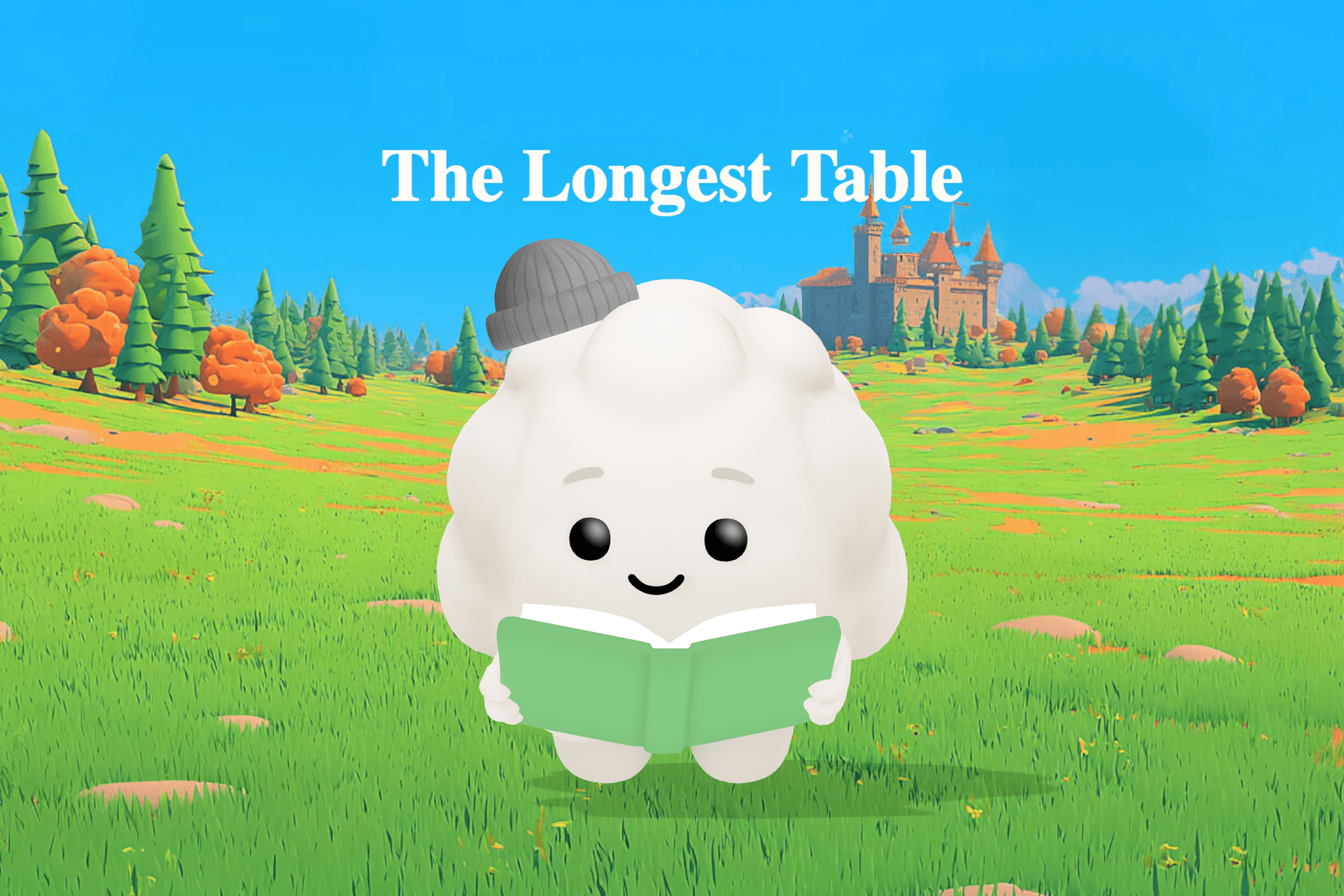
There's something deeply comforting about the clink of shared plates and the warmth of a crowded table, especially when little eyes are getting heavy. In The Longest Table, a girl named Mila arrives at a harvest festival with six ears of corn and fills an empty stretch of table alongside a boy named Tomas, proving that food and kindness need no common language. It's the kind of short thanksgiving story for preschoolers that wraps gratitude in something your child can feel, not just hear. If you love this one, try creating your own version with Sleepytale.
Why Thanksgiving For Preschoolers Stories Work So Well at Bedtime
Thanksgiving is built around gathering, and for young children, that feeling of everyone being together in one place mirrors the safety they crave at bedtime. The colors of harvest foods, the sound of laughter around a table, the simple rhythm of passing dishes; these sensory details slow a child's busy mind and invite stillness. A thanksgiving story for preschoolers to read at night taps into that warmth naturally, offering a world where belonging is as easy as placing a bowl beside someone else's. What makes this theme especially powerful is its simplicity. Preschoolers don't need complicated plots. They need to feel held. A story about people sharing food under a fading sky does exactly that. It tells a child: the world has room for you, and there will always be a plate waiting.
The Longest Table 5 min 28 sec
5 min 28 sec
Mila pressed her nose to the bus window.
Yellow hills rolled past, then a square of trees.
Somewhere behind them, her grandmother was waving from a porch that now belonged to strangers.
"Almost there," her mother said, though Mila knew the words were mostly for herself.
The bus hissed, stopped, and opened its doors to a town that smelled like dust and lilacs.
They had come for the harvest festival.
Mama said people arrived from three counties, bringing whatever their gardens had managed that year.
Mila’s backpack held six ears of corn, each kernel like a tiny sun.
She had wrapped them in a tea towel that still smelled of home.
The park looked bigger than the pictures.
Long tables formed a crooked spine across the grass.
At one end, children chased each other between benches.
At the other, three women arranged jars of something red.
Mila noticed the gap first: a whole section of table with no food at all, only paper plates waiting.
Mama nudged her forward.
"Find us a spot, bean."
Mila walked.
The corn felt heavier with every step.
She passed bowls of beans, baskets of peaches, a platter of tomatoes so ripe they seemed to breathe.
She reached the empty stretch and stopped.
A boy stood there already, arms full of something wrapped in foil.
He was about her age, maybe taller, with hair the color of creek mud.
He spoke.
The sounds lifted and dipped like birds she didn’t recognize.
Mila shook her head.
"I don’t understand."
The boy balanced the foil bundle on one arm and touched his chest.
"Tomas," he said.
"Mila."
He unfolded a corner of foil.
Steam escaped, carrying the smell of roasted meat and herbs.
Turkey.
Mila’s stomach answered with a small, embarrassing sound.
She blushed.
Tomas grinned and pointed to her backpack.
She unwrapped one ear.
The kernels glowed against the cloth.
Tomas’s eyes widened.
He set the turkey down, took the corn, and placed it on the paper plate closest to him.
Then he lifted the foil and revealed a golden brown drumstick.
He offered it to her like a prize.
Behind them, more people arrived, each carrying something different.
A woman with silver earrings brought squash shaped like flying saucers.
A man in a faded cap balanced a tray of purple berries that left stains on his fingers.
They spoke in rapid syllables that Mila’s ears couldn’t catch.
They looked at the empty table, then at Mila and Tomas, then at each other.
Tomas said something musical.
The woman laughed.
The man shrugged and set his berries beside the corn.
Others followed.
Plates clinked.
A baby crawled under the table and grabbed a fistful of grass.
Mila found herself smiling so hard her cheeks hurt.
She helped arrange the food.
Tomas pointed, she placed.
When a bowl of soup nearly tipped, they both lunged, bumping heads.
The soup sloshed but stayed.
They rubbed their foreheads and laughed without words.
Across the table, an elderly man unwrapped flatbread that smelled of smoke.
He tore a piece, dipped it in bright green sauce, and held it out to Mila.
She took it, bit, and tasted fire and lemon and something earthy she couldn’t name.
Tears sprang to her eyes.
Not from pain.
From the surprise of being fed by a stranger who didn’t need to know her story.
Tomas’s mother appeared, carrying a dish of orange pudding.
She spoke to Tomas, who translated with his hands: scooping, stirring, offering.
Mila understood.
She fetched spoons from a nearby basket.
Together they carved the pudding into squares that wobbled like sunshine jelly.
The sun slid lower.
Long shadows stretched across the grass.
Children began to drift toward a wooden platform where a fiddle waited.
Mila’s mama found her, arms full of watermelon slices.
She raised an eyebrow at the feast now covering the once empty stretch.
Mila shrugged, a small proud lift of shoulders.
Tomas tapped her arm.
He held two paper boats filled with mixed food: corn beside turkey, berries tucked beside pudding.
He nodded toward the edge of the park where lights were beginning to flicker on.
They walked, settling under a tree whose leaves whispered secrets.
They ate in silence, trading bites.
Mila discovered she liked turkey when it touched corn.
Tomas discovered he liked corn when it carried butter from the turkey.
They licked their fingers.
They watched the fiddle player draw a bow across strings.
Notes scattered like startled sparrows.
When the sky turned the color of grape juice, Mila’s mama called.
Time to go.
Mila stood, brushing crumbs from her dress.
Tomas handed her a piece of foil folded into a tiny bird.
She tucked it in her pocket.
She gave him the tea towel.
He pressed it to his face, breathing in the last scent of her old kitchen.
They didn’t exchange promises.
They didn’t need to.
The table would happen again next year.
The food would change.
The languages would still twist like vines.
And they would both arrive carrying something new.
On the bus, Mila leaned against the window.
The foil bird crinkled softly in her fist.
She thought of the empty table, now full.
She thought of hands reaching across gaps.
She thought of turkey and corn and the space between words where understanding grows.
Mama hummed beside her, a tune without words.
Outside, the moon followed them home, a clean plate waiting to be filled.
The Quiet Lessons in This Thanksgiving For Preschoolers Bedtime Story
This story gently explores generosity, connection across difference, and the courage of stepping into unfamiliar places. When Mila unwraps her corn and Tomas offers his golden turkey drumstick, children see that sharing what you have, even something small, can transform an empty table into a feast. The moment Mila tastes the elderly man's flatbread and tears spring to her eyes captures the quiet power of being welcomed by someone who doesn't need to know your story. These lessons settle especially well at bedtime, when a child's heart is open and the world feels close.
Tips for Reading This Story
Give Tomas a warm, gentle tone when he touches his chest and says his name, and slow your pace during the scene where he and Mila both lunge for the tipping soup bowl; let the head bump and the wordless laughter land before you move on. When the elderly man offers Mila the flatbread dipped in bright green sauce, whisper the words “fire and lemon“ to match her surprise. At the very end, as Mila holds the foil bird on the bus and Mama hums, let your voice grow softer and softer until it nearly disappears.
Frequently Asked Questions
What age is this story best for?
This story works best for children ages 2 to 5. The gentle pacing, vivid food descriptions, and the simple friendship between Mila and Tomas make it easy for even the youngest listeners to follow. Older preschoolers will especially enjoy the moment when the two children bump heads reaching for the soup bowl and laugh together without words.
Is this story available as audio?
Yes, just press play at the top of the page to hear the full story read aloud. The audio version brings lovely details to life, from the hiss of the bus doors to the steam rising off Tomas's turkey and the fiddle notes scattering like startled sparrows. It's a wonderful way to let your child close their eyes and drift right into the harvest festival.
Why do Mila and Tomas exchange gifts at the end of the story?
Tomas folds a tiny bird from a scrap of foil and gives it to Mila, while she offers him the tea towel that still carries the scent of her old kitchen. These simple exchanges show that meaningful gifts don't need to be expensive; they just need to hold a piece of who you are. It's a quiet, beautiful moment that helps children understand how small tokens can carry very big feelings.
Create Your Own Version
Sleepytale turns your child's imagination into a personalized bedtime story in moments. You can swap the harvest festival for a neighborhood potluck, change the corn to homemade cookies, or let your child be the one who fills the empty table. In just a few taps, you'll have a cozy, calming tale that feels like it was written for your family alone.
Looking for more bedtime stories for kids by age?
Scary Stories For Kindergarteners
Are you looking for short scary stories for kindergarteners? Wisp is a tiny trembling ghost who learns to name the shadows a windowsill.
Audiobooks For Kindergarteners
A tugboat named Biscuit navigates fog by following buoy bells, making short audiobooks for kindergarteners feel like a lullaby the water.

Short Newborn Bedtime Stories
Are you searching for short newborn bedtime stories where the moon watches over a sleeping baby all night?

Baby Bedtime Stories
Enjoy a cozy night with short baby bedtime stories like The Waiting Hug, featuring a stuffed rabbit's patient wait for one perfect embrace.

Short Stories For 8th Graders
Maya spent three years saying hello to every face in her hallway, and one quiet boy replied with dragons. Discover short stories for 8th graders here.
Kindergarten Stories
A lost red crayon waits under a bookshelf until a boy named Mateo draws a smiling sun in one of the sweetest short kindergarten stories for bedtime.