
Tell Me a Bedtime Story
By

Dennis Wang, Bedtime Story Expert
9 min 49 sec
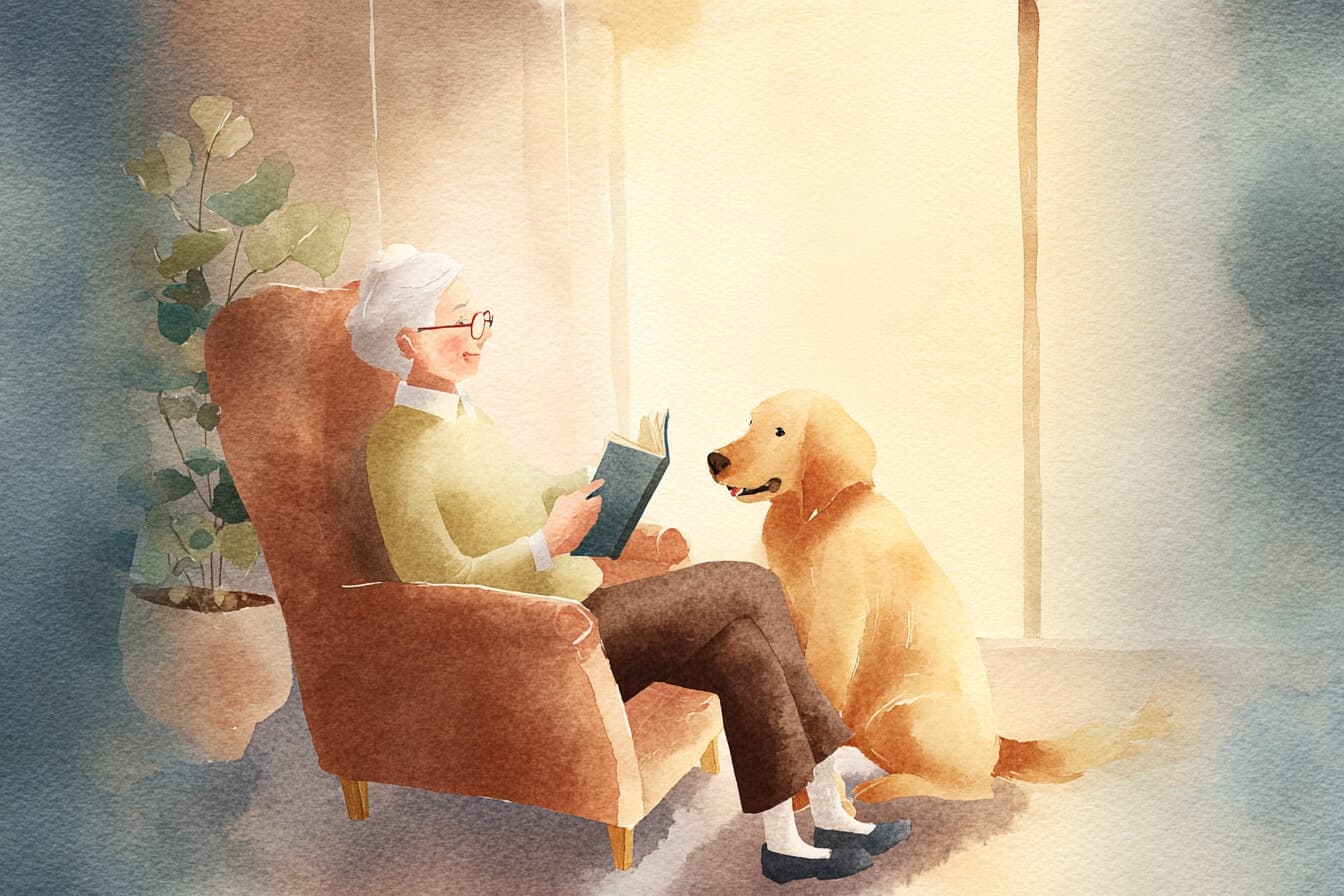
There is something about the hush right before sleep that makes words feel bigger, softer, more real. A child tucked under the covers, eyes half closed, asking for one more story before the lamp goes out. In this gentle tale, a golden retriever named Peanut collects a single word each day from his grandmother's reading chair, until a silver glow at midnight turns all those quiet words into a voice. If your little one loves to say "tell me a bedtime story," you can craft a fresh one with custom characters and cozy pacing inside Sleepytale.
Why Bedtime Stories Work So Well at Bedtime
When a child asks you to tell them a story before sleep, they are really asking for closeness. The rhythm of a voice reading aloud mimics a heartbeat, something steady they can follow as the day's noise fades away. Stories that move slowly and return to familiar patterns, like Peanut learning one word each afternoon, give a child's mind permission to stop solving problems and simply rest.
There is also something powerful about a story at night that centers on listening rather than action. Children spend their days being asked to talk, answer, perform. A tale where the hero's greatest gift is quiet attention tells them that stillness is valuable too, and that the world will still be full of wonder when they wake up.
Peanut and the Whispering Words 9 min 49 sec
9 min 49 sec
Every afternoon at three o'clock, Grandma Rose lowered herself into the rocking chair. It had a squeak that came on the backward tilt, a sound so familiar Peanut could hear it from the kitchen and know exactly what time it was.
He would arrive with the red book already in his mouth, fur the color of caramel, tail going before he even reached the room.
Grandma opened the cover, cleared her throat, and read.
Her voice moved through the sunlit air like something you could almost touch, drifting past the curtains, settling over the rug. Peanut watched her mouth shape every syllable. His tail tapped the floorboards, keeping a rhythm only he understood.
When the story ended, Grandma picked one word to keep.
She wrote it on a small card, punched a hole with the tip of a pen, and tied it to Peanut's collar. It hung there like a secret medal.
Monday's word was loyal.
Peanut carried it all day, though he could not have told you what it meant in any language. He only knew that when Grandma smiled at him, his whole body hummed.
Tuesday: gentle.
He practiced by carrying Grandma's reading glasses from the kitchen table to the bookshelf. Not a smudge. Not a scratch. He set them down and looked at her as if to say, "See?"
Wednesday: listen.
He sat through the afternoon chorus of robins, the uneven clinking of wind chimes, and Grandma's long, wandering memory about a cat she had loved as a girl, a tabby named Plum who once stole an entire roast chicken off the counter. Peanut did not interrupt.
At night he dreamed of letters drifting in the dark like fireflies.
Each morning he woke hoping that today would be the day those letters learned how to make sound.
Thursday: friend.
Grandma read a chapter about two foxes who shared a den. Peanut rested his chin on her slipper and felt the word settle behind his ribs, warm and steady, like a small lantern somebody had lit without telling him.
Friday: share.
Without being asked, Peanut picked up his tennis ball, the one with the bite marks only he recognized, and placed it in Grandma's lap. She laughed so suddenly that she snorted, which made Peanut's ears prick up in delight.
Saturday: kind.
He spent the whole afternoon letting the neighbor's shy kitten pounce at his tail. The kitten missed more than she landed, but Peanut lay still as a stuffed animal on a shelf, patient down to his bones.
Sunday: love.
When Grandma hugged him close, every word he had collected seemed to vibrate at once, like bees waking up inside a jar of honey.
That evening she kissed his forehead. "Good night, my talking dog in training."
She switched off the lamp. Peanut curled into his blanket and closed his eyes, not knowing the night had its own ideas.
At midnight, a pale silver glow slid across the floor.
It found Peanut's nose first. Cool, then warm, like a spark wrapped in a snowflake. The light traveled through his fur, tickled along his spine, and gathered in his throat with a fizzy warmth that made him swallow twice.
He opened his mouth expecting a bark.
Instead, a voice, small and clear, rose up: "Grandma, I love you."
The sound startled him so badly he rolled clean off his cushion and bumped into Grandma's slippers with a soft thud.
Grandma sat up fast. Hair everywhere. Candle already in hand, though she could not have said when she grabbed it. "Peanut?" she whispered. "Did you just speak?"
His heart was going so fast it shook his whole chest.
The words swirled inside him, stronger now, like a song he had been rehearsing in silence for years and years.
"Yes, Grandma Rose." He was amazed by how calm his voice sounded, as though it had been there all along, waiting behind a door. "It was me. And I have stories in my head that I want to tell you."
They tiptoed to the porch. Grandma wrapped the patchwork quilt around both of them, and it smelled like cedar and old lavender sachets. Crickets kept time. The stars seemed to lean in.
Peanut told her that loyal felt like a blanket that never slipped off your shoulders. He said gentle tasted like warm honey. Listen, he explained, sounded like the color of twilight, which made no sense and perfect sense at the same time. Grandma laughed until her cheeks ached, then wiped her eyes when Peanut said friend smelled like cinnamon toast on cold mornings.
They talked until the sky turned pink at the edges.
When the first robin called, Peanut tried his voice again. Still there. Steady and true.
In the morning Grandma made pancakes shaped like dog bones. She burned the first one slightly, and they both pretended it was on purpose. Over breakfast they agreed to keep Peanut's gift tucked between best friends, a secret with four legs and two.
They still read together every afternoon, but now Grandma invited Peanut to read the final line. His tail drummed the rug each time, applause of the purest kind.
Word by word, story by story, their friendship pushed deeper roots, stronger than the old oak in the yard whose branches scraped Grandma's bedroom window on windy nights.
One bright morning, Mr. Lopez from next door circled his yard muttering. He had lost his glasses again. Peanut trotted over, nosed through the petunias, and lifted the frames with care.
"Here you go, Mr. Lopez. They were hiding with the flowers."
Mr. Lopez went completely still.
Then he laughed so loudly every bird on the fence took off at once. He promised to keep the secret, on the condition that Peanut join him for checkers every Thursday. Peanut agreed, though he suspected Mr. Lopez moved pieces when he looked away.
After that, the neighborhood felt lighter. Cookies tasted a little sweeter, the flowers stood taller, and even rainy afternoons had a warmth to them that nobody could quite explain. Peanut and Grandma knew why, but they just smiled at each other and said nothing.
They started making books of their own. Peanut dictated. Grandma typed on the old computer whose fan whirred like a small airplane. They left the finished stories on park benches for children to find. Each one came with a single word to keep, the way Grandma had taught him.
Seasons turned like pinwheels.
Peanut collected bigger words: magnificent, extraordinary, and serendipity, which he loved to say whenever Grandma pulled banana bread from the oven, the kitchen filling with that sweet, heavy smell.
One winter evening the rocking chair creaked more slowly, and Grandma's voice grew softer.
Peanut curled at her feet and whispered, "Thank you for every word you ever gave me."
Grandma rested her cheek against his head. "And thank you," she said, "for turning them into love."
Outside, snow fell without a sound, each flake like a tiny syllable drifting through the sky's quiet story.
Peanut understood something then, not with his voice but somewhere deeper. Friendship begins with listening, long before anyone learns what to say.
Years later, when a few golden puppies tumbled onto the porch, Peanut told them about the midnight glow and the word cards on his collar. He taught them that loyalty, kindness, and love are the best words any dog or person can carry.
And every day at three o'clock, the chair still rocks. The red book still opens. If you listen closely, you might hear two voices reading together in perfect harmony, one silver haired and one golden furred, proof that stories shared with love outlast everything.
The Quiet Lessons in This Bedtime Story
This story wraps several big ideas in a blanket of warmth without ever announcing them. When Peanut hands over his favorite tennis ball without being asked, children absorb the idea that generosity can be quiet and unprompted. His patience with the shy kitten shows that kindness sometimes looks like doing nothing at all, just staying still so someone smaller can feel brave. And the central thread of Grandma Rose tying a new word to his collar each day teaches children that learning happens slowly, one small piece at a time, and that paying attention is its own reward. These are exactly the kind of reassurances a child needs before sleep: tomorrow you can be patient, you can be generous, and the people who love you will still be there.
Tips for Reading This Story
Try giving Peanut a soft, slightly awed voice when he first speaks at midnight, then let it grow more confident by the time he talks to Mr. Lopez on the porch. For the days of the week sections, slow your pace and let each bolded word land with a pause, so your child can repeat it back to you if they want. When Peanut describes what each word feels like on the porch, lean into the silliness of "listen sounds like the color of twilight" and see if your child wants to invent their own descriptions for words before you move on.
Frequently Asked Questions
What age is this story best for?
It works beautifully for children ages 3 to 7. Younger listeners love the repeating pattern of one word per day and the gentle surprise of a dog who can talk, while older kids appreciate the descriptions Peanut gives each word and the humor of Mr. Lopez losing his glasses in the petunias.
Is this story available as audio?
Yes. Press play at the top of the story to hear it narrated aloud. The week-by-week rhythm of Peanut collecting words translates especially well to audio, because each day feels like a small chapter with its own beat. The midnight scene, where the silver glow travels down Peanut's spine and his first words come out, sounds wonderful when a narrator can slow down and let the quiet build.
Can a dog really learn words like that?
Not quite the way Peanut does, but real golden retrievers can learn to recognize over 150 words and respond to them. In the story, Grandma Rose's method of choosing one word a day is a lovely exaggeration of something dog trainers actually recommend: teaching new commands one at a time with lots of repetition and affection, which is exactly how Peanut and Grandma spend their afternoons.
Create Your Own Version
Sleepytale lets you build a cozy bedtime story like this one in moments, with your own characters, setting, and pace. Swap the golden retriever for your child's favorite animal, move the rocking chair to a treehouse or a houseboat, or add a sibling who collects words alongside the pup. You can choose a shorter version for busy nights or a longer one when everyone wants to linger, and save your favorites so they are ready the next time a small voice asks for a story before sleep.
Looking for more kid bedtime stories?
Bedtime Poems For Kids
Discover short bedtime poems for kids through a story where a boy says goodnight to kettles, slippers, stars, and a goldfish named Planet.
Scary Story Ideas For Kids
Looking for short scary story ideas for kids that feel cozy, not overwhelming? Meet Sir Boop, a bow tie wearing ghost who judges spooky slips from an Idea Jar.
Interactive Children's Stories
Discover short interactive children's stories where a girl named Wren makes choices guided by a paper fox bookmark called Flip.
Ghost Stories For Kids
The scariest thing about Puddle the ghost is his giggle, not his boo, in one of the sweetest short ghost stories for kids.
Adventure Stories For Kids
A folded map hidden inside a library book sends two friends a treasure hunt in one of our favorite short adventure stories for kids.

Native American Stories For Kids
Discover short native american stories for kids through a fireside tale of geese, gratitude, and a grandfather's gentle wisdom.