
Rhyming Bedtime Stories
By

Dennis Wang, Bedtime Story Expert
11 min 17 sec
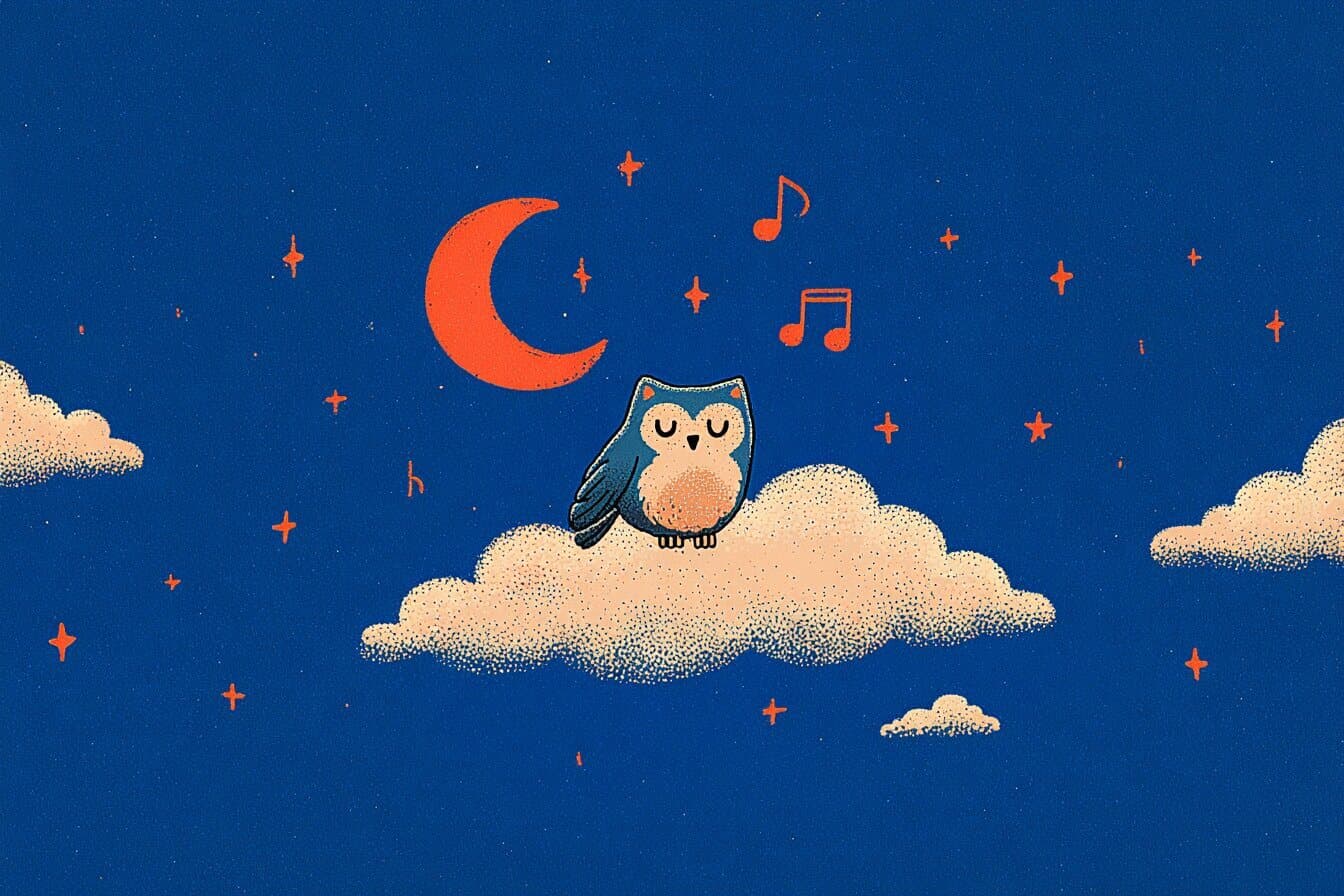
There is something about words that bounce and chime that makes a child's eyelids heavy in the best way, like the rhythm itself is rocking them to sleep. In this story, a girl named Tilly Tuner discovers she can only speak in rhyme, and her cat Clatter has opinions about it, especially when it is time for bed. It is one of those rhyming bedtime stories that starts silly and loud, then settles down gently until the room feels still. If your child loves words that play, you can create a personalized version with Sleepytale.
Why Rhyming Stories Work So Well at Bedtime
Rhyme does something that plain prose cannot quite manage at the end of the day. The repetition of sounds gives a child's brain a pattern to latch onto, and patterns are calming. When a sentence ends the way a young listener expects it to, there is a small moment of satisfaction, a tiny click of rightness that loosens tension in the shoulders and jaw. That predictability is exactly what bedtime needs.
A bedtime story built on rhyme also invites participation without requiring it. A child can mouth the rhyming word before you say it, or just let the sounds wash over them. Either way, the cadence slows breathing naturally, the way a rocking chair does. For kids who resist the transition from play to sleep, rhyming stories offer a middle ground: still playful, still fun, but gently steering everything toward quiet.
The Rhyming Song That Made Bedtime Extra Long 11 min 17 sec
11 min 17 sec
In the cozy town of Whistlewick, where every chimney puffed in what the neighbors swore was perfect rhythm, lived a small girl named Tilly Tuner who loved words that twirled and whirled and sometimes got away from her entirely.
One Tuesday evening, while brushing her teeth with bubblegum paste (the kind that turns your spit pink), she discovered that every sentence she spoke came out in perfect rhyme.
"Oh neat, my words have dancing feet," she giggled. The bathroom mirror giggled back: "A song so long will make night strong!" Which did not make a lot of sense, but rhymes rarely worried about sense.
Tilly skipped to her bedroom where her cat Clatter waited on the quilt, tail twitching like a metronome that had lost patience with the orchestra. The moment Tilly opened her mouth, a melody floated out: "Goodnight, moonlight, pillow fight, dreams take flight!"
Clatter's whiskers drooped.
"Meow, wow, wow, that's loud for now," he complained, pressing his face deeper into a polka dotted pillow.
Tilly tried to stop. She pressed her lips together. She held her breath until her cheeks went round. But rhymes kept popping like popcorn in a covered pot. She flopped onto her quilt and whispered, "I need quiet, try it, buy it?"
No sale.
The room answered with a humming, thrumming, strumming chord that only rhyme could afford. Tilly sat up straight.
"If I can't talk plain, I'll take a walk, no squawk," she decided, which was a strange sentence, but she meant it. She tiptoed past her parents' door, holding her breath, hoping the floorboards would not start a chorus.
Each creak sang back, "We speak in rhyme all the time!"
"Oh my, oh my, I'll try outside where secrets hide."
She slipped into the starlit yard. The grass beneath her slippers sang, "Blades of jade in moonlight's shade." Even the porch step creaked out a half rhyme. Tilly groaned, "This rhyming zone has grown and grown!" Clatter followed, tail flicking eighth notes, looking like he wanted to file a formal complaint but could not find the right form.
Together they tiptoed down Doodle Street, where lampposts glowed like golden notes on a giant invisible staff. Every sign chimed in: "Turn right, delight, good night!"
Tilly covered her ears, but rhymes snuck through her fingers. "I need help, big yelp, not a whelp," she muttered.
From behind the petunia patch, which smelled sharp and green the way petunias do when the dew is already on them, popped Mr. Mellow. He was the town librarian. He wore bowties shaped like open books, and his spectacles flashed moonlight as though they had been waiting all day for it.
"Tilly, silly, sounds are frilly tonight," he observed.
Tilly explained in a waterfall of rhyme how her voice had turned to song that stretched bedtime extra long. Mr. Mellow stroked his chin. He did this whenever he was thinking and also sometimes when he was not, just to stay in practice.
"A talking clock may stop the rock," he suggested, producing a pocket watch painted with tiny poems. He pressed the crown. The watch ticked and tocked without a single rhyme.
Tilly's lips tingled. She tried: "Hello."
Plain words! She laughed out loud. But the watch chimed, "One minute of mute is kind of cute," then resumed its rhyming racket.
Mr. Mellow shrugged. "Short circuit, quite quirky," he apologized.
Clatter purred, "Time for rhyme is almost prime." Nobody knew what he meant by that, including Clatter.
Tilly thanked the librarian and skipped onward. At the corner of Giggle and Guffaw (real street names, the town council had a sense of humor), she met Mrs. Pepper, the baker whose brownies rhymed so hard they hopped out of the pan.
"Tilly, filly, taste this lily," she sang, holding out a daffodil cupcake with yellow frosting that curled at the edges like actual petals.
Tilly bit. Sweetness bloomed, but her words still rhymed: "Delightful bite, light as night." She sighed powdered sugar clouds.
Mrs. Pepper leaned close. "Legend says the Moon's own tune will end a runaway rhyme." She pointed to the sky, where the Moon peeked over the rooftops like a glowing croissant, and honestly, Mrs. Pepper probably saw croissants everywhere.
"Catch a moonbeam, dream a clean stream," she advised.
Tilly tucked that clue into her pajama pocket, the one with the loose thread she kept meaning to ask about.
Clatter flicked his tail in 3/4 time. Together they marched to Windy Hill, the highest point in Whistlewick, where breezes carried secrets and lost kite strings and the faint smell of Mrs. Pepper's ovens.
Tilly climbed, rhyming all the way: "Grassy hill, climb until, standing still." At the top, the town twinkled below like a scattering of rhyming stars. The wind up here was cooler and tasted different, like it had come from somewhere with no words at all.
She raised her hands.
"Moon, I need a quiet tune, not a loony cartoon."
A silver beam slid across the sky and tapped her forehead. Light, quick, like a fingertip. Instantly, the rhymes hushed. In their place: soft wind, the rustle of grass, Clatter's breathing.
Tilly gasped. She spoke normally: "Thank you, Moon. I'll sleep real soon."
But the silence felt strangely empty, like a song missing its chorus. She stood there for a moment, just listening to nothing. A cricket started up somewhere below the hill, one single note repeating.
She glanced at Clatter. His eyes caught the moonlight, two little coins.
"Maybe a little rhyme at bedtime is sublime," she admitted.
The moonbeam pulsed gently, as if it had been waiting for her to figure that out on her own.
Tilly closed her eyes and whispered a brand new couplet: "Stars above, send sleepy love." The words floated, not taking over, just visiting. They hung in the air for a moment and then dissolved. She smiled.
Clatter curled against her ankle, purring a rhythmic lullaby without words, which was his specialty.
Down in Whistlewick, clocks struck nine in perfectly rhyme-free time. Tilly descended the hill, calm and clear, her slippers damp from dew.
At home, her parents tucked her in. They had no idea about the vocal adventure, which was fine. Some things are between a girl and a moonbeam.
Tilly gave them a goodnight rhyme so mild it sounded like a smile: "Night so bright, hold me tight." They kissed her forehead.
Clatter settled on the windowsill, tail finally still.
As sleep tiptoed in, Tilly discovered she could choose: rhyme or rest, song or silence. She chose a sprinkle of both. The Moon winked through the curtain gap.
Dreams arrived carrying gentle rhymes that behaved like polite guests, the kind who take off their shoes at the door and never stay past nine. Tilly floated through cloud-shaped couplets, each one releasing her into deeper sleep.
Somewhere down the street, Mr. Mellow's watch ticked regular time. Mrs. Pepper's cupcakes cooled on the rack without a single hop.
Whistlewick slept, wrapped in a lullaby so subtle only hearts could hear. And Tilly dreamed of tomorrow's talking adventures, where rhymes would visit but never overstay, making bedtime just the right length.
The Quiet Lessons in This Rhyming Bedtime Story
Underneath the bouncing couplets, this story explores self-regulation, the idea that something fun can also be too much, and that a child can learn to choose the right amount. When Tilly wanders Whistlewick looking for help, she models the courage of asking neighbors for advice, even when the problem feels silly. And when she finally stands on Windy Hill and realizes total silence feels empty, kids absorb a gentle truth: balance is not about cutting out what you love but about giving it the right space. That realization, arriving just as the story grows quiet, is the kind of thought that settles well before sleep, a small permission to enjoy things without letting them take over.
Tips for Reading This Story
Give Tilly a bright, slightly breathless voice when her rhymes are spiraling out of control, and let it slow and soften once the moonbeam touches her forehead. For Clatter, try a low, drowsy purr of a voice, especially on his line "Meow, wow, wow, that's loud for now." When Tilly reaches the top of Windy Hill and the rhymes suddenly stop, pause for a real beat of silence before reading the next line, so your child can feel the hush land.
Frequently Asked Questions
What age is this story best for? It works well for children ages 3 to 7. Younger listeners enjoy the bouncing rhymes and Clatter's grumpy reactions, while older kids follow Tilly's journey and understand her choice at the end. The vocabulary is playful without being difficult, and the plot moves through familiar places like a bathroom, a yard, and a hill.
Is this story available as audio? Yes. Press play at the top of the story to hear it read aloud. The rhyming lines have a natural musical quality that really comes alive in audio, especially Tilly's runaway couplets and Mr. Mellow's quirky clock scene. The shift from noisy rhymes to moonlit quiet lands beautifully when you can hear the pacing change.
Why does rhyme help kids fall asleep? Rhyming creates a predictable sound pattern, and predictability is calming for young brains at the end of the day. In this story, the rhymes start loud and fast, then gradually thin out as Tilly finds her balance, so the listening experience mirrors the process of settling down. By the time Tilly whispers her final couplet, the rhythm has slowed to match a resting heartbeat.
Create Your Own Version
Sleepytale lets you build a personalized bedtime tale inspired by stories like this one. Swap Whistlewick for your own neighborhood, trade Clatter for your child's favorite stuffed animal, or turn the moonbeam into a lantern, a firefly, or a friendly star. In just a few taps you can shape a cozy rhyming story that feels like it was written for your family's exact kind of goodnight.
Looking for more kid bedtime stories?

Bedtime Poems For Kids
Discover short bedtime poems for kids through a story where a boy says goodnight to kettles, slippers, stars, and a goldfish named Planet.

Scary Story Ideas For Kids
Looking for short scary story ideas for kids that feel cozy, not overwhelming? Meet Sir Boop, a bow tie wearing ghost who judges spooky slips from an Idea Jar.

Interactive Children's Stories
Discover short interactive children's stories where a girl named Wren makes choices guided by a paper fox bookmark called Flip.

Ghost Stories For Kids
The scariest thing about Puddle the ghost is his giggle, not his boo, in one of the sweetest short ghost stories for kids.
Adventure Stories For Kids
A folded map hidden inside a library book sends two friends a treasure hunt in one of our favorite short adventure stories for kids.

Native American Stories For Kids
Discover short native american stories for kids through a fireside tale of geese, gratitude, and a grandfather's gentle wisdom.