

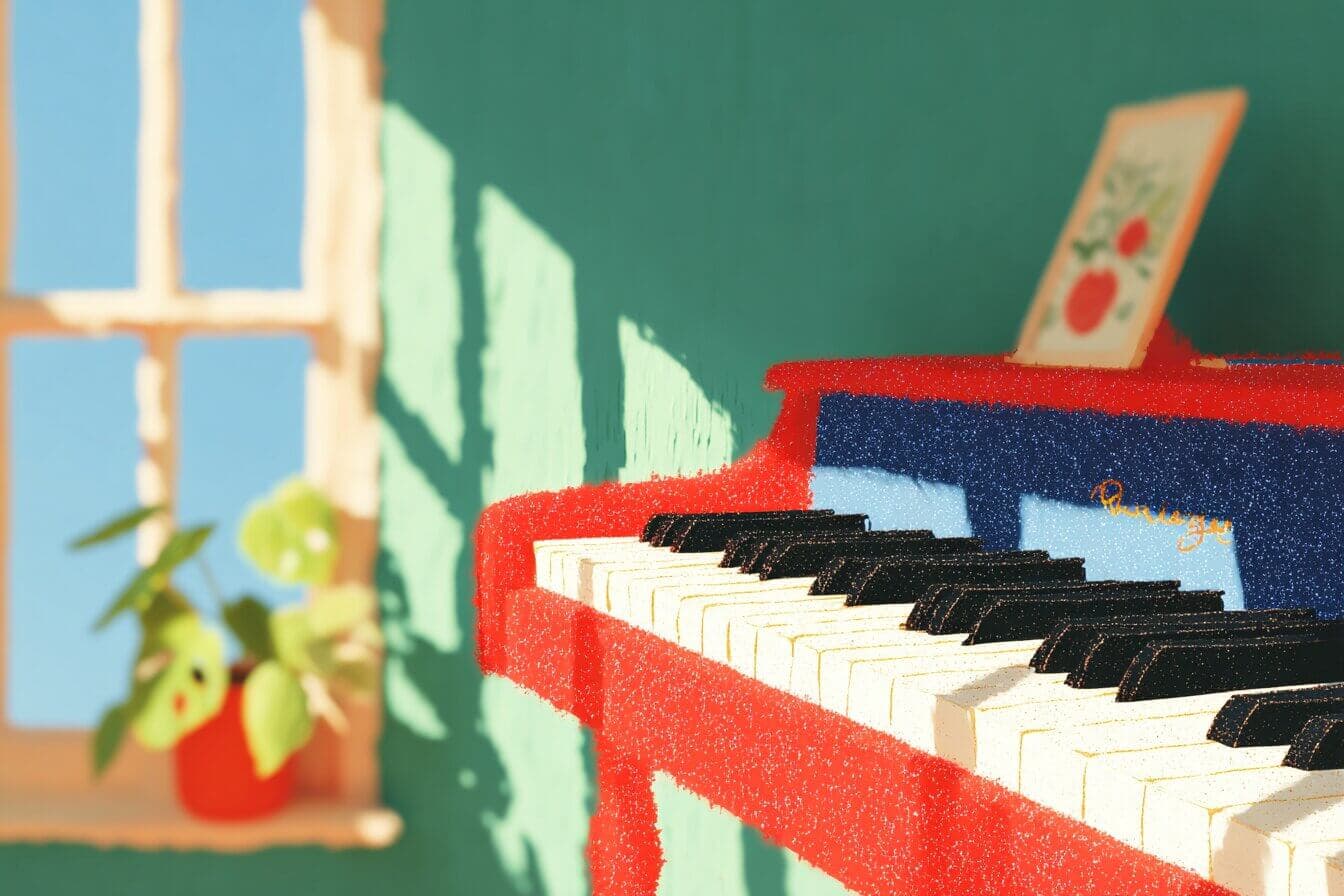
There is something about the sound of a piano at night that makes the whole house feel slower, like the air itself has decided to sit down and listen. In this story, a girl named Priya visits a grand piano called Melody in a village music shop, discovers a hidden silver button, and finds that gentle playing can turn small worries into ribbons of calm light. It is one of those piano bedtime stories that feels like a warm room where every note lands softly and the evening hushes itself around you. If you would like a version shaped around your child's own world and favorite sounds, you can create one with Sleepytale.
Why Piano Stories Work So Well at Bedtime
Music is one of the first things children respond to, even before they have words for what they feel. A bedtime story about a piano taps into that instinct directly. The idea of pressing a key and hearing something beautiful come back is simple enough for any young mind to picture, and it carries a built-in rhythm that mirrors the slowing pace of a body getting ready for sleep.
Piano stories also give kids a way to imagine control over sound and silence, which can feel reassuring when the house is dark and the day is over. The image of soft notes floating through a quiet room is easy to hold in the mind without any effort, and that effortlessness is exactly what bedtime needs. There is no conflict to solve, just a gentle exchange between a child and an instrument that listens back.
Melody's Gentle Song 9 min 15 sec
9 min 15 sec
In a quiet corner of the village music shop stood an old grand piano named Melody.
Her wood gleamed like warm honey, and her keys waited for fingers the way a cat waits at a window, patient and still.
Every evening, just before sunset, little Priya visited.
She pressed the keys softly, one at a time. Each note bloomed and then hung there, not in any hurry to leave.
The lowest key rumbled like a sleepy bear turning over. The highest tinkled like wind chimes three gardens away. Priya closed her eyes and let her hands float above the keyboard without pressing anything, feeling the cool ivory and smooth ebony, the faint warmth where sunlight had been sitting on the lid all afternoon.
Melody loved these moments.
The shop grew still. The air smelled of cedar and old songs and, very faintly, the lemon polish the shopkeeper used on Tuesdays.
One twilight, Priya discovered a small silver button hidden beneath the bench. She almost missed it. Her shoe had knocked against something that clinked, and when she ducked to look, there it was, no bigger than a shirt button, cool under her thumb.
When she pressed it, the piano gave the softest sigh, as though breathing in time with her own breath.
The walls of the shop seemed to lean closer.
Priya pressed Middle C, and this time the note shimmered in the air like a firefly that had forgotten how to go out. A glow rose from inside the piano, and she could see the tiny silver hammers dancing, precise and quiet, like performers who know the audience is almost asleep.
She played a simple pattern. C, G, A, F. Each note painted a ribbon of pastel light that floated above the keys and drifted toward the window, where the first star of evening blinked awake as if somebody had tapped it on the shoulder.
Priya's heart slowed.
She did not decide to let it slow. It just did, matching the piano's quiet magic the way a boat matches a current.
Melody's strings hummed a lullaby older than the village itself, one that remembered every peaceful bedtime it had ever witnessed, every child who had yawned in this room and gone home with heavy eyelids.
Priya's fingers moved slower, softer, until the final note lingered like a feather on still water.
Outside, the village lights blinked on one by one, tiny golden echoes of the music inside.
She whispered thank you to Melody, closed the key cover gently, and tiptoed home beneath the hush of twilight, carrying the calm song inside her like a glowing pocket star.
The next evening, Priya returned carrying a small cushion the color of moonlight. She had stitched it herself, and the stitching was a little crooked, but it was soft.
She set it on the bench, sat, and rested her hands on her lap until her breathing matched the piano's quiet presence.
Then she pressed the keys so lightly that the notes sounded like secrets.
Melody answered with a chord that felt like blankets pulled up to the chin.
Together they played a gentle game, trading soft notes back and forth, each sound lighter than a dandelion seed. The shop's dusty rafters listened. Even the metronomes on the shelf forgot to tick, which was fine because nobody had wound them in years.
Priya imagined the notes drifting out the open window, curling around the moon, then floating down to tuck tired flowers into sleep.
She played the same four notes again. This time the silver ribbons twisted into the shape of a small sleeping cat. It purred in perfect silence, stretched, yawned without making a sound, and curled on the windowsill with its tail over its nose. One ear twitched, as if it were dreaming about something only glowing cats dream about.
Priya smiled. Her own eyelids grew heavy.
She finished with a single high note that felt like a kiss on the forehead.
The cat faded into stardust, and the ribbons dissolved into calm twilight.
Priya rose, bowed to Melody, and slipped outside where the village square lay hushed under a lavender sky. She walked home past closed flower stalls and darkened bakery windows. A dog was asleep on a doorstep with one paw stretched out, as though reaching for something it had dreamed. Every step echoed the hush of the piano's lullaby.
In bed, she pictured the keys smiling softly in the dark shop, waiting for tomorrow's gentle song.
The following night brought rain, yet inside the shop the air felt cozy and dry.
Priya shook droplets from her hair, hung her yellow raincoat on the door peg, and approached Melody with reverence.
She pressed the sustain pedal so slowly that it sighed rather than clicked.
Outside, raindrops tapped the windows like tiny fingers asking to listen.
Priya touched the keys as though petting a sleepy kitten. The notes stretched like yawns, overlapping in soft lavender layers. She played a gentle scale upward, and each step made the rain fall slower, until droplets hung midair like glass beads on invisible strings.
Time itself seemed to nap.
Priya imagined the village children tucked in beds, dreams floating like paper boats on quiet ponds. She played Middle C once more, and the silver hammers formed a tiny circle inside the piano, bowing to one another like polite dancers at the end of a very long, very slow waltz.
The glowing ribbons returned, braiding themselves into a quilt of light that settled over the piano's shoulders. Priya felt the calm settle over her own shoulders too.
She ended with a chord that sounded the way a room full of sleeping bunnies would sound if sleeping bunnies made any sound at all, which they don't.
The rain resumed its gentle drumming. Beads of water slid down the glass, leaving shiny trails that caught the lamplight.
Priya pressed the button beneath the bench again, and the piano released a contented hum that blended with the rain's rhythm. She sat for a moment in the peaceful hush, then closed the fallboard, slipped on her coat, and stepped back into the rainy night, carrying the quiet glow inside her like a lantern that never needs oil.
The fourth evening arrived wrapped in silver fog.
Priya tiptoed into the shop carrying a tiny paper bird she had folded during the day. The creases were sharp because she had used her thumbnail, the way her grandmother had shown her.
She placed it on the music rack above the keys and whispered, "This is for you, Melody."
Then she pressed the keys so gently that the notes sounded like mist rising off morning grass. The paper bird fluttered without wind, riding the soft sound waves. Each note lifted it higher, until it hovered near the ceiling, wings shimmering with quiet light.
Priya played a slow lullaby her grandmother used to hum, and the piano's strings responded with memories of every lullaby ever played in that room, and maybe a few from rooms it had never seen. The shop filled with the scent of lavender and warm milk.
The paper bird swooped low, then perched on the edge of the key cover, seeming to listen. Priya imagined other paper birds awakening in houses across the village, folding themselves from forgotten homework and grocery lists, then gliding through open windows to settle on children's pillows, singing silent lullabies of their own.
She finished the song with a chord as soft as eyelids closing.
The bird dissolved into a gentle snowfall of paper petals that melted into light before touching the floor. The hush that followed felt complete, like the pause between a story and a goodnight kiss.
Priya pressed the silent keys once more, feeling the cool ivory beneath her warm fingertips, then let the quiet echo fill the room. She blew a kiss to Melody, slipped out the door, and walked home through the fog, every breath tasting of calm music and lavender.
On the fifth evening, the village held its annual Lantern Night, but Priya slipped away to the shop before the parade began.
Inside, Melody waited. The keys glowed faintly, like moonlit stepping stones across a dark pond.
Priya sat, closed her eyes, and breathed in cedar and starlight.
She pressed the keys one by one, each note a tiny lantern released into the quiet room. The silver hammers danced in slow circles, forming constellations that mapped no real sky but felt true anyway. Priya played a pattern that sounded like heartbeats slowing, like blankets being tucked under chins, like the last blink before sleep.
The piano answered with a chord that wrapped around her like soft wool.
Together they created a lullaby so calm that even the crickets outside forgot to chirp, and one cricket in particular, who had been practicing all day, simply closed its wings and listened.
Priya imagined the village children drifting into dreams where paper birds and silver cats guided them through clouds of lavender light.
She played the final note and held it until it faded into the same hush that lives inside seashells.
The lanterns in the square would shine soon, but here in the shop a quieter glow lingered.
Priya pressed her cheek against the piano's smooth side. It was cool and smelled faintly of honey.
"Good night, dear Melody."
She stepped outside into the cool night, the calm song tucked safely inside her heart, ready to guide her through gentle dreams until tomorrow's twilight returned. And every evening after, whenever Priya visited, the piano remembered the peaceful songs and sang them back to her in colors only the heart can see.
The Quiet Lessons in This Piano Bedtime Story
Priya's nightly visits to Melody are built around patience, gentleness, and the idea that showing up for something you love, even when fog rolls in or a parade calls you elsewhere, is its own kind of devotion. When she presses the keys so lightly that the notes sound like secrets, children absorb the idea that softness is not weakness but a kind of power. The small paper bird she folds and offers to Melody shows generosity without expecting anything back, and when it dissolves into light, the story lets go of it without sadness. These are reassuring ideas to carry into sleep: that tomorrow is worth returning to, that calm is something you can make with your own hands, and that even quiet gifts matter.
Tips for Reading This Story
Give Melody's sighs and hums a low, warm tone, almost like humming a single note yourself, and let Priya's whispered "This is for you, Melody" be genuinely soft, as though you are telling a secret to someone standing very close. When the raindrops tap the windows on the third evening, try tapping your fingertip gently on the book or the bed frame so your child hears the rhythm. At the moment the paper bird dissolves into paper petals of light, slow your pace way down and let a pause sit before you read the next line, giving the image time to settle.
Frequently Asked Questions
What age is this story best for?
It works especially well for children between three and seven. The plot is simple enough for younger listeners to follow, since each evening visit has the same soothing structure, and the details like the paper bird, the glowing cat, and the silver button give older kids something to picture vividly. There are no frightening moments, so even sensitive children can relax into it.
Is this story available as audio?
Yes. You can press play at the top of the story to hear it read aloud. The audio version is especially nice for this particular tale because the rhythm of Priya's repeated visits creates an almost musical pacing, and moments like the rain tapping the windows and the single held final note feel richer when you hear them spoken with the right pauses.
Why does the piano have a name?
Giving the piano the name Melody turns it into a character Priya can have a relationship with, which makes the nightly visits feel more like meeting a friend than practicing an instrument. For children, naming an object makes it safe and familiar, and it helps them imagine their own beloved things, a stuffed animal, a blanket, a favorite chair, as companions that wait patiently for them too.
Create Your Own Version
Sleepytale lets you reshape this story into something that fits your child's world perfectly. You could swap the village music shop for a living room with a worn upright piano, change the paper bird into a paper airplane, or give Priya a new name and a different instrument entirely. In a few moments you will have a cozy, personalized tale ready for tonight.
Looking for more music bedtime stories?

Rock Bedtime Stories
A dad's secret past as a crowd surfing guitarist sparks a family jam session in one of our favorite short rock bedtime stories.

Rap Bedtime Stories
Ever wondered why short rap bedtime stories help kids sleep? Suki's sticky note rhymes and Milo's shoebox surprise say it all.

Pop Bedtime Stories
What happens when Mina performs for glowing jellyfish in one of our short pop bedtime stories featuring a silver pearl?
Orchestra Bedtime Stories
Mia's single triangle note unites a quarreling orchestra in one of our favorite short orchestra bedtime stories for little listeners.
Lullaby Bedtime Stories
Enjoy short lullaby bedtime stories like Mira's magical night Lark Lane, where a glowing feather chooses its keeper.

Kpop Bedtime Stories
A copper gold seed leads Jennie through Central Park in one of our favorite short kpop bedtime stories.