
Mailman Bedtime Stories
By

Dennis Wang, Bedtime Story Expert
10 min 49 sec
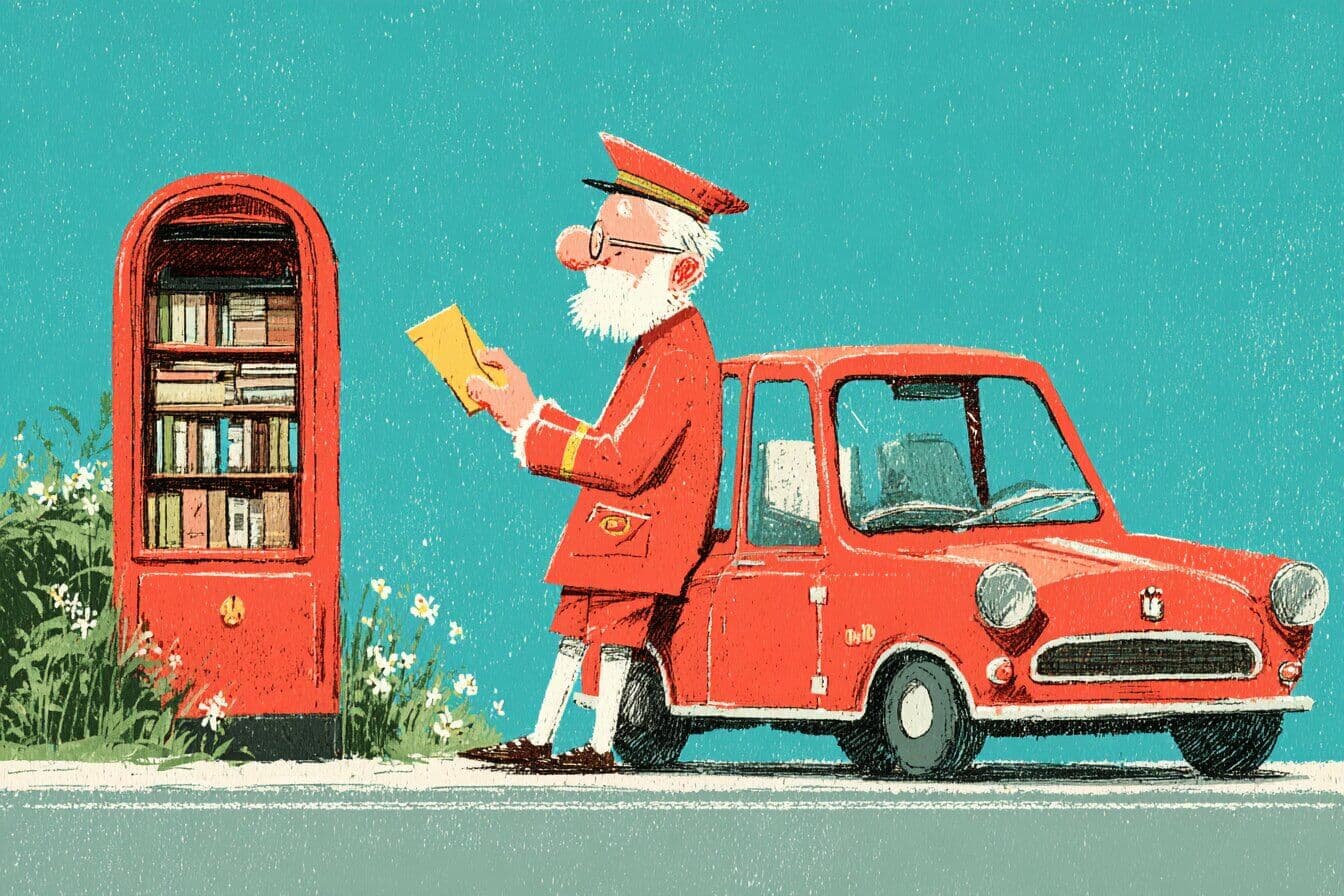
There is something deeply comforting about the sound of footsteps on a porch, the creak of a mailbox hinge, and the soft thud of an envelope landing inside. In this gentle story, a mailman named Marty notices a lonely child peeking from behind her curtain and decides to deliver something more than paper. It is one of those mailman bedtime stories that turns a quiet street into a place where kindness travels house to house, carried by steady hands and a cheerful whistle. If your child loves the idea, you can shape your own version with Sleepytale.
Why Mailman Stories Work So Well at Bedtime
A mailman's route follows a natural rhythm: one house, then the next, then the next. That predictable pattern mirrors the kind of gentle repetition that helps children settle down at night. The world of a mail carrier is also full of small, quiet actions, opening a bag, sliding an envelope through a slot, waving at a neighbor, and those tiny movements feel safe rather than exciting. For a child winding down, a bedtime story about a mailman offers just enough forward motion to hold attention without revving anyone up.
There is also something emotionally powerful about letters. A letter means someone far away was thinking of you, which is the same reassurance children crave before sleep: the knowledge that they are held in someone's mind even when the lights go out. Mailman stories at bedtime tap into that feeling naturally, without needing to explain it. The envelope does the work.
Marty's Smiling Letters 10 min 49 sec
10 min 49 sec
Marty the mailman tied his red shoes and straightened his blue cap before stepping into the morning sun.
He loved his job because every envelope he carried held a tiny piece of someone's heart, and he treated each one like it mattered.
Some letters held birthday wishes wrapped in stickers. Others carried jokes that would make grandmas giggle so hard they'd spill their tea.
Marty walked his route with a song lodged somewhere between his ribs and his throat, not quite humming, not quite singing, just feeling the tune. He greeted Mrs. Patel's roses, nodded to the tall oak like it was an old friend who never had much to say, and whistled to the sparrows that tagged along behind him like they had nowhere better to be.
By the time he reached Maple Street, his canvas bag felt light.
His heart felt lighter still.
He tucked a lavender envelope into mailbox number three. That one was for Mr. Lopez, from a friend he hadn't seen since first grade. Marty could picture the old man settling into his porch chair, peeling the flap slowly, and then grinning so wide his whole face became a crescent moon. The thought made Marty skip a step. His keys jingled.
He continued along the quiet road.
At the corner, two squirrels chased each other around a pine trunk, their tails flicking like they were painting invisible lines in the air. He watched them for a moment longer than he needed to, then turned onto Birch Lane.
The houses on Birch Lane stood in a row like crayons in a box, each one a different color and slightly crooked. Each mailbox opened with a squeak, and each envelope landed with a rustle that said, in its own paper voice, "Someone thought of you."
Marty's favorite stop was the little yellow house with the crooked mailbox shaped like a cat.
The cat had one bent ear and chipped green paint around the whiskers, and Marty always patted its metal head when he passed.
Today he carried a letter addressed to "Emma, the Girl Who Feels Lonely Sometimes."
The return address told him it was from Emma's grandmother.
He slipped it gently inside, patted the cat on its lopsided ear, and whispered, "This one's special." Then he moved on, not knowing that Emma stood behind her curtain, counting the seconds until she heard the jingle of his keys.
She pressed her nose to the glass so hard it left a little fog circle.
When the cat mailbox creaked open, her heart beat like a drum somebody was playing too fast. She opened the front door just enough to peek out, and Marty saw her eyes, curious and careful, watching from the gap.
He smiled and tipped his cap. Nothing fancy. Just a nod, the kind that said, "I see you."
Emma darted back inside and clutched the lavender envelope against her chest. She tore it open carefully, trying not to rip the flap, and her grandmother's curly handwriting danced across the page.
"Dear Emma," it began, "I remember when you were three and you tried to catch a rainbow in a jar. You laughed when the colors slipped through your fingers like water. I want you to know that friendship is like that rainbow. You can't hold it tight, but you can feel it brighten your whole sky."
Emma read the letter three times.
Each time, her smile stretched a little wider.
She ran outside, but Marty had already turned the corner. Only his whistle hung in the air, fading like the last note of a song you can't quite name.
She decided to write back. Not to her grandmother. To Marty.
She found a sheet of sky blue paper, the kind with faint lines she mostly ignored, and drew a mailman with wings made of envelopes. Underneath she wrote in her best handwriting, which still wobbled a little on the y's: "Thank you for carrying smiles to my house."
The next morning she woke before her alarm, placed the letter in the cat mailbox, and raised the little red flag.
When Marty arrived and found the drawing, he pressed it to his chest and stood there on the sidewalk for a full five seconds, not moving, just holding it. Then he tucked it into his pocket next to his lunch. The paper sat warm against his apple.
Emma watched from the window. When Marty looked up, she waved with her whole arm, not a polite little wave but the kind where your shoulder does most of the work.
He waved back the same way.
From that day, Emma left notes. Sometimes a joke. Sometimes a riddle. Sometimes just a picture of a sun with a face, smiling for no reason. Marty collected every one like treasure and wrote replies on the backs of used envelopes because he liked the idea of giving old paper a second life.
He told her about the squirrels who sat still long enough to look like they were posing for portraits. He told her about clouds shaped like sheep. He told her about the time he accidentally delivered a birthday card to a dog, and the dog, a basset hound named Gerald, had carried it around the yard in his mouth for an hour like it was the best gift he'd ever received.
Emma kept each reply in a shoebox under her bed. The box smelled faintly of cedar and old ink.
One rainy Tuesday, she discovered a letter addressed to "The Brave Mailman Who Makes People Smile." Inside was a simple message: "Meet me at the big oak at sunset. Bring your biggest smile."
Marty finished his route early that afternoon.
He walked to the oak where Emma waited, holding a paper bag that was already going translucent from the grease inside.
Cookies. Shaped like envelopes, frosted in red and blue.
They sat together on the roots that rose from the earth like bent knees, and the bark was rough against Marty's palms in a way that felt honest. Emma told him she used to feel lonely, but his letters made her feel like she had a friend tucked inside every house on the block. Marty admitted that walking alone with only envelopes for company could get quiet, real quiet, but her sticky notes had turned his route into something he rushed toward each morning.
They laughed, and the sound rose through the branches.
After that, they became partners. Emma drew tiny cartoons on sticky notes and slipped them into outgoing mail. Marty delivered them alongside the regular letters. He never peeked at the cartoons, because that felt like someone else's surprise to unwrap.
Soon the whole neighborhood started smiling more, and nobody quite knew why.
Mrs. Patel left a thank you card addressed to "Whoever Keeps Drawing Dancing Roses."
Mr. Lopez left a joke about a singing fish, which wasn't very funny, but the effort made Marty laugh anyway.
Even the mayor mailed a letter praising the mysterious artist who had brightened the town.
Emma felt proud. But she felt prouder that the secret belonged to her and Marty, like a coin only they could spend.
They met every week at the oak. One evening, Emma suggested they create a giant card for the whole street. Marty supplied a stack of envelopes. Emma provided crayons that smelled like fruit, the grape one strongest because it was the most used.
They worked under golden leaves, gluing envelopes into the shape of a rainbow. Inside each envelope they tucked a tiny note: "Open when you need a friend."
Marty delivered one to every mailbox. The next morning, neighbors waved at each other. They shared bread. They swapped stories on porches like they'd been doing it for years, even though they hadn't.
Emma realized friendship could stretch. It didn't have to stay between two people. It could wrap around a whole street, then a whole block, then who knows.
Years later, when Emma grew up and moved away, Marty still found tiny drawings tucked in the cat mailbox. They came from new children who had heard about the mailman who delivered smiles. Marty never found out who started the tradition back up, but he had his suspicions.
He kept walking. Kept whistling. Kept believing that a single envelope could carry more weight than it had any right to.
One winter evening, a letter arrived in familiar curly handwriting. Inside was a drawing: two figures under an oak, one tall and one small, both looking up at a sky full of paper birds.
Marty held it against his chest and stood in the falling snow. His footprints behind him looked like exclamation points pressed into white.
He walked on, through the hush, through the glow of streetlights, through the quiet music of winter air. And somewhere, maybe in a city apartment or a cottage near the sea, Emma opened her own mailbox to find an envelope with no return address.
Inside was a cookie shaped like an envelope, frosted in red and blue, and a note: "Open when you need to remember that you are never alone."
She smiled. She bit the cookie. It tasted like something you couldn't quite name but recognized immediately, the way you recognize a song from a long time ago.
Friendship, like mail, always finds its way home.
The Quiet Lessons in This Mailman Bedtime Story
This story weaves together loneliness, patience, and the small bravery it takes to reach out to someone new. When Emma slides her first drawing into the cat mailbox, children absorb the idea that a tiny gesture can be the beginning of something much bigger than itself. Marty's admission that he sometimes feels lonely too shows kids that grown-ups carry the same feelings they do, which is a reassuring thing to hear right before sleep. The slow expansion of kindness from two people to an entire neighborhood lets young listeners drift off knowing that generosity doesn't run out; it multiplies, quietly, one envelope at a time.
Tips for Reading This Story
Give Marty a warm, unhurried voice and let his words land gently, especially when he whispers "This one's special" at the cat mailbox. When Emma reads her grandmother's letter about catching a rainbow in a jar, slow down and let the image sit for a moment before moving on. At the scene where Marty and Emma sit on the oak roots eating envelope cookies, you might pause and ask your child what flavor they think the frosting is.
Frequently Asked Questions
What age is this story best for?
It works well for children ages 3 through 8. Younger listeners enjoy the repeated pattern of Marty visiting mailboxes and the gentle sound of jingling keys, while older kids connect with Emma's feelings of loneliness and her decision to write back to a near stranger. The vocabulary is simple enough for little ones but the emotional arc has enough depth for early readers.
Is this story available as audio?
Yes. Press play at the top of the story to listen. The audio version brings out the rhythm of Marty's walking route, and the moment when Emma's grandmother's letter is read aloud feels especially warm through a speaker. The quiet ending, with snow falling and footprints in the white, works beautifully as a wind-down, letting voices soften as the story closes.
Why does the mailbox look like a cat?
The cat mailbox is a detail that gives Emma's yellow house its own personality and makes her stop on Marty's route feel special. Kids often latch onto it because it is unexpected and a little silly. If your child loves that detail, you might ask them what animal they would want their mailbox to be, which is a fun way to extend the story into conversation before lights out.
Create Your Own Version
Sleepytale lets you turn a simple idea into a cozy story with the pacing and warmth your family loves. You can swap Marty's street for a seaside boardwalk, change the cat mailbox into a painted tin shaped like a lighthouse, or give Emma a little brother who wants to help with the drawings. In just a few taps, you will have a calm, personalized bedtime tale you can replay whenever your child needs a peaceful ending to the day.
Looking for more job bedtime stories?

Spy Bedtime Stories
Quiet halls glow before sunrise as a student agent follows kind clues in short spy bedtime stories. A gentle mystery ends with secret teamwork and warm notes.
Detective Bedtime Stories
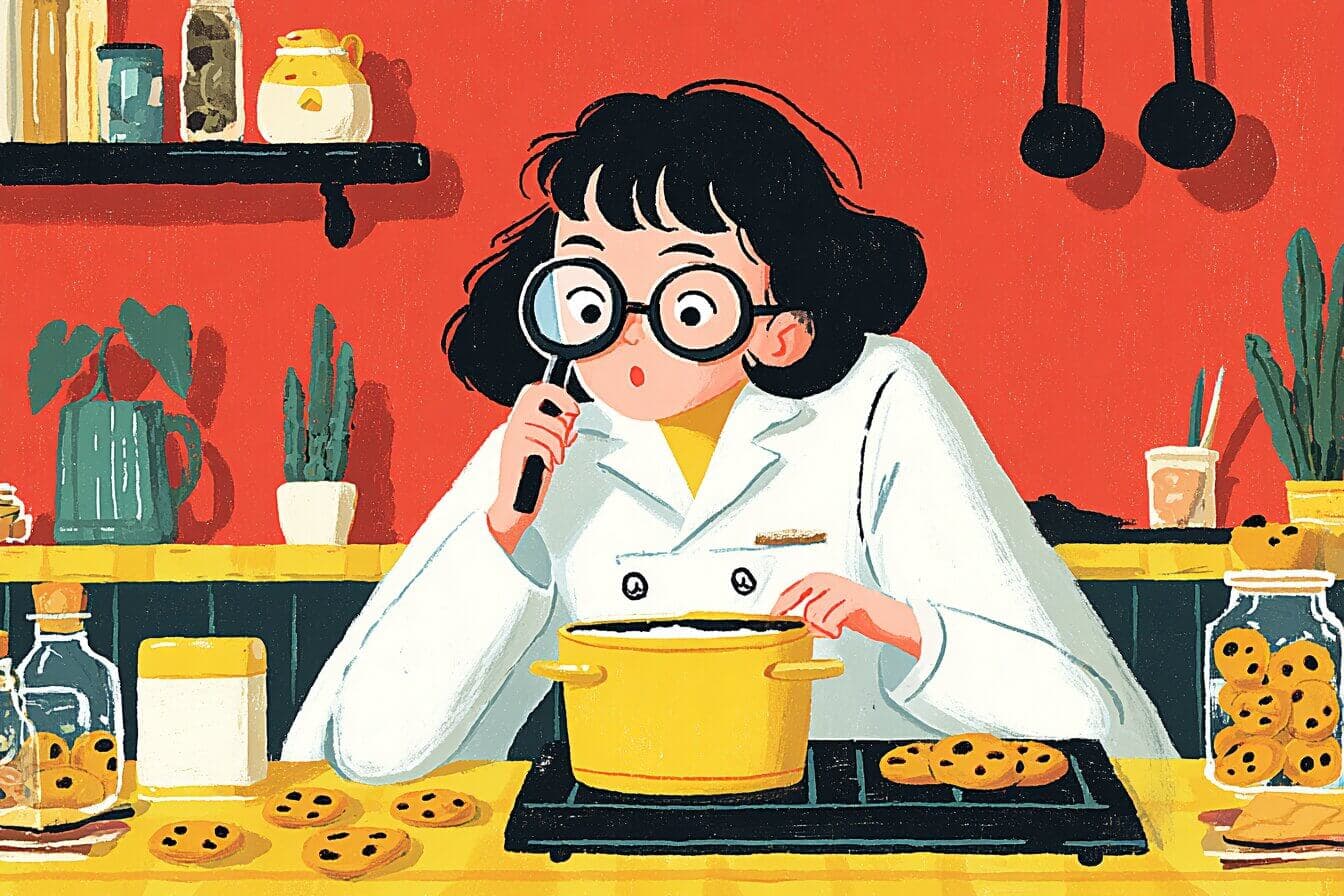
Detective Daisy follows crumbs and a chocolatey scent in short detective bedtime stories, then finds the missing cookies in a surprising place. A cozy case for winding down.

Astronaut Bedtime Stories
Looking for short astronaut bedtime stories that feel calm and wondrous at lights out? Read Astrid's gentle starlight parade and learn how to make your own version.

Vet Bedtime Stories
A tender clinic visit turns into a thank you lick and a tiny keepsake in short vet bedtime stories. A small thorn becomes a big lesson in trust and calm care.
Teacher Bedtime Stories
Want short teacher bedtime stories that feel cozy and kind for winding down after school? Discover a gentle classroom adventure you can read aloud tonight.

Scientist Bedtime Stories
Preston turns a quiet flight into a gentle lesson for curious kids in short scientist bedtime stories. Clouds, wind, and light become soothing wonders as everyone settles down.