
Orange Bedtime Stories
By

Dennis Wang, Bedtime Story Expert
5 min 12 sec
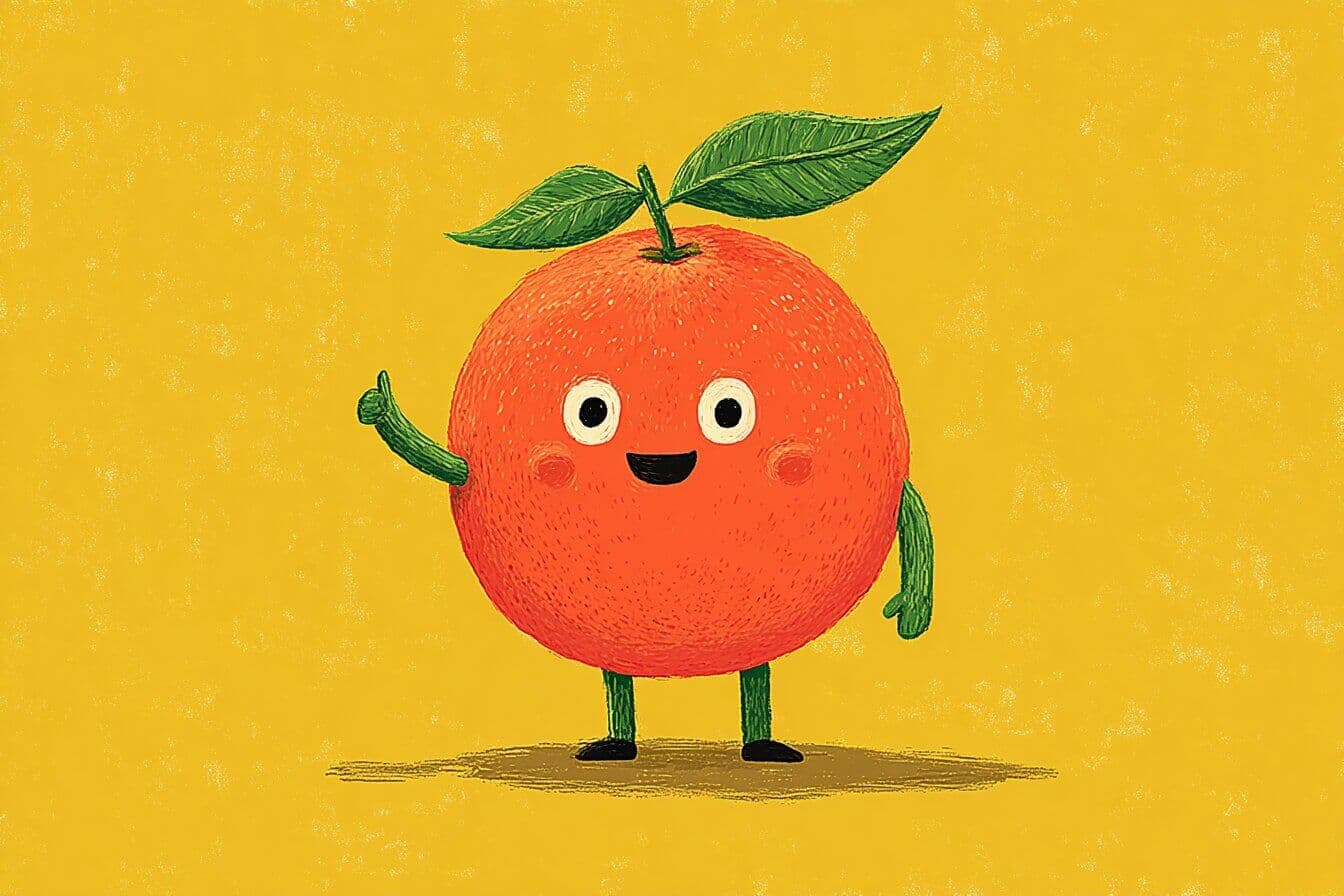
There is something about the smell of a fresh orange that makes a room feel warmer and smaller in the best way, like everything you need is right here. Tonight's story follows Oscar, a round little orange sitting in a market crate, quietly hoping someone will look past his peel and discover what he's been carrying inside all along. It is a perfect orange bedtime story for kids who sometimes wonder whether anyone notices the good stuff they keep hidden. If your child would love a version with their own name, favorite fruit, or a totally different ending, you can create one in Sleepytale.
Why Orange Stories Work So Well at Bedtime
Oranges are one of those things kids can picture instantly. The weight, the bumpy skin, the way the juice runs down your chin. That sensory richness gives a bedtime story about oranges a kind of built-in coziness. Children don't need to work hard to imagine the world, so they can relax into it.
There's also something reassuring about the idea that the best part is hidden inside and waiting to be found. For a child lying in the dark, that message lands gently. It says: you don't have to prove anything right now. The good stuff is already there. Orange stories at bedtime wrap that quiet confidence in something sweet and familiar, which is exactly what a settling-down moment needs.
Oscar's Bright Surprise 5 min 12 sec
5 min 12 sec
In the middle of Sunnyville Market, where fruit crates leaned against each other in crooked towers and someone was always arguing about the price of tomatoes, sat a round orange named Oscar.
He liked mornings best, when the first light hit the stall and his skin went from plain orange to something almost gold.
But mornings also meant shoppers, and shoppers meant reaching past him for apples, bananas, grapes, anything that wasn't Oscar.
He didn't blame them, exactly. Apples were shiny. Bananas came in convenient bunches. Grapes had that whole tiny-and-mysterious thing going for them.
Still.
Oscar knew what he carried inside, segments packed tight, every one of them bright and dripping with sweetness, and he couldn't figure out how to say so without sounding like he was bragging.
So he sat there, Saturday after Saturday, and kept his mouth shut.
One cool morning the market bell bonged nine times, slightly off-key the way it always was, and a girl named Mia stopped at Oscar's crate.
She wasn't in a hurry. She tapped her chin, looked at one orange, then another, then back to Oscar.
"I need something sweet for Grandma's cake," she whispered, mostly to herself.
Oscar didn't think about it. He just rolled forward, maybe half an inch, just enough to catch the light.
Mia's hand paused over him.
She smiled, picked him up, and set him in a woven basket that smelled like dried lavender and old bread crusts.
Oscar's peel tingled. He was chosen. He was also terrified.
The walk to Mia's house took them past a bakery where cinnamon pooled in the doorway like something you could swim through, and a garden where the bees were so loud they sounded annoyed about something.
Mia hummed a tune Oscar didn't recognize, slightly off-key, just like the market bell.
He told himself, quietly, "Today's the day."
Mia's kitchen was small. A mixing bowl sat on the counter next to a bag of sugar with a torn corner and a carton of eggs, one of them cracked and leaking a little.
Sunlight came through the window and turned the whole mess golden.
On the wall, someone had hung a painting of a fruit tree, and whoever painted it had given every piece of fruit a tiny glow, like each one held a candle inside.
Oscar stared at that painting and thought: maybe that's not so far off.
Mia picked up a silver knife, the kind with a wooden handle that had been washed so many times the wood was pale.
Oscar felt the cool edge touch his peel.
Here we go.
The knife slid in, and the peel began curling away in one long spiral, releasing a mist so sharp and bright that Mia blinked.
The kitchen filled with it, citrus and something underneath, something almost like sunshine if sunshine had a flavor.
Oscar felt lighter. Worries he'd been carrying since the market crate just floated off with that mist and disappeared.
Inside, perfect crescents glistened, pale orange and wet.
Mia leaned closer. "You are more beautiful than a sunset," she said, and she meant it in that way only a kid can mean something like that, completely and without embarrassment.
She ate one segment.
Her eyes went wide, then her whole face scrunched into a grin so big it barely fit.
She twirled once, then twice, and crashed gently into her grandma, who had just walked in wearing a flowery apron that was more flour than flowers at this point.
Grandma sniffed the air. "Heavenly," she said. "Let's squeeze the rest into juice before you eat it all."
Mia laughed, caught.
They squeezed, and poured, and clinked two small glasses together. Grandma poured a third, smaller one for the neighbors' cat, who did not want it but appreciated the gesture.
Oscar, watching all of this happen from the inside out, felt something warm spread through what was left of him. Not pride exactly. More like relief. He had shared the thing he'd been keeping, and it mattered to someone.
The baking that followed was loud and clumsy. Mia cracked an egg on the counter instead of the bowl. Grandma sang a song from when she was young and forgot half the words. The oven door stuck and had to be yanked.
But when the cake came out, golden and fragrant, they both went quiet.
Word got around. Neighbors showed up, first one, then four, then more than the kitchen could comfortably hold.
Everyone wanted to know the secret ingredient.
"Believing in hidden sweetness," Mia said, and Grandma nodded like this was a perfectly normal thing to say about a cake.
Oscar's peels rested in the compost bowl on the counter, curled and empty and done.
He didn't mind. The job was finished.
As the sky outside turned purple, Mia saved one last slice, set it on a chipped plate, and whispered, "Thank you, Oscar."
The kitchen was quiet now. The fridge hummed. A breeze moved the curtain.
Oscar felt complete.
That night he dreamed of orchards stretching in every direction, trees heavy with fruit, every single piece glowing softly from the inside.
The market bell would ring again at dawn. His friends would roll forward, each carrying their own hidden brightness, ready for someone willing to look.
The Quiet Lessons in This Orange Bedtime Story
This story carries a few ideas that settle well right before sleep. Oscar's worry about being overlooked touches on self-doubt, something even very young children feel, and his small decision to roll forward shows that courage can be tiny and still count. When Mia calls him more beautiful than a sunset, kids absorb the idea that what matters most about a person isn't always visible from the outside. And the messy, imperfect baking scene, cracked eggs, a stuck oven, forgotten lyrics, teaches that sharing doesn't have to be polished to be meaningful. These are reassuring themes for a child lying in the dark, because they say: you already carry something good, and tomorrow you can let a little of it show.
Tips for Reading This Story
Give Oscar a slightly anxious, quiet voice when he talks to himself in the market, and let it grow warmer and steadier as the story moves into the kitchen. When the peel curls away and the citrus mist fills the room, slow down and take an actual breath, so your child can almost smell it too. At the moment Mia crashes into Grandma after twirling, let yourself laugh a little; that's where the story wants to be silly. And when you reach the final line about Oscar's friends rolling forward, let your voice get very soft and leave a long pause before you say goodnight.
Frequently Asked Questions
What age is this story best for?
It works well for children ages 3 to 7. Younger listeners love the sensory details like the citrus mist and the golden kitchen light, while older kids connect with Oscar's worry about being passed over and his quiet decision to roll forward. The plot is simple enough to follow at three but layered enough to hold a six-year-old's attention.
Is this story available as audio?
Yes. Press play at the top of the story to listen. The audio version really brings out the rhythm of the market scenes and the contrast between the noisy baking and the hushed ending, when Mia whispers "Thank you, Oscar" and the kitchen goes still. It is a lovely one to listen to with the lights already dimmed.
Why is Oscar in the compost bowl at the end? Will that upset my child?
Most children take this in stride because the story frames it gently. Oscar doesn't disappear; he rests, feeling complete and satisfied. His peels are described as "curled and empty and done," which reads more like a cozy sigh than a sad ending. If your child asks about it, you can explain that Oscar shared all his sweetness with Mia's family and now he gets to rest, just like your child is about to do.
Create Your Own Version
Sleepytale lets you build a cozy bedtime story around any fruit, character, or kitchen your child can dream up. Swap Oscar for a shy mango, move the market to a seaside fruit stand, or replace Grandma's cake with pancakes on a rainy morning. In just a few taps you will have a warm, personalized story ready to play or read whenever your family needs a calm, glowing finish to the day.
Looking for more food bedtime stories?
Watermelon Bedtime Stories
Drift into short watermelon bedtime stories where a giant melon rolls into town and kindness becomes the sweetest snack of all.
Waffle Bedtime Stories
Craving a sweet twist at lights out? short waffle bedtime stories turn one brave waffle pocket count into a cozy topping parade that ends in a sleepy, syrupy sigh.
Taco Bedtime Stories
A picnic taco feels too full to wiggle, until a clever sharing plan turns tummy trouble into a tiny feast. Discover short taco bedtime stories that end in cozy calm.
Sushi Bedtime Stories
Settle in with soothing short sushi bedtime stories that calm busy minds with cozy kitchen magic. Read a gentle sushi bedtime story that helps kids drift off peacefully.
Strawberry Bedtime Stories
A garden hose breaks, and a ruby bright strawberry orders ants into a droplet brigade. Follow Stella the Sharing Strawberry in short strawberry bedtime stories with a cozy twist.

Spaghetti Bedtime Stories
A warm kitchen breeze nudges a spaghetti box, and three noodles discover friendship in a sunlit jar. Read short spaghetti bedtime stories for a calm, cozy wind down.