
Meerkat Bedtime Stories
By

Dennis Wang, Bedtime Story Expert
10 min 21 sec
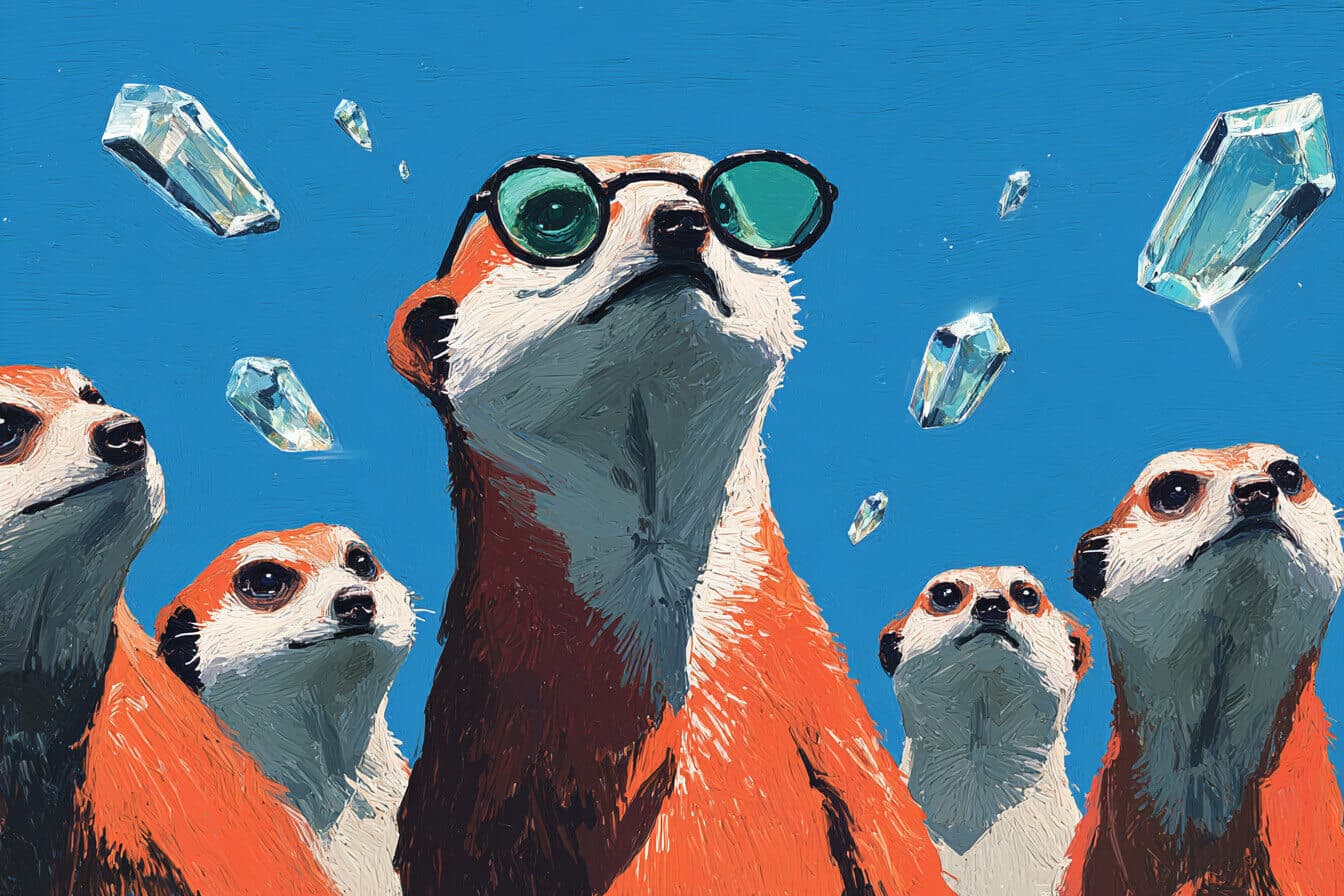
There is something about meerkats that makes children lean in closer, maybe the way they stand bolt upright on their hind legs like tiny, serious guards, or how they live in big noisy families where everyone has a job. In this story, a meerkat named Manny leads his mob underground into crystal tunnels, befriends a lost mole called Pip, and discovers a spring that sings. It is the kind of meerkat bedtime stories adventure that wraps curiosity and kindness around a child like a warm blanket. If you want to shape your own version with different characters or a calmer mood, you can build one in minutes with Sleepytale.
Why Meerkat Stories Work So Well at Bedtime
Meerkats live in tight-knit groups where the littlest members are always watched over, and that mirrors exactly what a child feels at bedtime: small, surrounded by family, and safe. Their world is full of burrows and tunnels, enclosed spaces that feel cozy rather than vast, so a meerkat story naturally pulls the imagination into snug, quiet places instead of wide-open ones that keep the mind racing.
There is also something reassuring about the way meerkats cooperate. Everyone digs, everyone takes turns standing guard, everyone shares the food. When a bedtime story about meerkats shows characters solving problems together and looking after one another, it echoes the comfort a child already feels in their own home. The rhythm of communal work, dig, rest, watch, repeat, mirrors the gentle repetition that helps small bodies wind down.
Manny and the Crystal Tunnels 10 min 21 sec
10 min 21 sec
The sun warmed the sandy hill where the meerkats kept watch, and Manny stood tallest on the lookout rock.
He was not the biggest. Not even close. But he had the brightest ideas, and when he chattered a plan the whole mob went quiet and tilted their ears toward him, even Aunt Rilla, who was older than anyone and had opinions about everything.
Their bellies were full from a morning of beetle hunting. Their paws were chalky with dust. The air smelled like hot stone and the faintest hint of rain somewhere far away, that clean electrical smell that desert animals notice long before any cloud appears.
Manny blinked at the distant dunes and scratched behind one ear.
He gathered the group close and traced a spiral in the dust with his claw.
"We dig a tunnel deeper than any tunnel," he said. "We follow the cool breath of the earth. We see what it hides."
The little ones bounced. Tiko and Lolo stretched their paws and wagged their tails so fast they blurred. Aunt Rilla packed water drops in leaf cups without being asked, which was her way of saying yes.
The sky had turned into a soft blue bowl.
Manny stepped forward and scraped the first pawful of sand, then the next, and soon the whole group dug beside him in a line. The sand slid in soft waves. Their whiskers brushed the walls. They sang a digging song, a simple one about warmth and trust, with a beat that matched the scooping motion so perfectly that even the kits who barely knew the words hummed along.
Every scoop made the tunnel longer. Every breath smelled a little cooler.
The morning moved along like a lizard crossing a warm rock, unhurried and sure of itself.
Manny watched for cracks in the ceiling and checked the walls with his knuckles, and he told stories to keep the smallest kits calm, stories about the time Aunt Rilla accidentally sat on a scorpion and jumped so high she could see three dunes away.
The tunnel grew wide enough for two meerkats to walk side by side, and the sound of their paws changed from a soft hush to a hush click, hush click.
The ground felt different. There were tiny pebbles that tinkled like bells when their claws brushed them.
Manny paused. Lifted his nose. A light breeze drifted up from below, carrying the scent of wet stone and something clean he could not name.
He told everyone to stop for a sip of water, then sent Tiko ahead a few paw lengths to tap the roof, and Lolo to press an ear against the floor. Together they tested the walls. Firm, cool, smooth.
They pressed on.
The hush click became a brighter sound, almost a ring, and the tunnel opened into a chamber where a glow greeted them like a jar of captured fireflies.
At first they squinted.
Then they gasped.
The walls shone with crystals. Blue ones caught the faintest light and held it steady. Pink ones blushed. Clear ones gathered drops of water and threw tiny rainbows across the floor whenever a meerkat shifted its weight. Pillars grew from the ground like frozen rain, and one of them had a crack down the middle that made it look like it was smiling.
Manny dipped a paw into a shallow puddle. The water tasted like nothing at all, which somehow made it taste gentle.
"We move carefully," he said. "Tails close. Voices low."
They walked slowly, and their whispers bounced off the crystals in soft echoes that arrived a half-second late, as if the room wanted to repeat everything it heard just to make sure it remembered.
Beyond the first chamber lay a hallway where crystals shaped like feathers hung from the ceiling. They chimed in the faint breeze, a sound like someone tapping a glass with a fingernail very far away.
A path led down and to the left, and Manny noticed marks on the floor. Not meerkat prints. These were round and close together, as if a small creature had shuffled across the stone in a nervous little dance.
"We are not alone," Manny said, and his voice was warm. "If we meet someone, we say hello."
The hallway opened into a wide cavern. A lake rested there, so still and clear that the group saw their own reflections floating alongside silver fish the size of seeds. The ceiling rose high and sparkled, and a single beam of sunlight poured through a crack above, thin and bright, like a golden ribbon. It lit a crystal tower in the center of the lake. At the tower's base grew moss that glowed faintly green, the color of the first leaves after rain.
Lolo pointed to a small stone bridge that crossed part of the water. They went over one by one, paws careful, nobody breathing very loudly.
On the other side they found a tiny burrow carved into the crystal wall.
From inside came a sound. Not quite a sigh. More like a glass marble rolling across a wooden floor.
Manny crouched and waited.
A little face appeared. Whiskers long, eyes wide and bright. A mole with glossy gray fur, blinking at the meerkats with a look that was half hopeful and half embarrassed, the way you look when you have been lost for a while and you are not sure whether to admit it.
Its name was Pip.
Pip spoke in a voice like pebbles rolling in a stream, quiet and round. It had wandered into the crystal halls from a distant tunnel, searching for the singing spring, a place said to heal tired paws and calm tricky dreams. But the paths kept shifting, and the lake's beauty had a way of making Pip wander in circles, always impressed, never any closer.
Manny listened. Not just with his ears.
"We will help," he said simply.
He organized a buddy system for the walk ahead, smallest kits paired with strongest diggers. Pip rode on Manny's back for a stretch, its round paws resting against his shoulders. It weighed almost nothing.
They followed the lake shore until they reached a cluster of crystal arches that looked like frozen birds mid-song. A faint melody threaded through the air, humming mixed with the sound of water falling from a height.
"That way," Pip whispered.
The path agreed, but a tricky patch of slick clay blocked the route. Manny tested it with one foot. It wobbled but held.
He showed the group how to shuffle low, bellies near the ground, weight on the drier edge. They crossed in a calm line. Tiko slipped once and caught himself with a grunt that echoed three times, which made the smallest kit laugh so hard she hiccuped. Nobody minded.
The humming grew louder. The floor rose into a gentle slope. A glow like sunrise spread across the crystals, and warm mist kissed their noses. Propped in the corner of the slope was a flat crystal plate, polished so smooth it reflected everything upside down. And behind it came the sweetest sound of all.
The singing spring was a small waterfall pouring from a seam in the stone.
It tumbled into a bowl of crystal, and every drop made a tiny note. The notes layered on top of each other and became a song, not a melody you could hum exactly, more like the memory of a melody you once heard from another room.
Breathing slowed.
Shoulders dropped.
Even Aunt Rilla, who always had one ear cocked for danger, closed both eyes for a moment.
Manny guided the group to cup the water in their paws and sprinkle a little on their whiskers. Pip climbed down from his back and set its sore paws in the bowl. The water ran over them, and Pip made a small sound that was not a word but meant something like, oh, finally.
The spring glowed brighter for a moment, then dimmed to soft again.
Manny explored the area and found a tunnel that pointed toward the surface. They could follow it home and come back another day with more leaf cups. But first there was work to do. Crystals had fallen across a small hole near the spring, and through that hole came a draft that smelled like desert wind. If they cleared the rubble and braced the edges with round stones from the lakeshore, the hole would become a chimney. The halls would breathe. The spring would sing stronger. Future visitors would find their way by the scent of clean air.
Everyone agreed without a vote.
They worked with slow care, lifting each crystal with both paws, humming the digging song in a softer key so the spring's music stayed in front. When the last stone settled, a ribbon of fresh air swept through the cavern. The lake rippled. One of the silver fish leapt and caught a drop of mist, which was completely unnecessary but seemed to make the fish happy.
Pip showed them a path beside the spring that led to a small alcove filled with white crystals shaped like snow blossoms.
Manny asked the group to leave a gift. They strung polished seeds from desert bushes into a necklace and draped it over one of the blossoms. A simple message: we were here, and we were friends.
In return, Manny took one pebble crystal, just the size of a seed. He wrapped it in a leaf and tucked it into his pouch.
They rested. The kits curled up in a pile, tails over noses. Manny and Aunt Rilla kept watch, though there was nothing to watch for except the slow drip of water somewhere deep in the stone.
Manny looked around. The crystals balanced each other. The water found its path. Every echo arrived gently because the halls were patient enough to let sounds finish before sending them back.
He did not say anything about what he had learned. He just breathed.
When the kits woke, the group followed Manny and Pip up the tunnel toward home. It was narrow and twisty, but the air smelled brighter with every turn. Soon a circle of sky appeared, pale gold, and the desert greeted them with buzzing insects and grass that whispered sideways in the evening breeze.
They climbed out into late afternoon sun and looked at one another. Dust on their whiskers. A new kind of quiet behind their eyes.
Pip stood at the tunnel entrance, blinking in the light it had not seen for days, and then did something nobody expected. It hugged Manny's ankle, just for a second, and disappeared back underground, already shuffling toward the spring with steady paws.
That night, while stars rose slow and bright, Manny told the story once more. He told it slowly. Every friend added a detail. And the pebble crystal glimmered in the moonlight, a tiny echo of the singing spring, promising more gentle adventures whenever they were ready.
The Quiet Lessons in This Meerkat Bedtime Story
This story wraps patience and careful leadership into every scene without ever stopping to lecture about them. When Manny pauses to test the clay, sends Tiko ahead to tap the ceiling, and organizes a buddy system instead of charging forward alone, children absorb the idea that real bravery looks a lot like paying attention. The way the meerkats welcome Pip, no questions, no hesitation, just "we will help," shows generosity as something natural rather than something you have to be told to do. And the moment when the group leaves a gift for the cave and takes only a tiny crystal in return plants a quiet seed about gratitude and restraint. These are exactly the kind of reassurances that settle well at bedtime, reminding a child that the world rewards gentleness and that tomorrow's adventures will still be there, waiting patiently.
Tips for Reading This Story
Give Manny a calm, slightly deeper voice than the others, and let Pip sound breathy and small, almost whispering, so the contrast between them makes the moment they meet feel warm. When you reach the part where the singing spring's notes layer into a song, slow your reading pace way down and let your voice drop to nearly a murmur. At Tiko's slip on the clay, pause after "echoed three times" and let your child giggle before you continue, because that little beat of laughter helps them relax into the softer ending.
Frequently Asked Questions
What age is this story best for?
Children between ages 3 and 7 tend to connect with it most. Younger listeners enjoy the sensory details like the tinkling pebbles and the singing spring, while older kids get drawn into the problem-solving, especially the buddy system and the chimney project. The mix of simple wonder and gentle teamwork keeps both ends of that range engaged.
Is this story available as audio?
Yes. You can press play at the top of the story to hear it read aloud. The crystal chamber scene sounds especially lovely in audio, because the shifts in sound, from the hush click of paws to the chiming feather-crystals to the layered notes of the spring, come alive when you hear them in sequence. Pip's quiet arrival also lands perfectly in a narrated version, with just enough pause to let a child picture that small hopeful face peeking out.
Do meerkats really dig deep tunnels like Manny's mob?
Real meerkats are champion diggers. A single mob can maintain a burrow system with dozens of entrances and multiple rooms for sleeping, nursery care, and shelter from heat. Manny's crystal tunnels are an imaginative stretch, but the teamwork, the lookout duties, and the way the group checks the walls for safety are all rooted in how meerkats actually behave in the wild.
Create Your Own Version
Sleepytale lets you reshape this underground adventure into something that fits your child perfectly. Swap the crystal tunnels for a moonlit burrow, replace Pip the mole with a shy desert mouse, or turn the singing spring into a warm puddle that glows. You can also dial the tone from adventurous down to extra cozy, so every story feels just right for tonight.
Looking for more animal bedtime stories?
Polar Bear Bedtime Stories
A shimmering palace appears the sea ice, and a small wish turns into shared laughter. Drift into short polar bear bedtime stories with a bright, gentle twist.
Bear Bedtime Stories
Drift off with short bear bedtime stories that feel warm and soothing, plus a simple way to create your own cozy version in Sleepytale.
Tropical Fish Bedtime Stories
Sunlight paints golden paths across a coral reef as a brave little fish leads a pattern parade. Drift into short tropical fish bedtime stories with gentle pride and calm sea sounds.
Pufferfish Bedtime Stories
Drift under turquoise waves with short pufferfish bedtime stories where a jumpy little fish turns surprise bounces into a brave stage dance. A conch charm makes the twist feel tender.
Piranha Bedtime Stories
Drift into the Amazon with short piranha bedtime stories where a toothy fish hosts a leafy picnic and wins hearts one crunch at a time.
Pigeon Bedtime Stories
Ease into comfort as Pablo delivers tiny folded notes tied with a sky blue ribbon to lift lonely hearts. Settle in with short pigeon bedtime stories that bring warmth, hope, and easy sleep.