
Jazz Bedtime Stories
By

Dennis Wang, Bedtime Story Expert
7 min 16 sec
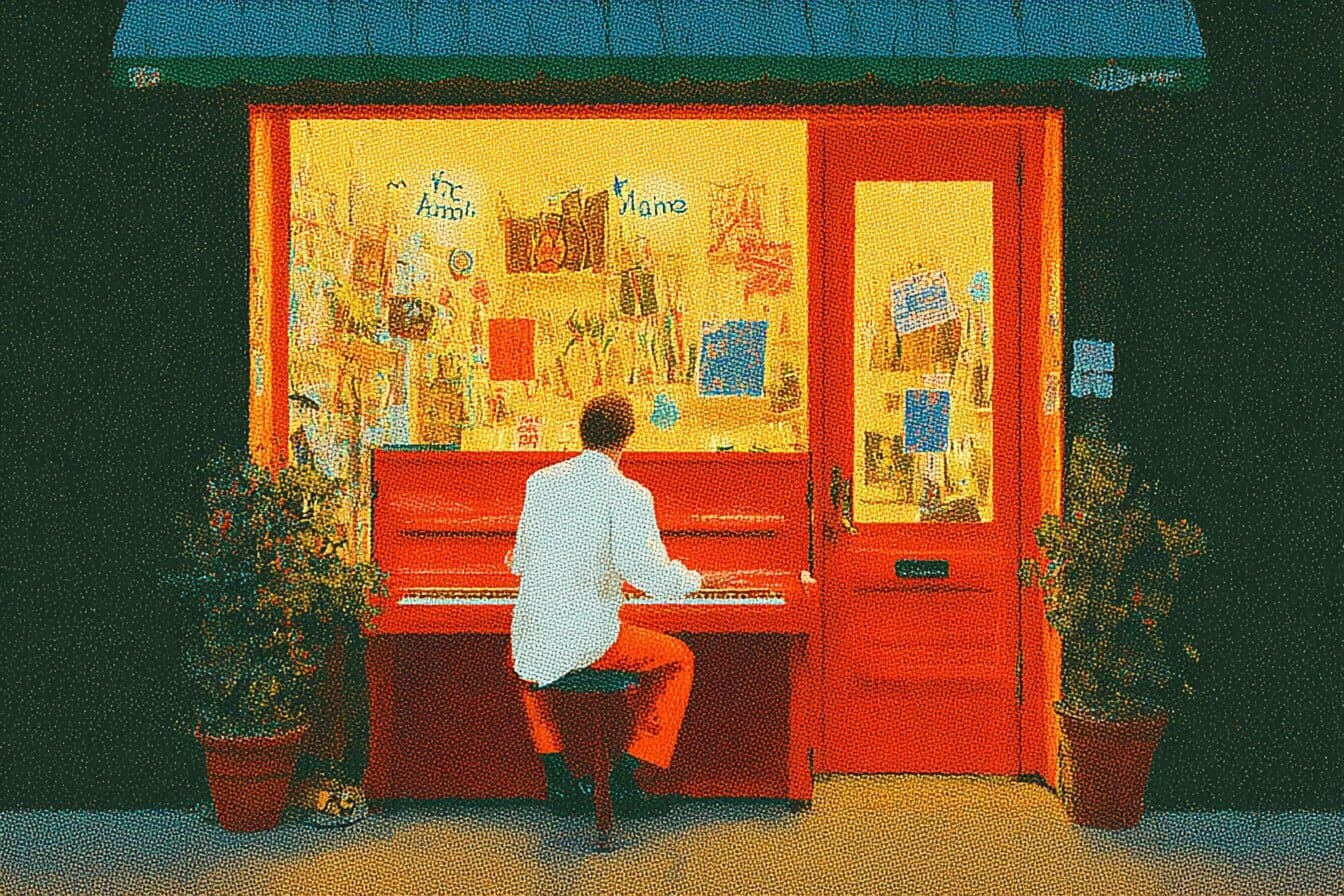
There's something about the slow swing of jazz that makes everything feel a little softer, a little closer to sleep. In The Midnight Song of the Blue Note, a brave girl named Mira follows mysterious music into an abandoned jazz club, where a ghostly singer named Lila Valentine needs help finishing one last song. It's one of our favorite short jazz bedtime stories because it wraps wonder, memory, and music into a gentle, dreamy adventure. If your child loves this kind of magic, you can create your own personalized version with Sleepytale.
Why Jazz Stories Work So Well at Bedtime
Jazz has a way of slowing time down. The gentle pulse of a walking bass line, the breathy warmth of a saxophone, and the quiet spaces between notes all mirror the way a child's breathing settles as sleep draws near. A bedtime story about jazz taps into that same rhythm, giving kids permission to let go of the busy day and simply listen. The music becomes a kind of lullaby without anyone having to call it one. There's also something deeply comforting about stories set in places full of memory and warmth. Kids may not know what a jazz club is, but they understand the feeling of a place where people gathered to share something beautiful. That emotional safety, the sense that music can carry love across time, makes jazz a surprisingly perfect backdrop for winding down at night.
The Midnight Song of the Blue Note 7 min 16 sec
7 min 16 sec
The old jazz club on 5th street closed twenty years ago.
But if you press your ear to the locked front door on a warm night, you can still hear a piano, a bass, and a voice singing something slow.
The mailman swears he's seen the lights flicker on at midnight more than once.
Mira didn't believe in ghosts, not really.
She believed in homework and leftover pizza and the way her dad's records crackled when the needle hit them.
But when her best friend Leo dared her to bike past the club after dark, she heard it too.
A low hum, like a bee trapped in a bottle.
Then a cymbal, soft as rain on a tin roof.
"You hear that?"
Leo whispered.
His breath fogged the brass mail slot.
Mira knelt.
The sidewalk smelled like old popcorn and rust.
She pressed her cheek to the door.
Cold metal.
Then inside, a woman's voice, curling like smoke: "Blue moon, I saw you standing alone..."
Mira's heart thumped.
She'd heard that song on her grandpa's favorite tape.
He'd danced her around the kitchen to it when she was five, before the cancer took him.
She hadn't thought about that in years.
The next night she came back alone.
No dare this time.
Just her, a flashlight, and a peanut butter sandwich in case she got hungry.
The door was still locked, thick chain looped through the handles.
She shone her light through the grimy window.
Inside: dusty tables, toppled chairs, a stage draped in cobwebs.
No musicians.
No ghostly glow.
Just silence.
She was turning to leave when she saw it.
A single red high heel lying on its side near the stage.
The strap was broken.
The satin was dull with dust, but the toe still gleamed.
Mira's mom had shoes like that in a box labeled "Before."
Before the twins.
Before the move.
Before everything got so busy.
The shoe twitched.
Mira stumbled back.
Her flashlight clattered to the ground.
The bulb flickered, then steadied.
The shoe twitched again, like something inside was trying to stand.
Then the music started.
Not from inside the club.
From the shoe.
A tinny, distant piano.
A man's voice counting: "One, two, you know what to do..."
She should run.
She knew she should.
But her feet felt sewn to the sidewalk.
The shoe rocked, heel scuffing the floor.
A shimmer rose from it, thin as breath on winter air.
Inside the shimmer, a tiny woman in a silver dress sat at a piano no bigger than a matchbox.
Her fingers moved.
The music grew louder.
The woman looked up.
Her eyes met Mira's.
She smiled, sad and slow.
Mira reached for the door.
Still locked.
She rattled it hard.
"Let me in!"
she yelled, not sure who she was yelling at.
"Please!"
The shimmer faded.
The shoe lay still.
The music stopped mid-note, like someone had lifted the needle off a record.
The street was quiet except for a dog barking two blocks over.
Mira came back every night for a week.
She brought offerings: a jellybean, a plastic dinosaur, a photo of her grandpa in his army uniform.
She left them by the door.
They were always gone by morning, but she never saw anyone take them.
The red shoe stayed where it was.
Sometimes she thought she saw it glow.
Sometimes she heard the faintest echo of laughter, high and sweet, like wind chimes in a storm.
On the eighth night, the door stood ajar.
Just an inch.
Just enough for moonlight to slip through.
Mira's stomach fluttered.
She pushed it wider.
Hinges groaned.
Dust motes danced in the beam of her flashlight.
Inside smelled like cedar and something else, something electric, like the air before lightning.
The red shoe was gone.
She stepped in.
Her sneakers crunched on broken glass.
The stage loomed ahead, empty.
She walked down the center aisle between rows of cracked vinyl booths.
Her shadow stretched long behind her.
She reached the stage.
Put her hand on the wood.
It was warm.
"Looking for someone, sugar?"
Mira whirled.
A woman stood behind her, tall and thin, wearing a green dress that shimmered like oil on water.
Her hair was pinned in soft waves.
Her lipstick was perfect, even though the rest of her seemed faint, like a photo left in the sun.
She held the red shoe in one hand.
"You...
you're..."
Mira's voice cracked.
"Lila Valentine," the woman said.
"I sang here every Saturday for thirty years.
Until one night I forgot the words."
She laughed, a sound like ice cracking.
"Forgot the words to my own song.
Crowd didn't mind.
They hummed along.
But I couldn't bear it.
Walked out mid-set.
Left my shoe behind like some half-rate Cinderella."
"Why are you still here?"
Lila looked past her, toward the door.
"Some songs don't end just because the singer's gone.
Some nights, the music's still hungry."
She held out the shoe.
"Put it on."
Mira shook her head.
"It won't fit."
"Not the foot, kid.
The story.
Every shoe's got a story.
Every story needs feet to walk it home."
Mira took the shoe.
It was lighter than she expected, warm as skin.
She slipped off her sneaker and pushed her foot inside.
The strap was still broken, but when her toes touched the satin, the club exploded with sound.
Trumpets.
Saxophones.
A drum kit rattling like hail on a roof.
The booths filled with people in bright clothes, laughing, clinking glasses.
A man in a fedora leaned over and lit Lila's cigarette.
She winked at Mira.
"Welcome to the after-hours set, sugar."
Mira looked down.
Her jeans and hoodie were gone.
She wore a blue dress with white polka dots.
Her hair was pinned back with a lily.
The shoe fit perfectly.
Lila took her hand.
"One song.
That's all we need.
Help me finish it."
They walked to the stage.
The crowd quieted.
Mira's throat felt dry.
She'd never sung in front of anyone, not even the shower.
But when Lila nodded, the band started.
A slow, swinging blues.
The microphone was cold against her lips.
She didn't know the words, not really.
But they came anyway, tumbling out like they'd been waiting in her chest all along.
About grandpas and kitchens and shoes that carry more than feet.
About doors that stay open if you remember to listen.
About songs that travel through years, looking for someone to carry them home.
Her voice wasn't smooth like Lila's.
It cracked on the high notes.
But the crowd leaned in.
A woman in the back wiped her eyes.
The man in the fedora closed them, swaying.
When the last note faded, the club fell silent.
Then applause, soft at first, then thunderous.
Mira looked for Lila.
The woman was already fading, green dress dissolving into moonlight.
She smiled once, bright as a camera flash.
Then she was gone.
The shoe was empty in Mira's hand.
The club was dark again.
Dusty.
Quiet.
Her own clothes were back.
The lily lay on the stage, already browning at the edges.
She walked home barefoot, carrying the red shoe.
The sidewalk was cool.
Somewhere a cat yowled.
She didn't look back.
She didn't need to.
She knew the door would be closed tomorrow.
But she also knew the music would still be there, humming low, waiting for the next listener brave enough to knock.
At home, she tucked the shoe into her closet, behind the box of Legos.
She didn't tell anyone.
Some stories walk better alone.
But sometimes, on warm nights, she opens the window and hums a few bars.
Just in case someone's listening.
Just in case a song is still hungry.
Just in case a shoe needs walking home.
The Quiet Lessons in This Jazz Bedtime Story
This story gently explores bravery, as Mira returns night after night to the locked jazz club despite her fear, showing children that curiosity can be stronger than worry. It also touches on the power of memory and connection, especially in the moment when Mira hears her grandpa's favorite song and recalls dancing in the kitchen with him as a little girl. Lila's request to help finish her song teaches something beautiful about generosity: sometimes the kindest thing we can do is help someone else tell their story. These themes settle softly at bedtime, when kids are most open to feeling brave and loved.
Tips for Reading This Story
When Lila Valentine first appears and says 'Looking for someone, sugar?', try a warm, smoky voice and draw out that last word to capture her vintage charm. Slow your pace during the moment Mira slips on the red shoe and the club erupts with trumpets and saxophones; let each instrument bloom in your voice before the crowd settles to listen. When Mira finally sings on stage, soften to almost a whisper so the room feels hushed and close, just the way the audience in the story leans in.
Frequently Asked Questions
What age is this story best for?
This story works best for children ages 5 to 10. Younger listeners will love the magical transformation of the dusty club and the shimmering image of tiny Lila at her matchbox piano, while older kids will connect with Mira's memories of her grandpa and the bittersweet beauty of helping Lila finish her final song.
Is this story available as audio?
Yes, you can listen to the full audio version by pressing play at the top of the page. This story sounds especially wonderful out loud, from the soft echo of Lila Valentine's singing curling like smoke to the moment the club erupts with sound when Mira slips on the red shoe. It's the kind of tale that was truly made to be heard.
Why does Mira sing a song she doesn't know the words to?
In the story, the words come to Mira naturally because the song is built from her own feelings and memories, like dancing with her grandpa in the kitchen and the meaning carried inside a single red shoe. Lila explains that every story needs feet to walk it home, and Mira's emotions become the lyrics. It's a lovely way to show kids that sometimes our hearts know things our minds haven't quite figured out yet.
Create Your Own Version
Sleepytale turns your child's imagination into a personalized bedtime story in moments. You can swap the jazz club for a moonlit orchestra hall, change Mira into your child's name, or replace the red shoe with a golden trumpet. In just a few clicks, you'll have a cozy, musical story ready to carry your little one off to sleep.
Looking for more music bedtime stories?

Rock Bedtime Stories
A dad's secret past as a crowd surfing guitarist sparks a family jam session in one of our favorite short rock bedtime stories.
Rap Bedtime Stories
Ever wondered why short rap bedtime stories help kids sleep? Suki's sticky note rhymes and Milo's shoebox surprise say it all.
Pop Bedtime Stories
What happens when Mina performs for glowing jellyfish in one of our short pop bedtime stories featuring a silver pearl?
Orchestra Bedtime Stories
Mia's single triangle note unites a quarreling orchestra in one of our favorite short orchestra bedtime stories for little listeners.
Lullaby Bedtime Stories
Enjoy short lullaby bedtime stories like Mira's magical night Lark Lane, where a glowing feather chooses its keeper.
Kpop Bedtime Stories
A copper gold seed leads Jennie through Central Park in one of our favorite short kpop bedtime stories.