
How Bedtime Stories Are Read
By

Dennis Wang, Bedtime Story Expert
9 min 46 sec
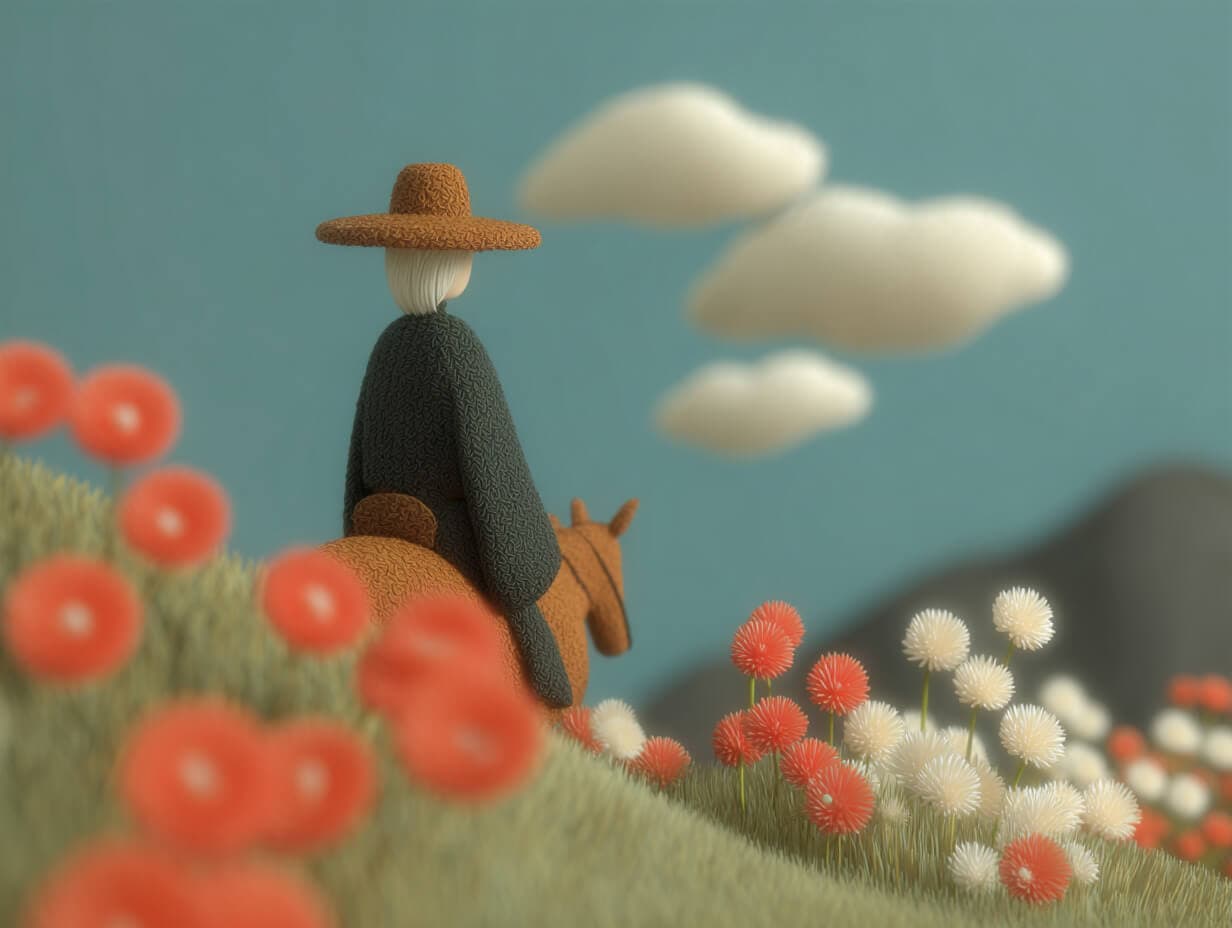
There is something about the last few minutes before sleep, when the lamp is low and a child's breathing starts to slow, that makes a story feel almost physical. The right words at the right pace can settle a restless body the way a warm blanket does. In "The Starlight Bloom," a girl named Rosie rides across the prairie on a quiet quest, and the story itself is shaped to show how bedtime stories are read when the goal is not excitement but a gentle landing into sleep. If you want to build your own version of that kind of reading experience, Sleepytale lets you create stories tailored to your child's world and your family's nightly rhythm.
Why Bedtime Story Reading Works So Well at Bedtime
The way a story is read aloud matters almost as much as what happens in the plot. When a parent's voice drops half a register and the sentences get shorter, a child's nervous system picks up on those cues even before the brain processes the words. A bedtime story read slowly, with pauses between scenes and soft images like stars or campfires, teaches the body that the day is winding down. It is a ritual as much as a narrative.
Kids also need a sense of completion before they can let go of the waking world. Stories with clear arcs, where someone leaves home, faces something uncertain, and returns safely, mirror the emotional shape of a child's day. That predictable resolution gives them permission to stop thinking and start drifting. Reading a story at bedtime in a calm, deliberate way turns the act of storytelling into a signal that everything is handled and it is safe to close your eyes.
The Starlight Bloom 9 min 46 sec
9 min 46 sec
Rosie tightened her purple bandana and patted Clover's neck, right on the warm spot where the mare's pulse thumped under the coat. The two of them stood at the edge of town, looking out at a horizon that seemed too far away to be real.
Maple Ridge was sick. Not the kind of sick where you stay in bed for a day and eat soup, but the kind where the whole town goes quiet. People coughed behind closed doors. Ponies stood still in their paddocks. Even the wind chimes on Mrs. Hartley's porch, the ones that never stopped jangling, hung silent.
The old stories said there was a flower. It only opened under starlight, somewhere past the canyons, and its petals could heal what ordinary medicine could not.
Rosie was not sure she believed that.
But she believed in doing something, which felt better than believing in nothing.
"We can do it, girl," she said into Clover's ear. The mare snorted and stamped once, which Rosie decided to interpret as agreement.
They trotted past the last fence post. The prairie opened up around them, wide and humming with crickets, and for a while neither of them looked back.
By midday the sun sat directly overhead like it had nowhere better to be. Rosie dismounted to let Clover drink from a shallow stream. The water was so clear she could see every pebble on the bottom, brown and orange and one that was almost green. She studied the map she had drawn on birch bark. Two buttes, a twisty ravine, and the Whispering Canyon still stood between her and a flower she was only half sure existed.
She folded the bark, tucked it away, and swung back up.
Late afternoon brought sage on the wind. Clouds drifted overhead in shapes that looked like ships if you squinted, or maybe just like clouds. Rosie hummed a song her mother used to sing, the one about the river that forgot where it was going. It helped for a while. Then the worry crept back in, small and sharp.
What if the flower was not real.
What if she got turned around in the dark.
She shook her head hard enough that her hat slipped sideways. Worry was like a burr. You had to brush it off before it worked its way in and stuck.
As the sun dropped, painting everything in shades of pink and apricot, a herd of wild mustangs appeared on a hill. Their manes moved in the wind. One foal, braver or dumber than the rest, came trotting over with its ears pointed straight up.
Rosie held still and spoke low. "Hello, little one. We are looking for something."
The foal stared at her for a long moment, then let out a high whinny and bolted back to the herd. Rosie laughed, a short surprised sound that she had not expected to make.
Night came on gradually, like someone dimming a lamp one notch at a time.
Rosie made camp under a cottonwood whose branches reached so wide they blocked half the sky. She rolled out her bedding, built a small fire from twigs, and set beans heating in a tin pot while Clover grazed nearby, tearing up grass with that steady ripping sound horses make. For a while Rosie practiced lassoing a stump, just to keep her hands busy. The rope whipped overhead, humming through the air, and settled around a low branch.
Good. If trouble came, her aim would hold.
She ate her beans. They were not great. She scraped the pot clean anyway, because out here you did not waste food, and then she lay back and watched the stars until her eyes closed on their own.
Morning arrived gold and cool. She doused the fire, packed everything tight, and rode toward the ravine.
The trail pinched narrow. One horse wide, maybe. Below, rocks jutted up in jagged rows, and Rosie did not look down more than once. Clover picked each step with the kind of slow care that made Rosie hold her breath between hoofbeats.
Halfway across, a hawk screamed overhead.
Clover spooked. Her back hooves skidded on gravel, and for one horrible second the world tilted. Rosie's stomach dropped straight through her boots. She leaned forward, grabbed mane, and put her mouth close to Clover's ear. "Easy, easy, you are fine, you are doing fine." She kept saying it, steady and low, until Clover stopped shaking and found her footing again.
They made it across.
Rosie slid off the saddle on the other side and stood with both hands on her knees, breathing hard. Clover nosed her shoulder as if to say, "That was not my best work." Rosie scratched the mare behind the ear and said nothing, because sometimes there is nothing to say.
Beyond the ravine, hills rose and fell, dotted with purple sage. Rosie walked instead of riding, giving Clover's legs a rest. Grasshoppers launched themselves out of the way with every step. The air smelled like dust and something sweet she could not name.
By sunset they reached a rise, and below them lay the Whispering Canyon. It was enormous, a deep gash in the earth where wind moved through stone spires and made sounds that were almost words. Legend said the canyon could guide the worthy. Rosie was not sure what "worthy" meant, exactly, but she figured showing up counted for something.
She made camp at the rim. No fire this time. She needed the dark.
She fed Clover a handful of oats from the bottom of the saddlebag and sat cross-legged, watching stars fill the sky one by one like someone was lighting them individually. When the whole canopy glittered, she stood, settled her hat, and led Clover down a narrow path into the canyon.
Moonlight turned the stone walls silver. The wind hummed and shifted through the rocks, sometimes sounding like drums in the distance, sometimes like someone laughing softly in another room. Rosie's shadow stretched ahead of her, long and thin, and she thought it looked braver than she felt.
Her father's voice came back to her. "Courage is not the absence of fear. It is riding alongside it."
She touched the pocket where she kept the family's lucky feather, a little hawk plume with a bent tip. It did not actually do anything. But it helped her remember that people she loved believed she could do this, and that was close enough to magic for now.
Hours passed. Her legs ached in that deep tired way that goes past muscles and into bone. Her eyelids drooped. She was about to wonder, really wonder, if the stories were only stories after all.
Then a faint glow flickered around the next bend.
Her pulse picked up.
She came around the corner and stopped.
In a moonlit alcove, growing from a crack in the stone where nothing should have been able to grow, a single vine held a star-shaped blossom that shimmered. Not glowed exactly, more like it was catching light that was not there. The petals looked like they had been cut from something between water and glass.
Rosie stood still for a long time. She was afraid that if she moved too fast, it would disappear the way good dreams do when you wake.
Then she knelt, unscrewed her canteen, and poured a few drops of water at its roots. It felt like the right thing to do.
She whispered the old words her grandmother had taught her, words she had practiced so many times they came out steady despite the tremble in her hands, and she cut the stem with her pocketknife. She wrapped the bloom in a soft bandana and tucked it inside her vest, next to her heart, where she could feel its faint warmth against her ribs.
The ride home blurred together in the way that return trips always do.
At dawn they climbed out of the canyon and into sunlight so bright it made Rosie squint. Prairie dogs popped up from their burrows and chirped at her like she was late for something. A cool wind pushed clouds in from the west, and by afternoon a gentle rain fell, the first in weeks.
Two days later Maple Ridge appeared on the horizon, rooftops first, then chimneys trailing smoke, then the church bell ringing noon.
Rosie rode down Main Street at a canter. Neighbors stopped and stared. A few waved slowly, like they were not sure they were seeing her right.
Doc Ellery waited on the clinic porch. He looked like he had not slept in days, his spectacles crooked and his shirt untucked on one side. Rosie pulled out the flower. Its shimmer had faded, but a soft glow still clung to the petals.
Doc Ellery smiled. It was the first time she had seen him smile since before the sickness started.
He ground the petals into tea, stirred in honey, and gave a spoonful to the sickest patients first. By nightfall the coughing stopped. By morning, voices came back. The roosters crowed like they meant it again, and Mrs. Hartley's wind chimes caught the breeze and rang out so bright that people on the next street could hear them.
That evening the town strung colored lanterns between the buildings. Somebody played fiddle. Somebody else brought peach pie, still warm, with a lattice crust that was slightly burned on one edge.
Rosie sat on a hay bale with her boots crossed. Clover stood beside her, eating oats from a bucket and occasionally nosing Rosie's hair until it stuck up in odd directions.
Mayor Dawson clinked a spoon against a jar and called Rosie a hero. She turned the color of sunset and said, "We just did what needed doing." Which was true, and also the only thing she could think of to say with that many people looking at her.
Later, in her own bed, the window open, she listened to the crickets. She thought about the hawk, the foal that ran away, the canyon's strange voice. About the flower glowing in the dark.
There was more out there. She knew that. But tonight the quilt was warm, and the town was quiet in the good way, and Clover was asleep standing up in the barn, and that was enough. The rest could wait for morning.
The Quiet Lessons in This Bedtime Story
Rosie's journey carries a handful of ideas that settle well into a child's mind right before sleep. When she shakes off her worries on the trail, comparing them to a burr that needs brushing away, kids absorb a small, practical way to handle anxious thoughts without being told to "stop worrying." The moment on the ravine, where Clover panics and Rosie talks her through it with a steady voice, shows that staying calm for someone else is its own kind of bravery, and that fear does not have to mean failure. And the way Rosie pours water on the flower's roots before taking it teaches generosity as instinct rather than obligation. These are the kind of lessons that feel safe at bedtime, gentle reminders that tomorrow's hard things are manageable, delivered while a child is already wrapped up and winding down.
Tips for Reading This Story
Give Rosie a quiet, steady voice, the kind of kid who does not raise her volume even when she is scared, and let Clover's snorts and stamps be big and breathy so the two of them sound like a real team. When Rosie crosses the ravine and Clover skids on the gravel, slow your pace way down and read her calming words almost in a whisper, because that is the scene where your child will lean in closest. At the very end, when Rosie is lying in bed listening to crickets, match her stillness: drop your voice to barely above a murmur and let the last sentence trail off like you are falling asleep too.
Frequently Asked Questions
What age is this story best for?
"The Starlight Bloom" works well for children ages 4 to 8. Younger listeners connect with Clover, the foal encounter, and the clear good-versus-sick structure, while older kids appreciate Rosie's self-talk on the trail and the tension of the ravine crossing. The language is simple enough for a four-year-old to follow but layered enough that a second grader will not feel talked down to.
Is this story available as audio?
Yes. You can press play at the top of the story to hear it read aloud. The audio version works especially well for the canyon scenes, where the descriptions of wind humming through stone and moonlight on the walls become almost atmospheric when heard rather than read. Rosie's quiet dialogue also comes alive with a narrator's voice, particularly the moment she says "we just did what needed doing" at the celebration.
Does the story have any scary parts for sensitive kids?
The ravine crossing is the most intense moment, when Clover slips on gravel and Rosie has to calm her down. It is brief and resolves quickly, with Rosie using a soothing voice rather than anything dramatic. There are no villains, no loud confrontations, and no real danger beyond that one scene, so most sensitive listeners handle it comfortably, especially if you read that section slowly and calmly.
Create Your Own Version
Sleepytale lets you build a story like this one with your child's name, their favorite animal as the trusty companion, and a setting that feels like home, whether that is rolling prairies or a neighborhood park at dusk. You can choose a calm tone, adjust the length to fit your family's reading time, and add familiar details so the story becomes a nightly ritual your child asks for by name. In a few taps you will have a personalized adventure ready to read aloud or play as audio, shaped to match the way your family winds down together.
Looking for more kid bedtime stories?
Bedtime Poems For Kids
Discover short bedtime poems for kids through a story where a boy says goodnight to kettles, slippers, stars, and a goldfish named Planet.

Scary Story Ideas For Kids
Looking for short scary story ideas for kids that feel cozy, not overwhelming? Meet Sir Boop, a bow tie wearing ghost who judges spooky slips from an Idea Jar.
Interactive Children's Stories
Discover short interactive children's stories where a girl named Wren makes choices guided by a paper fox bookmark called Flip.
Ghost Stories For Kids
The scariest thing about Puddle the ghost is his giggle, not his boo, in one of the sweetest short ghost stories for kids.
Adventure Stories For Kids
A folded map hidden inside a library book sends two friends a treasure hunt in one of our favorite short adventure stories for kids.
Native American Stories For Kids
Discover short native american stories for kids through a fireside tale of geese, gratitude, and a grandfather's gentle wisdom.