
Grocery Store Bedtime Stories
By

Dennis Wang, Bedtime Story Expert
8 min 58 sec
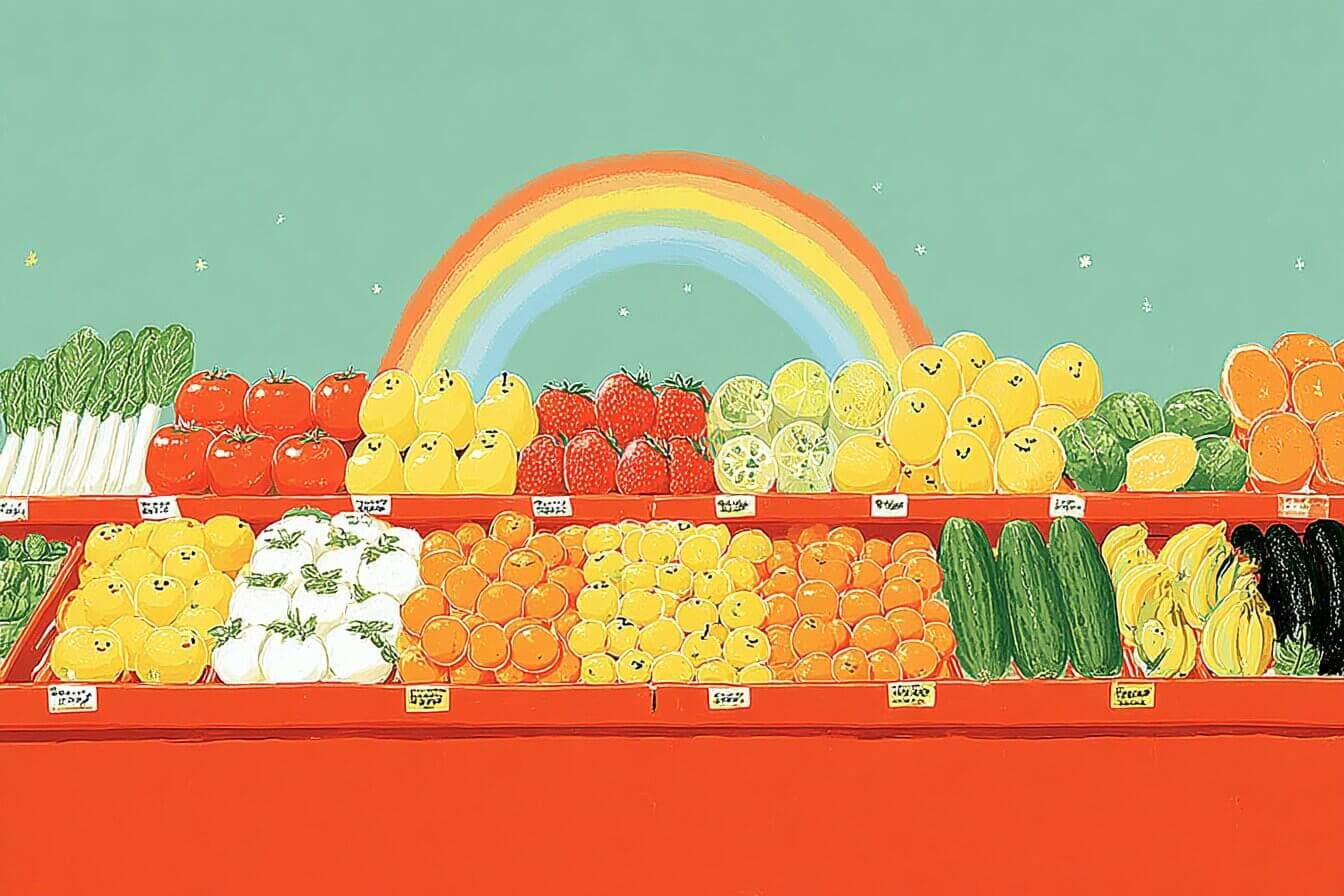
There is something about the quiet hum of a market at closing time, the way light catches a pyramid of lemons, the faint mist over the lettuce, that makes even adults slow down and breathe. Kids feel it too, and that is exactly why grocery store bedtime stories land so gently before sleep. Tonight's tale follows a curious girl named Mira through every color of the produce aisle as she hunts for the perfect dish to share at a neighborhood potluck. If your child loves stories built around the places they already know, try creating your own version with Sleepytale.
Why Grocery Store Stories Work So Well at Bedtime
A grocery store is one of the first "big world" places a child learns to navigate, and that familiarity is exactly what makes it such a powerful setting for a bedtime story about a grocery store adventure. Kids already know the rhythm of walking aisle to aisle, the cool air near the dairy, the colors stacked along the produce wall. When a story unfolds in a space they can picture perfectly, their minds settle instead of race.
There is also a natural slowness to shopping that mirrors the pace of winding down. Nobody sprints through the fruit section. A character who pauses to smell a lemon or count peas in a pod gives a child permission to linger, too, which is exactly the kind of breathing room kids need right before they close their eyes.
The Rainbow Aisle Parade 8 min 58 sec
8 min 58 sec
Mira pressed her nose against the cool glass window of Sunnyvale Market and watched the morning lights stutter on, one bank at a time, the way a yawn travels across a classroom.
Row after row of fruits and vegetables appeared beneath the fluorescent glow, and the whole store looked like someone had cracked a rainbow in half and arranged the pieces on shelves.
Red apples shone near the door. Orange carrots pointed every which way. Yellow lemons formed neat pyramids. Green lettuces fluttered at the edges. Blueberries sat in their plastic clamshells like marbles nobody had claimed yet, and purple eggplants stood glossy and silent at the far end.
Mira loved learning things. She also loved hopscotch, and she was pretty sure one day she would figure out how to combine the two, but today was not that day.
Today was Harvest Festival.
Mama had given her one job: pick a mystery produce item to bring to the neighborhood potluck.
She tugged a tiny notebook from her jacket pocket. The cover was bent because she had sat on it yesterday, but the pages inside were clean.
She pushed through the door.
A clerk in a green badge that read "Ask Me About Apples!" waved from behind a display of honeycrisps.
"Morning! Looking for anything special?"
"Why do fruits come in different colors?" Mira asked, because she had never been good at small talk.
The clerk laughed. "Each color usually means different vitamins hiding under the skin. Like a secret code."
Mira liked secret codes. She marched straight to the red section, where a crate of radishes sat looking like miniature planets.
She learned that red produce was famous for something called lycopene, a nutrient that helped hearts stay strong. She wrote the word in curly letters and drew a heart beside it. The pen smudged a little. She did not fix it.
She also learned that tomatoes, though everyone called them vegetables, were technically fruits because they carried seeds inside.
She bit into a grape tomato the clerk offered, and its juice was warm and sweet, almost startling. Like the store had hidden a tiny piece of July in there.
She thanked the radishes, which of course said nothing back, and skipped onward.
The orange section smelled faintly of dirt, the good kind. Sweet potatoes lounged in a low wooden bin, smooth as river stones somebody had polished with a thumb.
A produce worker stacking peppers explained that orange foods held beta carotene, which helped eyes stay sharp.
Mira blinked dramatically, pretending to polish her retinas like windshields.
The worker snorted.
She poked a butternut squash. It was heavier than it looked. She learned it stored energy in its bright flesh so people could feel warm even on cold days.
She sketched a little eye wearing spectacles and wrote "beta carotene" in orange.
She also found out that carrots, if you gave them loose soil and enough room, could grow as long as a forearm, though most stayed short enough for lunchboxes.
She balanced a carrot on her palm like a seesaw, watched it wobble, and moved on.
The yellow section shimmered.
Golden beets, sweet corn, and starfruit formed constellations across the shelf, and Mira had to stop herself from rearranging them into an actual constellation she knew.
A grandmotherly woman reaching for a grapefruit told Mira that yellow produce often carried vitamin C, the one that helped skin heal and helped you bounce back from colds faster.
Mira held a lemon close and inhaled. It stung the inside of her nose, but in a good way.
She learned that corn kernels grew in perfect rows because each strand of silk connected to exactly one kernel. Mathematics, right there on the cob. She drew a tiny multiplication sign beside the word "patterns."
She also learned that bananas ripened faster in a paper bag because a gas called ethylene gathered inside and encouraged sweetness.
She scribbled: "Gas can be good!" and underlined it twice.
Then she walked into the green section, and it smelled like the backyard after rain.
Broccoli stood in bunches. Spinach leaves curled at their edges. Peas rattled softly in pods whenever someone walked past and bumped the display.
A stock boy explained that chlorophyll gave these vegetables their color and helped plants turn sunlight into energy, a process called photosynthesis.
Mira said the word slowly. "Pho. To. Syn. The. Sis."
The stock boy gave her a thumbs up.
She cracked open a sugar snap pea and counted six round passengers inside, each one wearing a tight green coat. One rolled off her palm and pinged against the tile floor. She picked it up, wiped it on her shirt, and ate it anyway.
She wrote "chlorophyll" in swirly letters and added a smiling sun.
She discovered that darker lettuces held more nutrients than lighter ones, which meant color depth mattered, a fact she planned to use the next time someone told her to eat her salad.
She thanked the broccoli for looking like tiny forests and moved on.
Blue and purple.
Plump blueberries, glossy eggplants, violet grapes bunched like chandeliers for mice.
A clerk explained that purple produce carried antioxidants, helpers that cleaned up troublemaking molecules inside the body.
Mira imagined tiny janitors in purple uniforms, sweeping.
She tasted a blueberry. It popped between her teeth, sweet and a little tart at the finish, and left a stain on her thumb she would notice three hours later.
She learned that blueberries floated because each one held a small pocket of air inside. She drew a blueberry wearing water wings.
She also found out that eggplants soaked up flavors the way a sponge soaks up water, which made them perfect for stir fries.
She wrote "antioxidants" in purple and added a tiny broom.
Finally she reached the pale, quiet end of the rainbow.
Cauliflower clouds. Mushroom umbrellas. Ginger knots that looked like something a wizard would keep in a coat pocket.
A chef selecting ingredients nearby told her that white vegetables contained compounds that helped immune systems stay alert.
Mira poked a cauliflower head. It felt like a sheep made of vegetable snow, which was not a comparison she had ever needed before, but there it was.
She learned that mushrooms were fungi, not plants, and that underground they sent chemical signals to each other through networks scientists actually called the "wood wide web."
She drew a speech bubble near a mushroom and wrote "hello!"
She discovered that ginger grew as a rhizome, a stem that traveled sideways through the soil, and that it could calm an upset stomach.
She wrote "immune helpers" in gentle beige and closed her notebook.
Now the hard part.
She still had to choose one item for the potluck, and she wanted something that held every color, which was impossible unless she found a vegetable that was also a kaleidoscope.
Then she spotted it.
Near the checkout, a display held kits for rainbow veggie skewers. Each stick was designed to hold a red cherry tomato, an orange pepper square, a yellow squash moon, a green zucchini star, and a purple onion petal.
"Can I take one of these kits?" she asked.
The clerk cheered. Actually cheered, like Mira had won something.
She paid with coins from her jacket pocket, the same pocket with the bent notebook, and carried the bag outside where Mama waited.
On the walk home, Mira explained how each color helped bodies in different ways, and Mama listened with eyes that kept getting wider, which Mira found very satisfying.
That evening the neighborhood gathered beneath lantern lights. Kids munched Mira's rainbow skewers while she shared her facts. A few children squealed when they heard blueberries float. One adult clapped when she pronounced photosynthesis without pausing. And everybody wanted to know if tomatoes were really, truly, honestly fruits.
They were.
Later, tucked under her blanket with the notebook on her nightstand, Mira could still smell the green section if she thought hard enough.
She whispered a quiet thank you to the rainbow aisle.
Somewhere across town, Sunnyvale Market hummed in the dark, its shelves stocked and patient, waiting for whoever would wander in next.
The Quiet Lessons in This Grocery Store Bedtime Story
Mira's walk through the aisles is really about the courage to make a choice when the options feel endless, and the discovery that asking questions is never something to be embarrassed about. When she blurts out "Why do fruits come in different colors?" instead of making small talk, kids absorb the idea that genuine curiosity is more interesting than knowing the right thing to say. Her decision to pick the rainbow skewer kit, rather than agonizing over a single "perfect" item, shows children that creative solutions often come from paying attention instead of stressing. These are reassuring ideas to carry into sleep: tomorrow is full of things to notice, and you do not have to have all the answers before you start.
Tips for Reading This Story
Give the "Ask Me About Apples!" clerk a cheerful, slightly too-loud voice, and let Mira sound quietly serious by contrast, the humor comes from the gap between them. When Mira counts the six peas and one rolls onto the floor, pause for a beat and let your child laugh or gasp before you continue. Slow your pace in the green section where the story mentions the smell of rain; a deep breath there gives the whole room a moment to settle before the final stretch.
Frequently Asked Questions
What age is this story best for?
It fits children ages 3 to 8 nicely. Younger listeners love the colors and the image of blueberries wearing water wings, while older kids get excited by the real science words like photosynthesis and lycopene. Mira's notebook habit also models something school-age children can try themselves.
Is this story available as audio?
Yes. Press play at the top of the story to hear it read aloud. The audio version really shines during the produce aisle scenes, where each color section has its own rhythm, and Mira's slow pronunciation of "pho-to-syn-the-sis" is fun to hear spoken out loud. It makes a great wind-down listen with the lights already dimmed.
Will my child actually learn real nutrition facts from this story?
The facts woven in, like lycopene in red produce, beta carotene in orange vegetables, and the role of chlorophyll, are real and age-appropriate. Mira's notebook entries simplify them without making them wrong, so if your child asks follow-up questions at the grocery store next time, you can build right on top of what the story introduced.
Create Your Own Version
Sleepytale lets you turn any everyday errand into a cozy bedtime adventure built around your child. Swap Sunnyvale Market for your family's local shop, replace Mira with your little one's name, or change the potluck into a picnic, a bake sale, or a school lunch challenge. In a few taps you will have a gentle, personalized story you can replay whenever the lights go down.
Looking for more kid bedtime stories?
Bedtime Poems For Kids
Discover short bedtime poems for kids through a story where a boy says goodnight to kettles, slippers, stars, and a goldfish named Planet.
Scary Story Ideas For Kids
Looking for short scary story ideas for kids that feel cozy, not overwhelming? Meet Sir Boop, a bow tie wearing ghost who judges spooky slips from an Idea Jar.
Interactive Children's Stories
Discover short interactive children's stories where a girl named Wren makes choices guided by a paper fox bookmark called Flip.
Ghost Stories For Kids
The scariest thing about Puddle the ghost is his giggle, not his boo, in one of the sweetest short ghost stories for kids.
Adventure Stories For Kids
A folded map hidden inside a library book sends two friends a treasure hunt in one of our favorite short adventure stories for kids.
Native American Stories For Kids
Discover short native american stories for kids through a fireside tale of geese, gratitude, and a grandfather's gentle wisdom.