
Gravity Bedtime Stories
By

Dennis Wang, Bedtime Story Expert
7 min 46 sec
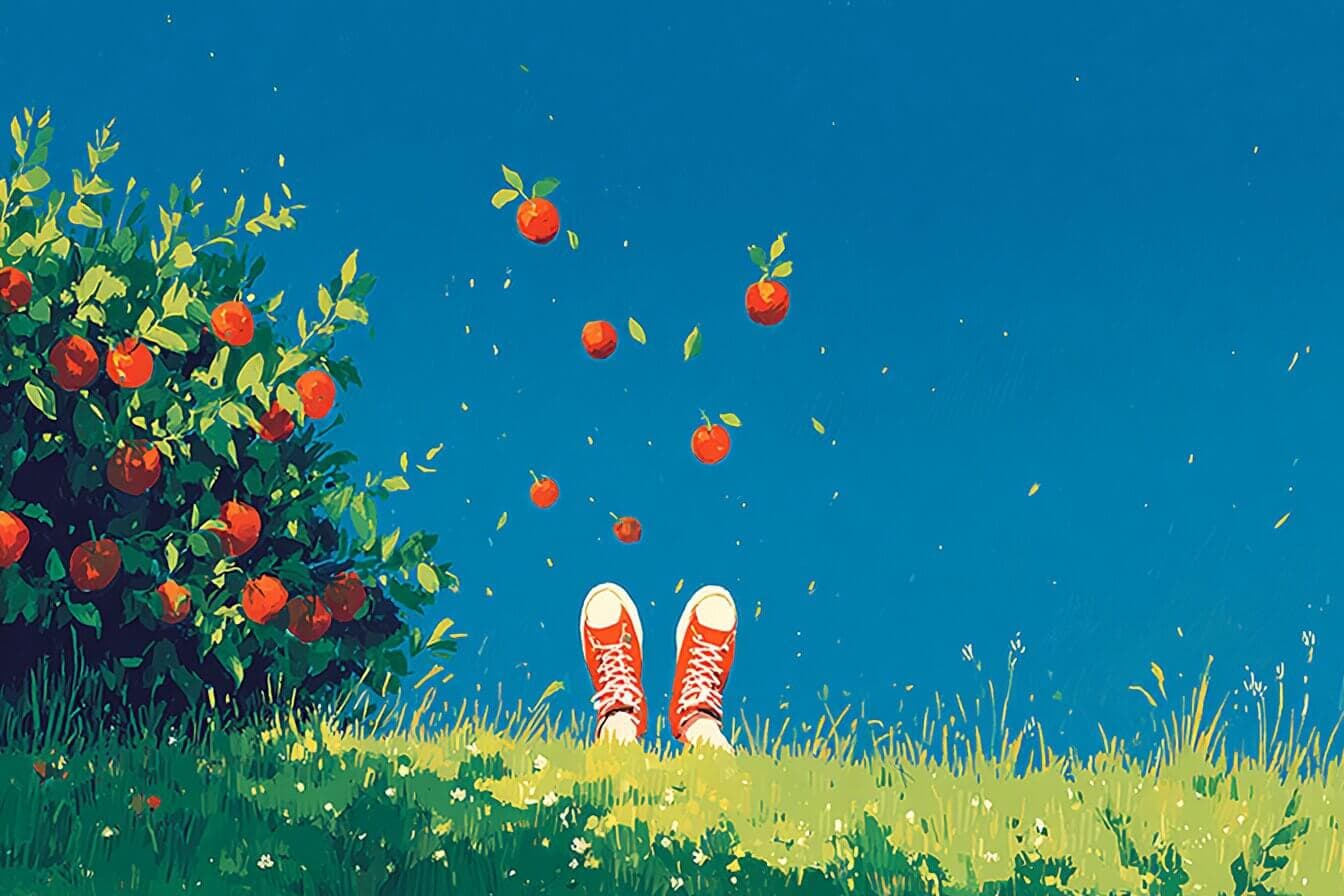
There is something deeply settling about the idea that the whole planet is holding you in place, keeping you anchored while you sleep. In this story, a curious squirrel named Milo takes a tumble from a branch and discovers that the force pulling him down is actually the friendliest thing in the forest. It is one of those gravity bedtime stories that turns a science concept into something warm and safe enough to fall asleep to. If your child loves wondering why things fall, you can create your own version, with their name and favorite details woven right in, using Sleepytale.
Why Gravity Stories Work So Well at Bedtime
Gravity is one of the first invisible forces a child notices without anyone explaining it. They drop a spoon from a high chair, watch a ball roll down a slope, feel their own body sink into a mattress at the end of the day. That constant, reliable pull mirrors exactly what a bedtime story should feel like: steady, predictable, always there. Stories about gravity tap into a child's earliest experiences of how the world works, and that familiarity is calming.
There is also something poetic about the idea that the Earth itself is holding you. For a child lying in bed, a story about gravity reframes the heaviness of tired limbs as the planet giving a hug. It transforms the pull of sleep from something to resist into something to welcome. A bedtime story about gravity, told slowly, can make the whole room feel like it is settling with the child.
Milo and the Gentle Pull of the Earth 7 min 46 sec
7 min 46 sec
Milo was a small brown squirrel who loved to leap between branches. He was not especially graceful about it. One autumn morning, his back foot caught a patch of wet bark, and he slipped.
He fell.
Instead of crashing, he landed in a pile of golden leaves that puffed up around him like a cough. He lay there a moment, blinking at the towering oak he had just left, feeling the cold dampness of the leaves soaking through his fur.
A chuckle came from above. "Gravity caught you again," said Newton, an old gray owl who ran forest school from a crook in the tree. His feathers were the color of dryer lint, and one of his ear tufts always pointed slightly sideways.
Milo brushed off his tail. "What is gravity?"
"A gentle pull," Newton said, settling his wings. "It keeps your feet on the ground and makes apples fall from trees. It is the reason puddles stay in puddles and you sleep in your nest instead of drifting off into the stars."
Milo had seen apples drop a hundred times. He had dodged them, eaten them, complained about them bonking his head. But he had never once asked why.
Newton invited him to join the other young animals for a morning of discovery beneath the branches. Milo scampered over to where a circle of rabbits, mice, and a shy hedgehog named Tilly sat waiting. Each one held a small object: a pebble, an acorn, a feather, and a shiny red apple with a dent on one side.
Newton asked them to guess which item would reach the ground first if they all let go at once.
The chatter was immediate. "The apple, obviously." "No, the pebble, it's heavier for its size." "The feather will lose."
Milo stayed quiet. He was thinking about leaves, the way they drifted and twirled and took their time, while stones just dropped like they had somewhere to be.
Newton gave a nod and counted to three. Everything tumbled through the crisp air. The pebble, the acorn, the apple, even the feather, they all hit the ground at nearly the same moment, landing together with a single soft thud.
Silence. Then gasps.
Tilly's quills stood up a little. Milo's heart did something quick and fluttery.
All things, heavy or light, fell at the same speed. The air could slow some of them down, Newton explained, but the pull itself played no favorites. Milo liked that. It seemed fair.
The owl led the class to the brook where smooth pebbles lined the bank like a collection nobody remembered starting. He explained that Earth's gravity pulls toward its center, like invisible arms wrapping around the planet from every direction.
Milo pictured a giant hug, the whole world squeezed gently inward. He sat on the bank and felt the cold stone through his paws and thought, for the first time, that the ground holding him up was doing it on purpose.
Newton challenged the students to find something that would not fall straight down when released. Tiny paws scattered. Dandelion seeds were lifted and let go, catching the breeze and sailing sideways instead of dropping. Milo watched one drift over the brook and vanish behind a birch tree, going absolutely nowhere useful. He grinned.
He tried a maple seed next, twisting its papery wing between his claws and letting it spin. It whirled downward in slow spirals, like it was taking the scenic route. The class cheered.
Tilly, who had been quiet all morning, raised a paw. "Why doesn't the moon crash into the Earth," she asked, "if everything gets pulled?"
Newton spread his wings wide. He spoke about balance, about how the moon is always falling toward the Earth but also moving forward fast enough that it keeps missing. The two forces together make a path, a loop, an orbit. Around and around, forever.
Milo pictured the moon rolling through the sky like a silver marble in a groove worn smooth by time. He wanted to try something like that himself, so he climbed the smallest hill nearby, curled into a ball, and let go.
Gravity took over. He tumbled down, giggling, leaves flying off him in every direction. He hit the bottom and lay there with his legs in the air.
The animals clapped. Newton hooted. One rabbit said, "Do it again," and Milo did, three more times, until he was dizzy and covered in bits of bark.
After the fun settled, Newton presented a challenge. Each student had to use gravity to help someone before sunset.
Milo's mind went to work immediately. He spotted Mr. Beaver struggling to drag a heavy branch across the clearing for his dam. The branch was thick and stubborn, and Mr. Beaver's forehead was slick with effort.
"What if we roll it downhill instead?" Milo said.
Mr. Beaver looked at the slope. Looked at the branch. Looked at Milo. "Huh," he said.
Together they hoisted the limb to the top of the rise and let the gentle pull do the rest. It slid smoothly down to the edge of the pond, and Mr. Beaver slapped his tail twice on the water, which was his way of saying something had gone extremely right.
Milo's chest went warm.
Not far away, Tilly had found a baby bird on the ground. It was unharmed but too young to fly back to its nest high in the sycamore. The fledgling kept opening its beak at nothing, confused by the sudden largeness of the world.
Tilly remembered how the maple seed had spun slowly and asked Milo for help. They gathered three wide fern fronds and tied them together with grass to make a rough parachute. It looked ridiculous. Milo climbed the tree anyway.
At the count of three, Tilly let go of the little glider from below. It caught the air, wobbled, and drifted up just enough for Milo to reach down and scoop the fledgling into his paws. He placed it in the nest beside its siblings, who immediately started arguing with it.
The parent birds sang. It was not a polite thank-you song. It was loud, almost frantic with relief, and it echoed through the trees for a full minute.
The sun began to sink. The sky turned peach, then lavender, then a deep bruised blue at the edges.
The class gathered once more in the clearing. Newton asked what they had learned, and little paws shot up. Floating feathers. Rolling stones. The way air fights back. The moon's endless almost-falling.
Milo spoke last. He did not give a speech. He just said, "I think gravity is the reason I feel like I belong here."
Newton looked at him for a long moment, then nodded. He gave each student a tiny wooden badge shaped like a falling apple. Milo pinned his to his vest.
As fireflies blinked awake around the clearing, the animals headed home. Milo scampered along the path, tail flicking. He paused beneath an apple tree and looked up.
A ripe fruit hung overhead, glowing faintly in the moonlight. He could have shaken it loose. Instead he whispered, "Thank you for staying up there tonight."
Tomorrow the apple might fall, and that was fine. Gravity would guide it down, the same way it guided him through every leap and tumble and clumsy roll down every hill.
Back in his cozy nest, Milo curled beside his favorite acorn. The bark walls smelled like rain from two days ago. He closed his eyes and pictured the Earth holding him, the moon tracing its quiet circle above, apples hanging like promises that had not come due yet.
In his dreams he built slides that carried friends across the forest using nothing but slopes, and swings where you could feel the pull shift directions at the very top, that one floating instant before it brings you back.
When morning came, he stretched, yawned, and scampered outside. The world was full of invisible things waiting to be noticed by a squirrel who once wondered why he never floated away.
The Quiet Lessons in This Gravity Bedtime Story
This story is built around curiosity, helpfulness, and the comfort of understanding something that once felt mysterious. When Milo lands in the leaves and chooses to ask "what is gravity?" instead of feeling embarrassed, children absorb the idea that a stumble can become the start of learning rather than something to fear. His teamwork with Tilly and Mr. Beaver shows that knowing how the world works is most meaningful when you use it to help others. These themes settle well at bedtime because they leave a child feeling capable and safe, ready to close their eyes knowing that the same gentle pull holding Milo in his nest is holding them in their bed.
Tips for Reading This Story
Try giving Newton a slow, rumbly voice, the kind that sounds like it comes from deep inside a tree trunk, and let Milo's lines come out quick and bright. When the whole class drops their objects at the count of three, pause just before the "single soft thud" and let your child guess what happens. At the very end, when Milo whispers to the apple, slow your voice down to almost nothing so the room gets quiet on its own.
Frequently Asked Questions
What age is this story best for? This story works well for children ages 3 to 7. Younger listeners will enjoy Milo's tumbles, the spinning maple seed, and the baby bird rescue as pure adventure, while older children will start connecting Newton's explanations to things they have noticed in real life, like why a ball always rolls downhill or why jumping always ends the same way.
Is this story available as audio? Yes, you can press play at the top of the story to hear it read aloud. The audio version brings out the rhythm of the drop-and-land moments especially well, and Newton's patient explanations have a cadence that works almost like a lullaby. The final scene where Milo whispers to the apple is particularly gentle in audio and makes a natural signal that sleep is coming.
Will my child actually learn about gravity from this story? The story introduces real concepts, including that all objects fall at the same rate, that air resistance can slow things down, and that orbits are a balance of forward motion and gravitational pull. It does not use technical language, but it gives children accurate mental pictures, like the moon "always falling but always missing," that they can build on as they grow older.
Create Your Own Version
Sleepytale lets you reshape this story around your child's world in just a few taps. You could swap the forest for a backyard, replace Newton the owl with a grandparent, or change the dropped objects to toys your child actually owns. The result is a cozy, personalized bedtime story about how the world holds us close, ready to replay whenever your little one needs the room to feel steady and safe.
Looking for more educational bedtime stories?
Folklore Examples
Discover short folklore examples through a library night where Anansi the spider, a loyal crane, and a clever hare teach timeless lessons.
Children's Fable
A fast fox loses to a steady turtle in this short children's fable about patience, ripe pears, and the quiet power of one step at a time.
Science Stories For Kids
Leo and his mom explore twinkling stars with a flashlight and a jar of water in one of our coziest short science stories for kids.
Small Stories With Moral
A girl gives her red umbrella to a classmate in the rain, one of the best short small stories with moral for bedtime.
Short Christian Stories With Moral Lessons
Discover short christian stories with moral lessons like Pastor Eli's unplanned outdoor sermon that teaches kids faith grows in unexpected places.

Quick Stories With Moral Lesson
Marcus copies a science test but discovers short quick stories with moral lesson show that honest effort feels better than a perfect stolen score.