
Bedtime Stories With Pictures
By

Dennis Wang, Bedtime Story Expert
9 min 51 sec
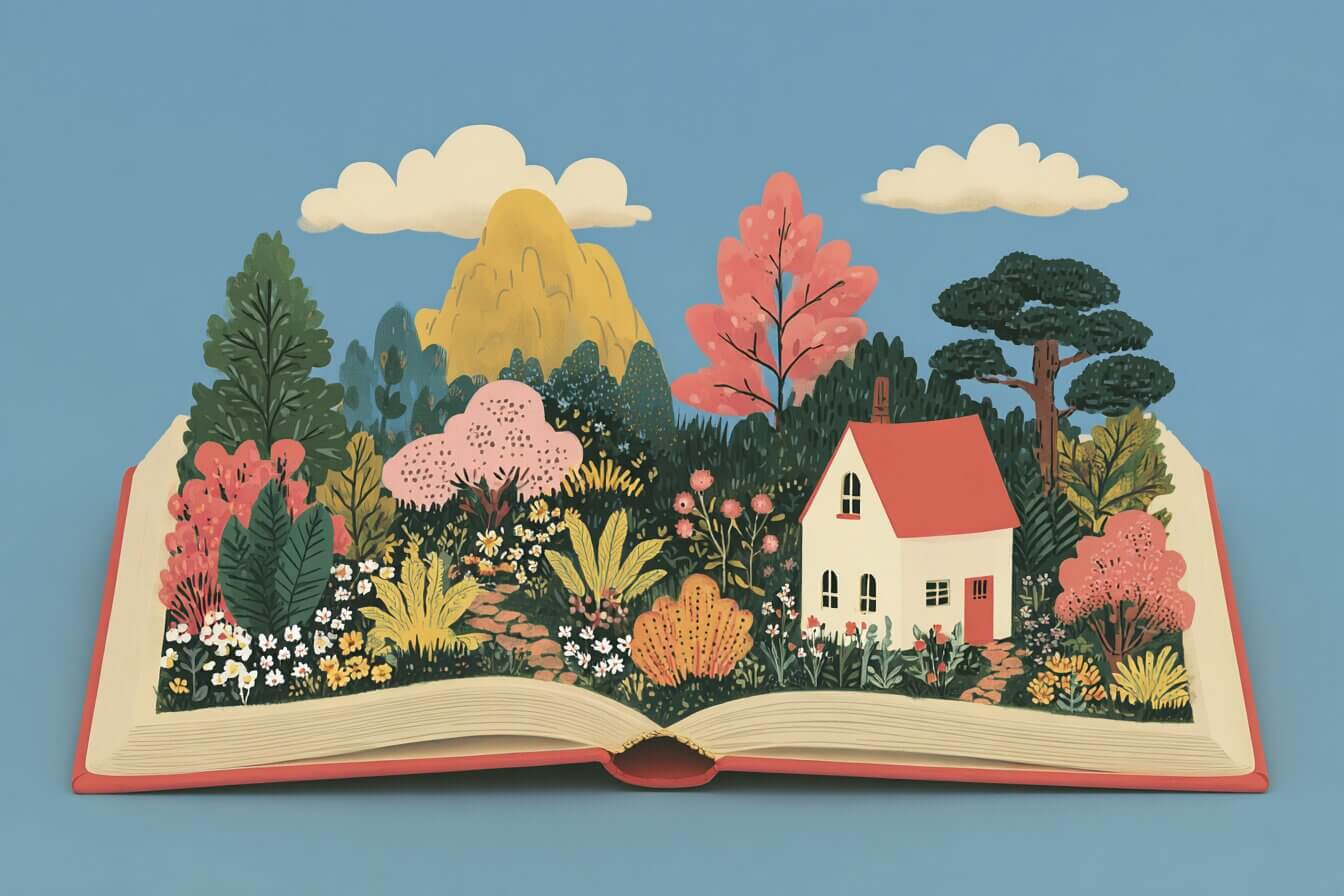
There's something about the way a child's eyes move across a page at night, landing on an illustration before the words even register, that makes a picture book feel like a warm hand on the shoulder. In this gentle tale, a girl named Mia discovers that the drawings in her library books aren't just decoration; they're bridges between the page and the little movie playing inside her mind. It's exactly the kind of bedtime story with pictures that settles a busy brain before sleep. If you'd like to create your own illustrated version, tailored to your child's favorite details, try building one with Sleepytale.
Why Picture Stories Work So Well at Bedtime
Children process the world visually long before they're fluent readers, and at bedtime their brains are already slowing down, looking for something restful to hold onto. A story that pairs words with pictures gives them two entry points: they can follow the sentences or simply let the images do the guiding. That gentle rhythm, look then read, look then read, mirrors the natural winding down that happens before sleep.
Picture stories at bedtime also invite a quieter kind of participation. Instead of answering questions or solving problems, a child can point at a hidden detail, trace a line with a finger, or whisper what they notice in a corner of the page. It's active without being activating. The illustrations carry half the weight, so the child's mind can relax into the story rather than working to decode every word.
The Little Ship, the Big Picture 9 min 51 sec
9 min 51 sec
Mia loved the library because it smelled like paper, pencils, and something she could never quite name, maybe the dust jacket of a hundred old books all breathing at once.
On a sunny afternoon she followed her teacher into a reading corner where picture books made a bright, lopsided hill on the carpet. The one on top showed a tiny ship on a blue sea, silver fish scattered across the waves like coins someone had tossed overboard for luck.
Mia opened it.
The first page had a bright picture and only a few words. Her eyes touched the picture first, then slid to the words, and a whole scene stood up inside her head like a little play on a stage with the curtains already open. The sea moved. The ship creaked. She could almost hear waves lapping at something wooden.
Her teacher leaned over and said, "Pictures help your brain make a movie while you read. Your brain loves patterns and colors, and it borrows from your own memories to fill in the sounds and smells."
Mia liked that idea. She looked at the fish and remembered a trip to the beach last summer, the water cold enough to make her gasp, a strand of seaweed stuck to her ankle. The book's picture didn't move, but the one in her head did, and that felt like friendly magic.
She traced a finger around the curve of the ship's hull and read the handful of words out loud. The words set the time of day. The picture gave the sky its color. Together they were like two hands lifting the story up to exactly where she could reach it.
She turned the page and a giggle bubbled up before she could stop it.
On the next page the ship sailed near a lighthouse that blinked like a patient eye.
More words this time, and a sea full of tiny ink strokes showing wind and motion. Mia noticed that when the waves curved to the right, her own eyes slid right too, like the picture was steering her. She thought about arrows on sidewalk signs and how lines can guide you without saying a word.
She found details tucked into the corners. A rope coiled like a sleeping cat. A seagull balanced on a buoy with one foot up. A map pinned near the captain's wheel, its edges curling.
The words told her a storm might come later, but the picture still showed calm water, and that gap helped her understand the change that was on its way. She wondered if clouds would gather by the last page.
A small note on the lighthouse page made her mouth shape a quiet "wow." It said lighthouses use a special lens called a Fresnel lens that bends light so it can shine far over the waves.
She had never heard that name before. She said it slowly, twice, and it felt like a friendly secret she could carry around.
The note sat inside a tiny frame with arrows, and Mia realized some pictures aren't just pictures. Some are diagrams that teach while they decorate the story. She kept reading, and all the while she could feel an invisible picture theater inside her head, warm and steady.
Later that week an illustrator visited her class with a folder so full of sketches it wouldn't close all the way.
Mia sat near the front. She watched as the visitor showed how a single line could make a frown look like a mountain slope or a smile look like a slim crescent moon.
"Pictures in books do a lot of jobs," he said. "Sometimes they set the place. Sometimes they show the shape of a feeling. Sometimes they explain how something works, like the parts of a bee's wing or the steps of a dance."
He flipped to a cutaway drawing of a whale, with labels that said stomach and muscle and heart. He said a labeled picture is like a map for your eyes. Then he showed a timeline with dots, a chart with bars, and a scene that changed slowly across four panels from morning to night.
"When we read," he said, "our eyes take in light, our brain makes pictures from patterns, and our memories color the edges."
Mia raised her hand. "The sea in my lighthouse book started swishing inside my mind. Like real water."
The illustrator nodded. "Your brain learned from the picture, then made more from what it already knew. It's like planting a seed in good soil, then letting sun and water help it grow."
Mia sat with that for a moment.
She wondered what kinds of pictures she might plant in her own story garden.
At home, Mia pulled out her art box and made a small book from folded paper and string. She chose to tell a story about a seed, because she wanted to try every kind of picture she'd seen that week.
On the first page she drew a tiny brown seed under dark soil, next to a coin for size. That was a scale picture.
On the next page she made a simple diagram with arrows showing water soaking the seed coat, and a note that said water helps the seed wake up. She added a timeline along the bottom edge with little sun icons for each passing day.
She drew roots like white threads, then a gentle shoot breaking through the soil like a yawn after a nap. She added a smiling worm and, in the corner, a beetle holding a tiny compass that pointed to the top of the page. A joke for careful readers.
Mia used faces on the clouds to show moods. Sleepy on day one. Surprised on day two. Proud on day three.
For the middle pages she created four small frames showing the shoot stretching toward light, with short sentences that matched each frame. The last pages showed a young tree with leaves shaped like open hands. She placed labels: leaf, stem, bark, bud. She realized every picture gave her readers a clue, a tool, or a feeling that words alone might not hold.
When she finished, she showed the little book to her parents. Her dad read it slowly, tilting the pages toward the lamp. Her mom laughed at the beetle compass before Mia even pointed it out.
They said they could see the story better because of the way her pictures helped. Mia smiled so hard her cheeks ached, and she didn't bother hiding it.
The next day she brought the seed book to school.
Her friends felt the rough string on the spine and opened to the tiny scale drawing. Noah said the coin helped him imagine how small the seed really was. Priya liked the timeline because it made her feel like the story was moving across the page in gentle steps. Luis noticed the beetle compass and laughed so suddenly the teacher looked up from her desk.
After everyone settled, their teacher gathered the class together. "Pictures are like bridges," she said. "They connect language to the senses we can see, and sometimes to sounds or smells we remember." She shared a science fact: people often recall images more easily than plain words. It's called the picture superiority effect.
Mia repeated the phrase softly, then tucked it into her pocket like a smooth pebble.
After lunch the class read a folktale that had only a few small drawings. The teacher invited them to close their eyes and make their own pictures. Mia saw a village with red roofs and a tall mango tree that held the breeze the way a hand holds a kite string. She noticed how the simple art pushed her imagination to fill in more, not less.
Some pictures teach with labels. Some pictures start the show so your mind can keep it running.
That afternoon Mia borrowed the lighthouse book again and sat by the window. She found details she'd missed before: a tea cup in the captain's hand, a cat curled asleep in a round basket, a curl of steam drawing a thin path to the neat little stove. She wondered how many things were hiding in plain sight.
When night came, Mia tucked into bed with a new book about the stars.
It had deep blue pages and quiet silver dots that made patient shapes. The first page showed the Big Dipper, and Mia thought it really did look like a spoon with a long handle, the kind her grandmother used for soup.
The words said that long ago people looked at the same stars and saw different animals and tools. The picture helped Mia connect the dots. She saw how a short line can be a tail if someone tells you a story about a bear.
She learned a fact about the North Star that stuck. It looks still because it sits almost right above the north pole of Earth. Sailors used it to find their way when maps were made of memory and sky.
"Thank you," she whispered to the picture, and felt a little silly, and didn't mind.
The star book carried her through a gentle tour of the sky. At the back a simple chart showed the seasons and how constellations rise and set at different times of the year. She liked that the book gave her pictures, and the pictures gave her a plan for looking out her window when autumn came.
Before she slept, she looked around her room. The world map on her wall looked like a patchwork quilt. Her stuffed animals sat in a row like a kind audience waiting for the lights to dim. On her nightstand the seed book waited, its string spine a little crooked.
She thought about how one picture in a book can build a whole room inside your head.
She hugged that thought like a pillow, and drifted into dreams where ships sailed, seeds stretched toward morning light, and stars drew silver trails across a peaceful sky.
The Quiet Lessons in This Picture Bedtime Story
This story is really about the courage to look closely and the comfort of discovering that you already know more than you think. When Mia admits she isn't sure how pictures and words fit together, she shows kids that confusion is just the first step, not a dead end. Her willingness to try making her own seed book, complete with a silly beetle compass, teaches that creativity doesn't require perfection; it just requires starting. And when her classmates notice different things in the same pages, the story gently reinforces that there's no single right way to see. These are reassuring ideas to absorb right before sleep, because they promise that tomorrow's uncertainties are just new pages waiting to be opened.
Tips for Reading This Story
Give the illustrator a warm, slightly rumbly voice, the kind of person who talks with their hands, and let Mia sound curious and quick, especially when she whispers the word "Fresnel" for the first time. When you reach the moment where Mia finds the beetle compass in her own book, pause and see if your child spots the joke before you explain it. At the very end, when Mia looks around her dim room at the map and the stuffed animals, slow your voice way down and let each detail land like a soft footstep heading toward sleep.
Frequently Asked Questions
What age is this story best for?
It works best for children ages 4 to 8. Younger listeners will enjoy pointing out the visual details Mia discovers, like the sleeping cat rope and the seagull on the buoy, while older kids will connect with the science facts about Fresnel lenses and the picture superiority effect. The layered structure means it grows with the child.
Is this story available as audio?
Yes. Press play at the top of the story to listen. The audio version works especially well here because the pacing follows Mia's page turns, so there are natural pauses that let your child picture each illustration in their mind. The moment where Mia whispers "Fresnel" and the scene where Luis laughs at the beetle compass both come alive with a narrator's voice behind them.
Why does the story include science facts alongside the pictures?
Mia's story weaves in facts like the Fresnel lens and the picture superiority effect because children are naturally curious, and learning something real inside a cozy narrative helps the information stick without feeling like homework. The facts are tucked into small, framed moments so they feel like discoveries rather than lessons.
Create Your Own Version
Sleepytale lets you build a personalized illustrated story that fits your child's world. Swap Mia for your little one's name, trade the ship for a hot air balloon or a submarine, or move the whole adventure to a moonlit garden. In just a few moments you'll have a cozy, picture-rich bedtime tale ready to read again and again.
Looking for more educational bedtime stories?
Folklore Examples
Discover short folklore examples through a library night where Anansi the spider, a loyal crane, and a clever hare teach timeless lessons.

Children's Fable
A fast fox loses to a steady turtle in this short children's fable about patience, ripe pears, and the quiet power of one step at a time.

Science Stories For Kids
Leo and his mom explore twinkling stars with a flashlight and a jar of water in one of our coziest short science stories for kids.
Small Stories With Moral
A girl gives her red umbrella to a classmate in the rain, one of the best short small stories with moral for bedtime.
Short Christian Stories With Moral Lessons
Discover short christian stories with moral lessons like Pastor Eli's unplanned outdoor sermon that teaches kids faith grows in unexpected places.

Quick Stories With Moral Lesson
Marcus copies a science test but discovers short quick stories with moral lesson show that honest effort feels better than a perfect stolen score.