
Grape Bedtime Stories
By

Dennis Wang, Bedtime Story Expert
10 min 42 sec
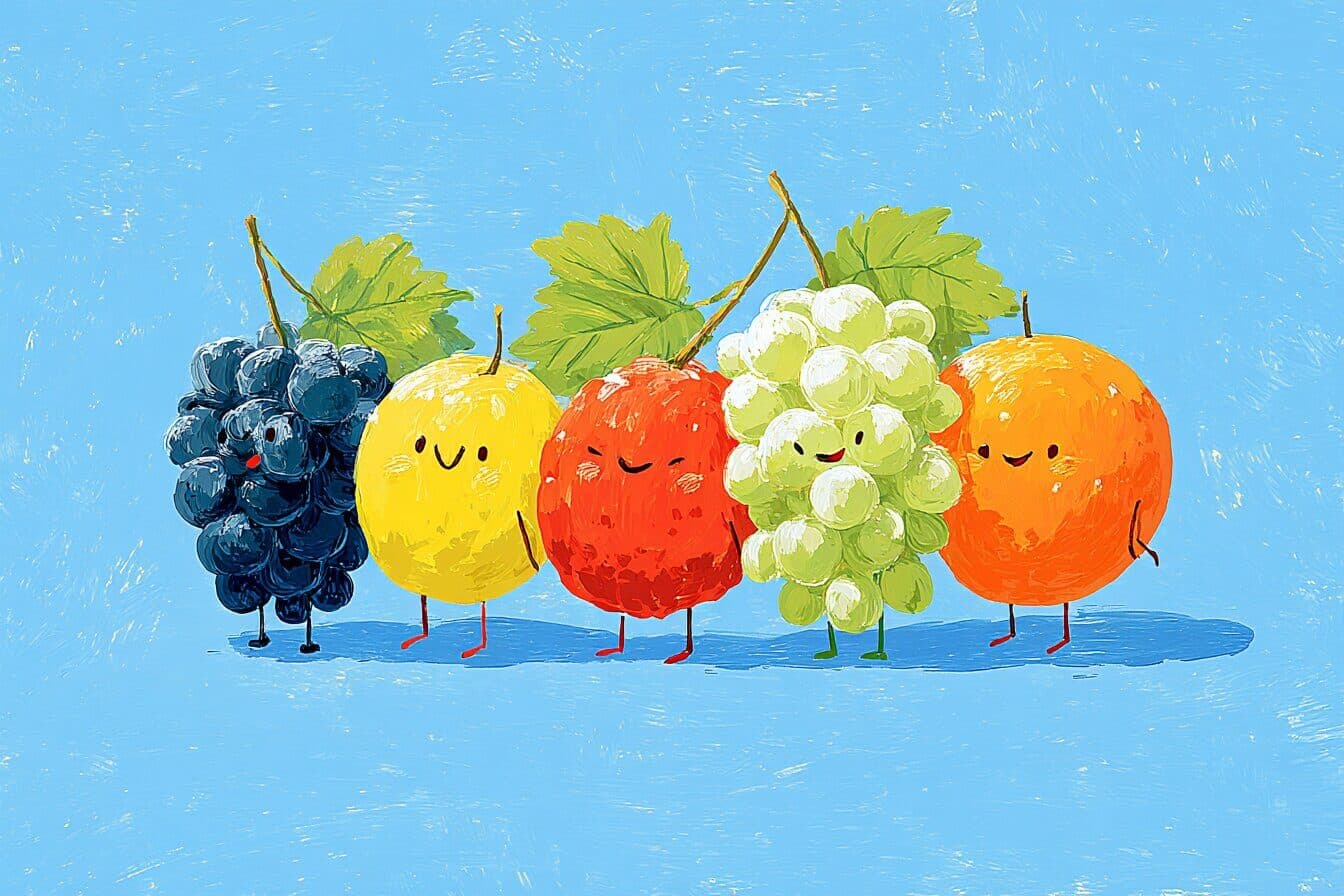
There's something about the weight of a grape between your fingers, cool and smooth, that feels like a tiny promise of sweetness. Tonight's story follows a plump bunch of grapes led by brave little Nia, who discover that sticking together through heat, waiting, and a thunderstorm can turn them into something the whole village wants to share. It's one of those grape bedtime stories that moves slowly enough to let heavy eyelids do their thing. If your child has a favorite fruit or a different adventure in mind, you can create your own cozy version with Sleepytale.
Why Grape Stories Work So Well at Bedtime
Grapes are small, round, and clustered together, which makes them a natural stand-in for family and closeness. Kids already know what grapes feel like in their hands and how they taste, so a story built around them doesn't need a big imaginative leap. That familiarity lets children settle into the world of the story faster, which is exactly what you want when the goal is winding down.
There's also something inherently gentle about a bedtime story featuring grapes. They don't roar or fly or explode. They sit close, share sweetness, and wait patiently, all qualities that mirror what we hope bedtime itself feels like. The quiet scale of grape stories gives kids permission to slow their thoughts and focus on soft, tangible details instead of excitement.
The Bunch That Stuck Together 10 min 42 sec
10 min 42 sec
In the heart of Sunnyvale Orchard, where morning light turned the leaves into something close to gold, a plump cluster of grapes grew on a low, curling vine.
Each grape was smooth and purple, nestled so tightly that not even a sunbeam could slip between them.
The bunch had ten: Pip at the very top, small and bright. Siblings Lulu and Tito on the left. Jolly twins Mimi and Momo on the right. Wise Violet near the center. Playful Bounce and Bumble dangling beneath. Shy Luna, half hidden behind a leaf. And at the heart of them all, Nia, who had a talent for saying exactly the right thing when someone started to wobble.
Every dawn they hummed in the breeze together, shared dewdrops that tasted faintly of cold metal from the trellis wire, and watched the orchard children sprint past with baskets banging against their knees.
One morning, the farmer's hands reached in.
A gentle snip, and the whole bunch swayed as their stem lifted free.
They glided through leafy tunnels into a wicker basket lined with straw. The basket smelled of peaches and warm earth, and Pip sneezed twice from the dust, which made Bumble laugh so hard he nearly rolled off the edge.
The sky wheeled blue overhead as the farmer carried them toward the market lane. At the wooden stand, a hand-painted sign read Sweet Sungrape Bunches. People bustled, coins clinked, children pointed. One by one, neighboring clusters were taken away. But the friends stayed intact, because the farmer believed a bunch this tightly woven should go to someone who would notice.
Hours passed. The sun climbed.
Their skins started to tingle, and the straw beneath them grew warm enough that Luna whispered she could smell it toasting. Pip suggested maybe being chosen quickly was best. Violet reminded everyone, in that measured voice of hers, that good things reward patience, then added, almost to herself, "Though patience is easier to admire than to practice."
They swapped stories to stay cheerful: dewy dawns, cricket concerts, the afternoon a butterfly had landed on each of them in turn and none of them could agree on the order.
Soon a boy named Milo trotted up, copper curls bouncing, eyes wide at the purple globes shining like treasure.
He tugged his grandmother's sleeve. Coins exchanged hands.
The bunch felt themselves lifted and cradled against a soft cotton shirt that smelled of sunshine and paint, the kind of shirt that had clearly survived several art projects. Milo hummed while skipping home, and the grapes swayed in rhythm with each stride, feeling oddly brave about whatever came next. Along the path he chattered about making the finest grape juice anyone had ever tasted and sharing it at the harvest festival. The grapes thrilled at this. Becoming something special together sounded right.
The cottage appeared around a bend, thatched roof glowing, windows catching the light. Inside, Milo set the bunch on a checkered cloth beside a porcelain bowl.
Sunlight through gingham curtains striped the table with gold.
Milo's grandmother filled a colander with water so cold it made the tap stutter, and the bunch was rinsed. Droplets slid down their curves. Violet sighed. Luna peeked out at last, reassured by the careful handling.
After the rinse, Milo studied the cluster, turning it slowly. He had never seen stems wound so tightly. He pressed two fingers gently between Nia and Bumble, thinking to separate one grape for tasting. They held firm. He tried again, a little harder, then stopped and laughed. "Fine," he said to no one in particular. "You win."
He fetched a tall glass pitcher instead, poured in spring water, and lowered the entire bunch inside.
The grapes drifted downward, buoyant and gleaming. Coolness swirled around them, and the leftover orchard heat dissolved like a forgotten thought. Pip squealed, sending bubbles rippling. Lulu and Tito spun slow somersaults. Mimi and Momo played chase in circles while Violet told everyone to link their tiny stem arms so no current could tug them apart. They formed a living ring, strong and bright, and the pitcher hummed faintly on the countertop the way glass does when it's full and still.
Milo set it on the windowsill where a breeze drifted through lace curtains. Afternoon light painted moving patterns across the floor, and one by one the grapes drifted into dreams of festivals and songs and laughter shared with friends.
When evening came, Milo's grandmother suggested they chill overnight for tomorrow's breakfast. She carried the pitcher to the pantry, a small stone room that smelled of flour and cinnamon with just a trace of something dusty and old. Darkness folded around them. But they glowed softly, catching the faint light that slipped under the door. They whispered stories to keep brave, voices mingling into something that sounded, from a distance, almost like a lullaby.
At dawn Milo hurried in, rubbing sleep from his eyes.
Condensation sparkled on the glass like frost. He carried the pitcher outside where dew still jeweled the grass and waited for his best friend, Amina, who lived next door and loved science the way Milo loved art, which is to say, completely.
She arrived with a tiny magnifying glass. Together they marveled. Amina proposed an experiment: how long could the bunch stay connected in water and remain healthy? Milo agreed, but only if the grapes stayed happy. They decided to add a single fresh mint leaf for cheer, and it floated above the purple crew like a small green boat.
The bunch beamed.
Days passed. Every sunrise, Milo and Amina recorded changes in a notebook Amina had labeled "Grape Log" in careful block letters. The grapes grew slightly larger, drinking cool water, but their bond never weakened. Violet suggested they share their sweetness with the water itself, turning it into something new. Little by little, color and flavor seeped out, tinting the liquid a pale amethyst. Milo tasted a spoonful. His eyebrows went up. He declared it the finest infused water in the village, and neighbors began arriving with cups.
The bunch felt joy overflow. They were bringing people together without trying. Even Mrs. Alder, who rarely left her porch, shuffled over, accepted a glass, and stood in the garden for a long time, saying nothing, looking at the orchard in the distance as if remembering something she thought she had forgotten.
Laughter floated above the garden fence.
One afternoon, dark clouds rolled in. Thunder growled low, and the wind rattled windowpanes hard enough to make the salt cellar slide an inch across the table. Milo moved the pitcher to the center of the sturdy kitchen table and surrounded it with wooden spoons and jars, a makeshift fortress against slipping.
Rain drummed the roof. Lightning flashed.
Violet led the bunch in a chorus, their tiny voices weaving together, and the sound was just enough to calm the kitten curled beneath the table, trembling with each crack of thunder. When a particularly loud boom shook the house, they sang louder, not to drown it out but to fill the silence that came right after, which was somehow worse. Milo watched from his chair and thought, for the first time, that bravery might be smaller than he had imagined.
Morning arrived scrubbed and bright. Sunlight spilled across puddles, turning them into mirrors. Milo and Amina set the pitcher on the porch railing so the bunch could see the rainbow arching over the orchard, one end disappearing behind the very vine they had come from. Inspired, they decided these grapes deserved to travel further, not as food but as proof of something. They would carry the pitcher to the harvest festival for everyone to see.
Festival day. Ribbons fluttered, fiddles played, and the air carried the warm, yeasty smell of cinnamon bread.
Children darted between booths, faces painted like tigers and butterflies. Milo and Amina placed the pitcher on the community table beside sunflower bouquets and honey jars. A handwritten sign read The Bunch That Sticks Together.
Villagers gathered. They marveled at the purple orbs still pressed lovingly side by side, still plump after many days. Someone suggested a toast. Cups were filled with the pale amethyst water.
Smiles rose.
Pip whispered that this was their greatest moment, and for once, nobody argued with Pip.
As golden afternoon softened into dusk, Milo lifted the bunch from the pitcher. They were slightly smaller now but still tightly knit. He carried them to the orchard, found the very vine they had come from, and nestled them among the roots beneath a blanket of moss.
There, they would rest and nourish the soil. Above them, new fruit was already swelling on the vine, and from somewhere in the leaves, a cricket started up, tuning its one long note. The grapes huddled close, dreaming of rain, of sunshine, of cups raised in a garden, of the way laughter sounds when it drifts over a fence on a warm afternoon.
The orchard settled into quiet, and the cycle turned on.
The Quiet Lessons in This Grape Bedtime Story
This story weaves together patience, generosity, and the courage that comes from staying close to the people you love. When Violet reminds the bunch that patience is "easier to admire than to practice," kids absorb the honest truth that waiting is hard even when it's worth it. Nia and the others choosing to share their sweetness with the water, and by extension the whole village, shows children that giving something away can make you more, not less. And the moment the grapes sing louder during the storm, not to be brave in some grand way but just to fill a frightening silence, teaches kids that courage often looks quiet and small. These are exactly the kind of reassurances that sit well right before sleep, when tomorrow's uncertainties feel biggest.
Tips for Reading This Story
Give Pip a high, slightly breathless voice, and let Violet speak slowly and deliberately, as if she's choosing every word from a long menu. When Milo says "Fine, you win" to the grapes he can't pull apart, pause and grin at your child, because that moment is funnier if you let it land. During the storm scene, actually lower your voice for the thunder and then go quiet for a beat after the lightning, so your listener feels the same silence the grapes rush to fill with singing.
Frequently Asked Questions
What age is this story best for?
It works best for children ages 3 to 7. Younger listeners love counting the ten named grapes and following Pip's squeals and Bumble's giggles, while older kids connect with Milo and Amina's experiment and the idea of bringing a whole village together with a pitcher of infused water.
Is this story available as audio?
Yes. Press play at the top of the story to hear it read aloud. The audio version brings out the rhythm of the storm scene especially well, where the singing grapes build over the thunder, and Milo's quiet realization about bravery lands with a pause that you can almost feel. The ten distinct grape characters also come alive with slightly different vocal textures in narration.
Why do the grapes end up back at the vine instead of being eaten?
Milo returns them to the roots of their original vine so they can nourish the soil and, in a way, help new grapes grow. It gives the story a gentle, circular ending rather than a sudden one, which is especially nice at bedtime because children aren't left thinking about the grapes disappearing. Instead, they picture the orchard growing quietly in the dark, which mirrors their own settling in for sleep.
Create Your Own Version
Sleepytale lets you reshape this story into something that feels like it was written just for your child. Swap the orchard for a backyard garden, trade the pitcher for a glass bowl on a porch, or rename Milo and Amina after your child's real friends. You can adjust the tone from cozy to silly, add a favorite fruit alongside the grapes, or set the whole thing on a rainy night instead of a sunny market day. It takes just a moment to build a calm, familiar tale that's ready for tonight.
Looking for more food bedtime stories?
Watermelon Bedtime Stories
Drift into short watermelon bedtime stories where a giant melon rolls into town and kindness becomes the sweetest snack of all.
Waffle Bedtime Stories
Craving a sweet twist at lights out? short waffle bedtime stories turn one brave waffle pocket count into a cozy topping parade that ends in a sleepy, syrupy sigh.
Taco Bedtime Stories
A picnic taco feels too full to wiggle, until a clever sharing plan turns tummy trouble into a tiny feast. Discover short taco bedtime stories that end in cozy calm.
Sushi Bedtime Stories
Settle in with soothing short sushi bedtime stories that calm busy minds with cozy kitchen magic. Read a gentle sushi bedtime story that helps kids drift off peacefully.
Strawberry Bedtime Stories
A garden hose breaks, and a ruby bright strawberry orders ants into a droplet brigade. Follow Stella the Sharing Strawberry in short strawberry bedtime stories with a cozy twist.
Spaghetti Bedtime Stories
A warm kitchen breeze nudges a spaghetti box, and three noodles discover friendship in a sunlit jar. Read short spaghetti bedtime stories for a calm, cozy wind down.