
Fencing Bedtime Stories
By

Dennis Wang, Bedtime Story Expert
9 min 51 sec
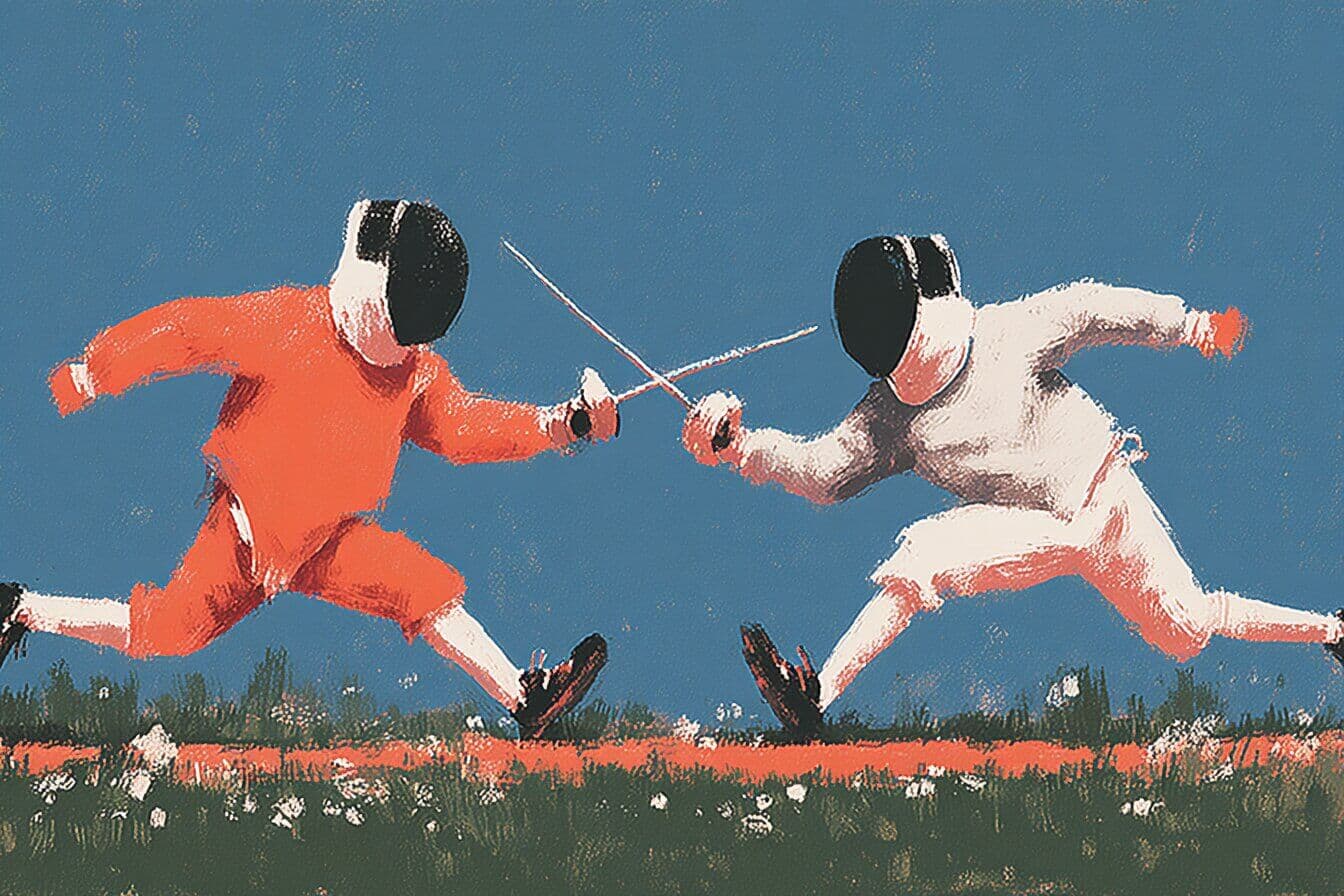
There is something about the quiet tap of practice blades that makes the whole world feel smaller and safer, like the room has pulled in close around you. In this story, a proud young fencer named Felix discovers that teaching a nervous newcomer named Leo might be more rewarding than winning any match. It is one of those fencing bedtime stories that trades scorekeeping for kindness, letting the rhythm of gentle bouts slow your breathing down to match. If you want to customize the characters or setting for your own child, Sleepytale lets you create a personal version in moments.
Why Fencing Stories Work So Well at Bedtime
Fencing has a built-in rhythm that mirrors the pace of a good bedtime routine: ready, slow approach, gentle contact, pause, reset. That call and response quality gives a story about fencing a naturally calming tempo. Children can almost feel the back and forth of the blades slowing down as the scene settles, which helps their own restlessness ease along with it.
There is also something reassuring about a sport where every exchange begins with a salute and a set of rules both sides agree on. For a child lying in bed, a story where fencing becomes a kind of conversation rather than a fight helps them process big feelings like competition, jealousy, and the fear of not being good enough. A bedtime story about fencing can quietly teach that being brave does not mean being the best, and that is exactly the kind of thought that makes sleep feel safe.
Felix and the Friendly Fence 9 min 51 sec
9 min 51 sec
Felix the fencer loved the shiny swoosh of his foil more than anything. Not more than breakfast, maybe, but close.
Each morning he marched to the village square, stood tall on the cobblestones where the sun hit first, and waited for someone to challenge him.
Most days the blacksmith's daughter, Mira, bounded up with her own foil.
They saluted, tapped blades, and laughed when their rubber buttons bumped together with a dull little thud that sounded like a cork popping.
Felix always won. Mira never seemed to mind. "The fun is in the trying," she said every single time, and Felix believed her because she always came back.
One breezy afternoon, Felix noticed a boy watching from the rim of the fountain. The boy's eyes tracked every flick and parry as if he were counting stars, mouth slightly open, fingers twitching on his knee like he was already holding an invisible foil.
When the match ended, the boy clapped so hard his straw hat tumbled off and landed in a puddle. He didn't even pick it up.
Felix bowed, pleased but curious.
"I'm Leo," the boy called. "I've never held a foil, but your dancing swords look like joy."
Nobody had ever called his fencing joyful before. Quick, sure. Clever, sometimes. But joyful?
Felix felt something shift in his chest, a small click, like a lock he didn't know was there turning open.
Mira nudged him. "Teach him."
Felix hesitated. Teaching meant slowing down. Sharing little secrets about weight and timing he had spent years collecting. Maybe even losing on purpose so Leo would feel brave enough to try again.
He had never lost on purpose in his life.
Still, the breeze carried cinnamon from the bakery down the lane, and everything felt soft and possible, the way late afternoon light sometimes does. So Felix waved Leo over.
First he showed how to stand like a heron, knees relaxed, one arm extended behind for balance. Leo wobbled. His left foot kept drifting inward like it had its own plans. He giggled, reset, and tried again.
By sunset Leo could tap Felix's blade twice without squeezing his eyes shut.
They agreed to meet the next day. Word spread that Felix was training someone, and villagers arrived with picnic blankets and loud opinions. The mayor brought shiny ribbon medals he kept in a velvet pouch that smelled like mothballs.
Felix felt important and nervous in equal measure. If Leo lost badly in front of everyone, would they blame the teacher?
The second lesson arrived bright and warm. Felix set two wooden boxes in the square. One held buttons painted like ladybugs. The other held bells no bigger than raindrops, the kind that ring with a sound so thin you have to hold your breath to hear it.
He explained the rule: touches should land gentle enough to ring a bell without squashing a ladybug.
Leo's eyebrows climbed halfway up his forehead.
They fenced slowly, aiming for bells, dodging bugs. Each ting made the crowd lean forward. Felix noticed Leo's smile growing wider than any trophy he had ever seen, and it did something odd to his own face, pulled it into a grin he couldn't put away.
When the sun hovered just above the rooftops, Felix lowered his foil.
"Your turn to teach," he said.
Leo blinked. "I don't know enough."
"Show me how you made the bell sing on that last touch. I couldn't get it that clean."
Leo demonstrated, tongue poking out the side of his mouth. Felix copied, adjusting his wrist, and the bell sang even sweeter.
They took turns leading and following and laughing at the turns that didn't quite work. Mira clapped from the fountain rim, splashing water with her heels so it caught the light like glitter.
The mayor stepped forward with two ribbon medals, one blue, one green. Felix expected the blue for himself. That was how it usually went.
Instead the mayor declared, "Today we celebrate the fencer who helped us see that the best victory is the one we share."
He handed both ribbons to Felix and Leo together, looped around the same hand.
That evening families danced around the square. Felix and Leo fenced in slow motion, telling a silent story of two swans greeting a sunrise. Nobody kept score. Nobody needed to.
Felix realized the square had never echoed with such full, warm noise when he had won alone.
Later, as stars blinked awake one by one, Leo yawned.
"Tomorrow can we fence blindfolded?"
Felix pictured the trust that would require, the giggles sure to spill. "Absolutely."
The next morning dew painted the grass silver. Felix arrived early, carrying two soft scarves. He found Leo already practicing heron stance beside Mira, wobbling less than yesterday, which made Felix oddly proud.
They tied the scarves around their eyes and tapped blades, listening for bells, feeling for the faintest nudge of a ladybug button. Without sight, every touch felt like a secret handshake.
They laughed so hard when foils bumped noses instead of buttons that Leo snorted, which made Mira snort, which set off the whole square.
Villagers formed a quiet circle after that, hushing so the fencers could hear the bells. Felix never knew fencing could feel like singing in the dark.
When they pulled the scarves off, colors looked brighter. Friends looked dearer. The fountain sounded louder, as if someone had turned a knob.
Over the following week Felix invented more games. He painted tiny suns and moons on their buttons; if your sun touched a moon, you both spun in a circle cheering, which looked ridiculous and felt wonderful. He balanced a feather on each foil tip, and whoever kept it longest won the right to tell the next joke. Leo's jokes were terrible. Everyone loved them anyway.
Children copied the games in the lanes, turning every stick into a gentle sword. The village felt lighter, as if someone had loosened a belt a notch.
Felix noticed Mira practicing with her little brother, guiding him kindly, never once mocking a stumble. Parents thanked Felix for teaching more than footwork, and Felix shrugged, embarrassed. But inside something glowed, steady and warm like the wick of a candle that has found its pace.
One twilight Leo asked, "Do champions always have to win?"
Felix looked at the orange sky, which had one long streak of purple running through it like a ribbon somebody dropped.
"Maybe real champions make everyone feel like winners."
Leo nodded solemnly, then broke into a grin so quick it was like a door swinging open. "Then let's host a Friendly Fence Festival where nobody keeps score."
Felix loved the idea so much his foil tip wiggled like a puppy tail.
Preparations sparkled through the village. Baker Rosa shaped cookie foils with sweet lemon glaze that cracked when you bit them. Grandma Tilda sewed satin banners painted with smiling swords. Musicians tuned joyful reels. Felix and Leo painted a banner that read, "En garde for fun!" and hung it between two lampposts where it flapped like it was excited too.
On the festival morning, clouds bobbed like sheep across blue fields. Villagers arrived wearing paper masks of lions, butterflies, dolphins, anything but fencers, which made Felix laugh.
He set up stations: balance the peacock feather, mirror footwork, slow motion bout with balloon tails tied to your ankles. At every station neighbors encouraged one another, clapping louder for wobbles than for perfection, because mistakes meant giggles.
Felix fenced every guest, letting them lead, copying their style, praising whatever they did that surprised him. His cheeks ached from smiling.
When the sun slipped low, everyone gathered at the fountain. The mayor stepped forward holding a fresh box of ribbon medals, every color of the rainbow.
"These are for all who taught us that the best bouts are the ones where both sides have fun," he declared.
He called names: Mira for kindness, Baker Rosa for creativity, Grandma Tilda for banners, little Thom for cheering loudest.
When he finished, only Felix and Leo remained unnamed. The mayor winked.
"And finally, to Felix and Leo, who started the ripple that became a tide of joy, we give the golden bell that rings without defeat."
He hung a small brass bell on a ribbon around both their necks. It sat between them, warm from his hands.
Felix felt tears prickle. Not sadness. Fullness. Like his chest had gotten bigger on the inside.
Leo squeezed his hand.
The crowd erupted, musicians struck up a reel, and the square became a swirling carousel of color and noise and laughter that bounced off the stone walls.
Later, when moonlight painted everything silver, Felix sat on the fountain edge with Leo and Mira. The square was quiet now, the kind of quiet that feels earned. His foil leaned beside him, catching starlight along its blade.
He no longer saw it as a tool for winning. More like a wand.
Leo rested his head on Felix's shoulder.
"Tomorrow," he murmured, already half asleep, "let's teach the birds to fence with feathers."
Felix laughed softly. "They already do, up in the sky, every time they swoop and swirl together."
Mira added, "And the wind applauds."
They sat a little longer, three friends sharing one comfortable silence. Somewhere a night bell rang, gentle and pure, the same thin sound as those tiny bells in the wooden box.
Felix tucked that sound into his heart and closed his eyes.
The Quiet Lessons in This Fencing Bedtime Story
This story weaves together generosity, vulnerability, and the quiet courage it takes to slow down for someone else. When Felix hesitates before agreeing to teach Leo, children see that sharing a skill you are proud of can feel risky, and that doing it anyway is its own kind of bravery. The blindfolded bout shows trust in action, not explained, just lived through laughter and bumped noses. And when the mayor gives the bell "that rings without defeat," the idea that connection matters more than winning settles in gently, without anyone spelling it out. These are exactly the feelings that help a child relax before sleep: the reassurance that kindness is noticed, that mistakes are funny instead of frightening, and that tomorrow is a safe place to try again.
Tips for Reading This Story
Give Felix a confident, slightly clipped voice when he is fencing, and let it soften noticeably in the scenes where he teaches Leo. Leo sounds best a little breathless and eager, especially the line about "dancing swords." When you reach the blindfolded fencing scene, try lowering your own volume so it feels like the room is hushing along with the villagers, and pause after the foils bump noses so your child has a moment to laugh. At the very end, when the three friends sit by the fountain, slow your pace to almost a whisper and let the final image of the night bell hang in the quiet for a breath before you stop.
Frequently Asked Questions
What age is this story best for?
It works well for children ages 4 to 8. Younger listeners enjoy the sensory details like the tiny bells and ladybug buttons, while older kids connect with Felix's internal struggle between winning and helping a friend. The festival scene gives every age group something fun to picture.
Is this story available as audio?
Yes. Press play at the top of the story to listen. The back and forth rhythm of the fencing bouts translates especially well to audio, and the blindfolded scene, where every sound matters, becomes genuinely atmospheric when you hear it rather than read it. Leo's sleepy final line about teaching birds to fence is a perfect wind-down moment in narration.
Does my child need to know anything about fencing to enjoy this?
Not at all. Felix explains the basics to Leo within the story itself, like the heron stance and the gentle bell-ringing rule, so young listeners learn along with Leo. The focus is on friendship and creativity rather than technique, which means the story works whether your child has held a foam sword or never seen a foil.
Create Your Own Version
Sleepytale lets you reshape this story into something that fits your family perfectly. Swap the village square for a backyard or a moonlit gym, turn Felix and Leo into siblings or cousins, or replace the bells and ladybug buttons with seashells and feathers. You can adjust the tone from playful to deeply cozy, and in moments you will have a personal bedtime story ready to read or replay whenever the night needs it.
Looking for more sport bedtime stories?

Yoga Bedtime Stories
Looking for short yoga bedtime stories that feel soothing and easy to read aloud? Try this gentle yoga bedtime story with rainbow breathing and a cozy cottage calm down.
Volleyball Bedtime Stories
Moonlit sand glitters beside a palm tree net as a glowing ball invites a quiet adventure in short volleyball bedtime stories. Follow Vicky into a gentle island match that ends in calm wonder.
Tennis Bedtime Stories
a quiet clay court, two best friends keep the ball floating under fireflies in short tennis bedtime stories. Their playful rally becomes a soothing song of friendship.
Tag Bedtime Stories
A cozy meadow game turns into a friendship ritual in short tag bedtime stories, with fireflies that remember. Read for a soothing twist that lingers.

Taekwondo Bedtime Stories
Help kids unwind with short taekwondo bedtime stories that build confidence, patience, and calm breathing before sleep. Enjoy a gentle dojo adventure you can read aloud tonight.

Swimming Bedtime Stories
Dive into short swimming bedtime stories where a determined girl finds a surprising kind of victory in the pool, then drifts into a dreamy calm.