
Empathy Bedtime Stories
By

Dennis Wang, Bedtime Story Expert
6 min 2 sec
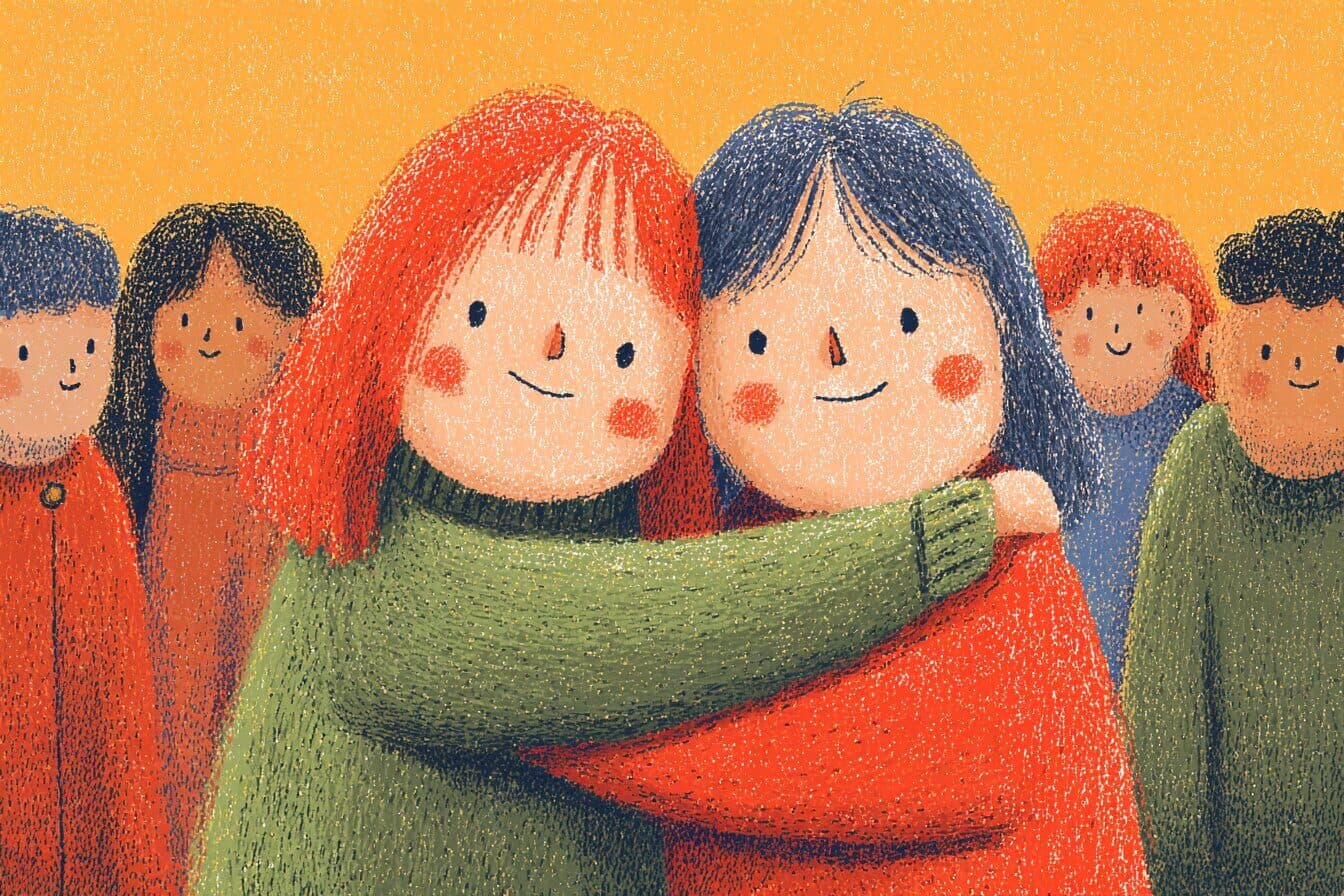
There is something about the hour before sleep that makes children want to talk about feelings, the hard ones and the quiet ones they could not name during the day. That is exactly why a story about a girl named Mira, who steps through a rainbow framed mirror and discovers she can sense what others feel, lands so perfectly on a pillow. Empathy bedtime stories give kids a safe way to practice understanding other hearts while their own hearts slow down for the night. If you would like a version shaped around your child's name, favorite setting, or the feeling they need most tonight, you can create one with Sleepytale.
Why Empathy Stories Work So Well at Bedtime
When the lights go low, children are more open to feeling things deeply. A bedtime story about empathy meets them right in that window, offering small, clear moments where a character notices someone else's sadness or worry and chooses to sit beside it. That simplicity matters. Kids do not need a lecture on kindness; they need to watch Mira kneel next to a trembling flower and say something gentle, then carry that image into sleep.
Empathy stories also mirror the parent-child bond happening in real time. A grown-up is right there, reading aloud, paying attention, staying close. The child in the story does the same thing for the characters she meets. That parallel helps children feel safe and understood, which is the exact feeling that invites deep, restful sleep.
The Mirror of Many Hearts 6 min 2 sec
6 min 2 sec
In the middle of the village square stood an old mirror framed in rainbow wood.
Most people hurried past it. Seven year old Mira did not. She pressed her nose to the cool glass, close enough to feel its faint chill on her upper lip, and whispered, "I want to feel what others feel so I can be the best friend ever."
The surface shimmered like moonlight scattered across water, and a voice, soft and unhurried, answered, "Then step inside and see."
Silver light wrapped around her shoulders and tugged her through.
She landed in a meadow where every flower hummed with feelings instead of scents. A shy violet near her left foot trembled with worry, its petals curling inward the way fingers do when you are cold. Mira knelt and patted those thin petals. "You are safe with me," she said, and she meant it the way you mean it when you find a lost cat and bring it indoors.
The violet stood taller. Its color deepened from pale lavender to something rich and warm. Mira felt the flower's fear melt away inside her own chest, a loosening she had not expected, as if she had been holding a breath she did not know about.
A bumblebee with tired wings drifted near her ear. It carried heavy sadness, the kind that makes everything feel a little too loud. Mira pictured her happiness as a tiny yellow balloon and offered it without a word. The sadness lifted like a cloud peeling off a hilltop. The grateful bee circled her three times, wobbling on the third pass, then zoomed toward a hive that glowed golden against the grass.
Walking on, she met a squirrel clutching an empty acorn cup. Through the mirror's gift she sensed hollow hunger, the rumbly, distracted kind that makes it hard to think about anything else. She pulled a crust of pocket bread from her jacket, still warm from her mother's kitchen that morning.
The squirrel's joy felt like popcorn popping inside her ribs.
Each kind act painted ribbons across the sky. They tied themselves into bridges that led toward a mountain made of lonely stones. Mira followed those bridges because no one should feel alone, not even a mountain.
Halfway up the slope she found a boy named Taro sitting beside a broken music box. Its lid hung at an odd angle, one hinge snapped clean. His longing for friendship pulsed like a drumbeat. Mira sat down next to him without asking permission, because sometimes sitting is enough.
He hummed the tune the music box used to play. She listened. Then, together, they reconnected the tiny springs, their fingers bumping, both of them laughing when a spring pinged across a rock and Taro had to chase it.
When the first clear note rang out, the mountain stones glowed pink and began to sing, low and rumbling, the way a cat purrs if a cat were the size of a hill.
Higher up, chilly wind carried the ache of lost kites. Mira and Taro gathered string and sticks, built diamond frames with uneven edges, and flew them side by side. Each soaring kite carried a piece of the mountain's sorrow into the open sky where it could finally stretch out and dissolve.
At the summit they found a door of ice that reflected only shadows.
Behind it lived the mountain's heart, frozen by centuries of isolation. Mira pressed her palm flat against the ice. She let every kindness she had shared that day flow through her fingertips and felt the mountain's ancient loneliness echo inside her bones, heavy and still and old.
Tears slipped down her cheeks, warm and full of understanding.
The ice melted like morning frost. Behind it waited a garden where crystal trees chimed in the breeze, each one ringing at a slightly different pitch, like a wind chime store with all the doors open. The mountain sighed with relief, and its voice rumbled, "Thank you, little empath, for teaching me that friendship begins with feeling another's heart."
The rainbow wood mirror reappeared, spinning slowly like a friendly planet. Mira held Taro's hand, stepped back through, and found herself in the square at sunset. The mirror now showed not only her own reflection but the glowing outline of every friend she had helped, layered behind her like pages in a book.
The next morning at school, Mira noticed her classmate Lily staring at a cracked crayon picture. The crack ran right through the sun Lily had drawn. Instead of laughing, Mira felt the sting of disappointment, knelt beside her, and offered to share her fresh colors. Lily picked the orange first, which surprised Mira. She would have guessed yellow.
During recess she saw Omar sitting alone on the bench, his shoulders curled like question marks. She sat quietly, matched his breathing, and sensed his worry about moving to a new town. She told him about the mountain, how it had been lonely for centuries and then, in one afternoon, started to sing. "New places can do that," she said, "if you give them a chance."
Omar's smile felt like sunshine landing on her own face.
Later, Jake accidentally spilled juice across her favorite book. She felt his panic, quick and sharp, before she felt her own annoyance. She took a breath. "Stories live deeper than pages," she told him, and together they turned the purple stains into a garden of painted flowers. One stain already looked like a tulip, so they just added a stem.
Each act was small. But inside her chest the mirror's silver light grew brighter, weaving something she could not quite see but could definitely feel.
That evening her family noticed how she hummed the mountain's crystal tune while setting the table, placing each fork with unusual care. Her little brother tugged her sleeve and asked why her eyes sparkled like starlit snow.
Mira just hugged him. She felt his delight, warm and fizzy, and knew her heart had somehow grown bigger on the inside.
Night wrapped the village in velvet. The mirror waited in the square, patient and still, for anyone ready to walk through the meadow of feelings again. Mira drifted to sleep counting friends instead of sheep, certain that tomorrow held new chances to understand and to be understood.
In her dreams, the violet, the bee, the squirrel, Taro, the mountain, Lily, Omar, and Jake all sat around a campfire that never went out. She felt every heartbeat as if it were her own, steady and close.
She woke with the sunrise, ready to listen with her heart wide open.
The Quiet Lessons in This Empathy Bedtime Story
Mira's journey weaves together patience, active listening, and the courage to sit with uncomfortable feelings rather than turn away from them. When she presses her palm to the frozen door and lets the mountain's loneliness echo through her own body, children absorb the idea that understanding someone else's pain does not break you; it connects you. The moment she feels her annoyance about the spilled juice but chooses reassurance over anger shows kids that empathy sometimes means giving yourself an extra breath before reacting. These themes land especially well at bedtime, when children are winding down and open to the reassurance that tomorrow they can try again, sit beside someone, listen a little longer, and find that doing so makes their own world feel warmer.
Tips for Reading This Story
Give the mirror's voice a slow, echoey quality, almost like you are speaking into a cup, and let Taro sound a bit shy at first, picking up energy once he and Mira start fixing the music box together. When the mountain sighs with relief, try a deep, rumbly exhale that your child can feel in your chest if they are leaning against you. At the moment Mira hugs her little brother near the end, pause for a beat and give your own listener a squeeze; the transition from story world to real world makes the feeling stick.
Frequently Asked Questions
What age is this story best for?
Children ages 4 to 8 tend to connect with it most naturally. Younger listeners enjoy the sensory moments, like the popcorn feeling in Mira's chest and the bee circling three times, while older kids pick up on the school scenes with Lily, Omar, and Jake where empathy plays out in situations they recognize from their own classrooms.
Is this story available as audio?
Yes. Press play at the top of the story to hear it read aloud. The audio version brings out the contrast between the quiet meadow scenes and the rumbling mountain voice especially well, and the moment the music box plays its first note has a gentle pace that sounds lovely through a speaker at low volume right before sleep.
Can this story help a child who struggles to understand other people's feelings?
It can be a gentle starting point. Mira's mirror gives feelings a visible, physical shape, like the trembling violet or the heavy bee, which makes abstract emotions easier for kids to picture. After reading, you might ask your child which character's feeling they recognized most; that small conversation can open a surprising door.
Create Your Own Version
Sleepytale lets you reshape this mirror adventure into something that fits your family perfectly. Swap Mira for your child's name, trade the mountain for a quiet ocean or a gentle forest, or change the mirror into a glowing seashell that hums when someone nearby needs a friend. In a few moments you will have a cozy, personalized story about understanding feelings, ready to read tonight and every night after.
Looking for more educational bedtime stories?
Folklore Examples
Discover short folklore examples through a library night where Anansi the spider, a loyal crane, and a clever hare teach timeless lessons.

Children's Fable
A fast fox loses to a steady turtle in this short children's fable about patience, ripe pears, and the quiet power of one step at a time.

Science Stories For Kids
Leo and his mom explore twinkling stars with a flashlight and a jar of water in one of our coziest short science stories for kids.
Small Stories With Moral
A girl gives her red umbrella to a classmate in the rain, one of the best short small stories with moral for bedtime.
Short Christian Stories With Moral Lessons
Discover short christian stories with moral lessons like Pastor Eli's unplanned outdoor sermon that teaches kids faith grows in unexpected places.
Quick Stories With Moral Lesson
Marcus copies a science test but discovers short quick stories with moral lesson show that honest effort feels better than a perfect stolen score.