
Clarinet Bedtime Stories
By

Dennis Wang, Bedtime Story Expert
6 min 1 sec
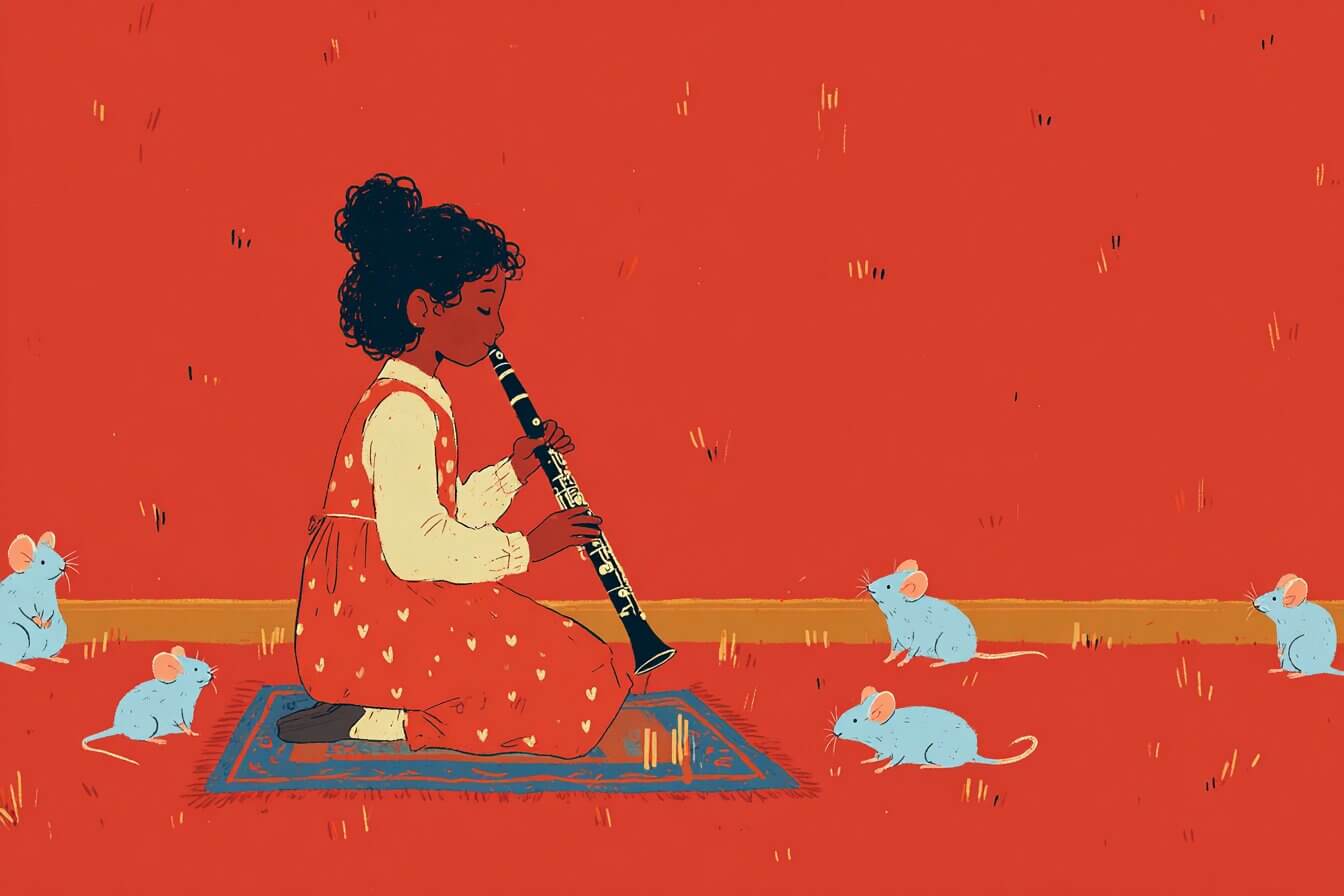
There is something magical about the warm, reedy hum of a clarinet drifting through a quiet house at night. In The Mouse Philharmonic, a girl named Nadia struggles through her band homework while a secret audience of adoring mice builds a tiny concert hall from matchsticks and gumdrops beneath her floorboards. It is one of those short clarinet bedtime stories that wraps practice, patience, and a whole lot of heart into a cozy goodnight moment. If your child loves this tale, you can create a personalized version with Sleepytale.
Why Clarinet Stories Work So Well at Bedtime
Music and sleep share a natural rhythm, and that is part of why a bedtime story about clarinet practice feels so perfectly timed for the end of the day. The clarinet's voice is gentle and reedy, close to a lullaby in the right hands. When children hear about Nadia warming up her instrument and listening to the hum of her house around her, they settle into that same quiet focus. It mirrors the way a child's own breathing slows as they get ready for sleep. There is also something deeply comforting about hidden worlds. The idea that tiny creatures are listening, appreciating, and cheering you on from just out of sight speaks to every child's hope that the world is kinder than it sometimes seems. That feeling of being secretly supported is exactly the kind of warmth kids need before closing their eyes.
The Mouse Philharmonic 6 min 1 sec
6 min 1 sec
Nadia set her alarm for 7:58.
Not eight.
Eight meant late.
She tightened her reed, licked it, winced at the taste, and waited for the kitchen clock to click over.
Two minutes.
She could hear her little brother humming in the bath, her mom clanking dishes, the fridge humming off key.
8:00.
She inhaled.
The clarinet squeaked like a stepped-on dog toy.
Under the floorboards, whiskers twitched.
"Maestro!"
cried Milo, dropping his walnut shell.
"She's starting!"
Mrs.
Bisby adjusted her thimble hat.
"Positions, everyone.
We're recording tonight."
She tapped a sesame seed on a toothpick and eight mice scurried into hollow matchbox seats they'd glued beneath the planks.
Above, Nadia tried a B flat.
It came out a wounded goose.
She frowned, cheeks puffing, and tried again.
Same goose.
"Genius," sighed Lulu, pressing her tiny ear to the wood.
"Such soul."
"She's experimenting with microtones," Milo whispered, scribbling on a Post-it scrap.
"Bold."
Nadia didn't feel bold.
She felt squeaky.
She practiced her band homework: "Merrily We Roll Along."
It wobbled, skidded, fell off a cliff.
She restarted.
The mice swayed.
Mr.
Bisby opened a soda-cap program he'd lettered with eyeliner: "An Evening with Nadia."
He passed dime-sized programs down the row.
She stopped at measure five, same as always, and rubbed spit from the mouthpiece onto her pajama sleeve.
"Stupid thing."
The mice gasped.
"Self-critique," Mrs.
Bisby said, dabbing her eyes with a cotton swab.
"The burden of artistry."
Nadia tried once more.
This time she imagined the melody floating like a paper airplane.
She pictured her grandma's laugh, the smell of library books, the way rain tasted metallic.
Her fingers found the keys.
The note came out round, not sharp.
She blinked.
Did it again.
Better.
Underground, Milo clutched his chest.
"I can't.
It's too beautiful."
"Compose yourselves," the maestro hissed, though his own tail trembled.
Nadia played the whole line.
Then, curious, she repeated it softer.
The mice leaned forward.
She tried it jaunty, then sleepy.
Each version felt like trying on a hat.
Some fit.
Some flopped.
She giggled.
The clarinet giggled back, a real laugh in wood and metal.
She lifted the instrument.
"Thanks, I guess."
A matchstick clattered below.
She froze.
"Hello?"
Her voice sounded huge in the hush.
She knelt, ear to floor.
"Anyone there?"
Inside the crawlspace, twenty-four mouse hearts hammered.
"Abort!"
Milo squeaked.
"She's onto us!"
Mrs.
Bisby yanked her conductor's baton, a stripped spaghetti noodle, and pointed toward the exit hole.
Mice scrambled over one another, programs fluttering.
Nadia tapped the board.
"I heard something fall.
You okay?"
Silence.
Then a tiny polite cough.
"We're...insulation inspectors," Mrs.
Bisby called up, voice muffled.
"Very tiny inspectors."
Nadia squinted through the crack.
A glint of moving shadow, no bigger than a sunflower seed.
"You're...in my floor."
"Technically under it," Milo corrected, then slapped both paws over his mouth.
She sat cross-legged.
"Were you listening?"
"Only to the greatest clarinetist alive!"
Lulu blurted, then shrank behind a raisin box.
Nadia's cheeks burned.
"I'm not great.
I'm...eighth grade."
"Eighth grade is a number, not a destiny," Mrs.
Bisop declared, stepping into the sliver of light.
Her hat gleamed silver.
"Art has no age requirement."
Nadia rubbed a scuff on the wood.
"I mess up every five measures."
"And yet we clap," Milo said, emerging.
"We even built a hall."
He gestured behind him.
She pressed her eye lower.
Matchstick arches, gumdrop pillars, a ticket booth from a bottle cap.
A chandelier of Christmas lights no bigger than her thumb.
Her breath caught.
"For me?"
"Opening night is tomorrow," Mrs.
Bisby announced.
"We hoped you might play the full piece."
"But I can't even, " "Yet," Lulu interrupted.
"Can't yet."
Nadia sat up, clarinet across her knees.
"You really think I could?"
"We know you can," the mice said in squeaky unison.
She glanced at her music stand, the crumpled pages, the pencil holes where she'd stabbed frustration.
"What if I mess up in front of you?"
"Then we'll wince in perfect harmony," Milo grinned.
"But we'll still cheer."
She laughed.
A real one.
It bounced off the ceiling and rolled under the boards where it landed like confetti.
"Alright.
Tomorrow.
Same time?"
"Curtain at eight sharp," Mrs.
Bisby said.
"Black tie optional."
The mice retreated, chittering plans: more seating, programs in triplicate, maybe popcorn kernels.
Nadia watched the crack until the last tail whisked away.
Next evening, she wore her favorite polka-dot socks.
She warmed up, fingers cold, stomach fluttering.
7:59.
She could almost hear tiny violins tuning.
8:00.
She raised the clarinet.
This time she pictured the mice in their finery, spaghetti-noodle baton lifted.
She breathed in.
Downstairs, her dad shouted at the news, the dishwasher slammed, life stumbled noisily on.
Up in her room, she played.
The notes weren't perfect.
They wiggled.
They wobbled.
But they rolled along, merrily indeed, like a wagon with one square wheel and a boundless heart.
She finished the final bar, held the last tone until it trembled into silence.
Under the floor, a thunderstorm of applause erupted: high-pitched, frantic, beautiful.
Milo whooped.
Lulu whistled through an acorn top.
Mrs.
Bisby bowed so low her hat tumbled off.
Nadia set the clarinet down, smiling so wide it hurt.
"Thank you," she whispered to the boards.
"See you tomorrow?"
"Encore!"
the mice squealed.
She laughed, clicked off her light, and wiggled her toes against the warm wood, hearing in the hush a hundred tiny hammers building, always building, a world just beneath her own.
The Quiet Lessons in This Clarinet Bedtime Story
This story explores perseverance, compassion for oneself, and the courage to perform even when you feel unprepared. Nadia's frustration at measure five, where she always stumbles, shows children that getting stuck is a normal part of learning, not a reason to quit. Lulu's gentle correction, “Can't yet,“ reframes failure as something temporary, teaching kids that growth lives in the space between trying and succeeding. These lessons settle naturally at bedtime, when a child's mind is open and reflective.
Tips for Reading This Story
Give Mrs. Bisby a prim, slightly bossy whisper and let Milo's voice crack with excitement whenever he praises Nadia's playing. Slow down during the moment Nadia imagines her grandma's laugh and the smell of library books, letting that sensory stillness fill the room. When the mice erupt into their thunderstorm of applause at the finale, tap your fingers lightly on the book or bed frame so your child can hear the tiny ovation come to life.
Frequently Asked Questions
What age is this story best for?
This story works best for children ages 4 to 9. Younger listeners love the idea of tiny mice building a concert hall from matchstick arches and gumdrop pillars, while older kids connect with Nadia's very real frustration about messing up at measure five and her journey toward trying again.
Is this story available as audio?
Yes, you can listen to the full audio by pressing play at the top of the page. The audio version is especially fun because you can hear the contrast between Nadia's squeaky early notes and the smooth, round tone she finally achieves. Mrs. Bisby's muffled voice calling up through the floorboards and the chorus of tiny mouse applause at the finale are moments that truly come alive when heard aloud.
Does this story teach kids anything about practicing a musical instrument?
Absolutely. Nadia's journey from squeaky B flats to a full, wobbly, but heartfelt performance of “Merrily We Roll Along“ mirrors what real practice looks like for young musicians. The story normalizes mistakes, restarts, and the frustration of getting stuck, while showing that even imperfect playing can be something worth celebrating. It is a wonderful conversation starter if your child is learning an instrument and feeling discouraged.
Create Your Own Version
Sleepytale turns your child's own interests and imagination into a personalized bedtime story in moments. You can swap the clarinet for a violin or trumpet, change the mice into friendly crickets or ladybugs, or set the whole concert in a treehouse instead of under the floorboards. In just a few taps, you will have a calm, cozy tale that feels made for your family.
Looking for more music bedtime stories?

Rock Bedtime Stories
A dad's secret past as a crowd surfing guitarist sparks a family jam session in one of our favorite short rock bedtime stories.

Rap Bedtime Stories
Ever wondered why short rap bedtime stories help kids sleep? Suki's sticky note rhymes and Milo's shoebox surprise say it all.

Pop Bedtime Stories
What happens when Mina performs for glowing jellyfish in one of our short pop bedtime stories featuring a silver pearl?
Orchestra Bedtime Stories
Mia's single triangle note unites a quarreling orchestra in one of our favorite short orchestra bedtime stories for little listeners.

Lullaby Bedtime Stories
Enjoy short lullaby bedtime stories like Mira's magical night Lark Lane, where a glowing feather chooses its keeper.

Kpop Bedtime Stories
A copper gold seed leads Jennie through Central Park in one of our favorite short kpop bedtime stories.