
Berlin Bedtime Stories
By

Dennis Wang, Bedtime Story Expert
6 min 5 sec
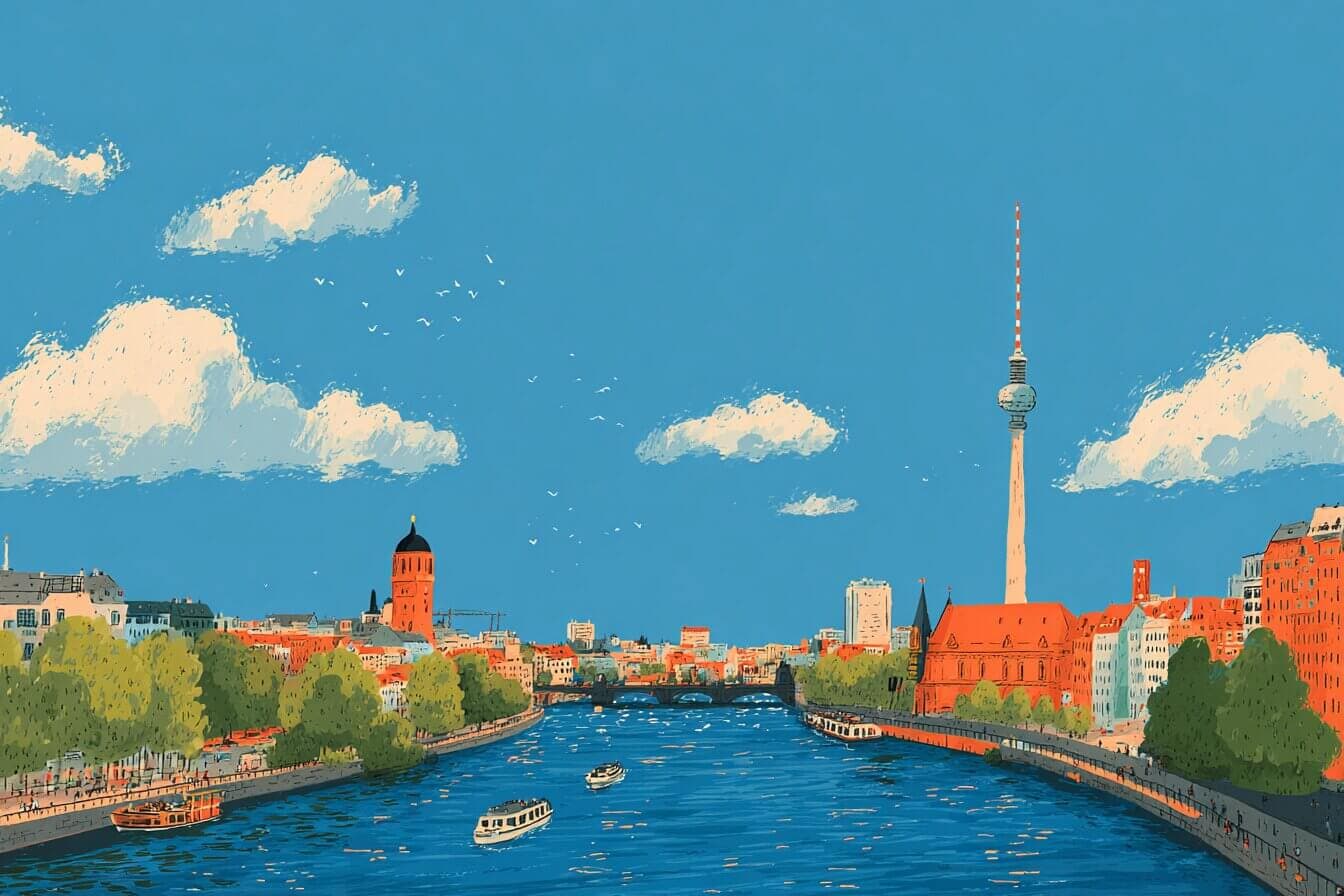
There is something about the hush of a city at night, the streetlamps pooling gold on cobblestones, the faint smell of bread from a bakery that closed an hour ago, that makes kids lean in and listen. In this story, a tiny hedgehog named Milo discovers a forgotten gray wall in Berlin and decides, one brushstroke at a time, to fill it with color and community. It is one of those Berlin bedtime stories that feels like a slow walk through side streets, quiet enough to carry a child right to sleep. If your little one loves it, you can create your own version, with different characters or settings, using Sleepytale.
Why Berlin Stories Work So Well at Bedtime
Berlin has a kind of magic that children sense even before they can name it. It is a city built on layers: old stone archways, bright murals splashed across apartment walls, parks where squirrels dart between chestnut trees. For kids, a bedtime story set in Berlin feels like exploring a place where history and imagination overlap, where something surprising can appear around every corner but where everything still ends safely under familiar lamplight.
That blend of wonder and coziness is exactly what helps children wind down. A story about Berlin at night naturally moves at a walking pace, from one quiet street to the next, giving young listeners a rhythm that slows their breathing. The city's real textures, linden blossoms, river reflections, warm pretzels, ground the fantasy in something sensory and specific, so kids feel held by the world of the story rather than overstimulated by it.
Milo and the Painted City 6 min 5 sec
6 min 5 sec
Milo was a small hedgehog with paint on his quills and more ideas than he knew what to do with.
He lived right in the middle of Berlin, in a neighborhood where every wall seemed to have something to say and somebody's accordion was always playing two streets over.
One morning he trotted past the old stone gate and stopped.
A long stretch of wall ran alongside the path, and every brick was the same flat gray, the kind of gray that doesn't even try. No posters, no chalk marks, no stickers peeling at the edges. Just silence.
Milo set down his satchel. His heart was thumping in a way that meant he was about to do something, though he wasn't sure what yet. History lived inside those stones, he could feel it pressing outward, but whatever color had once been there had gone to sleep a long time ago.
"I will help you remember," he whispered, and the words sounded a little ridiculous out loud, which made him smile.
He opened his tiny wooden paint box. The hinge squeaked, as it always did, and the noise startled a pigeon off the ledge above. Milo dipped his brush in sunny yellow and drew a glowing circle on the bricks.
The color shimmered.
A passing sparrow tilted its head, then chirped once, sharply, as though it had an opinion.
Milo added a cobalt line that curved like the river Spree on the maps he kept tacked above his bed. The line danced upward and became a ribbon looping through the air, pulling his brush along with it. He painted a purple trumpet that looked ready to blare a jazzy tune it had been saving for years.
A girl with braids stopped on her way to school. She laughed and clapped, and the sound of it was so sudden and bright that Milo nearly dropped his brush into the grass.
He painted faster after that. Emerald leaves, ruby stars, a silver moon that seemed to wink if you caught it at the right angle. Each new color felt like a memory stretching awake after a long nap. The wall began to hum, low and warm, the way a radiator hums in winter when the building finally decides to cooperate.
An old man walking a dachshund paused and watched for a while. "There used to be murals here," he said, not to Milo exactly, more to the wall itself. "Before the gray days."
Milo listened while painting a turquoise piano with keys that grinned.
The man told stories about artists who painted dreams bigger than the sky, and his dachshund sat down on the sidewalk as if it planned to stay forever. Milo's quills tingled.
He added golden violins, magenta dancers, and a top hat just for luck. Passersby started leaving things: a button, a crumpled feather, a tiny poem someone had written on the back of a grocery receipt. Milo tucked each gift into the painting, turning buttons into doorknobs and feathers into birds, and the receipt poem became a speech bubble rising from the trumpet.
The wall sang with so many colors now that even the clouds seemed to slow down overhead, curious.
A breeze carried the smell of fresh pretzels and linden blossoms, that sweet, papery scent that only lasts a few weeks each summer. Milo's paws ached. His brush arm felt heavy. But his spirit was lighter than it had been in months.
He stepped back.
The lonely wall had become a storybook you could read from across the street. Children crouched at its base drawing chalk hopscotch squares shaped like musical notes, arguing cheerfully about which note was which.
Milo sat beneath a lamppost and shared his paints with anyone who reached for them. Together they painted paper airplanes that looked ready to carry wishes across the city. A boy painted his grandmother's smile, and somehow, with just three colors and a wobbly line, the smile glowed like warm bread cooling on a windowsill.
Milo showed them how to swirl two colors so they danced together instead of turning to mud. "The trick," he said, "is you don't stir. You just let them bump into each other and figure it out."
Laughter echoed off the stones and bounced into nearby cafes where artists sipped mint tea and nodded along. The wall's song grew louder, a friendly rumble of joy that you could almost feel through the soles of your shoes.
Milo looked at the mural and saw history and creativity linking hands like old friends who had lost each other's phone numbers. Every brushstroke was a small promise: memories stay alive when someone bothers to share them.
Twilight painted the sky lavender. City lights blinked on, one by one, shy as stars.
Milo added one last shape: a tiny hedgehog wearing a painter's beret, standing on tiptoe.
Beside it, in gentle letters, he wrote: "Your turn."
The next morning he returned with fresh brushes and found the wall alive with new stories. Someone had painted a yellow submarine sailing through turquoise polka dots. Another artist added a compass rose with one arrow labeled "kindness."
Milo grinned so wide his cheeks ached.
He met a squirrel who played a miniature accordion, badly, and together they formed a parade of two. Children marched behind them, dogs wagged, and even the statues in the park seemed to lean forward. The mayor walked past, stopped mid-step, and declared the wall a place of perpetual painting, which mostly meant nobody was allowed to paint it gray again.
From that day on, visitors came from every district to add their dreams. The wall grew layer upon layer, but it never felt heavy. Only brighter.
Milo kept a tiny sketchbook where he pressed petals and ticket stubs, reminders that creativity, like history, is meant to be handed around.
Every evening, when the city lights shimmered in puddles on the sidewalk, Milo walked along the river and hummed the song the wall now sang. He knew tomorrow would bring new colors, new stories, and new friends ready to try.
The stars above Berlin twinkled like spilled glitter.
Milo curled beneath a linden tree, paint still on his quills and hope tucked under one arm. Somewhere across the city, a blank wall was waiting. But that was a job for morning. Tonight, all that mattered was the cool grass, the hum of the river, and the quiet feeling that he had done something worth doing.
The Quiet Lessons in This Berlin Bedtime Story
This story carries a handful of ideas that settle well into a child's mind right before sleep. When Milo whispers to a blank wall and picks up his brush despite not having a plan, kids absorb the notion that you do not need permission or certainty to start something creative. The old man sharing memories of lost murals shows that listening to others enriches what we make, and the parade of strangers leaving buttons and poems reminds children that generosity can be tiny and still matter. Milo writing "Your turn" instead of signing his name is a gentle lesson in letting go of ownership, trusting that what you begin will grow in ways you cannot predict. These themes, courage to begin, openness to others, and the quiet satisfaction of contributing rather than claiming, are exactly the kind of reassurance children need before closing their eyes.
Tips for Reading This Story
Give Milo a soft, slightly breathless voice, the kind of voice someone uses when they are excited but trying not to be too loud. When the old man with the dachshund speaks, slow down and drop your pitch a little, as though he is remembering something from very far away. At the line "Your turn," pause and let your child sit with those two words before you continue to the next morning. If they want to guess what someone painted on the wall overnight, let them; it makes the story theirs.
Frequently Asked Questions
What age is this story best for?
Children ages 3 to 8 tend to enjoy it most. Younger listeners are drawn to Milo's bright colors and the parade scene, while older kids pick up on the old man's memories and the idea that a wall can hold layers of shared history. The gentle pacing and absence of any conflict more intense than a blank wall make it comfortable for sensitive listeners too.
Is this story available as audio?
Yes. Press play at the top of the story to hear it read aloud. The audio version brings out details that shine in narration, like the squeaky hinge on Milo's paint box and the moment the wall begins to hum. Character voices, especially the old man reminiscing about murals, feel warmer when heard rather than read, and the slow build from silence to a full parade of sound works beautifully as a wind-down listen.
Does this story teach kids anything about real Berlin?
It weaves in real details from the city, such as the stone gate, the river Spree, linden trees, and Berlin's famous mural culture, so children get a genuine sense of place without a geography lesson. After hearing the story, many kids become curious about street art and want to know more about how real artists transform city walls, which can spark great conversations the next day.
Create Your Own Version
Sleepytale lets you reshape this story in seconds. Swap Milo for a fox, a cat, or your child's own name; trade the painted wall for a bridge covered in chalk drawings or a rooftop garden; shift the setting from Berlin to any city your family loves. In a few taps you will have a cozy, personalized tale ready to play whenever bedtime needs a little magic.
Looking for more travel bedtime stories?
Washington Dc Bedtime Stories
Ellie steps into bright marble streets and learns how big ideas become kind choices in short washington dc bedtime stories. A calm tour turns curiosity into comfort.

Tokyo Bedtime Stories
Looking for short tokyo bedtime stories that feel calm, magical, and easy to read aloud? Want a gentle tokyo bedtime story you can replay at bedtime.
Singapore Bedtime Stories
Lily arrives in Singapore and discovers rooftop gardens that float between towers in short singapore bedtime stories. She follows a humming seed to a gentle riddle and a citywide bloom.

Shanghai Bedtime Stories
Looking for short shanghai bedtime stories that feel calm and magical for kids? Read a gentle shanghai bedtime story and learn how to make your own cozy version in Sleepytale.

Sf Bedtime Stories
A foggy bridge becomes a quiet portal where a child rescues drifting dreams. Read short sf bedtime stories that glow with wonder and end in calm.

Seoul Bedtime Stories
Soothe bedtime with short seoul bedtime stories that blend gentle city sights, kind choices, and cozy calm for kids. Read a quiet Seoul adventure that settles little minds fast.