
Bedtime Stories For 14 Year Olds
By

Dennis Wang, Bedtime Story Expert
6 min 28 sec
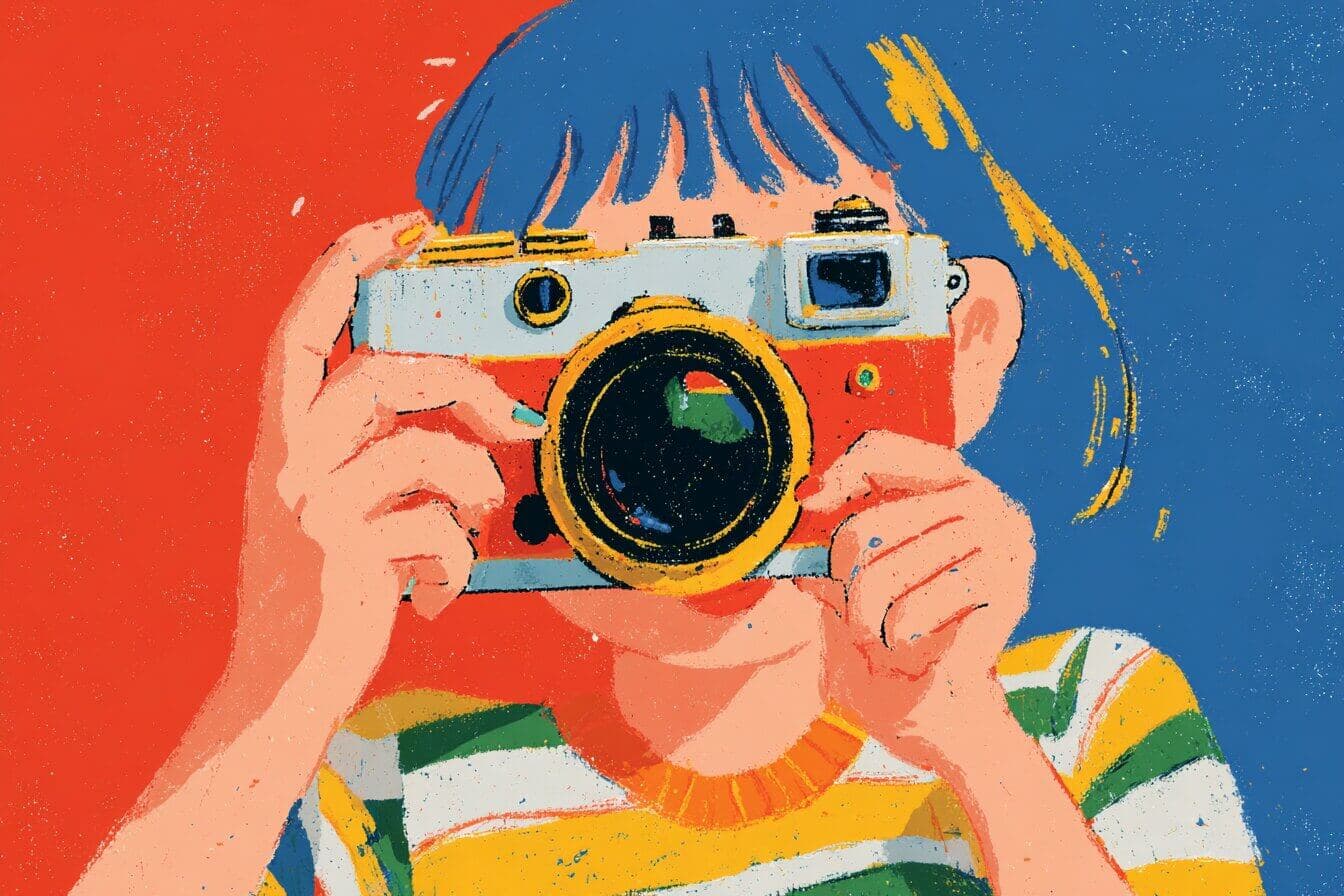
There is something about being fourteen that makes nighttime feel both vast and close, like your thoughts finally have room to stretch but nowhere comfortable to land. This story follows Mira, a puzzle-loving girl on the edge of fifteen, who receives a silver camera that can photograph tomorrow and must figure out what to do with that strange, heavy gift. It is the kind of bedtime stories for 14 year olds that trades the rush of action for something quieter, a question that lingers after you close your eyes. If your teen needs a version shaped around their own interests or mood, you can build one with Sleepytale.
Why 14 Year Old Stories Work So Well at Bedtime
By fourteen, kids have outgrown picture books but still crave that end-of-day ritual where the world gets small again. A story pitched at this age can hold real tension and real ambiguity without tipping into anxiety, because the stakes feel personal rather than apocalyptic. The best bedtime story for a 14 year old meets readers where their brains already are: curious, a little restless, beginning to ask what kind of person they want to become.
That is why themes like foresight, choice, and self-restraint resonate so well at night. A teen lying in the dark is already doing a version of what Mira does with her camera, running through tomorrow, weighing outcomes, hoping things will be okay. When a story validates that inner work and then gently releases it, sleep comes easier. The mind gets permission to stop rehearsing and start resting.
The Camera of Tomorrow 6 min 28 sec
6 min 28 sec
Mira was turning fifteen on the first day of spring. She had curly black hair she never quite managed to tame and a collection of smooth stones lined up on her windowsill in order from lightest to darkest. Puzzles, rocks, the fat adventure novels she read under the oak in her front yard. Those were her things.
That morning, her grandmother pressed a small silver camera into her hands. It was wrapped in a scarf the color of sunrise, the silk cool and a little slippery.
"This belonged to your great aunt," Grandma said, her voice low, the way people speak when they are handing you something they are not sure you are ready for.
"It shows what will happen tomorrow. One photo per day."
Mira laughed. Of course she laughed.
But she pressed the shutter anyway, mostly to be polite, and a picture slid out with a faint mechanical whir. In it, her cat Whiskers lay asleep on the windowsill, tail curled into a loose question mark against the glass.
The next day, Whiskers climbed to that exact spot around two in the afternoon and stayed there until dinner. Same curl, same paw tucked under his chin.
Mira sat on her bed and stared at the camera for a long time. It was heavier than it looked, the kind of weight that seemed to shift depending on how you held it.
She took another photo the following morning. This one showed Leo, her best friend since third grade, slipping on a banana peel at school, arms pinwheeling, tray of spaghetti airborne. She found him before first period and tried to say something useful.
"Just, maybe don't run at lunch?"
Leo grinned. "When do I ever run?"
"Always. You always run."
He shrugged and walked away already half-jogging.
At 12:07 he went down in front of the entire cafeteria. Not hurt, just sprawled there with marinara on his sleeve, blinking up at the ceiling tiles while thirty people tried not to laugh and mostly failed. Mira watched from two tables away and felt her stomach clench, not because of the fall, but because she had seen it coming and it happened anyway.
Word traveled fast. Somehow the story mutated from "Mira warned Leo" into "Mira can predict things." By Thursday, classmates were stopping her in the hall. Could she check tomorrow's math test? Would it rain for the soccer semifinal? Did Jake's crush like him back?
She said no to all of it.
But alone in her room that night, she sat cross-legged on the floor and turned the camera over and over. The metal had a faint smell, like old coins. She realized something that made her chest tight: knowing tomorrow might make today feel like it didn't count.
On the third morning, she pressed the shutter before she could talk herself out of it.
The photo showed the town clock tower. There was a crack running along its base, jagged and dark, the kind you see in walls right before they stop being walls.
Mira's hands went cold.
She paced her room for twenty minutes. Then she called Leo.
"I need you and the science club. Don't ask why yet."
To his credit, Leo only asked why twice before agreeing. They met at the tower after school, five of them poking around the base with flashlights and the stubborn energy of people who had not been told the full story. It was Leo who found the fissure, a hairline crack near the south corner where a restless maple root had been pressing for years.
"That's, uh, not great," he said, crouching.
They filled it with fresh mortar that Mira's neighbor donated from his garage, no questions asked, and redirected water away from the root so the tree could drink somewhere else. It took two hours. Mira's knees ached from kneeling on the cobblestones. Nobody asked her how she knew.
Walking home, Leo bumped her shoulder. "You going to tell me how you knew?"
"Nope."
"Cool. Want to get ice cream?"
"Yeah."
They got mint chip, and Mira watched the sun go down behind the repaired tower and thought about gardens. Not the metaphorical kind. Actual gardens, the way her grandmother pressed seeds into dirt without demanding to know exactly when they would bloom.
After that, the camera stayed on her bookshelf with the lens cover on. She still picked it up sometimes, felt its weight shift in her palm. But she only used it when something nagged at her badly enough that kindness overruled curiosity.
She still collected stones. Still read under the oak. Still laughed when Whiskers knocked a pen off the desk and then stared at the floor like the pen had betrayed him.
But she also kept a journal now, the kind with no lines, just blank pages where she wrote about the difference between seeing what comes next and choosing what comes next. Some entries were long. Some were just a single word. One page said only: "enough."
Her friends noticed she seemed different. Not quieter exactly, just steadier. Leo started volunteering at the community garden on weekends. Others in the club began checking on small things around town, a loose railing, a cracked sidewalk, the kind of problems you only see when you decide to look.
One afternoon they were painting sunset clouds at the park, watercolors bleeding orange and violet across wet paper. Leo set his brush down.
"How come you never take pictures anymore?"
Mira wiped paint from her thumb and thought about it.
"Today is enough of a gift," she said, and meant it in a way that surprised even her.
The air smelled like lilacs. Somewhere above them, a star appeared while the sky was still more blue than dark, too early and a little defiant, like it could not wait for proper nighttime.
Years later, Mira kept the camera on a shelf in her workshop. She built things now, small inventions that solved small problems, a door latch for her grandmother's arthritic hands, a reading light that clipped to any branch. She did not need the camera's images to feel brave. She had learned that everyone carries something like a lens inside them, a way of focusing on hope instead of dread, and that the real trick is choosing to protect wonder rather than trying to control it.
On calm nights she still walked to the oak. She pressed her palm flat against the bark, felt the roughness against her skin, and listened.
And whenever a younger kid asked her if tomorrow would be okay, she would reach into her pocket, offer a smooth stone, and say, "Let's make today good enough that tomorrow sends a thank-you note."
The Quiet Lessons in This 14 Year Old Bedtime Story
This story explores self-restraint, the courage of quiet action, and the difference between knowledge and wisdom. When Mira refuses to preview test answers or soccer scores for her classmates, she models something teens rarely hear praised: saying no to power you already hold. The clock tower scene takes it further, showing that helping others does not require credit or attention, just mortar, patience, and a willingness to kneel on cobblestones. These are reassuring ideas to carry into sleep, the sense that tomorrow does not need to be predicted or controlled, only met with enough steadiness to do the next small, generous thing.
Tips for Reading This Story
Give Grandma a slow, deliberate delivery when she explains the camera, almost like she is deciding mid-sentence how much to reveal. When Leo says "When do I ever run?" let your voice crack with cheerful obliviousness, and speed up his lines compared to Mira's measured ones. At the moment Mira sees the cracked clock tower in the photo, pause for a full breath before continuing, and let your child sit in that silence with her.
Frequently Asked Questions
What age is this story best for?
It works best for readers between 12 and 16. The moral questions Mira faces, like whether knowing the future is actually a gift, land with kids who are starting to think about consequences and responsibility. Younger teens will connect with the school scenes and friendship dynamics, while older ones will appreciate the restraint Mira shows in keeping the camera on the shelf.
Is this story available as audio?
Yes. Press play at the top of the story to listen. The pacing works particularly well in audio because the quiet moments, like Mira turning the camera over in her hands or the pause after Leo's cafeteria fall, feel genuinely suspenseful when you hear them rather than read them. Leo's dialogue also comes alive with a narrator's voice giving him that slightly too-confident energy.
Does the camera have limits, or could Mira photograph anything?
The camera allows one photo per day, and it only shows events from the following day. Mira never tests whether it can see further ahead, which is part of the story's point. She chooses not to push its boundaries, treating the camera the way she treats tomorrow itself: something to approach carefully rather than demand answers from.
Create Your Own Version
Sleepytale lets you reshape this story around your teen's interests and mood. Swap the silver camera for a journal that writes back, move the setting from a small town to a houseboat or a mountain school, or replace Mira and Leo with siblings, cousins, or a whole robotics team. In a few minutes you get a calm, original story ready to read or listen to whenever the night needs a little more stillness.
Looking for more bedtime stories for kids by age?
Scary Stories For Kindergarteners
Are you looking for short scary stories for kindergarteners? Wisp is a tiny trembling ghost who learns to name the shadows a windowsill.

Audiobooks For Kindergarteners
A tugboat named Biscuit navigates fog by following buoy bells, making short audiobooks for kindergarteners feel like a lullaby the water.

Short Newborn Bedtime Stories
Are you searching for short newborn bedtime stories where the moon watches over a sleeping baby all night?
Baby Bedtime Stories
Enjoy a cozy night with short baby bedtime stories like The Waiting Hug, featuring a stuffed rabbit's patient wait for one perfect embrace.

Short Stories For 8th Graders
Maya spent three years saying hello to every face in her hallway, and one quiet boy replied with dragons. Discover short stories for 8th graders here.
Kindergarten Stories
A lost red crayon waits under a bookshelf until a boy named Mateo draws a smiling sun in one of the sweetest short kindergarten stories for bedtime.