
Banjo Bedtime Stories
By

Dennis Wang, Bedtime Story Expert
6 min 47 sec
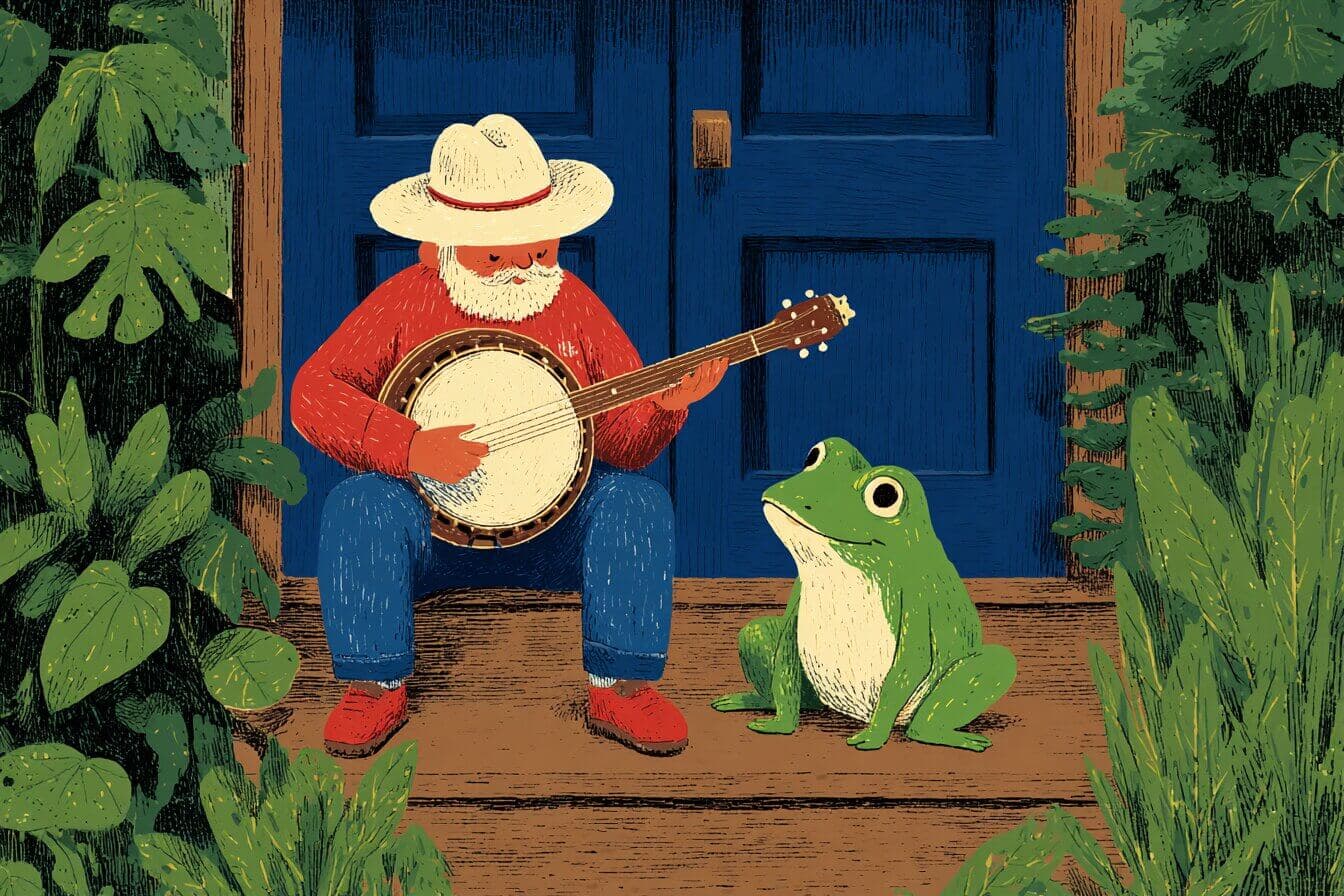
There is something magical about the twang of a banjo drifting through a warm evening, the kind of sound that makes little eyes grow heavy and imaginations glow. In The Frog Who Hummed Back, a child discovers that Pop Pop's nightly porch concerts attract a mysterious green frog who hums along in perfect harmony. It is one of those short banjo bedtime stories that feels like sitting on the steps yourself, listening to music braid through the garden air. You can even create your own version of this cozy tale with Sleepytale.
Why Banjo Stories Work So Well at Bedtime
A banjo has a voice unlike any other instrument. It is warm and twangy and a little bit wild, like summer caught in a handful of strings. For children settling into bed, that sound carries a special kind of comfort. It feels familiar even if they have never heard one in person, perhaps because banjo melodies move the way good stories do: rising, falling, and always finding their way home. A bedtime story about banjo music taps into that natural rhythm, giving restless minds something gentle to follow into sleep. There is also something deeply reassuring about a story set on a porch at dusk, with crickets and garden sounds filling the quiet spaces between notes. Kids respond to that kind of sensory richness because it mirrors the coziness of their own bedtime routines. The predictable return of the music, night after night, creates a feeling of safety that helps little listeners let go of the day and drift off peacefully.
The Frog Who Hummed Back 6 min 47 sec
6 min 47 sec
Pop-Pop’s banjo always sounded like summer trapped inside a tin can, all twangy and bright, and whenever he played on the back porch the whole yard seemed to lean in closer.
Mom said the story about the frog was just a tall tale, the kind old men keep in their pockets like worn coins, but I watched that garden every evening.
One frog.
Always one.
Green with a speckled chin, eyes like polished buttons.
It hopped out from between the tomato vines, padded across the brick path, and stopped right at Pop-Pop’s bare feet.
He never looked down, just kept strumming, but the corner of his mouth curled like he knew a secret joke.
I asked him once if the frog had a name.
He said, "Names are for folks who plan on leaving," and ended the song with a quick riff that sounded like laughter.
The frog blinked twice, swallowed, and vanished into the beans.
Next evening, same time, same song, same frog.
I started bringing a jelly glass of water and set it near the steps.
The frog ignored it.
I tried bread crumbs.
Ignored those too.
Pop-Pop saw and chuckled, said, "That one only feeds on music, same as me."
I tried to picture a twelve-year-old Pop-Pop knee-deep in Louisiana swamp water, banjo on his shoulder, arguing chords with a talking frog.
Hard to imagine.
His knees now popped when he rose from the rocking chair, and his songs had slowed the way rivers do when they meet the sea.
Still, his fingers found the strings without looking, and every note felt like a question waiting for an answer.
One night lightning flashed far off, heat lightning that never quite became a storm.
Pop-Pop played softer, almost whispering with the banjo.
The frog sat closer than usual, its throat bulging in tiny pulses, as if keeping time.
I crouched low, elbows on the cool porch rail.
"Did you really win this banjo from a frog?"
I asked.
Pop-Pop didn’t stop playing, but his eyes met mine.
"Winning ain’t the word.
More like a trade."
He launched into a tune I’d never heard before, minor and restless.
The frog lifted its head, opened its mouth, and, no word of a lie, hummed along.
Not croaked.
Hummed.
A low, thrumming harmony that rattled the jelly glass.
My heart jumped like a startled sparrow.
Pop-Pop nodded toward the frog.
"Your turn," he said, still picking.
The frog’s throat sac inflated, bigger than I thought possible, and from it came a single clear note, higher than the banjo, bright as a penny.
Pop-P answered with a matching chord, and the two sounds braided together, climbing the porch posts, slipping through the oak leaves, drifting toward the moon.
I felt my own throat tighten, not from fear but from the nearness of something impossible made ordinary.
When the song ended, Pop-Pop set the banjo across his lap and exhaled.
The frog deflated, eyes half-closed.
Silence felt suddenly loud.
"Contest rules," Pop-Pop said, voice rough.
"We each teach the other one new song every twenty years.
Tonight was my payment."
He rubbed his knuckles.
"Next time, it’s his turn to teach me."
I stared at the frog, waiting for it to speak, to declare victory, to demand a rematch.
Instead it simply turned, hopped once, twice, and disappeared beneath the bean leaves.
I waited for it the following night, but the garden stayed empty.
And the next night, and the next.
Pop-Pop played his usual tunes, but his foot tapped slower, and sometimes his fingers missed the strings.
Weeks passed.
Tomatoes ripened and were picked.
Beans yellowed on the vine.
The jelly glass sat untouched, water evaporated to a ghost line.
I started to believe Mom was right, that the frog had been an ordinary frog after all, that stories swell when retold.
Then one humid evening, when the air felt like breathing through a wet towel, a sound rose from the garden: a single note, clear and sweet, the exact pitch the frog had sung.
Pop-Pop straightened in his chair so quickly the banjo almost slipped.
He placed it across his knee, listened.
The note came again, followed by another, forming a melody I almost recognized.
Pop-Pop’s face folded into a grin.
He answered with a tentative chord.
The garden music paused, then resumed, weaving invitation.
His old fingers found the strings, slower than years ago but certain.
Together, porch and garden made a duet neither side had fully learned yet both somehow remembered.
I sat on the steps between them, humming the part I understood.
When the moon reached the top of the sky, the garden went quiet.
Pop-Pop set the banjo down and patted my shoulder.
"Tomorrow," he said, "we’ll practice the new song till it feels like ours."
I glanced at the dark rows of vegetables, half expecting the frog to reappear.
Instead, only dew shimmered on the leaves.
Yet the yard felt different, fuller, like a held breath.
Next morning I carried the banjo outside, wiped the strings with a soft cloth.
Pop-Pop watched from the doorway, coffee steaming in his hand.
"Careful," he warned, but his eyes twinkled.
I plucked the first note of the frog’s tune.
It rang true, echoing against the house, rolling down the street, bouncing off the morning.
Somewhere down by the ditch, a frog croaked once, as if clearing its throat.
Pop-Pop laughed, a sound like gravel tumbling smooth.
"Sounds like we’ve got ourselves a rehearsal," he said.
I placed the banjo across my lap, heart thumping.
From the garden came answering notes, not one frog but three, each pitching a different tone, clumsy but eager.
Pop-Pop stepped onto the porch, lifted his instrument, and winked at me.
"Ready?"
I nodded.
We played the new song together, human and frog, wrong notes and right ones tangling in the humid air.
Overhead, clouds drifted, shaped like swollen rivers.
Somewhere inside, Mom hummed while peeling peaches, maybe believing, maybe not.
I no longer needed to decide.
The song was enough, rising and falling, imperfect and alive, a contest that never ended, a trade that kept trading.
When we finished, the frogs quieted.
Pop-Pop set his banjo aside, wiped his brow, and looked at me with something between pride and gratitude.
"Keep practicing," he said.
"Twenty years goes faster than you think."
I promised I would.
That night I left the porch light off so the stars could listen better.
The Quiet Lessons in This Banjo Bedtime Story
This story gently explores the beauty of intergenerational bonds, as the child learns to treasure Pop Pop's music and the traditions that come with it. Patience surfaces when the frog disappears for weeks and the child must wait, uncertain, until the garden sings again. There is also a lovely lesson about embracing imperfection, captured in the moment when human and frog play together with wrong notes and right ones tangling in the humid air. These themes settle naturally at bedtime, when children are most open to feeling connected and reassured.
Tips for Reading This Story
Give Pop Pop a slow, gravelly voice with a warm Southern drawl, and let his lines land with quiet pauses, especially when he says “Names are for folks who plan on leaving.“ When the frog hums its single clear note, try holding a soft, steady hum yourself so your child can feel the magic of that moment. Slow your pace during the final porch duet with three frogs joining in, and let your voice trail to a whisper when the child promises to keep practicing and turns the porch light off for the stars.
Frequently Asked Questions
What age is this story best for?
This story works beautifully for children ages 4 to 9. Younger listeners will love the idea of a frog that hums along to banjo music, while older children will appreciate the deeper bond between the child narrator and Pop Pop. The gentle pacing and absence of anything scary make it a cozy choice for sensitive readers too.
Is this story available as audio?
Yes, you can listen to the full audio version by pressing play at the top of the page. It is especially wonderful to hear Pop Pop's twangy porch scenes come alive, and the moment the frog hums its single bright note feels even more magical in audio. The quiet closing scene where the porch light goes off so the stars can listen is a perfect last sound before sleep.
Why does the frog in the story hum instead of croak?
In the story, the frog's humming is what makes it extraordinary and signals its special musical bond with Pop Pop. Pop Pop explains that every twenty years they trade songs, each teaching the other a new melody, and the humming is the frog's way of holding up its end of that ancient agreement. It is a magical detail that turns an ordinary garden visitor into something wonderfully mysterious.
Create Your Own Version
Sleepytale turns your child's wildest ideas into personalized bedtime stories in seconds. You can swap the banjo for a ukulele, replace the frog with a singing cricket, or set the whole tale on a houseboat instead of a back porch. In just a few taps you will have a calm, cozy story that feels made for your family's bedtime routine.
Looking for more music bedtime stories?

Rock Bedtime Stories
A dad's secret past as a crowd surfing guitarist sparks a family jam session in one of our favorite short rock bedtime stories.

Rap Bedtime Stories
Ever wondered why short rap bedtime stories help kids sleep? Suki's sticky note rhymes and Milo's shoebox surprise say it all.
Pop Bedtime Stories
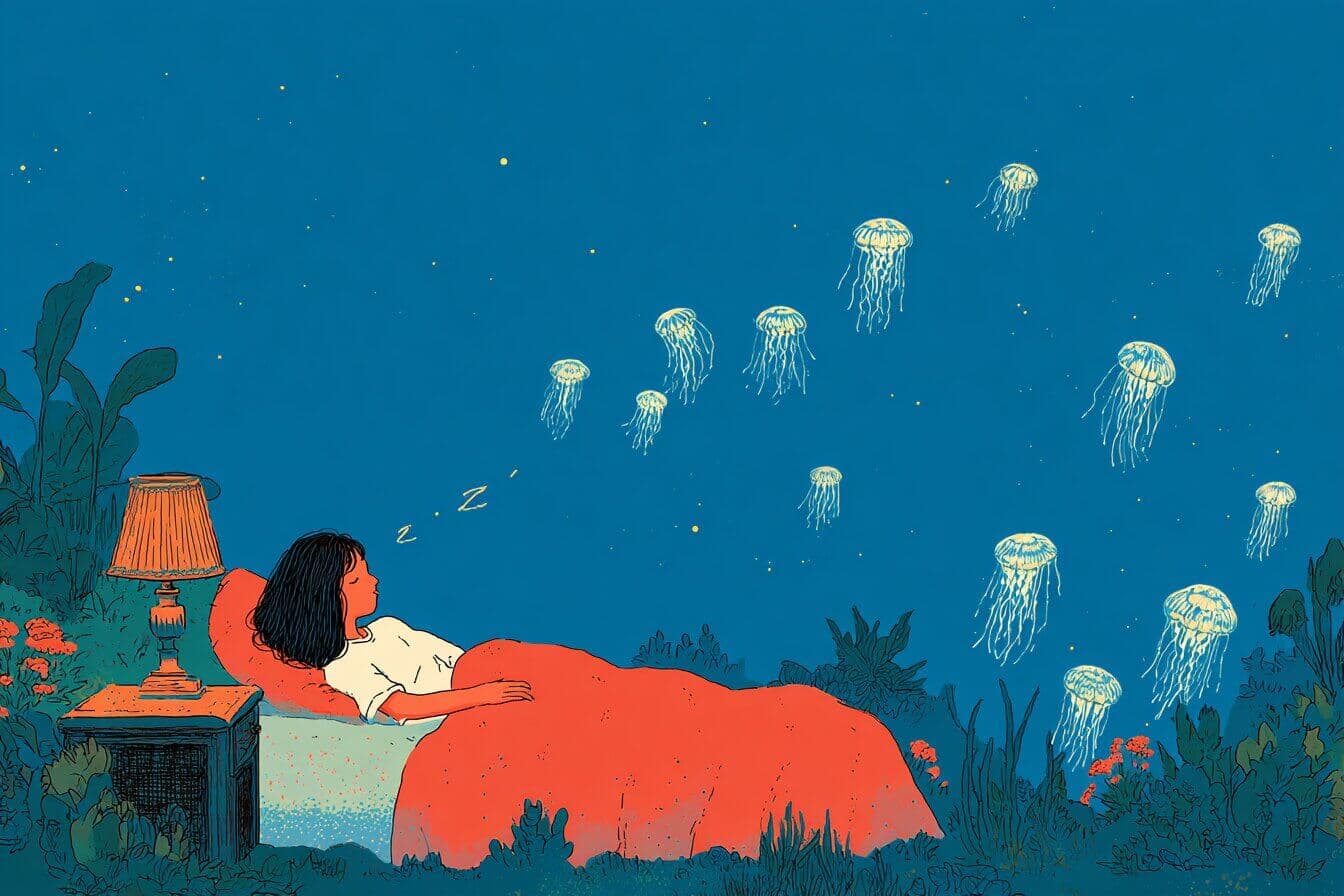
What happens when Mina performs for glowing jellyfish in one of our short pop bedtime stories featuring a silver pearl?
Orchestra Bedtime Stories
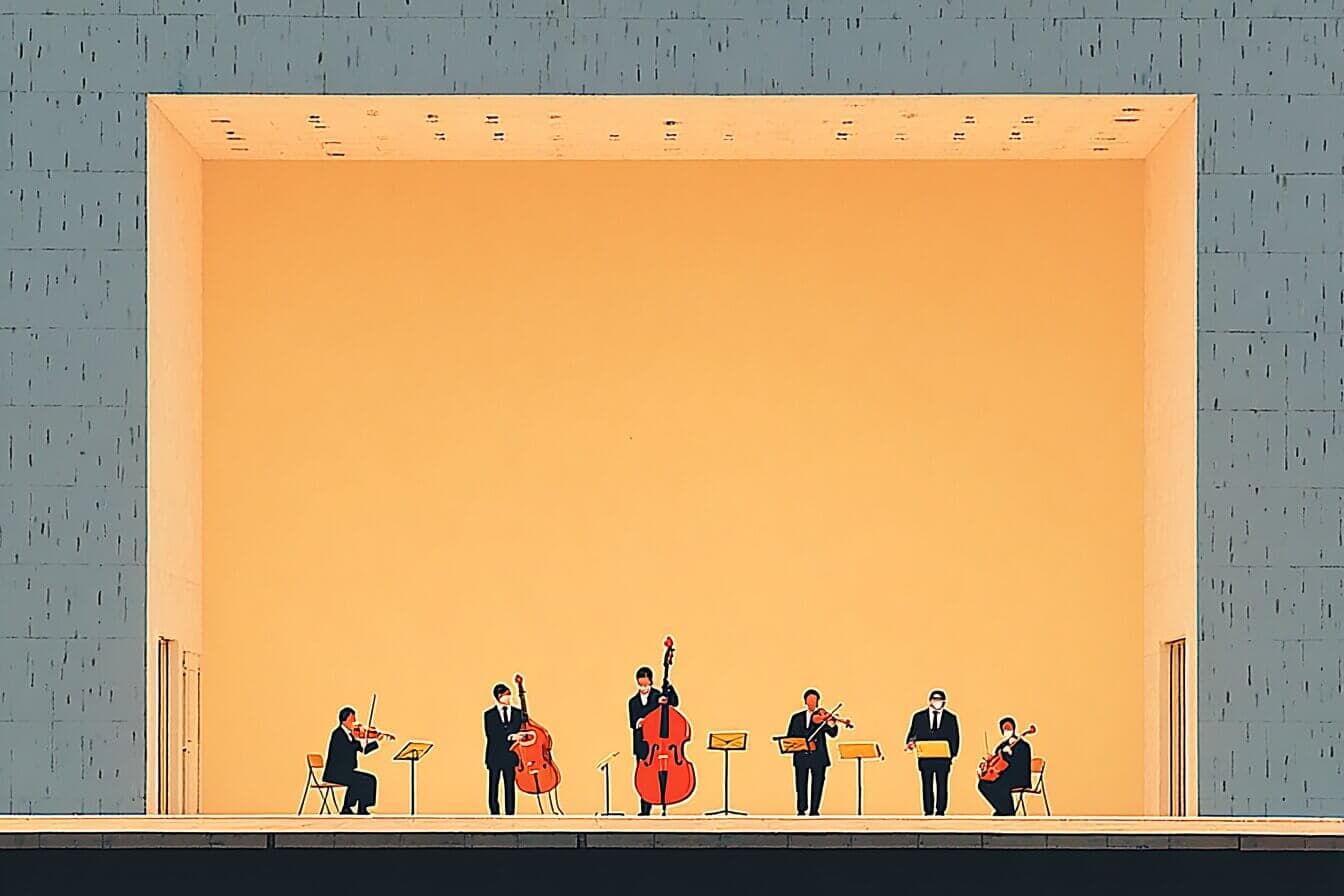
Mia's single triangle note unites a quarreling orchestra in one of our favorite short orchestra bedtime stories for little listeners.
Lullaby Bedtime Stories
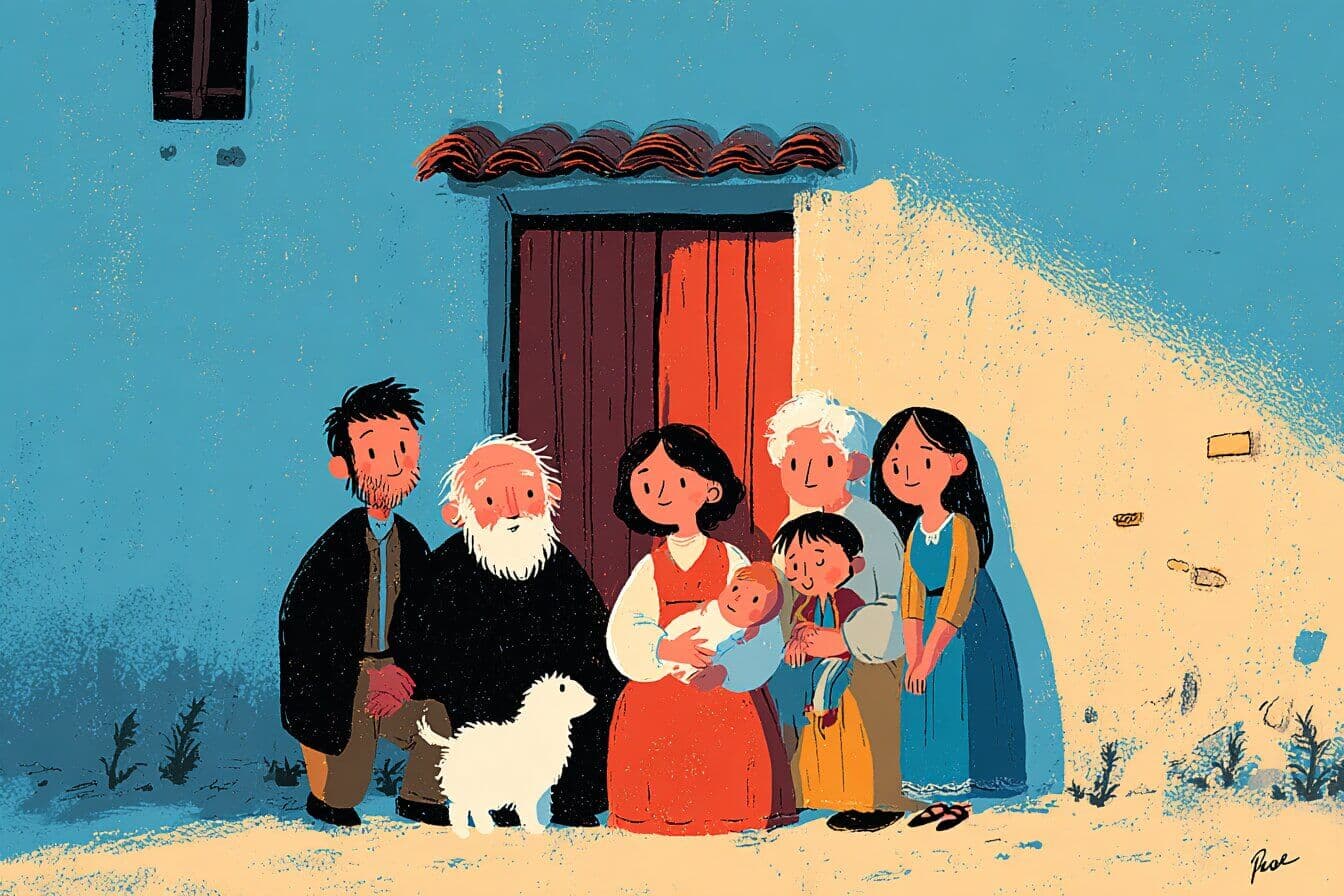
Enjoy short lullaby bedtime stories like Mira's magical night Lark Lane, where a glowing feather chooses its keeper.

Kpop Bedtime Stories
A copper gold seed leads Jennie through Central Park in one of our favorite short kpop bedtime stories.