
15 Minute Bedtime Stories
By

Dennis Wang, Bedtime Story Expert
15 min 3 sec
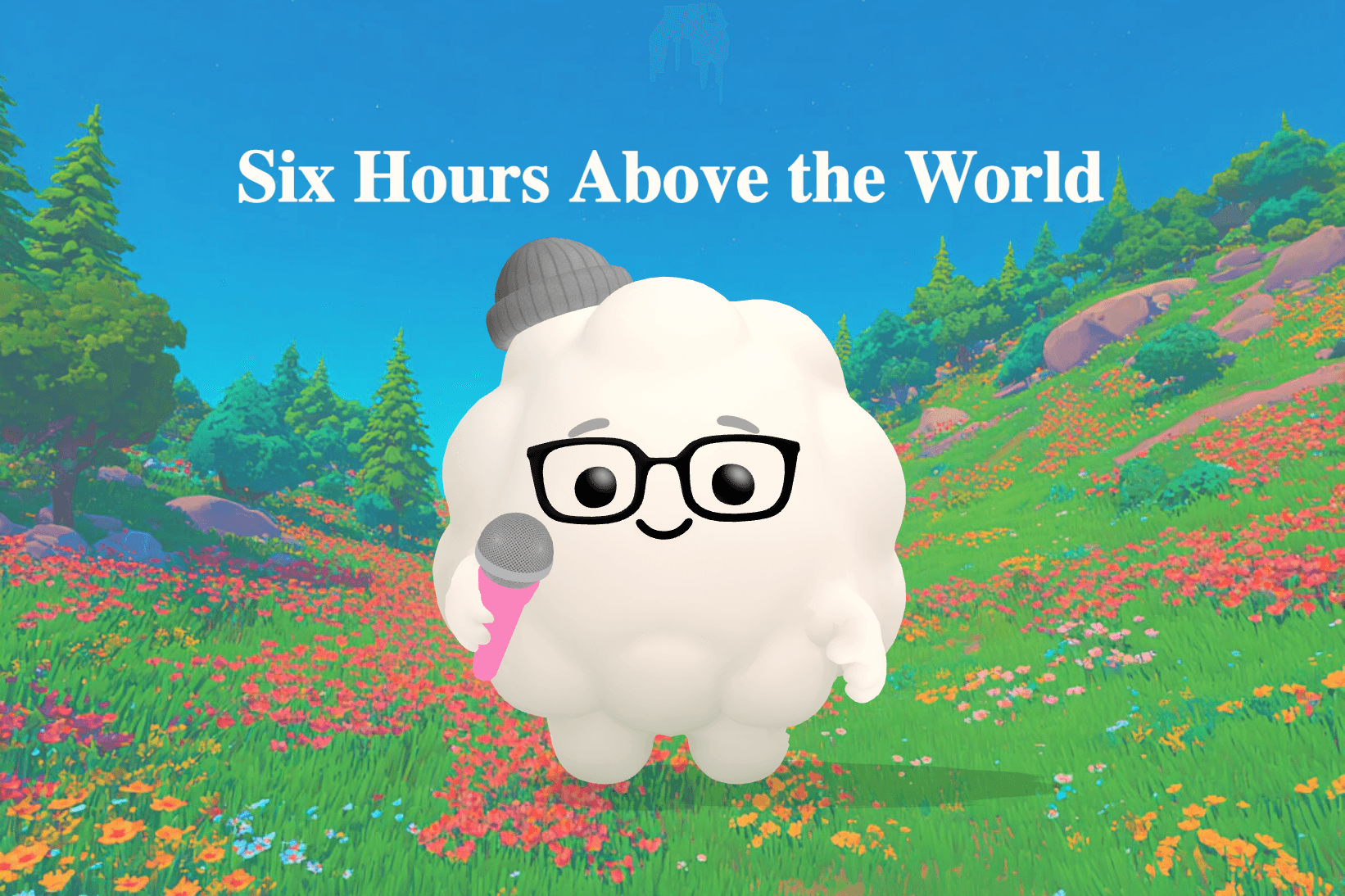
There is something magical about the quiet of space, the kind of stillness that makes a child's breathing slow and their eyes grow heavy. In this story, astronaut Mara Chen finds herself untethered above the Earth, held steady by the voices of her team back in Houston who talk about cornbread, bad jokes, and a stubborn beagle named Biscuit. It is one of those short 15 minute bedtime stories that feels both enormous and impossibly cozy at the same time. If your child loves adventures among the stars, try creating your own version with Sleepytale.
Why 15 Minute Stories Work So Well at Bedtime
Fifteen minutes is a kind of sweet spot for bedtime reading. It is long enough to let a child sink fully into a story, to feel the texture of the world and care about the characters, but not so long that sleep gets pushed too far away. A 15 minute bedtime story to read online gives families a sense of ritual: enough time to settle in, enough room for wonder, and a natural ending point that feels complete rather than cut short. For children, this length also mirrors the way they process big feelings. A story that takes fifteen minutes can introduce something thrilling or even a little scary, like floating untethered in space, and still have time to bring everything gently back to safety. That arc from tension to comfort is exactly what young minds need before drifting off to sleep.
Six Hours Above the World 15 min 3 sec
15 min 3 sec
The tether snapped at 9:47 in the morning, Houston time.
Astronaut Mara Chen heard it before she felt it.
A small, sharp sound, like a pencil breaking.
Then nothing.
Then the slow, impossible realization that she was no longer attached to anything at all.
She did not scream.
She had trained for twelve years.
She pressed the button on her suit radio and said, very clearly, "Houston, I have a situation."
For three seconds, there was static.
Then a voice came back.
It was her flight director, a man named Gerald, who always kept a thermos of bad coffee on his desk and never raised his voice at anyone.
"We see you, Mara.
We have you on camera.
Talk to me."
She talked.
She told him the tether had snapped near the second joint.
She told him her oxygen levels were reading normal.
She told him her suit pressure was holding.
Her voice stayed even the whole time, which surprised her a little, because her hands were shaking inside her gloves.
Below her, the Earth turned.
It was enormous and blue and covered in clouds that looked, from up here, like something you might find on the inside of a shell.
She had seen it hundreds of times from the station window.
But this was different.
There was no glass between her and it now.
Nothing but her suit and the dark.
Gerald said, "Okay.
Here is what we are going to do.
We are going to get you home.
But first, I need you to breathe."
She breathed.
The plan, as Gerald explained it, was not simple.
A retrieval arm on the station needed to be repositioned.
That took time.
A second spacewalk needed to be authorized.
That took more time.
The whole operation, he told her honestly, would take somewhere between four and seven hours.
Mara looked at the Earth below her feet.
"Okay," she said.
"You are not going to drift far," Gerald said.
"Your position is stable.
You are in a slow rotation, maybe one full turn every forty minutes.
We can see you the whole time."
She could feel the rotation, barely.
The sun moved across her visor in a long, slow arc.
First on her left, then above her, then gone behind her helmet, then back again.
"Gerald," she said.
"Right here."
"What time is it there?"
He laughed, a short surprised sound.
"Nine fifty-one.
I have not finished my first cup of coffee."
She almost smiled.
"Sorry to interrupt."
"Are you kidding me?
This is the most interesting thing that has happened all week."
That was not true, and they both knew it.
But she appreciated him saying it.
For the first hour, there was a lot of talking about logistics.
Engineers came on the line.
Someone named Priya walked her through a checklist, item by item, her voice careful and unhurried.
Mara answered everything.
She checked her oxygen.
She checked her thrusters.
She checked the small emergency beacon clipped to her left wrist, which was blinking green, which meant it was working.
The checklist took twenty minutes.
After that, there was a pause.
Then Gerald came back on.
"Okay," he said.
"Everything looks good on our end.
You are stable.
Priya is going to stay on the line, but I want you to know, you do not have to talk if you do not want to.
We are here.
We are not going anywhere."
Mara looked out at the dark.
"Can you just," she started.
"Can you just keep talking?
About anything?"
There was a beat of silence.
"Absolutely," Gerald said.
He started with the weather.
"Back home in Houston," he said, "it is sixty-two degrees.
Partly cloudy.
There was a little rain this morning, just enough to make the parking lot smell like wet pavement.
You know that smell?"
She did know that smell.
She had not thought about it in months.
"The oak tree outside the main building dropped about a thousand acorns last night," Gerald continued.
"Somebody is going to have to sweep those up.
Probably not me, but somebody."
Mara laughed.
It came out louder than she expected, bouncing around inside her helmet.
"What else?"
she said.
"The cafeteria has chili today.
The good kind, with the cornbread on the side.
I had some yesterday and I am still thinking about it."
She had forgotten about food.
Real food, the kind that had weight to it, the kind you could smell from across a room.
In space, everything came in pouches.
It tasted fine.
It was not the same.
"Tell me more about the cornbread," she said.
Gerald described the cornbread in detail.
He was very thorough.
He talked about the crust on the bottom, which was slightly crispy, and the way it was just barely sweet, and how it came out in a square piece wrapped in foil that was always a little too hot to hold at first.
Mara floated above the Earth and listened and thought about cornbread.
The second hour was when someone thought to check the camera.
NASA had set up a live feed at Mara's house months ago, as part of a program for astronaut families.
Her neighbor, a retired schoolteacher named Mrs.
Okafor, had been looking after her dog, a large and very opinionated beagle named Biscuit, for the duration of the mission.
One of the younger engineers, a woman named Tomoko, pulled up the feed.
"Oh," Tomoko said, and then laughed.
"What?"
Mara said immediately.
"Biscuit is on the couch," Tomoko said.
"He is not supposed to be on the couch, is he?"
"Absolutely not," Mara said.
"He is on the couch.
He is taking up the entire left cushion.
He has his head on the armrest and he is looking at the ceiling like he is thinking very hard about something."
Mara pressed her lips together.
"That is his thinking face.
He makes that face when he hears a sound he cannot identify."
"Mrs.
Okafor just walked in," Tomoko said.
"She is pointing at the couch.
Biscuit is not moving.
He is pretending he cannot see her."
"He does that," Mara said.
"He thinks if he does not look at you, you cannot see him."
"She is putting her hands on her hips.
Oh, he is getting down.
Very slowly.
Like it is his own idea."
Mara laughed again, and this time it did not surprise her.
Tomoko kept the feed open for the rest of the mission.
She gave updates every twenty minutes or so, whenever something happened.
Biscuit moved from the couch to the kitchen.
Biscuit found a sock under the coffee table.
Biscuit sat by the back door for a long time, then changed his mind and went back to the couch.
"He is looking at the camera now," Tomoko said, at one point.
"He does that sometimes," Mara said.
"I think he knows I watch him."
There was a pause.
"That is really sweet," Tomoko said.
Mara did not answer.
She was looking at the Earth.
In the third hour, Gerald told jokes.
He warned her first.
"These are not good jokes," he said.
"I want to be upfront about that."
"Tell me anyway."
"Why did the astronaut break up with the moon?"
She waited.
"Because she needed some space."
Mara groaned.
It echoed in her helmet.
"Gerald."
"I told you they were not good."
"Tell me another one."
He told her another one.
And another.
They were all bad.
One of them was about a black hole and a library book that she did not fully understand, but she laughed anyway because Gerald seemed very proud of it.
Someone in the background, she thought it might be Priya, could be heard trying not to laugh.
"Okay," Gerald said, after the fifth joke.
"I am running low.
Someone else is going to have to take over."
A new voice came on.
It was younger, a little nervous.
"Hi, um.
I am Marcus.
I work in propulsion.
I have one joke."
"Go ahead, Marcus," Mara said.
"What do you call a fish without eyes?"
She thought about it.
"I do not know."
"A fsh."
She did not laugh right away.
Then she did.
A real laugh, long and surprised.
"Marcus, that is terrible."
"Thank you," he said, and sounded genuinely pleased.
After that, other people started coming on the line, one at a time, briefly, just to say hello.
A technician named Deb who had worked the night shift and was still there.
A young intern named Sam who said he had been following her mission since the beginning and that he thought she was very brave, and then got embarrassed and said sorry, and she told him not to be sorry.
She did not know most of these people.
She had walked past them in hallways.
She had maybe nodded at them in the cafeteria.
But up here, floating in the dark with the Earth turning slowly below her, their voices felt like something solid.
Something to hold onto.
In the fourth hour, things got quieter.
The engineers had done what they could do for now.
The retrieval arm was being repositioned, which was slow work that did not require anyone to talk.
Gerald stayed on the line but stopped filling the silence.
Mara floated and watched the Earth move.
She had been an astronaut for twelve years.
She had wanted to be one since she was seven years old, when her grandmother took her to a planetarium in the city and she sat in the dark and watched the stars wheel overhead and felt, for the first time, that the universe was very large and that she wanted to go into it.
Her grandmother had been gone for three years now.
Mara looked at the clouds below her.
There was a storm system over the Pacific, a wide white spiral that she had been watching for the last hour.
It was beautiful in the way that very large things are sometimes beautiful, not pretty exactly, but honest.
Real.
"Gerald," she said.
"Here."
"Can I tell you something?"
"Of course."
She thought about how to say it.
"I have been up here for four months.
And I love it.
I really do.
But sometimes it is very," she paused.
"It is very far away from everything."
Gerald did not say anything for a moment.
"Yeah," he said finally.
"I imagine it is."
"I did not expect that part," she said.
"I expected the work.
I expected the silence.
I did not expect to miss," she stopped again.
"Ordinary things."
"Like cornbread," Gerald said.
"Like cornbread," she agreed.
Another pause.
A comfortable one.
"You know what I miss when I travel?"
Gerald said.
"My own pillow.
I know that sounds ridiculous.
But every hotel pillow is wrong somehow.
Too flat or too full or it smells like someone else's shampoo.
And I think about my pillow at home and it seems like the most important object in the world."
Mara smiled inside her helmet.
"That does not sound ridiculous."
"What do you miss most?"
he asked.
"Right now.
If you had to pick one thing."
She thought about it seriously.
"Rain," she said.
"The sound of it on a window.
At night."
Gerald did not say anything.
But she heard him exhale slowly, like he understood exactly what she meant.
In the fifth hour, Tomoko reported that Biscuit had found his favorite toy, a rope shaped like a small octopus, and had carried it to the middle of the living room floor and then fallen asleep on top of it.
"He does that," Mara said.
"He likes to keep it safe."
"From what?"
Tomoko asked.
"I have no idea," Mara said.
"Other dogs, maybe.
Or the vacuum cleaner.
He does not like the vacuum cleaner."
"Noted," Tomoko said seriously, as if she was writing it down.
Mara watched the Earth.
The storm over the Pacific had moved.
A new stretch of coast had come into view, brown and green and threaded with rivers that caught the light.
She had flown over it dozens of times from inside the station and never quite seen it like this.
She thought about her grandmother again.
About the planetarium.
About the way the projected stars had moved overhead in the dark theater, slow and certain, and how her grandmother had reached over and taken her hand without saying anything.
Just held it.
Mara reached out her own hand now, in her glove, into the space in front of her.
There was nothing there.
Just the dark and the Earth turning below.
But it did not feel empty.
The sixth hour was the last one.
The retrieval arm was in position.
The second spacewalk team was suiting up.
Gerald walked her through what was going to happen, step by step, in the same unhurried voice he had used all day.
"They are going to come out from the port airlock," he said.
"Yusuf is leading.
You know Yusuf."
"I know Yusuf," she said.
Yusuf was her crewmate.
He had once spent forty minutes explaining to her the correct way to make tea, which she had found both annoying and endearing.
"He is going to come to you on the secondary tether line.
It is going to take about twenty minutes.
Then he is going to clip you in and you are going to walk back together."
"Okay," Mara said.
"How are you doing?"
She thought about it honestly.
Her back ached a little from the suit.
Her hands were stiff.
She was hungry in the way you get hungry when you have been too busy to notice it for a long time and then suddenly you are not busy anymore.
"I am okay," she said.
"I am actually okay."
"Good," Gerald said.
"You did good today, Mara."
She did not know what to say to that, so she did not say anything.
She watched the airlock on the station, far below her and to the left.
After a few minutes, she saw it open.
A figure emerged, slow and deliberate, moving hand over hand along the guide rail.
Even from this distance she could tell it was Yusuf by the way he moved, careful and precise, like someone who never did anything without thinking about it first.
He had a second tether clipped to his belt.
It trailed behind him, silver in the sunlight.
Mara watched him come.
It took nineteen minutes.
She counted, not because she was impatient, but because she needed something to do with her mind.
At minute twelve, Yusuf waved at her.
She waved back.
At minute nineteen, he reached her.
"Hello," he said, through the suit radio.
His voice was calm.
He did not make a big deal of it.
"Hello," she said.
He clipped the tether to her suit with a solid, definite click.
Then he checked it twice.
Then he looked at her through his visor.
"Ready?"
he said.
"Ready," she said.
They moved back toward the station together, slow and careful, hand over hand.
The Earth turned below them.
The sun was behind them now, and the station was ahead, lit up gold and white against the dark.
Over the radio, she could hear the sound of the mission control room.
Not talking, just the background noise of it.
The hum of equipment.
Someone moving a chair.
A muffled sound that might have been Gerald finally finishing his coffee.
Mara moved her hand to the next grip and pulled herself forward.
The station grew closer.
She could see the window of the lab module, and through it, the faint glow of a screen someone had left on.
She could see the scratches on the hull from a micrometeorite strike two years ago that everyone had meant to document more carefully and then forgotten about.
Yusuf said nothing.
She said nothing.
They just moved.
When the airlock door closed behind her and the pressure equalized and she could finally pull off her helmet, the air inside the station smelled like recycled air and metal and the faint trace of the coffee someone had brewed that morning.
It was not a beautiful smell.
It was just the smell of the place where she lived.
She sat on the floor of the airlock with her back against the wall and her helmet in her lap.
Outside the small porthole above her, the Earth was still turning.
The Quiet Lessons in This 15 Minute Bedtime Story
This story quietly explores trust, courage, and the comfort of ordinary things. When Mara's tether snaps and she chooses to speak calmly into her radio, children see what real bravery looks like: not the absence of fear, but the decision to reach out for help. Gerald's loving descriptions of cornbread crust and the smell of wet pavement remind young listeners that even in the most extraordinary moments, small familiar details can be a lifeline. These lessons settle gently into a child's mind at bedtime, when the world feels vast and the reassurance of connection matters most.
Tips for Reading This Story
Give Gerald a warm, steady, unhurried voice, especially when he describes the cornbread crust and the smell of rain on the parking lot outside the building. When Tomoko reports on Biscuit pretending he cannot see Mrs. Okafor, let your voice get lighter and quicker to match the humor of the scene. Pause for a full breath of silence right after the tether snaps at the opening, letting the stillness of space hang in the room before Mara speaks into her radio.
Frequently Asked Questions
What age is this story best for?
This story works beautifully for children ages 5 to 10. Younger listeners will love the funny updates about Biscuit the beagle slowly sliding off the couch like it was his own idea, while older children will appreciate Mara's calm problem solving and the realistic details of how the Houston team works together to bring her home.
Is this story available as audio?
Yes, just press play at the top of the page to hear the full story read aloud. The audio version is especially wonderful here because you can hear the shift between Gerald's calm, grounding weather reports and the playful moments when Tomoko narrates Biscuit pretending he is invisible on the couch. The contrast between the tension of space and those warm, funny scenes really comes alive in audio.
Does this story teach kids anything about how astronauts stay safe in space?
It does, in a gentle and age appropriate way. The story includes real details like oxygen level checks, suit pressure readings, and the small emergency beacon on Mara's wrist that blinks green when it is working. Priya's careful checklist and Gerald's steady communication show children how real teams support each other during emergencies, making the science feel human and reassuring rather than frightening.
Create Your Own Version
Sleepytale turns your child's wildest ideas into personalized bedtime stories in just minutes. You can swap the space setting for a deep ocean submarine, change Biscuit the beagle into a fluffy cat named after your own pet, or replace Gerald's cornbread descriptions with stories about your family's favorite meal. In just a few clicks, you will have a calm, cozy adventure made especially for your little one.
Looking for more bedtime stories by length?

14 Minute Bedtime Stories
Are you searching for short 14 minute bedtime stories? This one follows a princess and a shepherd sharing a well between rival kingdoms.
13 Minute Bedtime Stories
Fall asleep to short 13 minute bedtime stories like Oscar's enchanting journey through a forest that appears overnight, guided by a wise talking fox.

12 Minute Bedtime Stories
Enjoy short 12 minute bedtime stories like Mara's voyage aboard the Saltbird to discover her grandmother's seven secret islands.
9 Minute Bedtime Stories
Looking for short 9 minute bedtime stories featuring a clockmaker and a magical copper hand? Discover this cozy tale tonight.

11 Minute Bedtime Stories
Not all dragons breathe fire to scare villages; in these short 11 minute bedtime stories, one bakes pizza instead.
10 Minute Bedtime Stories
A glass instrument in a dusty square becomes unforgettable in these short 10 minute bedtime stories about a kingdom that forgot rain.