
14 Minute Bedtime Stories
By

Dennis Wang, Bedtime Story Expert
14 min 4 sec
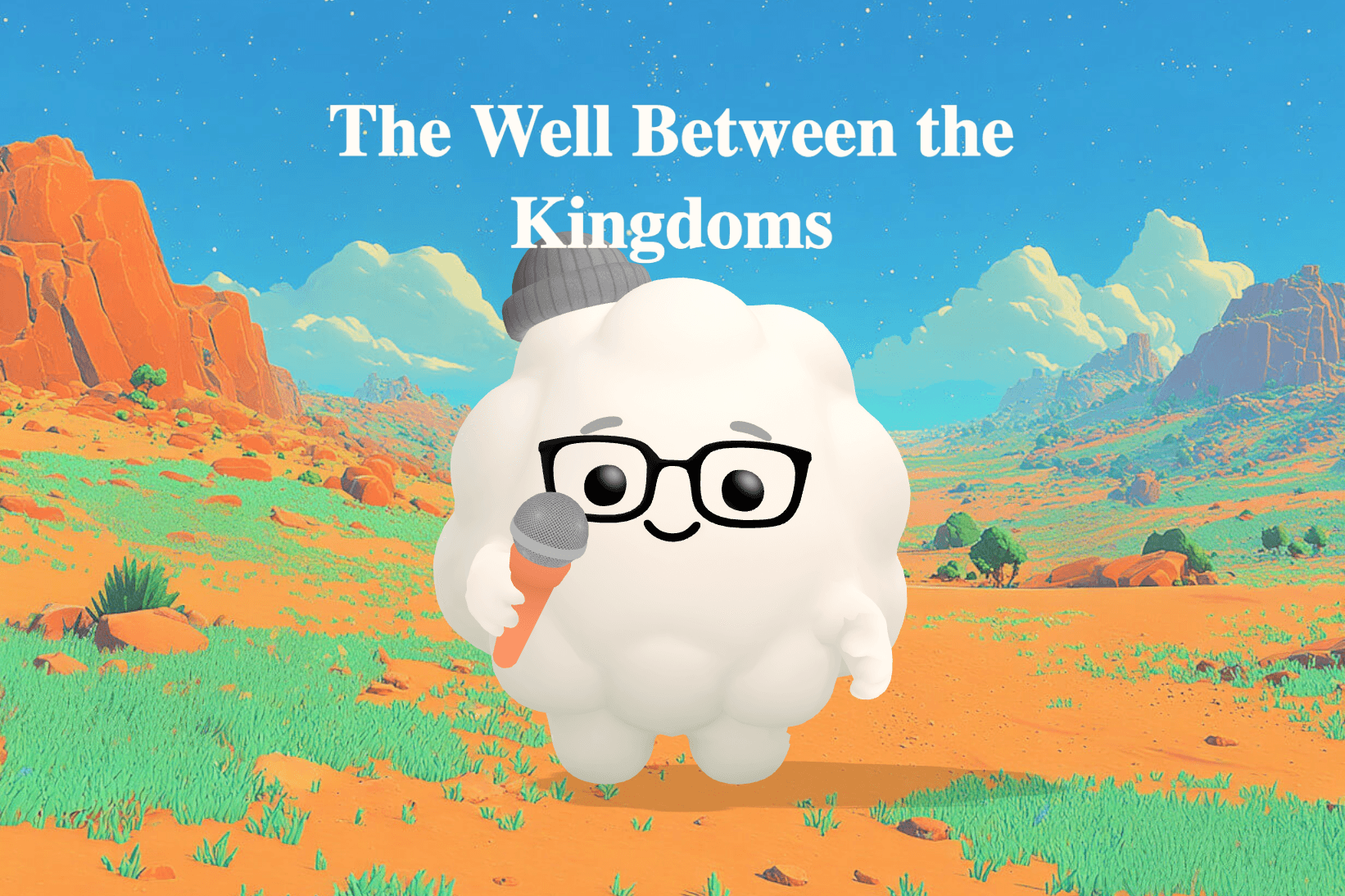
There is something about the sound of water dripping from a bucket that makes the whole world feel quieter, and that is exactly the feeling this story brings to bedtime. In The Well Between the Kingdoms, Princess Mira wanders to a forgotten well at the border and meets Eli, a shepherd boy from the rival kingdom, and together they realize neither of them knows why their lands are fighting at all. It is one of those short 14 minute bedtime stories that gives kids just enough time to sink into a world and drift off feeling thoughtful and calm. If your child loves this kind of gentle tale, you can create a personalized version with Sleepytale.
Why 14 Minute Stories Work So Well at Bedtime
Fourteen minutes is a sweet spot for bedtime reading. It is long enough for a story to breathe and for characters to feel real, but not so long that little eyes start fighting to stay open. A 14 minute bedtime story gives kids time to settle into the rhythm of the words, to feel the cool stone of a well or hear the quiet drip of water, without the pressure of a longer chapter looming ahead. Stories set in border places, where two worlds meet, have a particular calm to them. They remind children that even in the middle of disagreement, there is always a space where people can sit together, share a cup of water, and simply talk. That sense of unexpected peace is exactly what makes 14 minute bedtime stories to read at night such a lovely part of the routine.
The Well Between the Kingdoms 14 min 4 sec
14 min 4 sec
The well sat exactly in the middle of nowhere, which is to say it sat exactly between two kingdoms that had been fighting for so long that the maps had stopped agreeing on where one ended and the other began.
The stones around the well were old.
Older than the fighting, probably.
Moss had grown up one side and dried out on the other, and the rope that held the bucket was frayed in three places but still held.
Nobody from either kingdom used the well anymore.
It was too close to the border, and the border was a place where people kept their heads down and their voices low.
Princess Mira had not planned to be anywhere near the border that afternoon.
She had planned to be in the library, reading about birds.
She had a whole collection of drawings she had made herself, careful pencil sketches of wings and beaks and the way feathers overlapped like roof tiles.
But the library had been taken over by her father's advisors, who were arguing about something in loud, important voices, and so she had walked.
And walked.
And somehow the walking had brought her here, to this well, with a dry throat and no cup.
She looked at the bucket.
She looked at the rope.
She grabbed it and started pulling.
The rope was heavier than she expected.
That was because someone on the other side of the well had already lowered the bucket and was pulling it up from below, hand over hand, not looking where he was going.
The bucket jerked.
Mira pulled.
The boy on the other side pulled back.
And then the rope went slack and the bucket swung sideways and hit the edge of the well with a hollow clunk, and water went everywhere.
The boy scrambled up the last few steps of the path that led from the lower field and stood there, dripping, staring at her.
She stared back.
He was about her age, maybe a year older.
He had mud on his boots and a crook leaning against his shoulder and three sheep standing behind him like they were waiting to see how this turned out.
His name was Eli, though she did not know that yet.
She was wearing a blue coat with silver buttons, which was not what she usually wore but happened to be what she had grabbed on her way out.
He looked at the buttons.
She looked at the mud.
Neither of them said anything for a moment that stretched out longer than it should have.
Then one of the sheep sneezed.
Mira laughed.
She could not help it.
It came out before she could decide whether laughing was the right thing to do, and it was a real laugh, the kind that bends you forward a little.
Eli blinked.
Then he laughed too, a short surprised sound, like he had not expected to.
"Sorry about the water," he said.
"I pulled first," she said.
"So it is probably my fault."
"Probably," he agreed, which she appreciated.
Most people would have argued.
He lowered the bucket again, more carefully this time, and they took turns.
She drank first because he offered, and she accepted because she was genuinely thirsty and there was no point in being polite about it.
The water was cold and tasted faintly of stone.
The sheep drank after.
All three of them, in a row, very serious about it.
Eli told her his name and she told him hers and then there was a pause while both of them worked out what the other's name meant.
"You are from Velden," he said.
It was not quite a question.
"Yes," she said.
"And you are from Arrath."
He nodded slowly.
He did not step back, which she noticed.
She did not step back either.
"My father says people from Velden cannot be trusted," he said, in the tone of someone reporting a fact they are not entirely sure about.
"My father says the same thing about people from Arrath," she said.
Eli looked at her.
She looked at him.
The afternoon light came down through the leaves of a tree neither of them had planted and landed on the stones of the well in patches.
"Can I ask you something?"
Mira said.
"All right."
"What are we actually fighting about?
The two kingdoms, I mean.
Do you know?"
Eli opened his mouth.
Closed it.
Looked at his sheep as if they might have an answer.
They did not.
"I was hoping you knew," he said.
She sat down on the edge of the well.
He sat down on the other side of it.
The bucket dripped.
Neither of them knew.
That was the thing.
Mira had asked her tutors once, years ago, and been told it was complicated.
She had asked her mother, who had said it was a matter of history.
She had asked the head cook, who had said something about a river and a bridge and a very old argument about fish, but then gotten distracted by a pot boiling over and never finished the story.
Eli had been told it was a matter of honor.
He had asked his grandmother, who had said she could not quite remember but that it had been going on since before she was born, and that was a very long time.
So neither of them knew.
And somehow that was the strangest thing of all.
"A war nobody can explain," Mira said.
"My uncle says we fight because they fight," Eli said.
"And I think they probably say the same thing about us."
"That is not a reason."
"No," he said.
"It is not."
One of the sheep, the smallest one, came and put its chin on Eli's knee.
He scratched behind its ear without looking, the way you do when you have done something a thousand times.
"What is her name?"
Mira asked.
"Fig," he said.
"The other two are Barrel and Soot."
"Those are terrible names."
"I was seven when I named them."
She accepted this as a reasonable explanation.
They sat there a while longer, which was unusual for both of them.
Mira was not someone who sat still easily.
She was usually moving, reading, drawing, asking questions that made her tutors rub their foreheads.
Eli was usually with the flock, which required constant attention because sheep had a talent for getting into trouble in new and creative ways.
But the afternoon had a quality to it that made staying feel easier than leaving.
Mira pulled her sketchbook from her coat pocket.
She always had it.
It was battered and the cover had a water stain shaped like a boot.
Eli looked at it.
"What is that?"
"I draw birds," she said, and opened it to a page near the middle.
He leaned over and looked at the drawing.
It was a heron, done in careful pencil lines, every feather placed exactly right.
He looked at it for a long time.
"That is really good," he said, and he meant it, she could tell.
"I have been practicing," she said.
"I cannot draw at all," he said.
"I tried once.
It looked like a rock had fallen on something."
She smiled.
"What did you try to draw?"
"A horse."
She turned to a blank page.
"Show me."
He looked at her.
"You want me to draw in your book?"
"Yes."
He took the pencil she held out.
He drew slowly, with great concentration, the tip of his tongue just visible at the corner of his mouth.
The result was, as promised, not a horse.
It had too many legs and the head was facing the wrong direction and there was something about the ears that defied explanation.
Mira studied it seriously.
"I see what you mean."
"It is bad."
"It is very bad," she agreed.
"But it is also a little bit wonderful."
He looked at the drawing again.
"You are being kind."
"I am being honest," she said.
"Both things can be true."
He handed the pencil back.
She did not erase the horse.
She left it there between the heron and a sketch of a sparrow, and it stayed there, wrong and wonderful, for a long time after.
The sun had moved.
The shadows from the tree were longer now, reaching across the stones.
"I should get the flock back," Eli said, but he did not stand up yet.
"I know," Mira said.
She did not stand up either.
"If someone saw us talking," he started.
"I know," she said again.
But then she thought about the library full of arguing advisors, and her father's maps with their disagreeing borders, and the cook's story about fish that had never been finished.
She thought about how neither of them knew why the war had started.
She thought about the horse drawing, still in her book.
"I am going to find out," she said.
Eli looked at her.
"Find out what?"
"Why.
Why the war started.
There has to be an answer somewhere.
In the old records, or the archives.
Someone wrote it down."
"And if you find it?"
"I will come back here and tell you."
He was quiet for a moment.
Fig was still leaning against his knee.
Barrel had wandered three steps away and was looking at a patch of grass with deep suspicion.
"All right," Eli said.
"And I will ask my grandmother again.
Properly this time.
She knows more than she lets on."
"How do you know?"
"Because she always makes tea before she says she cannot remember something.
She only makes tea when she is stalling."
Mira stored this information away.
It was the kind of detail that told you a lot about a person.
"Same time next week?"
she said.
"Same time," he agreed.
He stood up and called to the sheep, and they came, even Barrel, who had been pretending not to listen.
Mira watched them go down the path toward the lower fields, Eli's crook swinging at his side, Fig trotting close to his heel.
She stayed at the well a moment longer.
She put her hand on the stones.
They were rough and cold under her palm, and the moss on one side was damp.
Then she turned and walked back toward Velden.
The week was long.
Mira went to the archives three times.
The archives were in a part of the castle that smelled like dust and old leather and something else she could never identify, maybe the particular smell of very old paper.
The archivist, a small woman named Doss who wore her hair in a braid so long it touched the back of her knees, helped her without asking too many questions.
Mira liked her for that.
They found things.
Not the answer, not right away, but pieces.
A letter from a king who had been dead for two hundred years.
A record of a boundary dispute over a river crossing.
A note in the margin of an old treaty, written in very small handwriting, that said simply: this was never resolved.
Mira copied everything down in her sketchbook, in the margins around the birds.
Eli, meanwhile, made tea for his grandmother every evening that week.
On the fourth evening, she looked at him over her cup and said, "You are up to something."
"I just like tea," he said.
She looked at him a while longer.
Then she set down her cup and said, "It was a bridge."
He sat very still.
"There was a bridge over the Arren River, right at the border.
Both kingdoms claimed it.
Both kingdoms used it.
There was an agreement, a very old one, that it belonged to neither and both.
Then one winter it flooded, and half of it washed away, and Velden rebuilt their half and put a gate on it.
And Arrath said that was a violation of the agreement.
And Velden said the gate was just for safety.
And it went back and forth and back and forth until someone said something unforgivable and then someone did something unforgivable and then it was a war."
She picked up her cup again.
"And the bridge?"
Eli said.
"Fell down completely about a hundred and fifty years ago," she said.
"There is nothing there now but the old posts in the river."
Eli sat with that for a long time.
"So we have been fighting," he said slowly, "about a bridge that does not exist."
His grandmother looked out the window.
"People often do," she said, not unkindly.
He was at the well before Mira the next week.
He had brought a piece of bread wrapped in cloth, because the walk was long and he had thought she might be hungry too.
He did not think about this as a particularly notable thing to do.
It just seemed obvious.
She arrived with her sketchbook full of notes and her coat buttoned wrong, one button off from the start, which she had not noticed.
He did not mention it.
They sat on the edge of the well and compared what they had found.
The pieces fit.
The letter, the boundary dispute, the bridge, the gate, the thing that was never resolved.
It was not a grand or glorious reason.
It was an ordinary, human, slightly embarrassing reason.
A gate on a bridge that had washed away a century ago.
"All those years," Mira said.
"All those years," Eli agreed.
Fig put her chin on Mira's knee this time, which surprised her.
She scratched behind the sheep's ear, copying what she had seen Eli do.
Fig's eyes went half closed.
"What do we do with this?"
Eli said.
Mira had been thinking about that all week.
She had turned it over and over, the way you turn a stone in your hand, looking at all the sides.
"I think," she said, "we write it down.
All of it.
The real story.
And I think we give it to people who can do something with it.
My mother listens to me, sometimes.
And your grandmother already knows."
"It will not be fast," he said.
"No," she said.
"Probably not."
"And people might not want to hear it.
Sometimes people get used to a fight.
It becomes part of who they are."
"I know," she said.
"But we know now.
And you cannot unknow something."
He thought about that.
Then he broke the bread in half and gave her a piece.
She took it.
It was dense and a little sweet, the kind of bread that had been baked that morning and was still good in the afternoon.
"Thank you," she said.
"It is just bread," he said.
But it was not just bread, and they both knew it, and neither of them said so.
They made a plan.
Not a perfect plan, not a plan with guaranteed outcomes, but a real one, with steps and names and a list of people to talk to.
Mira wrote it in the back of her sketchbook, after the birds and the margin notes and Eli's horse that was not quite a horse.
The sun was lower again.
The shadows were long.
"Same time next week?"
Eli said.
"Same time," she said.
He gathered the sheep.
She closed her sketchbook.
And for a moment before they both turned to go, they stood on either side of the old well, with its frayed rope and its mossy stones and its water that tasted faintly of cold and time, and the afternoon light came through the leaves and lay across everything without caring at all which kingdom it was shining on.
The Quiet Lessons in This 14 Minute Bedtime Story
This story gently explores the courage it takes to question something everyone around you accepts without thinking, as both Mira and Eli admit they have no idea why their kingdoms are at war. It also celebrates honest kindness across a divide; Eli offers Mira the first drink, and she accepts genuinely rather than performing politeness, modeling a kind of sincerity children can carry with them. There is a lovely thread about seeing someone as an individual rather than a label, which lands softly at bedtime when a child's heart is open and the day's noise has faded away.
Tips for Reading This Story
Give Mira a quick, curious voice and let Eli sound steadier and more measured, especially when he reports what his father says about people from Velden. Pause after the sheep sneezes and Mira laughs; let that unexpected moment of warmth sit in the air before continuing, because it is the hinge where the whole story relaxes. When Eli draws his terrible horse in Mira's sketchbook, slow down to show his concentration, then let your voice carry gentle humor as they both study the too many legs and the backwards head.
Frequently Asked Questions
What age is this story best for?
This story is ideal for children ages 5 through 10. Younger listeners will be charmed by the sheep named Fig, Barrel, and Soot, and by Eli's hilariously bad horse drawing. Older kids will connect with the deeper question Mira and Eli share: why do people keep fighting when nobody can remember the reason?
Is this story available as audio?
Yes, you can listen to the full audio by pressing the play button at the top of the page. The narration brings out the contrast between Mira's bright curiosity and Eli's calm, careful way of speaking, and the moment the bucket hits the well with a hollow clunk sounds wonderful aloud. It is a perfect way for your child to close their eyes and picture the mossy stones and dappled afternoon light.
Why does nobody in the story know why the two kingdoms are fighting?
That mystery is the quiet heart of the tale. Mira has asked her tutors, her mother, and even the head cook, who mentioned something about a river and fish but never finished the explanation. Eli was told it is a matter of honor, and his grandmother cannot quite remember how it started. The story suggests that some conflicts outlive their reasons and continue simply out of habit, a realization both children reach together at the well.
Create Your Own Version
Sleepytale turns your child's own ideas into personalized bedtime stories filled with wonder and warmth. You can swap the well for a footbridge over a river, change the sheep to goats or cats, or set the story between two villages separated by a forest instead of a kingdom border. In just a few clicks, you will have a calm, cozy tale ready for tonight's bedtime routine.
Looking for more bedtime stories by length?
15 Minute Bedtime Stories
Discover short 15 minute bedtime stories featuring an astronaut floating above Earth, held steady by cornbread tales and a stubborn beagle back home.
13 Minute Bedtime Stories
Fall asleep to short 13 minute bedtime stories like Oscar's enchanting journey through a forest that appears overnight, guided by a wise talking fox.
12 Minute Bedtime Stories
Enjoy short 12 minute bedtime stories like Mara's voyage aboard the Saltbird to discover her grandmother's seven secret islands.
9 Minute Bedtime Stories
Looking for short 9 minute bedtime stories featuring a clockmaker and a magical copper hand? Discover this cozy tale tonight.
11 Minute Bedtime Stories
Not all dragons breathe fire to scare villages; in these short 11 minute bedtime stories, one bakes pizza instead.
10 Minute Bedtime Stories
A glass instrument in a dusty square becomes unforgettable in these short 10 minute bedtime stories about a kingdom that forgot rain.