
Tractor Bedtime Stories
By

Dennis Wang, Bedtime Story Expert
11 min 35 sec
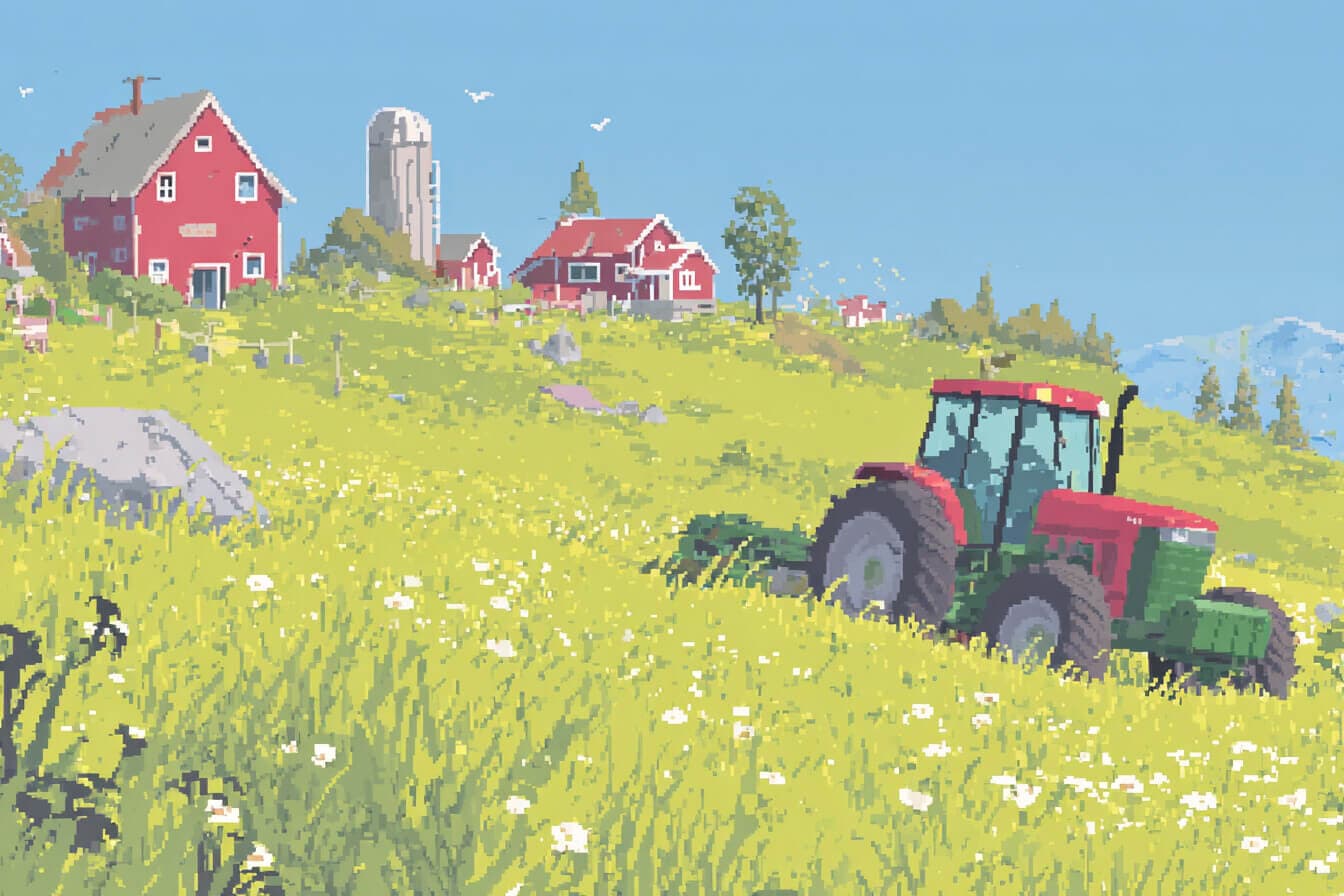
There is something about the low rumble of an engine crossing a dark field that makes a child's eyelids heavy. The sound feels steady and safe, like the world outside is being gently smoothed into rows before sleep. In this story, a curious red tractor named Tom follows a single carrot seed from soil to supper, learning farm secrets alongside Farmer Lily as the seasons slowly turn. If your little one loves tractor bedtime stories, you can craft a personalized version with their name, favorite crop, and hometown woven right in using Sleepytale.
Why Tractor Stories Work So Well at Bedtime
Tractors move slowly. That matters more than it sounds. Unlike rockets or race cars, a tractor crosses a field at walking pace, and the rhythm of its work, plowing one row, then the next, then the next, mirrors the kind of repetition that helps a restless child settle down. A bedtime story about a tractor naturally unfolds in loops of work and rest, morning and evening, planting and waiting. Those cycles feel like breathing.
There is also something grounding about farm life for kids who spend most of their day indoors. Fields, soil, rain, seeds cracking open underground: these images connect children to the physical world in a way that feels calm rather than stimulating. A tractor story gives a child permission to slow down, notice small things, and trust that good results come from patience, which is exactly the mindset you want right before lights out.
Tom the Tractor's Growing Adventure 11 min 35 sec
11 min 35 sec
In the gentle hills of Sunvale Valley, a bright red tractor named Tom awoke each dawn with a chug and a puff of steam that smelled faintly of old toast.
Tom was not just any tractor. He was the only one on Maplebrook Farm who carried a tiny chalkboard wired to his dashboard, the kind that squeaked when Farmer Lily wrote on it too fast.
Every season, Lily scribbled new words on that board.
Today it said, "How do seeds turn into supper?"
Tom's engine buzzed. He loved that question. He loved all questions, really, but this one sat right in the center of his work, and he wanted to understand it the way Lily did, all the way down to the roots.
After a breakfast of fresh oil and a quick polish that left a long streak Lily missed near his left headlight, Tom rolled out of the barn.
Dewdrops sat on the clover like they were deciding whether to fall or stay. The spring air smelled of earth, and something sweeter underneath it that Tom could never quite name.
Farmer Lily waved from the porch, holding a packet of carrot seeds.
She hopped onto his seat, and her boot heel thumped against his fender the way it always did when she was in a hurry.
They headed for the north field, where the soil lay soft and dark from winter's long rest.
Tom's wheels pressed neat lines into the ground, and he liked watching the rows appear behind him, straight as ruled paper waiting for sentences made of seeds.
Lily knelt and held out a single carrot seed on her fingertip.
It was small. Flat. Tan. No bigger than a freckle.
She told Tom that inside that speck slept the instructions for roots, leaves, and the sweet orange crunch that made the schoolkids in Greenhaven fight over second helpings.
Tom listened carefully, because understanding made his work feel like something more than just pulling things through dirt.
With every furrow he plowed, Lily dropped seeds, spacing them the width of her palm.
Tiny clouds of soil rose and settled, tucking seeds into beds that smelled cool and mineral, like the underside of a stone.
When the row was finished, Tom wanted to feel satisfied, but he kept glancing back at the flat, quiet field. How could those specks feed a whole town?
Lily patted his steering wheel. "Knowledge grows like plants," she said. "Bit by bit."
Tom beeped softly, which was the closest he could get to saying, "I'll try to be patient."
That evening he parked near the barn and studied the field under moonlight.
He imagined the seeds waking up underground, drinking in moisture, splitting open, sending out roots as thin as thread.
In his dreams he heard small pops, like sprouts pressing through soil, raising little green flags.
The next morning, gray clouds gathered and gentle rain began.
Tom learned that rain carries dissolved minerals seeds need, much like his own engine needs coolant mixed with water. He liked when the world made comparisons easy like that.
Puddles formed between the rows and earthworms rose to the surface, wiggling in a way that looked both purposeful and slightly ridiculous.
Lily said worms make tunnels so air and water can reach roots more easily.
Tom made a mental note to thank every worm he met, though he was not entirely sure how you thank a worm.
On the third day, the sun came back and painted the field gold.
Tom rolled along the paths while Lily checked soil temperature with a small thermometer she kept in her vest pocket, the one with the cracked glass she refused to replace.
She told him carrot seeds germinate best around sixty degrees Fahrenheit, the same temperature that makes baby goats frisky.
Tom filed that number next to oil pressure in his mind.
By the end of the week, the first feathery green tops appeared, so delicate that Tom held his breath. Literally. He idled his engine down to almost nothing.
He bent low and noticed two heart-shaped seed leaves on each baby plant.
Lily said those first leaves feed the plant until the true leaves form.
Tom thought of them as packed lunches the seed prepared for its own journey, which struck him as extremely organized.
He rolled his wheels between the rows with exaggerated care, like someone tiptoeing past a sleeping baby.
Birds fluttered overhead, eyeing the fresh greens, so Lily stretched a thin net over the field.
Tom learned that protection is part of farming, and he felt like a big brother standing guard over siblings who could not yet stand on their own.
Each day brought something new.
On day ten, the seedlings grew true leaves shaped like tiny carrot tops.
Tom compared the height of each row to the mark on his fender and noticed the plants in the loamy middle section stood tallest.
Lily explained that loam, a balanced mix of sand, silt, and clay, holds both water and air, which makes for perfect plant neighborhoods.
"Like the comfy middle bunk," Tom thought, though he had never actually seen a bunk bed. He just liked the idea of one.
He chugged to the tool shed, fetched a soil chart, and tucked it beside his chalkboard.
When the plants reached finger length, Lily climbed up for the first thinning.
She pulled every other carrot so the rest had room to swell.
Tom felt a small pang for the uprooted ones, but Lily dropped them into a basket and said they would go straight into tonight's soup. Nothing wasted. He admired that.
He watched bees dart among the clover at the field's edge. Lily mentioned that pollinators like bees and butterflies help fruiting crops, though root crops like carrots do not need pollination for the part people eat.
"Good to know," Tom beeped, filing it next to his spark plugs.
By midsummer, the carrot tops waved like green pennants in the breeze.
Tom measured them against his headlights and found they reached nearly halfway up the glass.
Sunvale Valley got less rain in July, so Lily attached a sprinkler system to Tom's rear hitch.
Together they rolled along the rows, misting water that caught the light and threw tiny rainbows onto the dirt.
Tom learned that plants breathe through microscopic pores called stomata, mostly on the undersides of leaves, and that water cools them, much like sweat cools his engine on a long haul.
He pictured each leaf sipping through a straw, and for some reason that made him happy.
One afternoon, a troop of ladybugs landed on the carrot tops.
Lily cheered. She said ladybug larvae eat aphids, the tiny bugs that suck plant juices.
Tom pictured the ladybugs as miniature knights defending carrot castles. He rolled slowly so they could keep patrolling.
That night he dreamed of a parade where ladybugs rode on his hood, waving flags shaped like carrot leaves. It was the best dream he had had in weeks.
The next morning he polished his hood extra bright, just in case.
As August arrived, the days turned hot and the field smelled of warm earth and sweet greens layered together like a pie nobody had baked yet.
Tom and Lily checked the soil each dawn. If the top inch stayed slightly moist, the carrots would push deeper.
Lily showed him the finger test: press into the soil, and if it feels cool and slightly damp, watering can wait.
Tom tried with a tire instead of a finger. It worked. He felt quietly proud of that invention, even if Lily laughed.
One morning, a yellow bus from Greenhaven pulled up to the farm gate.
Children poured out, and they cheered when they saw Tom. "The talking tractor!" they shouted, though Tom only beeped. He beeped a lot, though.
Lily led the students down the rows and let them each pull a carrot.
Gasps filled the air when bright orange cones emerged, some straight, some comically bent like they had tried to dodge a rock underground. One looked exactly like a letter J. A boy named Marcus held it up and said, "This one's for my name. Almost."
Tom learned that carrots grow around obstacles, so smooth soil makes smoother carrots.
The children brushed off the dirt and munched right there in the field, and Tom's engine warmed with a kind of happiness that had nothing to do with combustion.
After the visit, Lily wrote a new phrase on Tom's chalkboard: "Harvest Moon."
She explained it was the full moon closest to the autumn equinox, which gives extra light for late work.
Tom liked that idea. The moon as a big night lamp held up by the sky.
On calm evenings, he rolled with his headlights off, harvesting by moon glow. The world turned silver and slow.
The carrots glowed pale orange under the lunar light, as if lit from somewhere inside themselves.
Tom discovered that cool nights make carrots convert starches to sugars, adding extra sweetness. He stored that fact next to his oil filter and thought, "Sweetness comes from patience." He liked when the farm taught him things about more than farming.
When the harvest bins filled, Lily drove Tom to the packing shed.
They washed the carrots with gentle sprays, and the colors that appeared surprised him every time: sunrise orange, deep sunset purple, and one row of pale yellow that Lily said tasted like honey and pepper.
Purple carrots contain anthocyanins, she told him, the same compounds found in blueberries.
Tom beamed. His field had produced rainbow nutrition.
Each carrot was sorted, bunched, and placed into crates labeled for Greenhaven's school lunches, soup kitchens, and weekend markets.
Tom imagined the journey ahead. Carrots in trucks, then on lunch trays, in stews, in lunchboxes with doodles on the lids.
On the final market day, Lily parked Tom beside the town square fountain.
Children ran up and patted his hood, and a girl with red boots left a dandelion tucked under his windshield wiper.
Tom's chalkboard read, "From seed to supper, knowledge grows!"
Beneath that, Lily had drawn a tiny heart, a little crooked, like the J-shaped carrot.
As the sun dropped low, Tom rolled back to Maplebrook Farm.
He passed the field, now resting under a blanket of cover crop, ready for winter.
Fireflies blinked above the stubble. Tom thought they looked like tiny tractors polishing the night, and then he thought that was a strange thing to think, but he liked it anyway.
He parked in the barn. The wooden rafters creaked once, then settled.
Farmer Lily whispered, "Goodnight, Teacher Tom," and pulled the barn doors closed.
Inside the dark, Tom's engine ticked its cooling rhythms, slow and regular, like a lullaby the valley had been humming for a very long time.
He thought of seeds sleeping. Children growing. The dandelion still tucked under his wiper.
And somewhere in his quiet, tractor-shaped way, he smiled.
The Quiet Lessons in This Tractor Bedtime Story
This story is built around curiosity, patience, and the gentle pride that comes from understanding something you helped create. When Tom watches the field day after day and still cannot see anything happening, children absorb the idea that growth is real even when it is invisible, a reassuring thought for kids who are growing in ways they cannot always see either. The moment when Lily turns the thinned carrots into soup instead of throwing them away introduces resourcefulness without any lecture, and the school visit, where Marcus holds up his crooked carrot and laughs, shows that imperfect results are still worth celebrating. These are exactly the kind of ideas that settle well at bedtime, when a child needs to feel that tomorrow's mistakes and slow progress are nothing to worry about.
Tips for Reading This Story
Give Tom a low, rumbly voice, like a friendly engine idling, and let Lily sound brisk and cheerful, especially when she thumps her boot on his fender. When the earthworms appear and Tom wonders how you thank a worm, pause and let your child suggest ideas. During the Harvest Moon section, drop your voice to almost a whisper and slow your pace, because the silver mood of that scene does the work of making eyelids heavy if you give it room.
Frequently Asked Questions
What age is this story best for?
It works well for children ages 3 to 7. Younger listeners will enjoy Tom's beeping, the ladybug parade dream, and the crooked carrot shaped like a J, while older kids tend to latch onto the real science details, like stomata and soil temperature, that Lily teaches throughout the seasons.
Is this story available as audio?
Yes. Press play at the top of the story to listen. The audio version is especially nice here because the rhythm shifts from busy planting scenes to the slow, quiet Harvest Moon section, and hearing Tom's cooling engine tick at the end feels almost like a real lullaby winding down beside you.
Do carrots really turn sweeter in cold weather like the story says?
They do. Cool nights cause carrots to convert stored starch into sugar, which is why fall-harvested carrots often taste noticeably sweeter. Tom's discovery in the story is based on real science, so if your child asks, you can tell them Farmer Lily's lesson checks out.
Create Your Own Version
Sleepytale lets you build a personalized farm story with the details your child loves most. Swap Tom's carrots for pumpkins or sunflowers, move the farm to your own town, or add a barn cat who rides along on every trip to the field. In a few minutes you will have a cozy, slow-paced story you can replay whenever bedtime needs something steady and warm.
Looking for more vehicle bedtime stories?
Train Bedtime Stories
Thomas wakes before dawn to carry jars of wishes up a moonlit mountain in short train bedtime stories. A gentle climb, soft magic, and a cozy return help little listeners drift off.

Taxi Bedtime Stories
Tyler the taxi gathers gentle city moments in short taxi bedtime stories that soothe kids to sleep. Ride along with warm passengers, quiet streets, and a cozy garage goodnight.
Submarine Bedtime Stories
Looking for short submarine bedtime stories that feel calm, curious, and cozy at lights out? Want a gentle deep sea adventure that helps kids settle and drift off.

Spaceship Bedtime Stories
Drift into wonder with short spaceship bedtime stories as Stella joins a starlight parade and restores its glow using laughter, song, and kindness. A soothing twist among the stars.
Snowplow Bedtime Stories
A friendly snowplow hums through quiet streets after a heavy snowfall, clearing paths with neighbors. Cozy short snowplow bedtime stories for peaceful nights.

Skateboard Bedtime Stories
Milo is shy at the skate park until a friendly board helps him try one small roll at a time in short skateboard bedtime stories. A warm ribbon and kinder confidence follow.