
Tide Pool Bedtime Stories
By

Dennis Wang, Bedtime Story Expert
6 min 48 sec
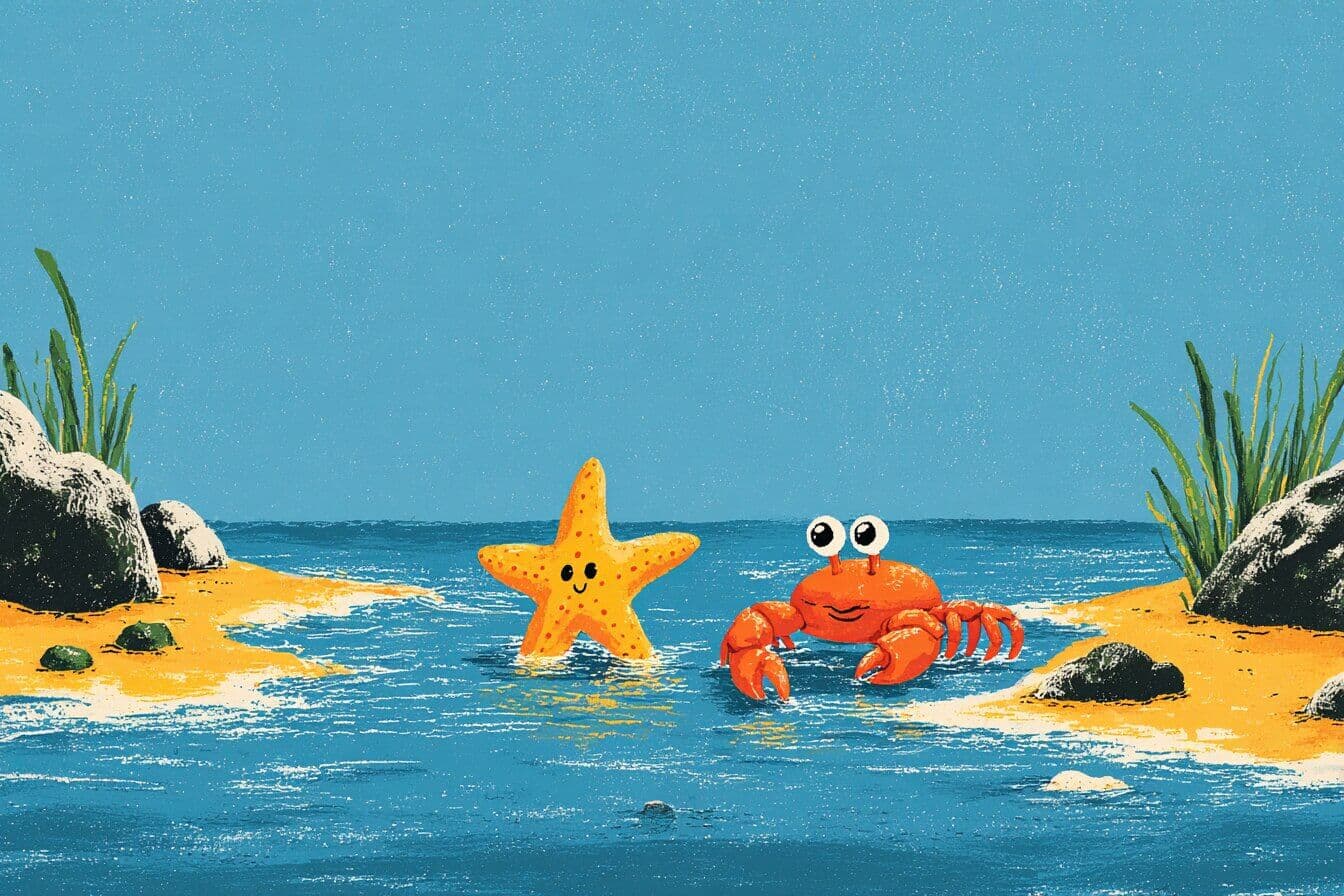
There's something about salt water and smooth stones that slows a busy mind right down, especially at the end of a long day. This story follows Sally the starfish and Carl the crab as they discover a mysterious clutch of eggs beneath a wooden pier and work together to keep them safe through nets, tides, and one unforgettable hatching. It's exactly the kind of tide pool bedtime stories that let a child drift off feeling curious and cared for. Want to build your own seaside tale with your child's name and favorite creatures? Try Sleepytale.
Why Tide Pool Stories Work So Well at Bedtime
Tide pools are miniature worlds, close enough to peer into but full of strange, quiet life. For kids, that combination of smallness and mystery is magnetic. Everything in a tide pool moves slowly: snails inch, anemones sway, water laps in and out. That natural rhythm mirrors the pace a child's body needs as it settles toward sleep, and the enclosed, protected feeling of a pool surrounded by rock echoes the safety of being tucked into bed.
A bedtime story about a tide pool also gives children a way to think about care on a very small scale. Watching two characters guard a handful of eggs teaches that gentle attention matters, even when the world outside is big and loud. The ocean keeps going, the tides keep turning, but inside the pool everything is still enough to notice, and still enough to rest.
The Tide Pool Teachers 6 min 48 sec
6 min 48 sec
Sally the starfish loved her tide pool home beneath the old wooden pier.
Every morning when the sun cleared the harbor, she stretched her five arms and glided across the rocks to say hello to whoever was awake. The barnacles were always awake. They never seemed to sleep at all, which Sally found both impressive and a little unsettling.
Her best friend, Carl the crab, would already be busy scooping bits of algae for breakfast with his claws. One claw was slightly bigger than the other, and he ate with it the way a person favors their right hand. Together they explored every corner of their watery world, from the swaying sea grass to the pile of broken shells near the drain spout that smelled faintly of rust.
One bright Tuesday, Sally noticed something unusual.
A cluster of tiny eggs had appeared on the underside of a barnacle-crusted rock. They were no bigger than grains of sand, and they shimmered when the light hit them right.
She called Carl over, waving her arms.
Carl scuttled sideways, eyes on stalks swiveling.
"Those aren't starfish eggs," he announced. "Too small. Too round."
Sally tilted her body. "Then whose are they?"
Carl tapped the rock once, thinking. Then he tapped it again, because tapping things helped him think.
"Only one way to find out. We ask Grandma Winkle."
Grandma Winkle the periwinkle snail lived in the far corner of the pool where the light stayed dim and green. She had been there for more summers than anyone could count, and she knew every creature in the neighborhood by name, habit, and worst personality trait.
When they arrived, Sally asked politely about the eggs.
Grandma Winkle squinted. "Ah," she rasped, and then said nothing for a long time, because she enjoyed making people wait. "Those belong to the nudibranch family. The mother laid them last night while the moon was high."
She explained that nudibranchs are sea slugs, colorful ones, who breathe through feathery gills on their backs. Sally listened carefully, storing every fact the way she stored tiny shells in the crook of her arms.
"Will the babies look like their parents right away?" Carl asked.
"Not at all." Grandma Winkle almost smiled. "They'll hatch as tiny larvae and drift in the plankton until they're strong enough to settle somewhere solid."
Sally tried to imagine it: hundreds of miniature travelers, spinning through open water like living sparks. It made her arms tingle.
She thanked Grandma Winkle and promised to keep watch over the eggs.
The days that followed had a pattern. Sally took the morning shift, Carl took the afternoon. They learned the eggs needed steady salt water and gentle currents, not too still, not too rough. At night, moonlight painted the pool in silver stripes and Sally would press close to the rock and listen to the water tick against the pier posts above.
Then, one afternoon, voices.
Children arrived with buckets and nets, their sneakers slapping the planks. Sally felt the pool tremble. A shadow fell across the water, and a yellow net plunged down, fast and clumsy.
Instinctively, Sally stretched her arms over the eggs.
The net brushed her top arm and lifted away, carrying several shells and a very confused shrimp who was shouting something nobody could hear.
Carl snapped both claws, the big one and the small one. "We need a better plan."
That night, while the pool was quiet except for the hum of barnacles filter-feeding, Sally thought. She remembered how sea anemones stuck to rocks with their strong bases, and how their tentacles stung anything that came too close.
A fence. A living fence.
The next morning, she told Carl. Carl told Annie the anemone, who sat near the pool's edge looking like a bright green flower with a bad attitude.
"Fine," Annie said. "But I'm doing this for the eggs, not for you two."
She crawled on her sticky foot until she reached the barnacle rock, then planted herself beside the cluster. Her tentacles waved, slow and deliberate. Other anemones followed, because anemones are surprisingly competitive and none of them wanted to be left out.
When the children returned with their nets, the tentacles turned them back every time.
The eggs stayed safe. Carl did a small sideways dance that he would later deny.
Weeks passed. The eggs grew darker, which Grandma Winkle said meant the babies were nearly ready. Sally checked them each morning, looking for the slightest crack.
One dawn, she found them.
Tiny fractures across the surface, thin as thread.
She called Carl and Grandma Winkle. Even Annie leaned in, though she pretended she was just adjusting her position.
And then it happened. Hundreds of translucent larvae wriggled free, so small they were almost invisible, spinning into the water column like glitter thrown into sunlight. Some tumbled. Some rose. A few bumped into each other and spun off in new directions, which made Carl laugh, a rare clicking sound.
"Where will they go?" Sally asked.
"Everywhere," Grandma Winkle said simply. "The tidal currents will carry them to new pools up and down the coast. They'll find their own rocks, their own homes."
Sally watched the last larva drift upward and vanish into the plankton. The rock looked bare now, just barnacles and stone. But the water around it still hummed with something she couldn't name.
She turned to Carl.
"Tomorrow," she said, "let's explore the lower rocks. I want to know how sea urchins grow their spines."
Carl clicked his claws, already curious.
They glided across the pool together, the pier creaking softly above them, the water settling, the night beginning to arrive.
The Quiet Lessons in This Tide Pool Bedtime Story
This story weaves together curiosity, teamwork, and the courage to protect something fragile. When Sally stretches herself over the eggs as the net swoops down, children absorb the idea that caring for others sometimes means acting before you have time to be afraid. Carl's insistence on finding "a better plan" shows kids that frustration can turn into problem-solving if you give it a night to settle. And the moment the larvae drift away, beyond anyone's control, gently introduces the truth that letting go is part of loving something. These are reassuring ideas to carry into sleep: that asking for help is wise, that small creatures can do important work, and that the world keeps turning safely even after you close your eyes.
Tips for Reading This Story
Give Carl a clipped, businesslike voice, especially when he announces "Those aren't starfish eggs," and let Grandma Winkle speak slowly with long pauses, the way she makes Sally and Carl wait for answers. When the yellow net plunges into the pool, speed up just a little and then slow right back down once the danger passes. At the hatching scene, try whispering the part about the larvae spinning upward, and pause after "the water settling, the night beginning to arrive" to let the quiet do its work before your child drifts off.
Frequently Asked Questions
What age is this story best for?
It works well for children ages 3 to 7. Younger listeners enjoy the animal characters and the excitement of the net swooping down, while older kids pick up on details like how the larvae ride tidal currents to new homes and why the anemones form a protective ring. The vocabulary is gentle enough for threes but textured enough to hold a six-year-old's attention.
Is this story available as audio?
Yes. Press play at the top of the story to hear it read aloud. The narration brings out the contrast between Grandma Winkle's slow rasp and Carl's quick, clicking way of talking, and the hatching scene sounds especially beautiful when you can just close your eyes and listen to the larvae spinning free.
Why do kids find tide pool creatures so fascinating?
Tide pools put strange animals right at eye level. Sally and Carl live in a world where crabs tap rocks to think, anemones form fences, and sea slugs lay shimmering eggs by moonlight. For children, that blend of the real and the almost-magical is irresistible, especially when the creatures are small enough to feel like friends rather than something far away.
Create Your Own Version
Sleepytale lets you build a personalized seaside story with the same gentle pacing and cozy tone. Swap the pier for a quiet cove, trade the nudibranch eggs for a lost hermit crab shell, or turn Sally into a sea urchin and Carl into a clownfish. In just a few moments you'll have a soothing ocean tale you can replay anytime for a calm, easy wind down.
Looking for more nature bedtime stories?
Sun Bedtime Stories
A valley stays chilly at dawn until a brave sunbeam gathers shared promises that warm the forest again, inside short sun bedtime stories. A sunrise seed becomes the twist that lingers.

Earth Bedtime Stories
Mira follows a soft blue glow to a space bus and joins a kind crew to help the ocean sing again in short earth bedtime stories.

Winter Bedtime Stories
Drift off with cozy short winter bedtime stories that soothe with gentle wonder and warm cocoa calm. Read a quiet tale and learn how to create your own with Sleepytale.
Windy Day Bedtime Stories
A breezy town turns into a gentle game day as one child follows the wind home. Discover short windy day bedtime stories that end with cocoa and a lullaby.

Wildflower Bedtime Stories
Moonlight slips through a window as a brave seed dreams of color beyond tidy gardens in short wildflower bedtime stories. Petal and a playful pebble spark a gentle parade of blooms.

Waterfall Bedtime Stories
Looking for short waterfall bedtime stories that feel calm, magical, and easy to read aloud? Discover a gentle tale set at a rainbow mist waterfall, plus tips to create your own.