
Spaghetti Bedtime Stories
By

Dennis Wang, Bedtime Story Expert
8 min 32 sec
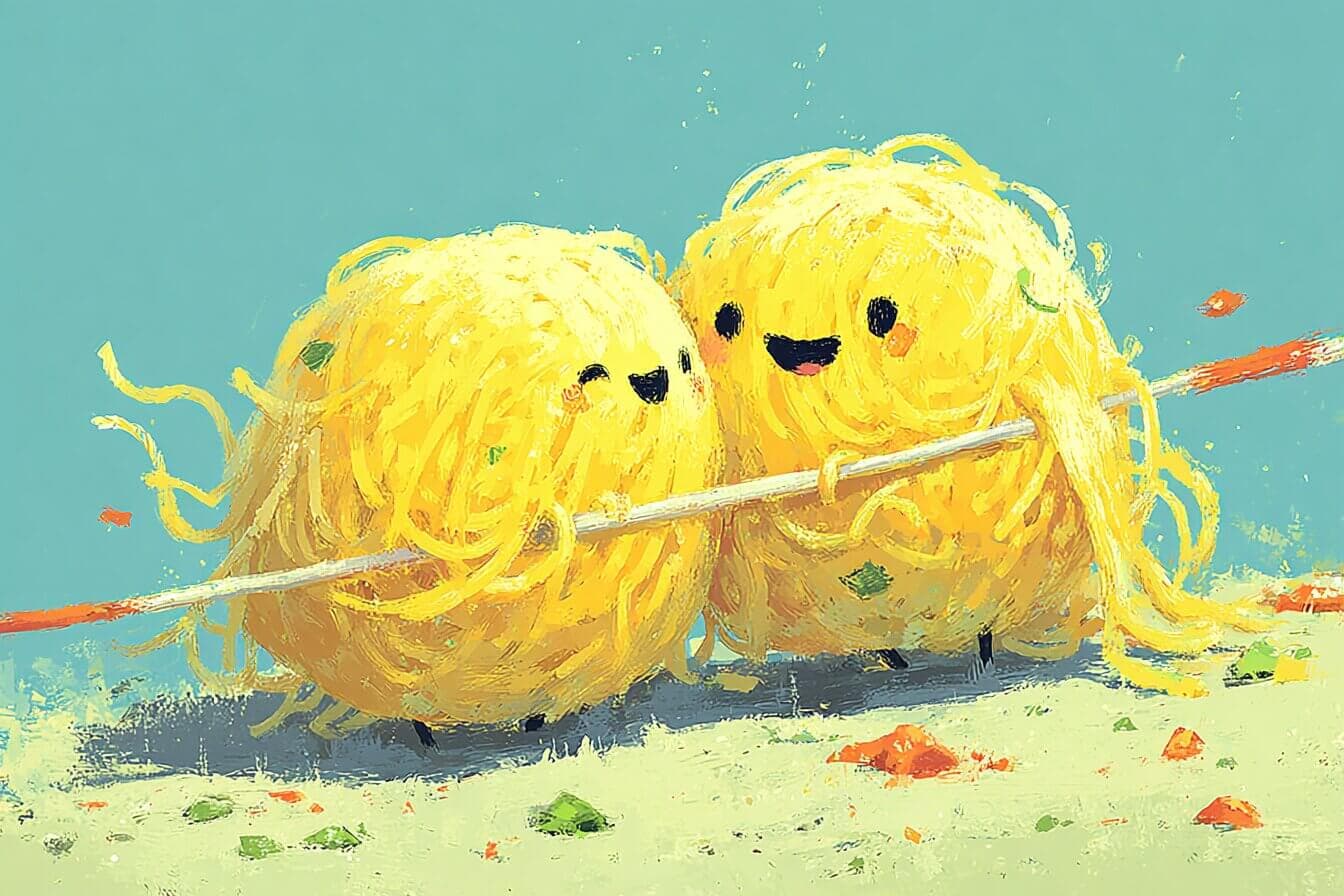
There is something about warm kitchens at night, the hum of the fridge, a faint smell of butter still hanging in the air, that makes kids want to hear one more story before they close their eyes. This tale follows three pasta friends named Nico, Pia, and Marco, who tumble out of an ordinary spaghetti box and discover that getting tangled together is the best thing that ever happened to them. It is one of those spaghetti bedtime stories that wraps around you like a warm bowl of something good. If your child wants a version starring their favorite noodle shape or set in their own kitchen, you can build one in minutes with Sleepytale.
Why Spaghetti Stories Work So Well at Bedtime
Spaghetti is one of those foods almost every child recognizes. It is stretchy, silly, and a little bit messy, which means a story about it already feels friendly before a single word is read. The textures are built for bedtime too: warm water, soft curling shapes, gentle steam. Kids can picture it without trying hard, and that easy familiarity lets their minds settle instead of race.
A bedtime story about spaghetti also sneaks in something comforting about transformation. A dry stick of pasta becomes something soft and bendy, the way a wound-up kid becomes relaxed under a blanket. That quiet parallel helps children feel like the whole world is slowing down alongside them, which is exactly the mood you want right before sleep.
The Twirly Noodle Friends 8 min 32 sec
8 min 32 sec
In the tiny blue house on Maple Street, a box of spaghetti noodles sat on the kitchen shelf, waiting for their turn to be dinner.
Every noodle was straight and smooth, like a golden stick. They all looked exactly the same.
Nobody could tell them apart. And even though they were packed so close together that they couldn't move, they still felt a little lonely. That's the strange thing about looking identical to everyone around you.
One afternoon, with the kitchen window propped open and a breeze pushing in from the yard, the lid of the pasta box shifted. Just enough.
One noodle peeked out.
His name was Nico.
Nico wiggled. He squirmed. He leaned too far and tumbled off the counter, landing with a soft plop in a bowl of warm water the baker had left out for her bread dough. The water closed around him gently, and for a moment he just floated there, not sure whether to be scared or relieved.
Then something happened. He started to bend.
Slowly, like waking up from a long nap, his body curled into loops and ribbons. He twisted around himself, making shapes he had never imagined when he was stiff and straight.
He laughed, a tiny sound, like a fork tapping a glass.
Up on the shelf, another noodle heard the giggling. Her name was Pia, and she had always been a bit nosy about sounds she couldn't explain. She slid from the box, rolled across the counter, and splashed into the bowl beside Nico.
The warm water did its work on her too.
Their shapes curled together, loop after loop, until they were tangled in a happy knot. At first they panicked. "I think my middle is stuck to your end," Pia said.
"I think that's actually my middle," Nico said.
They stayed quiet for a second, feeling the warm water rock them. And then they realized something. Being tangled meant neither one of them was alone.
They whispered about the things noodles think about: the dream of a really good tomato sauce, whether cheese was better melted or shredded, and what it might feel like to be on a plate surrounded by basil leaves.
When the baker came back, she stopped short. Two noodles, twisted into an intricate golden knot, sat in her bread water.
She picked them up, turning them in the light. "You two are much too interesting to be eaten," she said.
She set them on a clean towel to dry, then placed them in a small glass jar on the windowsill.
Nico and Pia blushed, which is a difficult thing for noodles to do. But they did seem to glow a shade warmer.
From the windowsill, the world looked different. They watched the kitchen come alive every morning: the baker kneading, the kettle screaming, a cat named Pepper threading between chair legs. At night they cuddled close in their jar and told stories to the measuring spoons, who never answered but seemed to listen anyway.
Moonlight sprinkled over them like powdered sugar.
One evening, a curved shape appeared on the sill. A macaroni. His name was Marco, and he looked nothing like them. He was small and bent into a permanent half-smile, and he stood at the lip of the jar like someone waiting to be invited into a party he wasn't sure was his.
"Get in here," Nico said.
Marco didn't need to be told twice. He tucked himself between them, and the three noodles formed something that looked, from a distance, like a small curly sculpture. The baker noticed the next morning and laughed out loud, a real laugh, the kind that starts in the belly.
She showed her neighbors. Then the neighbors told friends. Children pressed their noses to the glass and fogged it with their breath, trying to figure out where one noodle ended and another began.
Nico, Pia, and Marco loved the attention. But they loved each other more, in the way you love the people who saw you when you were just a plain stick and liked you anyway.
They practiced new shapes every day, wrapping and unwrapping like a slow, gentle hug that kept finding new ways to hold on.
When autumn came, the baker moved the jar to the center of the Thanksgiving table. Guests leaned in and cooed. Nobody suggested cooking them. The three noodles became the centerpiece, sitting among the mashed potatoes and cranberry sauce like tiny royalty.
After dessert the baker sprinkled them with glittering sugar. In the candlelight they looked like stars that had decided to live indoors.
That night, under the soft glow, they whispered promises. "We stick together," Marco said. And it was funny because of course they did. They were literally stuck together.
Winter fogged the windows. The baker tied a ribbon around the jar, red with a thin gold stripe, and set it near the stove for warmth. Snowflakes blew sideways outside, but inside the noodles invented stories about faraway places: valleys made of cheese, tomato-cloud skies, butter ponds smooth enough to skate on.
Pia described bread-crumb ski slopes in such detail that Nico swore he could feel the wind.
Spring arrived with longer light. The baker decided the noodles deserved a bigger audience. She brought the jar to the children's museum downtown and placed it on a bright windowsill in the friendship exhibit.
Boys and girls stopped to stare. Some sketched the curly shapes. Some tried to twist pipe cleaners into noodle knots. A little girl named Lily studied them for a long time, then turned and hugged her brother so hard he almost fell over. "Let's stick together like the noodle friends," she said.
The curator heard, and wrote it on a card beside the jar.
Summer filled the museum with long golden hours. Fireflies blinked in the garden outside. Inside, the noodles glowed with a quiet happiness that had nothing to do with sugar or candlelight. They had been together for a whole year. Every twist in their shape held a memory.
They remembered the days when they were straight sticks packed in a dark box, afraid of being ordinary.
Children kept visiting, kept bringing drawings. Some tied ribbons around their wrists and called them friendship bracelets inspired by Nico, Pia, and Marco. The noodles couldn't wave, couldn't clap, couldn't do much of anything, really. But they beamed.
One evening the baker returned carrying two fresh boxes of spaghetti. She winked at the trio. "These new noodles are curious about friendship," she told the curator. "Think the three of them could teach a class?"
Marco wiggled, which might have been pride or might have been the building's heating vent. Hard to say.
The museum planned a Friendship Festival. Banners showed smiling noodles holding hands. The mayor made a short speech. Families arrived in noodle crowns made from yellow paper, and children practiced twisting ribbons together until the floor was covered in curly loops.
From inside the jar, Nico, Pia, and Marco watched.
Their story had traveled far beyond the tiny blue house on Maple Street. It had curled out into the world the way they had curled around each other: gently, without forcing anything.
When autumn circled back, the baker brought them a tiny cake decorated with sugar spaghetti on top. They couldn't eat it, obviously. But they loved the thought so much that the jar seemed to hum.
The curator placed a candle beside them. Everyone sang.
That night, after the museum went dark and the last footstep faded down the hall, the three noodles settled into their familiar tangle. The jar was polished. The ribbon was still there, a little faded now.
Nico whispered something about warm water.
Pia mumbled about gentle hands.
Marco said nothing at all, already half-asleep, curled between his two best friends like a small, permanent smile.
Outside, the first snowflakes of the season drifted past the window, and inside the jar, the three noodles held on to each other the way they always had, softly and without letting go.
The Quiet Lessons in This Spaghetti Bedtime Story
This story weaves together a few ideas that sit well with kids right before sleep. There is the fear of being ordinary, something even young children feel, and Nico's tumble into the warm water shows that change often starts with an accident rather than a plan. When Pia and Nico panic about being tangled and then realize the knot is actually a comfort, kids absorb a small truth about vulnerability: letting someone close can feel scary at first and wonderful a moment later. Marco's arrival adds a lesson about welcoming difference, since he looks nothing like the others and fits perfectly anyway. These themes, belonging, openness, the courage to be different, land gently at bedtime because the story never lectures. It just shows three small characters holding on to each other in the dark, which is exactly the feeling a child wants before drifting off.
Tips for Reading This Story
Try giving Nico a slightly breathless, excited voice when he first tumbles into the water, and let Pia sound matter-of-fact and a little bossy, like someone who always needs to know what is going on. When Marco appears on the windowsill, slow down and leave a pause before Nico says "Get in here," so your child can feel the moment of welcome. During the winter section where the noodles invent faraway cheese valleys and butter ponds, you can lower your voice almost to a whisper; this is where the story naturally wants to pull your child toward sleep.
Frequently Asked Questions
What age is this story best for?
This story works well for children ages 3 to 7. Younger listeners enjoy the silly idea of talking noodles falling into a bowl, while older kids connect with the feelings of wanting to be noticed and finding a place to belong. The simple structure, one friend, then two, then three, gives toddlers something easy to follow, and the museum scenes give early readers something to picture.
Is this story available as audio?
Yes. You can press play at the top of the story to listen along. The audio version brings out the contrasts nicely, from the quick splash of Nico hitting the water to the quiet candlelit scenes near the end. Character moments like Pia's nosy curiosity and Marco's shy arrival on the windowsill come alive when you hear them spoken aloud, making it a great option for nights when you want to lean back and let the story do the work.
Why spaghetti instead of other pasta shapes?
Spaghetti starts out perfectly straight and identical, which sets up the whole emotional arc. When Nico and Pia curl and tangle, the change is dramatic and visible in a way that, say, penne or rigatoni would not allow. Kids understand the transformation instantly, a stiff stick becoming a soft, loopy ribbon, and that visual contrast is what makes the friendship metaphor land without any explanation needed.
Create Your Own Version
Sleepytale lets you build a cozy pasta bedtime story that fits your child perfectly. Swap the noodle trio for ravioli, bow ties, or rice noodles. Move the setting from a kitchen windowsill to a picnic blanket or a bustling Italian market. You can even adjust the tone, making it sillier for a giggly night or softer for a child who needs extra calm. In a few minutes you will have a story ready to read again and again, with an ending that feels warm and familiar.
Looking for more food bedtime stories?
Watermelon Bedtime Stories
Drift into short watermelon bedtime stories where a giant melon rolls into town and kindness becomes the sweetest snack of all.
Waffle Bedtime Stories
Craving a sweet twist at lights out? short waffle bedtime stories turn one brave waffle pocket count into a cozy topping parade that ends in a sleepy, syrupy sigh.
Taco Bedtime Stories
A picnic taco feels too full to wiggle, until a clever sharing plan turns tummy trouble into a tiny feast. Discover short taco bedtime stories that end in cozy calm.
Sushi Bedtime Stories
Settle in with soothing short sushi bedtime stories that calm busy minds with cozy kitchen magic. Read a gentle sushi bedtime story that helps kids drift off peacefully.
Strawberry Bedtime Stories
A garden hose breaks, and a ruby bright strawberry orders ants into a droplet brigade. Follow Stella the Sharing Strawberry in short strawberry bedtime stories with a cozy twist.
Smoothie Bedtime Stories
Looking for short smoothie bedtime stories that feel cozy and easy to read aloud? Want a gentle smoothie bedtime story that turns fruit mixing into a calming lesson for sleep.