
Respect Bedtime Stories
By

Dennis Wang, Bedtime Story Expert
9 min 37 sec
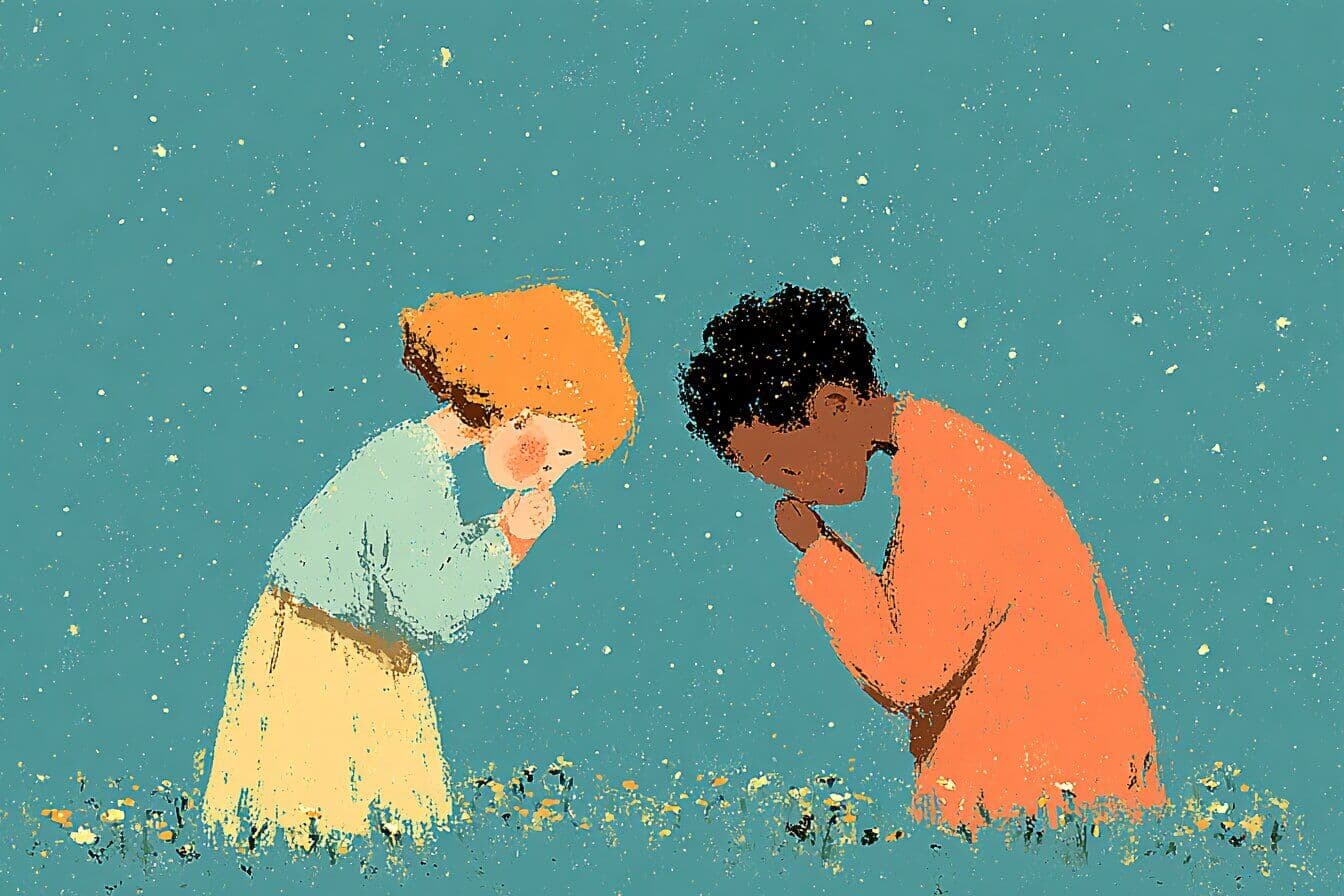
There is something about the hour before sleep that makes kids especially open to how people treat each other, as though the quiet of the room loosens something in them. In this story, a girl named Amara shares her rainbow ribbon with a lonely boy called Leo, and together they discover that small acts of kindness can change an entire town. It is one of the best respect bedtime stories for showing children what it looks like to include someone without making a big speech about it. If you want a version shaped around your own child's world, you can create one in minutes with Sleepytale.
Why Respect Stories Work So Well at Bedtime
Bedtime is when children replay the social moments of their day, the playground disagreement, the friend who shared a snack, the time someone got left out. A story about respect gives those moments a gentle frame. Instead of lecturing, it shows characters navigating the same feelings your child already had, and it does so inside the safety of a fictional world where things work out.
That is why a bedtime story about respect often lands deeper than a daytime reminder to "be nice." At night, kids are not defending themselves or performing for peers. They are just listening, tucked in, letting the ideas settle. When a character chooses patience or speaks kindly to someone who is struggling, the lesson slips in alongside the warmth of the blanket rather than arriving as a correction. It feels less like a rule and more like an invitation.
The Rainbow Ribbon Parade 9 min 37 sec
9 min 37 sec
In the town of Harmonyville, a girl named Amara loved to twirl her rainbow ribbon more than anything else she could think of.
Every afternoon she stood in the meadow behind the library, flicking her wrist so the colors snapped against the pale sky, and sometimes the fabric made a sound like a flag in a car window, that quick ripple that is almost a word.
One afternoon she noticed a boy she had never seen before sitting on the green bench near the path, shoulders curled in like he was trying to take up less space.
Amara walked over. The ribbon trailed behind her on the grass.
"I'm Amara."
She waited.
He looked up. His eyes moved to the ribbon first, then to her face.
"Leo," he said. "I just moved here."
"Want to try it?" She held out the handle before he could say no.
His fingers closed around the silk grip, which was warm from her hand. He gave the ribbon a short, uncertain wave, and it made a wobbly arc that looked like a question mark drawn in crayon.
Amara laughed, not at him, with him, because he laughed too, surprised by the way the color hung in the air for a second longer than it should have.
"See? You already get it."
They stayed until the sun sank into that thick golden light that makes everything look like an old photograph. Amara showed him loops, figure eights, and the tricky sideways flick that sent the ribbon spiraling upward. Leo dropped it twice, stepped on it once, and by the end could do a passable spiral that Amara clapped for with actual enthusiasm.
The next morning, posters appeared on every lamppost: the Great Harmonyville Parade, one week away.
Kids crowded around the announcements, already arguing over costumes.
Amara found Leo at the bench again.
"March with me," she said. "We'll carry the ribbon together."
He bit his lip. "What if I drop it in front of everyone?"
"Then we pick it up." She said it the way you state the weather. Simple. Done.
They spent the week preparing. Leo painted cardboard stars with silver house paint that got under his nails and would not come off for days. Amara stitched a second handle onto the ribbon so they could each hold one end. They practiced steps on the cracked sidewalk outside Leo's new house while his dog watched from the porch, head tilted, unconvinced.
Parade morning arrived under a sky the color of dryer lint, gray and grumbling. The mayor stood at the starting line looking nervous, but the children lined up anyway because children do not cancel things for clouds.
Amara and Leo stood side by side. She could feel the tiny vibration in the ribbon from his hand shaking.
"Ready?"
He nodded.
The trumpet sounded, one bright note that bounced off the brick storefronts.
They stepped forward, and the ribbon rose between them, throwing color across the gray day like a crack in a stone letting light through.
People clapped. Someone whistled.
Halfway along the route, a gust of wind grabbed the ribbon and yanked it straight up, hard. It slipped from Leo's fingers and sailed into the air, twisting and flashing, looking for a second like some bright, confused bird.
The crowd gasped. Leo went still. His face flushed the way faces do when every eye in the world seems to land on you at once.
Amara did not chase the ribbon. She stayed right next to him and put her hand on his back, steady pressure, nothing dramatic.
"We can fix this," she said quietly.
Then she did something odd. She looked up at the wind, as though it had a face, and spoke in a calm, clear voice.
"We would appreciate our ribbon back, please. It matters to us."
Nobody breathed.
The gust softened. The ribbon drifted, turned once, and floated down across Leo's outstretched arms like it had simply decided to come home.
The cheering was louder this time. Much louder.
Leo looked at Amara and his grin came slow, starting at the corners, the kind of smile that changes a person's whole posture.
They finished the parade twirling the ribbon in spirals so clean they surprised even themselves.
Afterward, kids swarmed Leo, asking him to show them how to wave it without tangling. He stood up straighter than Amara had ever seen him stand. He started explaining, and his voice did not wobble.
That evening, Leo's mother found Amara at the cider table and said thank you three times, each one a little more unsteady than the last. Amara shrugged because she did not know what else to do with that kind of gratitude.
Weeks passed. The ribbon became a thing around town, not a trophy, more like a library book that circulated. Whenever someone felt small or unsure, a friend would bring it over for a twirl. The colors reminded people of something they already knew but kept forgetting.
One Saturday, Amara walked to the meadow and found Leo surrounded by smaller children, showing them how to wave the ribbon gently so the fabric would not knot up. He crouched beside a girl who kept flicking too hard, and he adjusted her grip with a patience Amara had never heard in his voice before. She joined in, guiding tiny hands, and the meadow filled with laughter and shimmering fabric and the particular kind of noise that happens when a group of people are paying attention to each other.
Amara thought about that later, lying on her bedroom floor. Respect was not a single grand act. It was a rhythm, something you repeated, like breathing or the way the ribbon kept circling back through the air.
She wrote that in her journal and pressed a violet from the meadow next to the words.
When autumn arrived, Harmonyville planned a harvest festival, and the mayor asked Amara and Leo to lead a Friendship Dance with the rainbow ribbon.
They said yes immediately. Then they invited every child, regardless of skill, to practice in the square.
Some hopped on crutches. Some spun in wheelchairs. Some clapped from chairs at the edge, keeping time.
Amara reworked the steps so everyone could join, and Leo spent two afternoons painting extra ribbons in every color he could mix, because he said nobody should have to stand on the side and just watch.
On the night of the festival, lanterns swung from the eaves of every shop. The air smelled like warm apple cider and woodsmoke. Families gathered, cheeks pink, hands wrapped around paper cups.
Amara and Leo stepped into the circle and raised their shared ribbon.
The music started, slow at first.
Colors swooped above their heads, weaving something that felt like a roof made of light. Other children joined, ribbons rising, until the square was covered in a shifting canopy of color.
The music slowed further. Amara and Leo lowered the ribbon and draped it across the shoulders of every dancer, one long rainbow shawl connecting them all.
The applause that followed was the kind you feel in your chest.
Fireworks rose and spelled "Welcome" against the dark sky, each letter hanging for a breath before dissolving into sparks.
Amara and Leo stored the ribbon in a wooden box. Leo wrote on the lid in his slightly messy handwriting: "Kindness Never Fades."
They both knew tomorrow would need its colors again.
Years later, when they had grown tall and busy and sometimes forgot to visit the meadow, new children still found the box.
They still shared the ribbon.
They still believed it meant something.
And so respect, like a rainbow, kept circling the town, quiet and sure, long after anyone could remember where it started.
The Quiet Lessons in This Respect Bedtime Story
This story weaves together inclusion, patience, and the courage it takes to try something when you are afraid of failing in public. When Leo drops the ribbon in front of the entire town and Amara stays beside him instead of chasing it, children absorb the idea that loyalty matters more than perfection. Leo's later transformation, from the boy who sat alone on a bench to the one teaching smaller kids with calm patience, shows how being respected can turn into a desire to offer that same care to others. These are reassuring ideas to carry into sleep, the feeling that mistakes do not erase your worth and that someone steady will be there when things go sideways.
Tips for Reading This Story
Give Leo a quieter, slightly hesitant voice at the start, and let it grow steadier each time he speaks so your child can hear his confidence building. When Amara talks to the wind and asks for the ribbon back, slow your pace way down and pause before the ribbon drifts back, giving your child a moment to wonder whether it will actually work. During the festival scene, you can sway a little as you read the dance section, letting your body carry the rhythm of the music so the moment feels alive in the room.
Frequently Asked Questions
What age is this story best for?
It works well for children ages 3 to 8. Younger listeners connect with the colorful ribbon and the parade excitement, while older kids pick up on the social dynamics, like the way Leo feels when the ribbon slips from his fingers in front of everyone, and the way Amara's quiet presence helps him recover.
Is this story available as audio?
Yes. Press play at the top of the story to listen. The audio version brings out details that shine when heard aloud, especially the moment Amara speaks to the wind in that calm, polite voice. The parade scenes have a natural rhythm that builds well in narration, and Leo's growing confidence comes through beautifully when you can hear the shift in tone.
Why is a parade a good setting for teaching kids about respect?
A parade puts characters in front of an audience, which raises the stakes of small mistakes. When Leo drops the ribbon, kids understand the embarrassment because they have felt watched before. And because a parade is a shared celebration, it naturally reinforces the idea that everyone belongs in the same procession, crutches, wheelchairs, wobbly ribbon skills, and all.
Create Your Own Version
Sleepytale lets you reshape this story into something that fits your child's world perfectly. You can swap the ribbon for a kite or a scarf, move the parade to a beach boardwalk or a school hallway, or change Amara and Leo into siblings, cousins, or a pair of talking animals. In a few minutes you will have a personalized story about kindness and inclusion that feels like it was written just for your family's bedtime.
Looking for more educational bedtime stories?
Folklore Examples
Discover short folklore examples through a library night where Anansi the spider, a loyal crane, and a clever hare teach timeless lessons.

Children's Fable
A fast fox loses to a steady turtle in this short children's fable about patience, ripe pears, and the quiet power of one step at a time.

Science Stories For Kids
Leo and his mom explore twinkling stars with a flashlight and a jar of water in one of our coziest short science stories for kids.
Small Stories With Moral
A girl gives her red umbrella to a classmate in the rain, one of the best short small stories with moral for bedtime.

Short Christian Stories With Moral Lessons
Discover short christian stories with moral lessons like Pastor Eli's unplanned outdoor sermon that teaches kids faith grows in unexpected places.

Quick Stories With Moral Lesson
Marcus copies a science test but discovers short quick stories with moral lesson show that honest effort feels better than a perfect stolen score.