
Kyoto Bedtime Stories
By

Dennis Wang, Bedtime Story Expert
12 min 15 sec
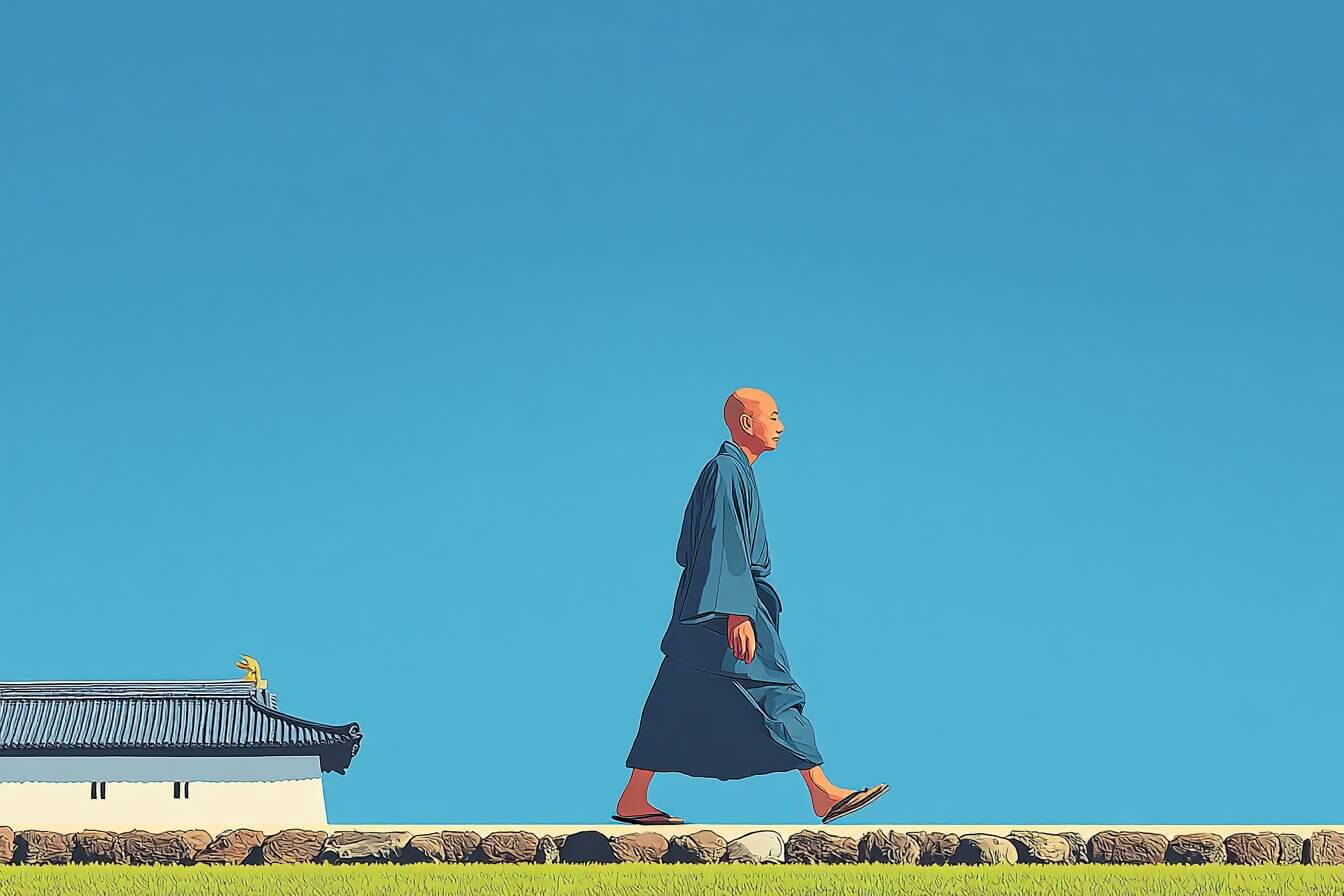
There is something about the hush of wooden corridors and the faint smell of incense that makes a child's whole body go quiet. In this gentle Kyoto bedtime stories collection, a boy named Hiro walks with his grandfather through an ancient temple, learns to slow his steps on cool stone, and discovers a tiny carved crane that carries calm wherever it goes. The temples breathe, the tea steams, and the world beyond the gate can wait. If you would like a version shaped around your own child's name or favorite details, you can create one with Sleepytale.
Why Kyoto Stories Work So Well at Bedtime
Kyoto is a city where stillness is built into the architecture. Paper walls, raked gravel gardens, the single note of a temple bell fading into nothing. For children, these images do something almost physical: they slow the breathing, lower the voice, make the room feel like a quieter place. A bedtime story set in Kyoto does not need to invent calm. It simply borrows it from the setting.
There is also something reassuring about a child walking alongside a grandparent through an unfamiliar but safe place. Kids process the unknown best when they have a trusted guide beside them, and stories about Kyoto temples at bedtime offer exactly that shape. The world is new and beautiful, but someone steady is holding your hand the whole way through.
The Temple Whispers of Kyoto 12 min 15 sec
12 min 15 sec
In the heart of Kyoto, where morning mist clung to tiled roofs like damp silk, a boy named Hiro walked beside his grandfather past the old temples.
His geta sandals clicked against stone. He held his grandfather's hand, and overhead the cedar branches stretched up and up, still as arms mid-reach.
Every temple they passed seemed to breathe.
The wooden walls let out the scent of incense and old wood, and Hiro listened to the hush between the temple bells. It was the kind of quiet that felt heavy, like it had weight, like it was pressing gently on your chest and telling you to stay.
Grandfather whispered that the monks inside moved so slowly their footsteps taught the earth how to be still.
Hiro tried it. He placed one foot down carefully, then the other, and felt the cool of the stone through his sandal. It was harder than he expected. His left knee wanted to hurry.
A maple leaf drifted down and landed on his shoulder, red as sunset, and he let it sit there like a tiny flag.
They stopped at a low wooden gate. A monk in brown robes stood there, not waiting for them exactly, but not surprised to see them either. He had the kind of face that looked like it had been smiling for a very long time.
The monk bowed. Hiro bowed back, a little too quickly, and felt the calm rolling off the monk like warmth from a stove.
Grandfather spoke in gentle Japanese, telling Hiro this temple was called Shunko-in, the Temple of the Spring Breath.
Inside, the garden held raked gravel that looked like ripples on a lake made entirely of stone. Hiro tiptoed along the edge, afraid to disturb the patterns, until the monk gestured toward the wooden veranda and nodded.
The floorboards creaked once, then settled. The sound was so brief it felt like the temple had sighed and gone back to sleep.
Hiro sat cross-legged beside his grandfather. The monk set a small iron kettle over heat and began to prepare tea with the kind of attention most people save for threading a needle.
Steam rose in slow curls. It wrote nothing readable, but Hiro watched it anyway.
The monk placed a tiny cup in Hiro's hands, and the warmth traveled through his fingers and up his arms and settled somewhere near his ribs. The leaf was still on his shoulder. He had forgotten about it.
When he sipped, the tea tasted like moss and rain and something faintly sweet he could not name. He wanted to ask what it was, but the room felt too quiet for a question like that.
Grandfather closed his eyes, so Hiro did the same. Behind his lids the temple glowed, soft gold, like a paper lantern lit from inside.
He heard monks circling the hallway. Each footstep was barely a sound. He imagined their robes brushing the floor, fabric softer than moth wings, and for a moment he was not sure whether he was hearing it or inventing it.
A bell rang once.
Deep. Low. The sound moved through the wooden pillars, through Hiro's chest, and out into the garden where the gravel seemed to shimmer for just a second. He opened his eyes and found the monk smiling again, and this time the smile felt like a doorway you were being invited to walk through.
The monk beckoned. Hiro followed, leaving his grandfather breathing peacefully beside the tea.
They stepped into a narrow corridor where the walls were paper and light. Shadows of bamboo leaves slid across the surface like slow dark fish in a white pond. One leaf-shadow paused, as if it were watching Hiro pass.
The monk slid open a door. Inside: a low table, a single scroll painted with one crooked line of ink. That was all.
Hiro knelt. His heart thumped softly.
The monk unrolled the scroll further. The line became a mountain path, then a river, then the horizon. Hiro traced it with his fingertip, feeling the paper's grain catch against his skin. The monk whispered that the line was the journey of every person who ever sought quiet inside themselves.
Hiro understood, or thought he did, that the path was both endless and already complete. Those two things did not seem like they should fit together, but they did.
Then the monk placed something in Hiro's palm: a tiny carved wooden crane, no bigger than a coin. Its wings were smooth from years of being held. The monk told him it would remind him to return to this stillness whenever the world grew loud.
Hiro cupped the crane and bowed deeply. His forehead touched the tatami mat, and the smell hit him, straw and sun, warm and plain and real.
When they returned to the veranda, Grandfather opened his eyes as if he had never closed them. Maybe he had not. The three of them shared sweet bean cakes shaped like plum blossoms, and the monk ate his in two bites, which surprised Hiro. He had expected monks to eat slowly too.
The monk poured more tea. The second cup tasted quieter somehow, as if the first had taught Hiro's tongue how to listen.
Outside, a breeze moved through the cedar, and the leaves answered with a hush that sounded like yes.
Hiro set the maple leaf on the table, a gift back to the temple. The monk accepted it with a bow.
They watched the gravel garden together. Nothing moved, yet everything in it felt alive, the way a sleeping person is alive even though they are perfectly still.
A small snail was climbing the wooden post beside them, its shell glossy as polished jade, leaving a faint silver trail that caught the light. Hiro breathed in time with its progress. Grandfather told him that in this temple, time was measured in breaths, not minutes, and Hiro counted ten slow ones until the snail vanished into shadow.
The monk invited them to ring the great bell above the gate.
They climbed narrow wooden stairs. The cedar smell was thick, and the steps were worn into shallow dips from centuries of feet. At the top, a bronze bell as tall as Hiro hung in silence, its surface etched with vines and tiny Buddhas sitting in lotus blooms.
Hiro took the padded mallet, lifted it with both hands, and struck the bell gently.
The sound rolled out across Kyoto like a warm wave, touching every roof tile, every sleeping cat, every person who happened to be standing still at that exact moment. Pigeons burst from the eaves, wings clapping, then settled again almost immediately, soothed by the echo.
Hiro felt the vibration settle into his bones. He would carry it home like a hum nobody else could hear.
The monk bowed once more. Hiro bowed back, the wooden crane safe in his pocket, its wings pressed against his heartbeat.
As they left the temple, morning sun broke through the mist and turned the cedar trunks gold. Hiro's shadow stretched long and calm across the stone path.
He looked back once. The monk stood motionless in the doorway, brown against the glow, a living part of the temple's quiet breath.
The city beyond the gate bustled with bicycles and tourists and someone calling out about fresh mochi, yet Hiro walked through the noise as if wrapped in a bubble of hush. The bell was still echoing inside him, very faintly, like a memory that refuses to fully fade.
Every step felt softer. Every breath, deeper.
Grandfather squeezed his hand, and Hiro squeezed back, and neither of them said anything because there was nothing that needed saying.
When they reached the hotel, Hiro placed the tiny crane on the windowsill overlooking the Kamo River. It stood there, wings catching late sunlight, a promise that the temple's calm would travel with him wherever he went.
That night, as city lights flickered like scattered stars, Hiro listened to the river's quiet shushing. He felt the monks walking in slow circles around his heart, teaching him, even in dreams, how to be still.
The Quiet Lessons in This Kyoto Bedtime Story
This story weaves together patience, respect, and the idea that calm is something you can practice rather than something that just happens to you. When Hiro tries to slow his steps and notices his left knee wanting to hurry, children absorb the honest truth that stillness takes effort, and that is completely fine. The moment he bows to the monk, accepts the crane, and offers his maple leaf in return, the story models a gentle exchange of generosity without anyone keeping score. And the surprise of the monk eating his bean cake quickly reminds kids that real people, even very peaceful ones, are not perfect or predictable. These threads settle well at bedtime because they leave a child feeling that tomorrow's world is a patient place, one where trying counts as much as succeeding.
Tips for Reading This Story
Give Grandfather a low, unhurried voice that stretches the vowels just a little, and let the monk speak barely above a whisper so your child leans in to listen. When Hiro strikes the great bell, try tapping gently on the bedframe or nightstand and letting the silence afterward hang for a few seconds before continuing. At the moment the snail appears on the wooden post, slow your reading pace to almost nothing and invite your child to count ten breaths alongside Hiro.
Frequently Asked Questions
What age is this story best for?
Children between about four and eight tend to connect with it most. Younger listeners enjoy the sensory moments, the bell ringing, the steam from the tea, the snail on the post, while older kids begin to appreciate Hiro's realization that the ink line on the scroll is both endless and already complete. The pace is gentle enough for drowsy four-year-olds but layered enough to hold a seven-year-old's attention.
Is this story available as audio?
Yes. You can press play at the top of the story to hear it read aloud. The audio version works especially well here because so much of the story lives in sound, the single bell note, the creak of the veranda, the hush of cedar leaves. Hearing those moments narrated lets a child close their eyes and feel like they are walking beside Hiro and Grandfather through the temple.
Why is a wooden crane the keepsake Hiro receives?
Cranes hold deep meaning in Japanese culture, often symbolizing longevity, peace, and good fortune. In the story, the monk gives Hiro the crane as a portable reminder of the stillness he felt inside the temple. It is small enough to fit in a pocket, which matters because Hiro carries it back into the noisy city, proof that calm is something you can take with you even when the world gets loud again.
Create Your Own Version
Sleepytale lets you reshape this temple story into something that feels like it belongs to your family. Swap Hiro for your child's name, replace the gravel garden with a bamboo forest, or change Grandfather into a grandmother who hums old songs. You can adjust the tone from calm to gently adventurous, or set the whole thing beside the Kamo River instead of inside a temple. In a few moments you will have a peaceful bedtime tale ready to read or replay whenever the evening needs a little quiet.
Looking for more travel bedtime stories?

Washington Dc Bedtime Stories
Ellie steps into bright marble streets and learns how big ideas become kind choices in short washington dc bedtime stories. A calm tour turns curiosity into comfort.

Tokyo Bedtime Stories
Looking for short tokyo bedtime stories that feel calm, magical, and easy to read aloud? Want a gentle tokyo bedtime story you can replay at bedtime.

Singapore Bedtime Stories
Lily arrives in Singapore and discovers rooftop gardens that float between towers in short singapore bedtime stories. She follows a humming seed to a gentle riddle and a citywide bloom.

Shanghai Bedtime Stories
Looking for short shanghai bedtime stories that feel calm and magical for kids? Read a gentle shanghai bedtime story and learn how to make your own cozy version in Sleepytale.

Sf Bedtime Stories
A foggy bridge becomes a quiet portal where a child rescues drifting dreams. Read short sf bedtime stories that glow with wonder and end in calm.

Seoul Bedtime Stories
Soothe bedtime with short seoul bedtime stories that blend gentle city sights, kind choices, and cozy calm for kids. Read a quiet Seoul adventure that settles little minds fast.