
Interactive Children's Stories
By

Dennis Wang, Bedtime Story Expert
7 min 42 sec
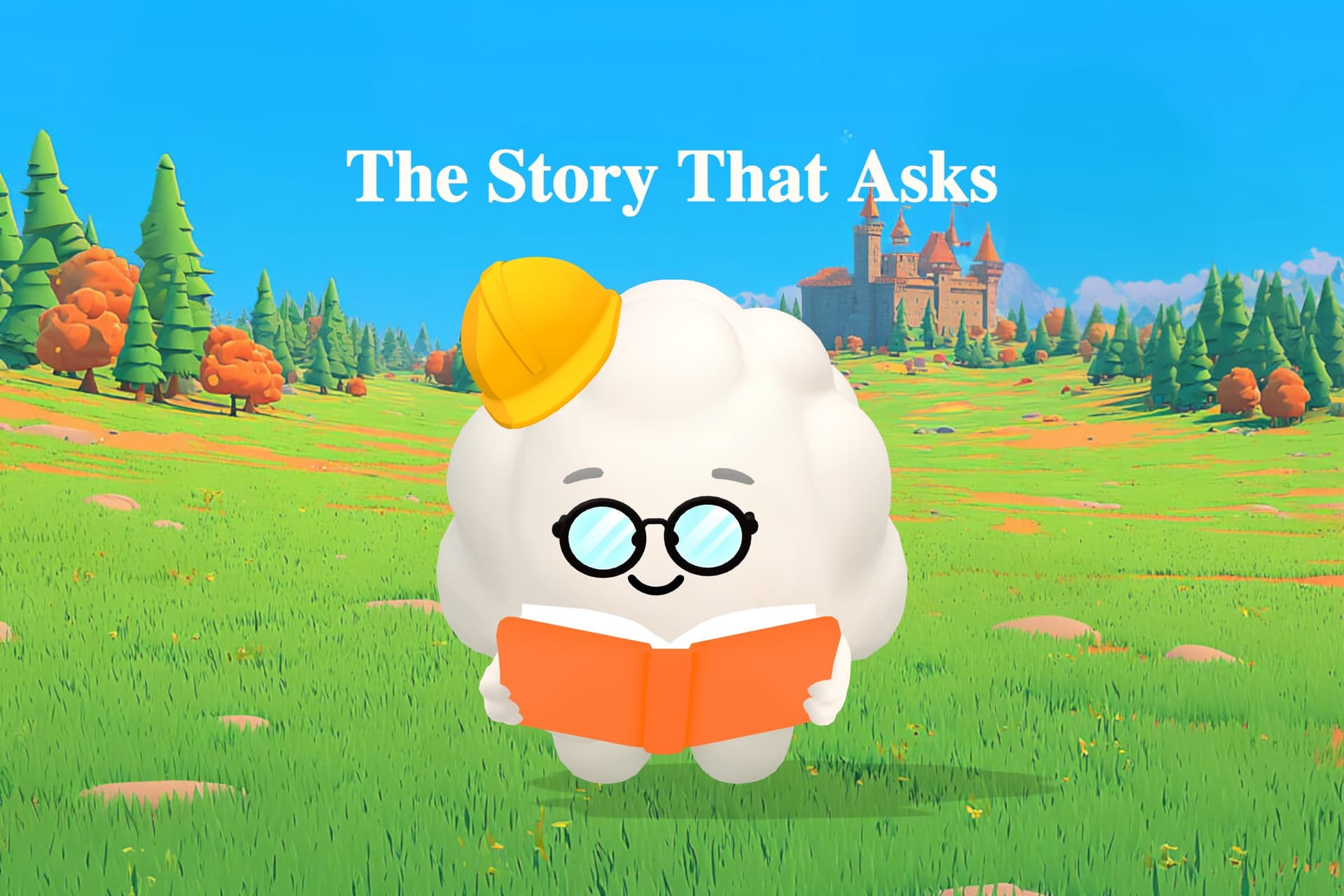
There's something magical about a story that listens back, pausing to let your child decide what happens next. In The Story That Asks, a girl named Wren discovers a mysterious book that knows her name and a tiny paper fox called Flip who guides her through forests hung with lanterns, a badger who trades riddles, and a cozy village full of quiet wonders. It's one of those short interactive children's stories that feels like a warm conversation between the reader and the page. If your little one loves making choices at bedtime, you can create a personalized version with Sleepytale.
Why Interactive Children's Stories Work So Well at Bedtime
Interactive bedtime stories give children something rare: a sense of control right when the world is asking them to let go and sleep. When a story pauses and offers a choice, it tells the child that their voice matters, even at the end of the day. That small act of deciding, whether to knock on a door or walk past it, lets a child feel seen inside the narrative rather than simply carried along by it. This kind of storytelling also creates a natural rhythm for winding down. Each choice becomes a gentle pause, a moment of thinking before the next soft scene unfolds. Instead of racing toward an ending, the child settles deeper into the story with every decision, arriving at the final page feeling calm, heard, and ready to rest.
The Story That Asks 7 min 42 sec
7 min 42 sec
The library was closing in ten minutes when Wren found the book.
It was on the lowest shelf, spine outward, no picture on the cover.
Just gold letters pressed into dark blue cloth: The Story That Asks.
She pulled it out.
It was heavier than it looked.
The librarian, Mr.
Osei, glanced over and raised one eyebrow but said nothing.
He stamped her card.
She tucked the book under her arm and walked home in the cold.
She did not open it until she was in bed, lamp on, socks still on her feet.
The first page said: Hello, Wren.
She looked at the cover.
She looked back at the page.
It still said her name.
Then something moved.
A small flat shape slid out from between the pages and sat up.
It was a bookmark, orange and white, cut in the shape of a fox with a pointed nose and a curling tail.
Two tiny ink-dot eyes blinked at her.
"I'm Flip," it said.
The voice was papery and small, like a page turning in another room.
"I go where you go in the book.
I help when things get complicated."
"Are you alive?"
Wren asked.
"Mostly," said Flip.
She decided that was a good enough answer.
The next page had two pictures side by side.
On the left, a forest path with paper lanterns strung between the trees.
On the right, a wide silver river moving slow and flat under a round moon.
Below both pictures, the book asked: Which way do you go?
Wren pressed her finger to the lantern path.
The page turned by itself.
The forest smelled like pine and candle wax.
Wren could not smell it exactly, but she knew it the way you know a smell in a dream.
The lanterns were amber and rose, and they swayed without any wind.
Flip slid along the bottom of the page, keeping pace with her eyes as she read.
"There's something ahead," Flip said, and sure enough, the next paragraph described a hill rising out of the trees, round and grassy, with a wooden door set right into its side.
The door had a brass knocker shaped like an acorn.
"Do we knock?"
Wren asked.
"The book is asking," Flip said.
And it was.
The page said: Do you knock politely, or do you walk on?
"We knock," said Wren.
"Obviously."
She liked that the book used the word politely.
It seemed important.
Three slow knocks, the story said.
Then a long pause.
Then a sound like someone dragging a chair across a stone floor.
The door opened two inches.
One small eye, dark and sleepy, peered out.
"It's late," said a low, grumbling voice.
"I know," said Wren, reading aloud without meaning to.
"I'm sorry to bother you.
We're just passing through."
The door opened wider.
The badger stood there in a striped dressing gown, holding a candle.
He looked at Wren, or rather at the page, in a way that made her feel he could see her too.
"Riddles," he said.
"I'll trade you riddles for safe passage.
I ask one.
You ask one.
Whoever stumps the other gets to pick the next part of the path."
Flip slid up beside the badger's paragraph and whispered, "He does this with everyone.
He loves it.
He's not actually blocking the way, he just gets lonely."
Wren smiled at that.
She liked the badger already.
His riddle was this: I have hands but I never wave.
I have a face but I never smile.
What am I?
Wren knew it immediately.
"A clock."
The badger's ears went back in pleased defeat.
Her riddle took her a moment.
Then: "I'm lighter than a feather but even the strongest person can't hold me for more than a minute.
What am I?"
The badger frowned.
He tapped his paw on the doorframe.
He looked at his candle.
He muttered something about breath, then stopped, then said, "Breath."
"Yes," said Wren.
"Good one," said the badger, and he almost smiled.
He stepped aside.
"Safe passage.
And," he added, "there's a good path to the left that leads somewhere worth seeing."
He went back inside.
The door clicked shut.
Somewhere behind it, a chair scraped across stone again.
The story moved forward.
The path to the left curved down into a small valley where a village was just visible, lights in the windows, smoke from chimneys, the sound of something being stirred in a pot.
Wren read every word slowly.
Flip sat still for once, tail curled, watching the same pages she was watching.
"You're doing well," Flip said.
"I haven't done anything," said Wren.
"I just chose."
"That's the whole thing," said Flip.
The village had three more characters: a girl who collected echoes in jars, an old man who built bridges out of folded paper, and a small dog who had once outrun a thunderstorm and never forgot it.
None of them needed saving.
None of them were in trouble.
They were just there, living their lives inside the pages, and Wren got to sit with them for a while.
The echo girl showed her a jar that held the sound of a door closing in an empty house.
Wren held it to her ear in her imagination and felt something she could not name.
Then the book shifted.
The pages grew softer somehow, the ink a little darker, and Flip moved to the very center of the page and sat facing her.
"Last choice," he said.
The book showed two final pictures.
On the left, a grand parade: banners and lanterns and every character dancing through the village square, the badger in his dressing gown, the echo girl with her jars clinking, the paper-bridge man waving from a float.
Loud and bright and full.
On the right, a single room.
A fire low in the grate.
Everyone tucked in.
The badger in his armchair with a blanket over his knees.
The echo girl curled on a window seat, one jar held loosely in her hand.
The paper man at his table, head resting on his arms, asleep over his work.
The dog stretched out on the hearthrug, one ear twitching.
The book asked: How does the story end?
Wren did not hesitate.
"The cozy one," she said.
Flip's ink-dot eyes went soft.
He slid gently to the corner of the page, curled his tail around himself, and tucked his nose under it.
The story moved through the room one character at a time.
The badger's candle went out.
The echo girl's breathing slowed.
The paper man's hands went still.
The dog made one small sound in its sleep, a quiet huff, and then nothing.
The last line of the book said: And the story rested, because it had gone exactly as far as it needed to go.
The book closed.
Not because Wren closed it.
It closed on its own, slowly, the way a door closes when the house settles at night.
The cover pressed flat.
The gold letters on the front caught the lamplight once and then went still.
Wren sat for a moment with her hands in her lap.
Flip was gone back between the pages.
She could see the faint orange edge of him, just barely, at the top of the book.
His tail, she thought.
Or maybe just the spine.
She turned off the lamp.
The room smelled like dust and wool and the faint cold coming in under the window.
She pulled her blanket up.
Outside, the street was dark and ordinary and exactly itself.
The Quiet Lessons in This Interactive Children's Bedtime Story
This story gently explores curiosity, courtesy, and the quiet power of choosing comfort over spectacle. Wren's decision to knock politely on the badger's door rather than walk past teaches children that kindness opens doors, both literally and in how we connect with others. The riddle exchange between Wren and the badger models how two strangers can become friends through playfulness and mutual respect. And Wren's final choice of the cozy fireside ending over the grand parade reassures children that stillness is its own kind of celebration, a perfect feeling to carry into sleep.
Tips for Reading This Story
Give Flip a papery, whispery voice, as if each word were a page turning in another room, and let the badger's lines come out in a low, grumbly tone like someone who just woke from a nap. Slow down during the final scene, pausing between each character settling in: the badger's candle going out, the echo girl's breathing slowing, the paper man's hands going still, and the dog's quiet huff on the hearthrug. When the book closes on its own at the very end, let a long, warm silence sit in the room before you say goodnight.
Frequently Asked Questions
What age is this story best for?
This story works beautifully for children ages four through eight. Younger listeners will love making choices like picking the lantern path and answering the badger's clock riddle, while older readers will appreciate subtler moments like the echo girl's jar holding the sound of a door closing in an empty house and Wren's thoughtful final decision between the parade and the cozy room.
Is this story available as audio?
Yes, just press play at the top of the page to hear the full story read aloud. The audio version brings out wonderful details, from Flip's quiet, papery whisper to the badger's grumbly riddle challenge and the gentle hush that falls as each character settles into sleep in the final scene.
Why does Wren choose the cozy ending instead of the grand parade?
Wren's choice reflects something children instinctively understand: after a full adventure of exploring forests, trading riddles with a badger, and visiting a village of gentle strangers, what feels best is settling in somewhere warm and still. The cozy ending, with each character drifting to sleep by the fire, mirrors the feeling of being tucked into bed after a good day. It's the story's way of showing that the quietest ending can also be the most satisfying one.
Create Your Own Version
Sleepytale lets you turn your child's own interests and imagination into a personalized bedtime story in moments. You can swap the forest lantern path for a starlit beach, replace the badger and his riddles with a wise owl who tells jokes, or turn Flip the fox bookmark into a tiny origami dragon. In just a few clicks, you'll have a cozy, personalized adventure your child will want to revisit night after night.
Looking for more kid bedtime stories?
Bedtime Poems For Kids
Discover short bedtime poems for kids through a story where a boy says goodnight to kettles, slippers, stars, and a goldfish named Planet.
Scary Story Ideas For Kids
Looking for short scary story ideas for kids that feel cozy, not overwhelming? Meet Sir Boop, a bow tie wearing ghost who judges spooky slips from an Idea Jar.
Ghost Stories For Kids
The scariest thing about Puddle the ghost is his giggle, not his boo, in one of the sweetest short ghost stories for kids.
Adventure Stories For Kids
A folded map hidden inside a library book sends two friends a treasure hunt in one of our favorite short adventure stories for kids.
Native American Stories For Kids
Discover short native american stories for kids through a fireside tale of geese, gratitude, and a grandfather's gentle wisdom.
Stories About Jealousy For Kids
Sam wrestles with a twisty feeling when his sister gets a shiny red bike in one of our favorite short stories about jealousy for kids.