
Garden Bedtime Stories
By

Dennis Wang, Bedtime Story Expert
7 min 42 sec
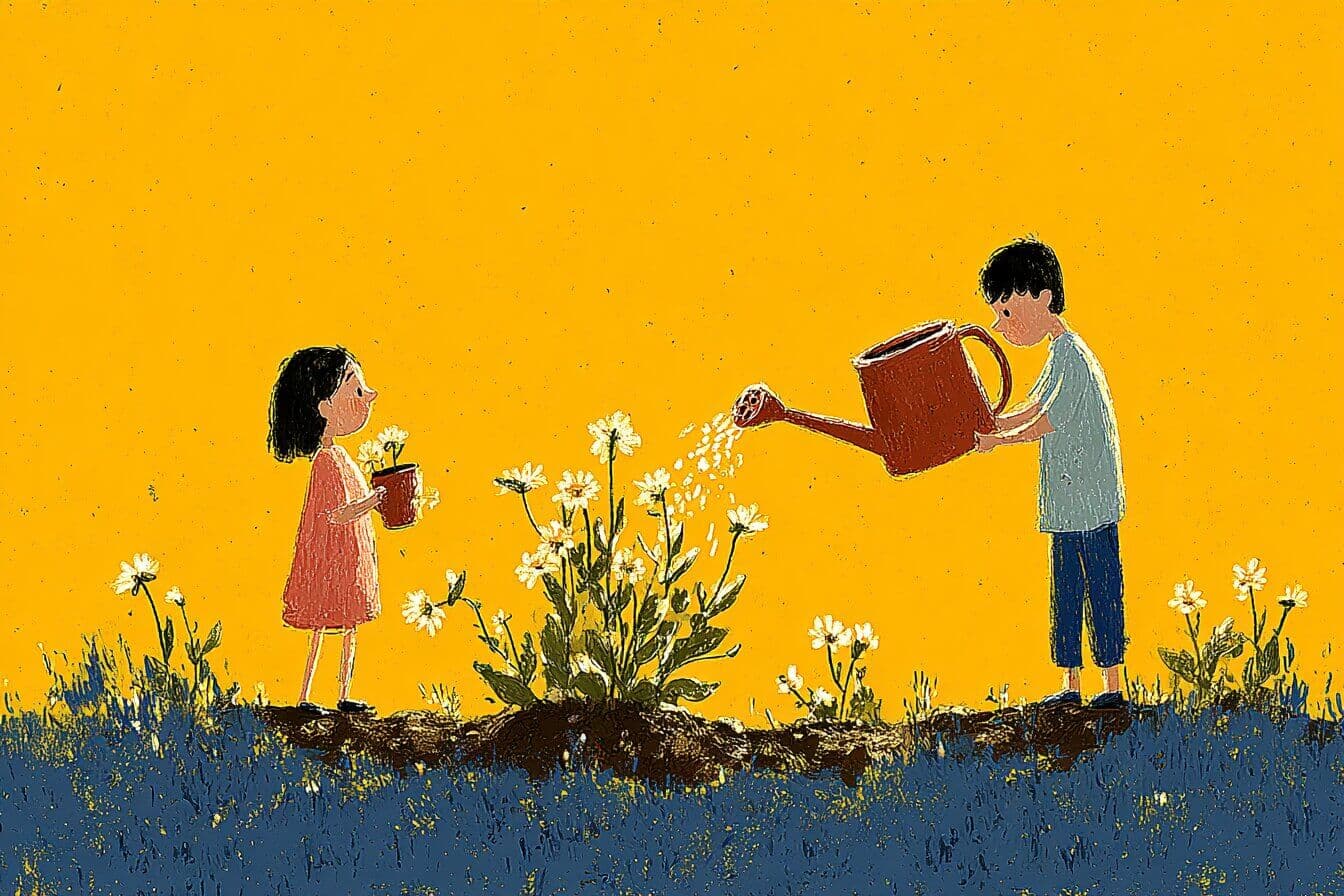
There is something about the smell of damp soil and green things growing that makes a child's whole body slow down before sleep. Tonight's story follows a girl named Cora who discovers a forgotten patch of earth behind the town library and decides, one seed at a time, to turn it into something worth caring about. It is one of the loveliest garden bedtime stories for winding down after a busy day, full of quiet moments, friendly worms, and moonflowers that open just as the stars come out. If you want to swap in your child's name, their favorite flowers, or a cozier ending, you can create your own version free with Sleepytale.
Why Garden Stories Work So Well at Bedtime
Gardens move at a pace that mirrors the rhythm kids need before sleep. Seeds do not rush. They sit in the dark, soak up what they need, and push upward when they are ready. That unhurried tempo gives children permission to stop doing and simply be still for a while. The sensory details help too: cool water, warm soil, buzzing bees, the papery sound of a leaf unfurling. These are textures a child can almost feel, and that grounding in the body is one of the surest ways to quiet a busy mind.
A bedtime story about a garden also teaches something children sense but cannot always name, that care is an everyday thing, not a grand gesture. Watering a small plant, whispering encouragement to a seedling, making room for a friend beside you in the dirt. These acts are tiny and repeatable, which makes them comforting. When kids hear about someone tending a living thing right before they close their eyes, they carry that steadiness into sleep.
The Garden That Grew Love 7 min 42 sec
7 min 42 sec
In the middle of the town of Willowmere sat a small, forgotten garden behind the library. The gate was rusted the color of old pennies, and the latch stuck unless you lifted it at exactly the right angle and gave it a shake with both hands. Most people hurried past without noticing.
But every Saturday morning, seven-year-old Cora skipped up to that gate with a cloth bag of seeds slung over one shoulder and a watering can that sloshed like laughter.
She believed that plants, like friends, needed gentle words, steady care, and songs hummed at dusk. On this bright spring day she knelt beside a patch of bare earth and whispered, "Today we grow something kind."
She pressed marigold seeds into the soil, spacing them like yellow stars across a brown sky. A breeze came through carrying the scent of lilacs from somewhere far away, and she smiled because it felt like a promise she could not quite read yet.
She tucked a tiny folded note beside each seed.
"You are loved."
"You are brave."
"You are enough."
Then she watered them slowly, imagining the droplets carrying her messages down to the seeds' sleepy hearts. When the last drop fell she patted the earth, stood up, and sang the lullaby her grandmother used to sing, the one about roots finding home and shoots finding sky. The sun warmed the back of her neck. Somewhere inside the library, a page turned.
She did not know that Mrs. Alder, the librarian, watched from the window, tears bright in her eyes like dew on a web.
Cora skipped home already planning tomorrow's visit, her heart glowing like the first poppy of summer. That night she dreamed of green shoots wearing smiles.
The next morning she raced back expecting empty soil. Instead she found tiny emerald loops pushing upward, wearing her notes like crooked paper hats. Each seedling had read its message and believed it. Cora clapped once, hard, and the sound flew up into the branches of an old maple like a startled dove.
She spent the afternoon weaving strawberry runners between the marigolds so that love would have sweet red berries to share. She talked to the plants about her week: the spelling test she had nearly failed but tried again, the lonely boy at recess who had accepted her invitation to play tag, the way her mother hugged her a little longer after dinner last night, like she did not want to let go. The leaves trembled, and Cora felt certain they answered with growth.
By the end of the week, the garden wore a quilt of green so bright it looked like someone had stitched sunshine into the ground.
Bees arrived. They hummed like tiny tambourines. Butterflies danced above the petals. Cora introduced them to one another in a formal voice she had heard Mrs. Alder use during library events: "This is Bee Beatrice. She loves blue flowers. And this is Butterfly Benny, who dreams in color." They politely touched antennae and wings and agreed to help the blossoms grow.
Every day after school Cora ran to the garden, bringing new seeds: peas that would climb a string ladder, lettuce that would form ruffled rosettes, radishes that would wear pink party dresses underground. She painted small stones with hearts and buried them shallowly so the roots would find surprise encouragement.
One afternoon, Mateo wandered past the gate. Hands in pockets. Eyes wide.
Cora waved him in.
Together they planted cherry tomatoes, their fingertips brushing as they tucked seedlings into the earth. She told him each plant needed a name, so Mateo chose "Hope" for the first, "Joy" for the second, and "Courage" for the third. A worm wriggled out and tickled his thumb and he laughed so suddenly he startled himself, then laughed again because of that.
Mateo began coming every day. Soon other children arrived, drawn by the laughter drifting over the fence like birdsong. They carried watering cans of every color, and the garden became a choir of glad voices. Someone brought carrot seeds shaped like tiny suns. Another brought pumpkin seeds as fat as buttons. They planted them in spirals and stars, spelling the word "love" in green across the ground.
Cora watched the garden grow friendships the way sunflowers grow faces, always turning toward brightness.
One Saturday the mayor walked by, frowning at the wild tangle. But the children stood tall, explaining how every leaf was a kindness shown to a neighbor, every bloom a promise kept. The mayor's frown softened. She knelt, planted a single marigold herself, and patted the soil with careful hands. She declared the garden a town treasure and promised to protect it.
People passing by began to stop. They read the painted stones. They smelled the herbs. They tasted strawberries offered by small sticky fingers. Couples left notes of gratitude. Elders left poems. Toddlers left pebbles shaped like hearts. The garden answered by growing taller, richer, more generous than before.
One evening Cora's grandmother came, leaning on her cane, eyes shining.
She pressed a packet of moonflower seeds into Cora's palm and said, "Plant these near the gate so love can bloom even at night." Together they waited until dusk, then tucked the seeds into ground that was still warm from the afternoon. The sky turned from gold to rose to indigo. The moon rose like a silver seed itself, and the garden glowed softly, as if every petal held a candle no bigger than a firefly.
Crickets sang. Fireflies floated like sparks from a cozy fire.
Cora stood very still. Her heart swelled until she thought it might lift her right off the path. She understood then that love, like a garden, needs tending every day, and the more you give away, the more there is.
Seasons turned. The garden became a living library of stories: cucumbers that formed cool green tunnels for hide and seek, zinnias that hosted butterfly weddings, pumpkins that grew big enough to become playhouses, sunflowers that measured the sky with golden rulers.
Children learned math by counting bean pods, science by watching ladybugs feast on aphids, art by painting petals on stones, and kindness by sharing every harvest. When autumn arrived they gathered seeds into envelopes decorated with drawings and words of hope, then mailed them to neighboring towns so new gardens could sprout across the land.
Winter covered the beds with snow like a lullaby. Beneath the white quilt, roots remembered every promise.
Cora sat by the window, writing plans in a tiny notebook: more paths, more benches, more poems painted on wood. She pressed her palm to the cold glass and whispered, "See you soon," knowing the garden listened through its sleep.
Spring returned, as spring always does. The first crocus poked through the snow like a purple smile.
Cora ran outside, boots crunching, arms wide.
She found the gate open, the earth waiting, the air humming with possibility. Mateo arrived with a bag of new seeds: heart-shaped beets, rainbow chard, tiny yellow tomatoes that tasted like candy. Together they planted, sang, and invited the whole town to share in the season of growing.
Years later, when Cora had grown tall as a sunflower herself, she still came to the garden, now with her own children, who carried on the songs and the care. The maple had grown thick enough for swings. The marigolds returned every year like old friends. And the notes buried beneath them had turned the soil rich.
Travelers arrived from distant places to walk the paths, read the painted stones, taste the berries, and carry seeds home so the love could travel farther than any letter or map. Cora stood at the gate each evening, watching the moonflowers unfurl pale trumpets to the stars, releasing perfume as gentle as a lullaby.
Somewhere inside the library, a page turned, echoing her hope across the quiet town of Willowmere and into the dreams of every sleeping child who would wake tomorrow ready to grow something of their own.
The Quiet Lessons in This Garden Bedtime Story
Cora's story is woven through with patience, generosity, and the quiet courage it takes to invite someone in. When she waves Mateo through the rusty gate, she shows children that including someone who feels left out can be as simple as a single gesture. When the mayor kneels to plant a marigold after frowning at the mess, kids absorb the idea that changing your mind is not weakness but growth. And the way Cora returns season after season, even when winter buries everything she built, teaches that caring for something does not end when results disappear. These are exactly the kinds of reassurances that settle into a child's mind before sleep, reminding them that tomorrow is another chance to tend what matters.
Tips for Reading This Story
Give Cora a warm, slightly breathless voice, like someone who has been running and is excited to tell you what she found. When she introduces Bee Beatrice and Butterfly Benny, use Mrs. Alder's formal librarian tone for a funny contrast. At the moment when Mateo's worm tickles his thumb and he laughs twice, pause between the two laughs and let your child fill the gap with their own giggle. When the moonflowers open near the end, slow your voice way down and let the word "stars" hang in the air for a beat before finishing the sentence.
Frequently Asked Questions
What age is this story best for?
It works well for children ages 3 to 8. Younger listeners enjoy the sensory details like bees humming and strawberries being offered by sticky fingers, while older kids connect with Cora's friendship with Mateo and the idea of writing encouraging notes to tuck beside seeds. The story has no scary moments, so even very young children can listen without worry.
Is this story available as audio?
Yes. You can press play at the top of the story to hear it read aloud. The audio version brings out moments that shine with sound, especially the scene where Cora claps and the noise flies into the maple branches, and the evening section where crickets and fireflies fill the quiet. Character voices for Cora and her grandmother also come alive in narration.
Can this story inspire a real gardening activity?
Absolutely. After listening, many children want to plant something of their own. You could start with marigold seeds, just like Cora uses, or let your child write tiny encouragement notes to bury beside their seedlings. Even a cup of soil on a windowsill works. The story gives kids a reason to check on their plant each morning, which builds the same daily-care habit Cora models throughout the tale.
Create Your Own Version
Sleepytale lets you turn this story into something that fits your family perfectly. Swap the library garden for your own backyard, change Cora's name to your child's, replace marigolds with sunflowers or herbs they have actually planted, or add a sibling as a new helper beside Mateo. In a few moments you will have a soothing, personalized tale ready to read or replay whenever bedtime needs a little green.
Looking for more nature bedtime stories?
Sun Bedtime Stories
A valley stays chilly at dawn until a brave sunbeam gathers shared promises that warm the forest again, inside short sun bedtime stories. A sunrise seed becomes the twist that lingers.

Earth Bedtime Stories
Mira follows a soft blue glow to a space bus and joins a kind crew to help the ocean sing again in short earth bedtime stories.

Winter Bedtime Stories
Drift off with cozy short winter bedtime stories that soothe with gentle wonder and warm cocoa calm. Read a quiet tale and learn how to create your own with Sleepytale.
Windy Day Bedtime Stories
A breezy town turns into a gentle game day as one child follows the wind home. Discover short windy day bedtime stories that end with cocoa and a lullaby.
Wildflower Bedtime Stories
Moonlight slips through a window as a brave seed dreams of color beyond tidy gardens in short wildflower bedtime stories. Petal and a playful pebble spark a gentle parade of blooms.

Waterfall Bedtime Stories
Looking for short waterfall bedtime stories that feel calm, magical, and easy to read aloud? Discover a gentle tale set at a rainbow mist waterfall, plus tips to create your own.