
Edinburgh Bedtime Stories
By

Dennis Wang, Bedtime Story Expert
11 min 11 sec
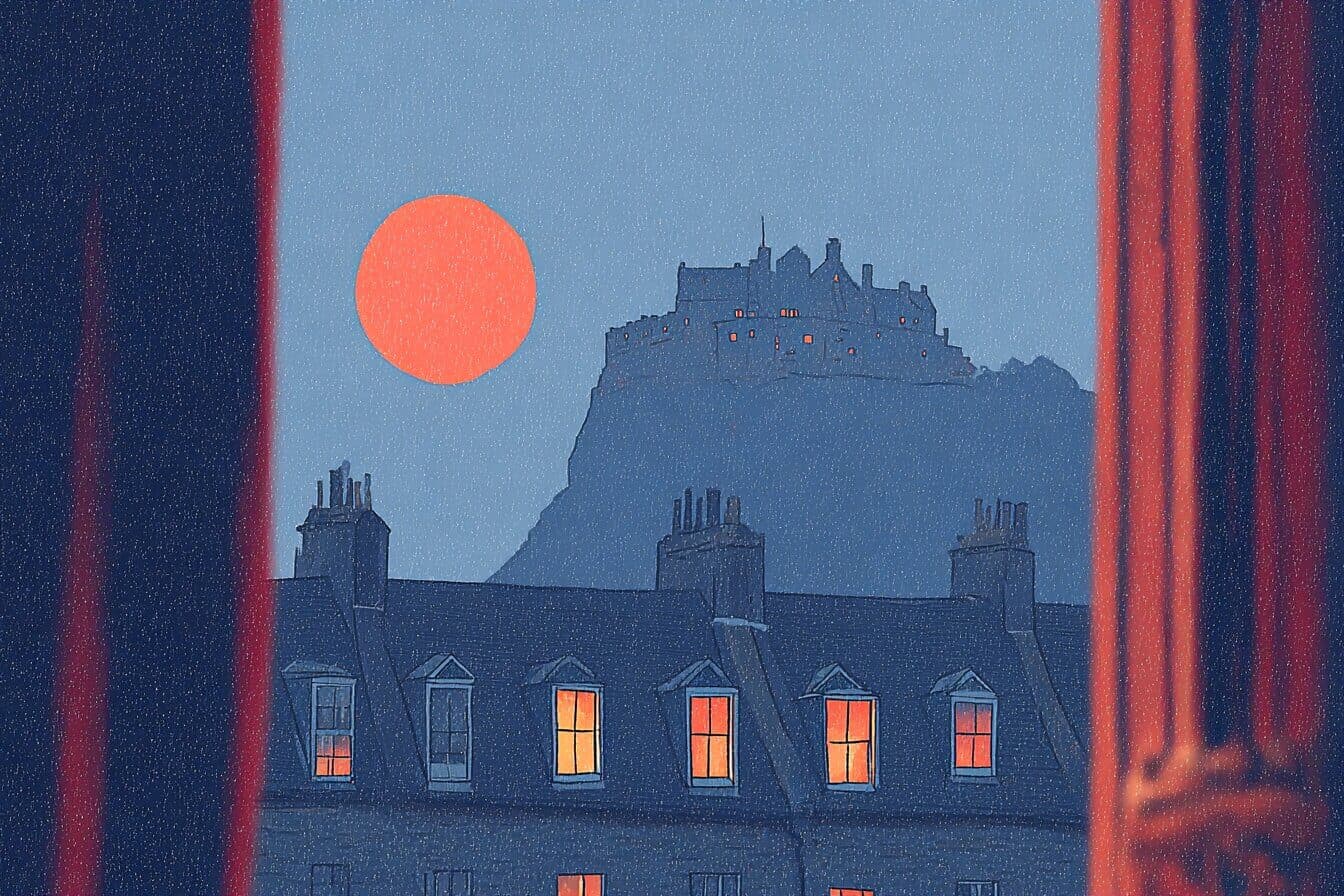
There is something about old stone and damp mist that makes a child's imagination crack wide open right before sleep. In this story, a girl named Isla slips out of her grandmother's flat on the Royal Mile to follow the sound of pipes and ghostly laughter, and ends up stitching a city's forgotten memories back together with a needle made of unicorn horn. It is one of those Edinburgh bedtime stories that feels like pulling a wool blanket up to your chin while fog rolls past the window. If the premise sparks something for your own family, you can build a custom version inside Sleepytale.
Why Edinburgh Stories Work So Well at Bedtime
Edinburgh is a city that already feels half asleep. Its closes are narrow and echo-filled, its castle sits up on volcanic rock like a night light that never goes off, and its cobblestones are worn smooth by centuries of footsteps. For a child lying in bed, that atmosphere does the same work as a dimmed lamp. Everything in the setting naturally whispers rather than shouts, so a bedtime story set there starts at the right volume.
Kids also respond to places that hold layers of history, because layered worlds mirror the way a tired mind drifts between what happened today and what might happen in a dream. A story about Edinburgh at night gives children permission to wonder without needing answers. The fog, the half-heard music, the idea that old buildings remember things all of it invites a gentle kind of curiosity that settles the body instead of winding it up.
The Castle of Whispering Shadows 11 min 11 sec
11 min 11 sec
High on Castle Rock, Edinburgh Castle glowed against the night sky. The old city curled around it like a sleeping dragon, and somewhere in that tangle of rooftops a chimney pot rattled loose and then went quiet again.
Isla pressed her nose to the cold window of her grandmother's flat on the Royal Mile. Her copper curls left a fog print on the glass.
Below, cobblestones glistened with mist, and the castle bells tolled ten times, each one slower than the last, as though the bell itself were getting drowsy. Isla's grandmother, Morag, tucked a wool shawl around the child's shoulders. "Tonight," she said, not looking up from her knitting, "the veil between yesterday and tomorrow grows thin."
Isla's eyes widened. She had heard the tales before. Ghosts stepping out of stone and shadow, dancing along the same streets where they once haggled over the price of oats. Morag set down her needles. "Listen with more than ears, love, and you will hear the city's oldest stories breathing."
So Isla opened the window.
The scent hit her first: heather, sea salt, and something metallic carried on the wind from the Firth of Forth. The candle flame on the sill leaned toward the open sky, curious as a cat. Down the steep lane, a piper's tune rose, lonely and sweet, bouncing off the tenement walls until it sounded like two tunes instead of one.
She slipped on her boots, the ones with the scuffed left toe from kicking the front step all autumn. She kissed Morag's cheek and tiptoed into the hallway where the grandfather clock ticked a slow, even beat that seemed to approve.
The stairwell smelled of polish and peat smoke. Each step creaked, and she could never decide if those creaks were warnings or welcomes.
Outside, the night wrapped around her. The castle on its great rock seemed to nod, the way a very old person nods when they are not really agreeing but just acknowledging you exist.
She passed the statue of Greyfriars Bobby. His bronze nose shone under the lamplight from all the tourists rubbing it for luck. "I will be back before sunrise," she told the loyal dog, and meant it.
The Grassmarket stretched ahead, its arc of taverns silent. Sleepy pigeons cooed from the eaves. One pigeon had its head tucked so far under its wing it looked like a grey tennis ball balanced on a ledge.
From somewhere near the gallows stone, a faint giggle floated. Light as thistledown.
Isla followed the sound into a close so narrow she could trail her fingers along both walls at once. The stones beneath her palms pulsed with something warm, and pictures flickered across her mind: horses clattering, a woman selling apples from a wooden cart, a man laughing until he doubled over. Then sadness, quick and sharp, like stepping on a thorn. The city was dreaming aloud, and she had walked right into the middle of it.
At the close's end, a doorway shimmered like moonlight on water, though no door had stood there for centuries.
Through it stepped a boy in a ruff collar and hose, carrying a lantern that cast no shadow. He bowed, stiff and slightly overdone, the way someone does when they have been practising for four hundred years.
"Davie," he said. "Once a drummer for King James. Would you care to see the hidden castle?"
Isla opened her mouth. Nothing came out. Wonder had tied her tongue into a knot she could not unpick.
Davie touched the wall, and stairs spiraled upward, each step humming a faint note like a plucked string. Together they climbed. Windows opened onto different centuries. A plague doctor adjusted his beak mask and glanced their way. A poet scribbled by candlelight, muttering to himself. A queen waved, distracted, already turning back to a letter in her hand.
At the top, a wooden door studded with iron swung open.
The courtyard beyond was lit by silver stars that did not move. They hung fixed in the sky like pins in a cushion. Gargoyles leaned down from the eaves, grinning, and offered Isla a thimble of starlight.
She drank. It tasted of peppermint and thunder.
Suddenly she understood the language of owls. An owl on the parapet was complaining about the pigeons again, which did not surprise her one bit.
"Every city keeps a second, secret heart," Davie said, "where time folds like paper. Tonight you stand within Edinburgh's."
Around the courtyard, ghosts gathered. A tailor, a seal woman, a knight missing one gauntlet, and a baker balancing loaves on her head with the ease of someone who had been doing it since 1643. They greeted Isla as if she were an old friend returned from a long trip and immediately asked for her help.
There was a tear in their stories. Without living belief, the castle's memories would fade, and the city would forget its own name.
Isla's heart drummed fast. But she remembered what Morag always said. Kindness is stronger than fear. She had never fully believed that, but standing here, she decided to act as if she did.
"What thread could sew such a rip?" she asked.
"A promise kept beneath the bell," the ghosts replied, almost in unison, though the baker came in half a beat late.
Davie pressed a needle into her hand, carved from unicorn horn, warm to the touch, and a spool of moonbeams that weighed nothing at all. "Before the next bell tolls," he warned, "you must stitch the hem of night to dawn. Otherwise we wander forever."
Isla knelt on the cold stones. She threaded the moonbeam through the needle's eye on the second try, the first attempt sliding right past.
The tailor ghost hummed a lullaby while she worked. Each stitch released sparks that floated upward like fireflies heading home. With every loop, a memory surfaced: Morag telling her the castle was built upon a volcano, the legend of a piper and his dog vanishing in the tunnels, the story of a young queen who sang to her soldiers because she had nothing else left to give them.
Isla stitched those memories into the fabric of now, binding past to present with threads of something she could not name but that felt a lot like love if love had a texture.
When the final knot tightened, the courtyard filled with soft golden light. The ghosts smiled. Not the dramatic, grateful kind of smile you see in paintings. More the quiet kind, the one where the mouth barely moves but the whole face changes.
Davie led her to the battlements. The city spread below like a sleeping cat, curled and warm and not quite ready to wake.
He touched her shoulder. Then she was back on the Royal Mile, window closed, candle burned low, Morag humming in the kitchen as though no time had passed.
In her pocket, the tiny unicorn needle glinted.
She ran to Morag, who simply set out two mugs of cocoa and asked if the ghosts had been kind, the same way she might ask about the weather.
Isla sipped the sweet chocolate, feeling the city breathe around her, stitched to her heart in a way she did not think would ever come undone. Outside, dawn painted the castle gold. The ghosts, satisfied, slipped back into stone. The pipes faded to silence. And somewhere in a close off the Royal Mile, a pigeon woke up, shook its feathers, and carried on.
The Quiet Lessons in This Edinburgh Bedtime Story
This story is really about choosing to be brave when you do not fully understand what is happening and discovering that showing up with kindness is enough. When Isla kneels on cold stone and stitches memories with a moonbeam thread, she is learning that careful, patient work can mend things that seem impossible to fix, an idea that settles well in a child's mind before sleep. The ghosts asking for her "living belief" gently shows children that their attention and care have real power, even when they feel small. And the way Morag reacts at the end, calm and unsurprised, with cocoa already poured, reassures young listeners that the safe, familiar world is always waiting for them after an adventure.
Tips for Reading This Story
Give Davie a stiff, slightly formal voice, the kind of person who bows a little too deeply and says "would you care to" instead of "do you want to," and let Morag sound warm and unbothered, as if ghosts turning up is no more remarkable than rain. When Isla drinks the thimble of starlight, pause for a beat and ask your child what they think it tasted like before you reveal the peppermint and thunder. Slow way down during the stitching scene, matching your pace to the rhythm of needle and thread, and let your voice get quieter with each stitch so the golden light at the end feels earned.
Frequently Asked Questions
What age is this story best for?
Children around ages 4 to 9 tend to enjoy it most. Younger listeners love the sensory moments, like drinking starlight and hearing the gargoyles talk, while older kids appreciate Isla's bravery in taking on a task she does not fully understand. The loop of leaving home and returning safely makes it especially reassuring for children who are still getting comfortable with bedtime independence.
Is this story available as audio?
Yes, you can press play at the top of the story to listen. The audio version brings out details that land beautifully when heard aloud, especially the ten slow bell tolls at the start, Davie's formal little introduction, and the quiet rhythm of the stitching scene. It works well as a wind-down listen with the lights already dimmed.
Why does the story feature ghosts if it is meant to be calming?
The ghosts here are friendly, polite, and slightly funny, like the baker who comes in half a beat late when they speak in chorus. They need Isla's help rather than the other way around, which flips the usual spooky script and gives the child listener a sense of being needed and capable. Most kids find these ghosts comforting rather than scary, because the story treats them the same way it treats pigeons and cocoa: as a normal, cozy part of Edinburgh's nighttime world.
Create Your Own Version
Sleepytale lets you reshape this story into something that fits your child perfectly. You could move the adventure from the Royal Mile to the Botanic Gardens, swap Davie for a friendly fox who knows the tunnels, or change the unicorn needle to a ribbon of moonlight your child ties in a bow. In a few moments you will have a gentle, personal story ready to replay whenever bedtime needs a little Edinburgh magic.
Looking for more travel bedtime stories?

Washington Dc Bedtime Stories
Ellie steps into bright marble streets and learns how big ideas become kind choices in short washington dc bedtime stories. A calm tour turns curiosity into comfort.

Tokyo Bedtime Stories
Looking for short tokyo bedtime stories that feel calm, magical, and easy to read aloud? Want a gentle tokyo bedtime story you can replay at bedtime.

Singapore Bedtime Stories
Lily arrives in Singapore and discovers rooftop gardens that float between towers in short singapore bedtime stories. She follows a humming seed to a gentle riddle and a citywide bloom.

Shanghai Bedtime Stories
Looking for short shanghai bedtime stories that feel calm and magical for kids? Read a gentle shanghai bedtime story and learn how to make your own cozy version in Sleepytale.

Sf Bedtime Stories
A foggy bridge becomes a quiet portal where a child rescues drifting dreams. Read short sf bedtime stories that glow with wonder and end in calm.

Seoul Bedtime Stories
Soothe bedtime with short seoul bedtime stories that blend gentle city sights, kind choices, and cozy calm for kids. Read a quiet Seoul adventure that settles little minds fast.