

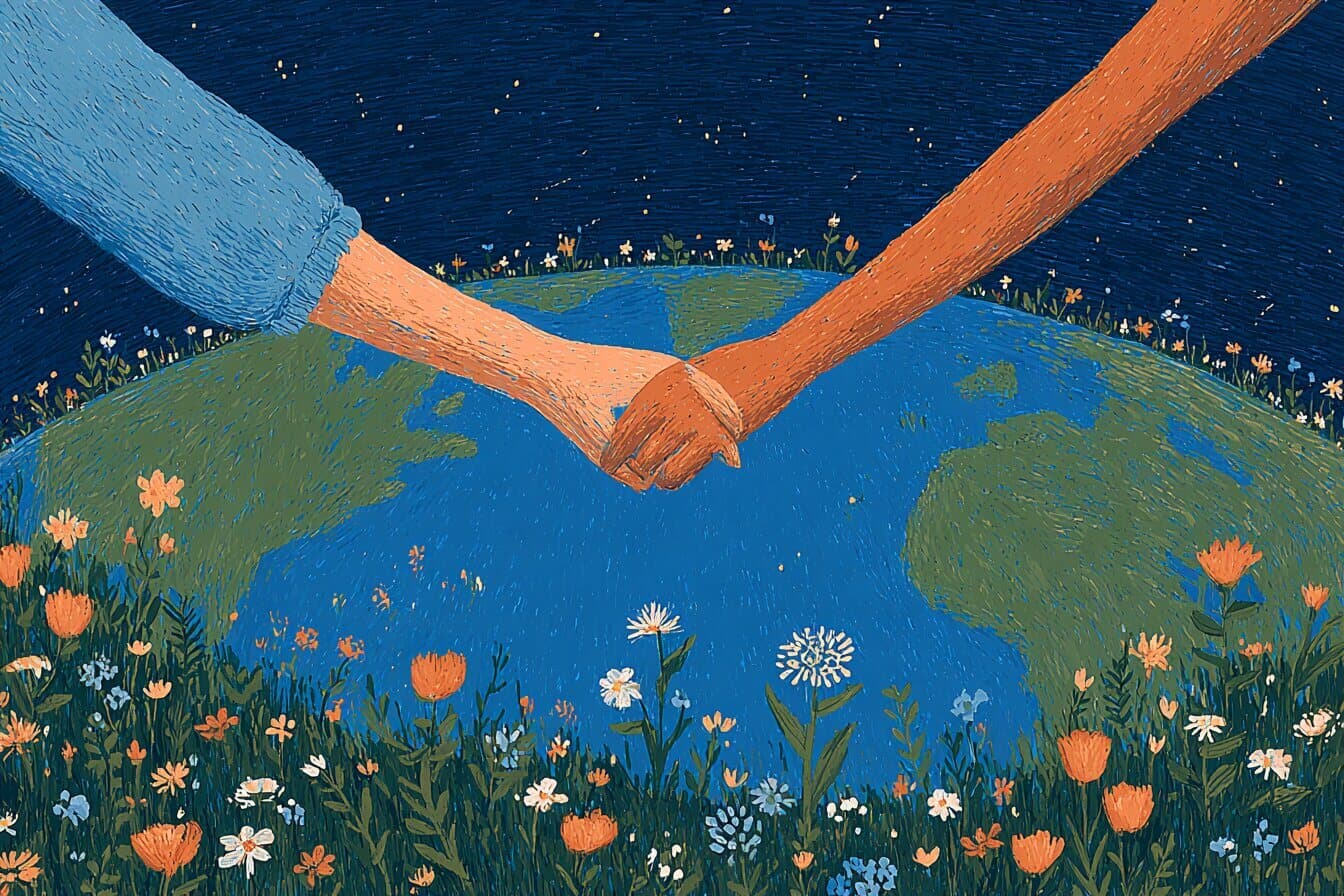
There is something about the planet itself, its oceans and wind and the hum of everything alive on it, that makes kids go quiet in the best way before sleep. In this story, a girl named Mira follows a blue glow into the backyard and ends up on a moonlit Hawaiian beach, working alongside three new friends to help the Pacific Ocean find its music again. It is a gentle kind of earth bedtime stories adventure, full of teamwork, coral magic, and the sound of dolphins saying thank you. If you want a version built around your child's name, favorite animal, or hometown, you can make one in minutes with Sleepytale.
Why Earth Stories Work So Well at Bedtime
Kids already sense that the planet is huge, mysterious, and worth protecting, but those feelings can be hard to put into words during the day. At bedtime, a story about Earth gives all that wonder somewhere calm to land. The ocean, the wind, a spiral of coral rising under the moon; these images are big enough to feel meaningful and slow enough to feel safe. A bedtime story about Earth meets children right where their curiosity lives without asking them to solve anything before morning.
There is also something reassuring about the idea that someone, somewhere, is looking after things while you sleep. Stories set on Earth remind kids that care is happening all the time, in small actions and quiet choices, and that they are already part of it just by noticing. That thought makes a pretty good pillow.
The Earth Keeper Crew 7 min 35 sec
7 min 35 sec
Mira, eight years old with curly black hair that never did what she asked it to, stared out her bedroom window at the night sky. She whispered the words her mom said every bedtime: "Earth is our home floating in space, and we take care of her together."
Tonight the phrase felt different. Electric. Like somebody on the other end had actually heard her.
A blue glow rose from the backyard, soft and steady, the color of a swimming pool at dusk.
Mira tiptoed outside in bare feet. The grass was cold and slightly damp, and sitting on it was a silver bus about the size of a minivan, humming the way a refrigerator hums when the house is otherwise silent.
Letters on the side read Home Team.
The door opened with a friendly whoosh.
Inside sat three kids she had never seen before, each wearing a pendant shaped like Earth. The driver was a golden retriever in a navy blazer. He wagged his tail once, a slow, official wag, and said, "Welcome, Mira. I am Captain Comet. Earth needs her crew."
Mira climbed aboard. Her heart was doing something ridiculous in her chest.
The bus rose without a sound, and suddenly the neighborhood was a grid of tiny lights, and then the continents spun below like colorful marbles someone had dropped on a dark floor.
Captain Comet explained the situation in his warm, barky voice. Every child who truly believes the motto becomes a Keeper, tasked with solving a problem that threatens Earth's balance. Tonight's problem: the Pacific gyre had gone too quiet. Plastic bits were muffling the water's natural music, and sea animals were losing their songs. Without those songs, migration routes would tangle. The food web would wobble.
The crew introduced themselves quickly.
Leo, ten, from Brazil, spoke fluent Dolphin. Zoe, nine, from Iceland, could freeze or thaw water by humming. Jamal, seven, from Kenya, could make plants grow in seconds. Mira's gift, it turned out, was talking to the wind, which felt both wonderful and a little silly when she said it out loud.
Captain Comet handed each Keeper a glowing pouch. Inside Mira's was a tiny bottle of breeze. Leo got a drop of tide. Jamal, a seed of coral. Zoe, a single snowflake of glacier that refused to melt on her palm.
They would need to combine these gifts at the right moment. Captain Comet did not say when that moment would be. He just wagged again and steered.
The bus dove through clouds and landed on a moonlit beach in Hawaii. The sand was the kind of white that almost glows on its own, and it squeaked underfoot when Mira stepped out. She knelt and asked the wind what it had heard.
The wind answered in hushed tones. The plastic bits were tangled in seaweed, weighing it down so it could not dance. Without dancing seaweed, baby fish had nowhere to hide. Without baby fish, bigger fish grew hungry and silent.
Leo waded into the shallows up to his knees and whistled a question. A dolphin named Nani surfaced almost immediately, clicking back that the dolphins had tried pushing plastic toward shore, but every night the waves brought more. She sounded tired. Leo translated and then added, quietly, "She says please."
Nobody spoke for a second.
Then Zoe sang a low note and froze a thin sheet of seawater into a shining bridge that stretched toward the horizon. Jamal knelt, planted his coral seed in the wet sand, and coaxed it upward. It twisted into a pink tree taller than a house, and it made a creaking sound as it grew, like an old door opening. Mira opened her pouch and released the miniature breeze. It became a playful wind that twirled around them, tugging at sleeves and hair.
Captain Comet barked, "Combine your gifts at the count of three."
Leo leapt onto the ice bridge and clapped out a rhythm. Zoe hummed warmth, and the bridge dissolved into thousands of crystal bubbles that hung in the air, trembling. Jamal guided coral branches through the bubbles, trapping plastic inside them like caught fireflies. Mira asked the wind to lift the whole thing.
"One, two, three!"
The wind spun the coral bubbles into a giant spiral that looked like a galaxy made of sea glass and moonlight. As it rose, it sang. Not a loud song. A song made from the hush of waves, the whistle of dolphins, the crackle of ice, and the rustle of leaves, all layered together like voices in a round.
Below, sea animals lifted their heads. Turtles began to move in slow, swaying circles. Whales answered with notes so deep Mira felt them in her ribs.
The plastic, transformed by the combined magic, turned into harmless sea glass that shimmered every color before dissolving into nutrients that fed the phytoplankton. Just like that, the water below looked different. Looser. Alive.
Captain Comet checked a glowing clipboard and barked once, happily. Music index back to normal.
The Keepers high-fived, then sort of just stood there grinning, too tired to talk. Nani the dolphin leapt through a moonbow, chattering thanks in a bubbly language that needed no translation. Mira watched her arc back into the water, and for a moment everything felt so huge and so small at the same time that she forgot to breathe.
Captain Comet announced the bus had to return before sunrise so the mission would settle softly into dreams.
On the ride home, Leo taught everyone a Brazilian lullaby about rain. He had a surprisingly good voice. Zoe countered with an Icelandic rhyme about puffins, which made Jamal laugh so hard he hiccupped. Jamal shared a Swahili tongue twister about friendly elephants. Mira offered a Texas poem about bluebonnets bending in spring breeze, and nobody teased her for the fact that it did not quite rhyme.
The bus glided over deserts, mountains, cities, farms. Mira saw how all of it was stitched together by air, water, soil, and life. Earth was not just floating, she thought. Earth was flying on purpose, carrying everyone forward through time.
When the bus landed back in her yard, the eastern sky had started to blush pink.
Captain Comet gave each Keeper a small blue button shaped like Earth. Press it, and the bus would come. Mira tucked hers into the pocket over her heart.
She slipped inside, climbed into bed, and listened to the morning birds begin their chorus. Just before sleep pulled her under, she whispered, "Earth is our home floating in space, and we take care of her together." This time the words went all the way down to her bones.
At breakfast, Mom tilted her head and asked why Mira smelled faintly of salt and stars.
Mira grinned. "Maybe I was dreaming about waves."
She helped clear the table. She turned off a light she was not using. She rinsed a yogurt cup, the kind with the foil lid that peels back in one satisfying strip, and set it in the recycling bin while humming the dolphins' thank-you song under her breath.
At school she drew coral bubbles rising like balloons and told her class that plastic can be transformed if everyone adds their own small magic. The teacher smiled and pinned the drawing on the bulletin board labeled Young Voices for the Planet.
Mira pressed her hand over her pocket. The tiny button was warm against her palm. Somewhere out there, Leo, Zoe, and Jamal were doing the same.
Together they formed a quiet, bright net of care around the blue world they all loved.
That night she placed a glass of water on her windowsill, just in case the wind wanted a drink while she slept.
The Quiet Lessons in This Earth Bedtime Story
This story carries a few ideas that settle well right before sleep. When Mira discovers her gift is talking to the wind, something she finds a little silly at first, kids absorb the notion that their own small talents matter even if they seem ordinary. The crew's mission only works because each Keeper contributes a different element, so the story shows cooperation not as a lesson but as something that feels obvious and good. And at the end, Mira does not save the whole planet; she rinses a yogurt cup and turns off a light. That quiet shift from grand adventure to small daily kindness tells children they do not need superpowers to take care of things, which is a reassuring thought to fall asleep with.
Tips for Reading This Story
Give Captain Comet a warm, slightly gravelly voice, the kind a dignified dog would have, and let Nani's dolphin clicks be quick little tongue sounds your child can imitate. When the crew counts "One, two, three!" slow down just before and then let the words burst out together, so the magic feels like it actually launches. At the very end, when Mira places the glass of water on her windowsill, read that line barely above a whisper and pause afterward; it is a natural moment for your child's eyes to close.
Frequently Asked Questions
What age is this story best for?
It works well for kids ages 4 through 9. Younger listeners enjoy the talking dog, the dolphin named Nani, and the visual of coral bubbles rising like balloons, while older kids connect with Mira's crew dynamic and the idea of each Keeper having a unique gift that matters.
Is this story available as audio?
Yes. Press play at the top of the story to listen. The audio version brings out details that land especially well when heard aloud, like Leo's dolphin whistles, Zoe's humming that freezes and thaws water, and the layered song the spiral makes as it rises. It is a great option for winding down without screens.
Does the story explain real ocean problems in a way that might worry kids?
The plastic problem is mentioned gently and resolved completely within the story, so it introduces the concept without leaving anything scary hanging. Mira and her friends transform the plastic into shimmering sea glass that feeds phytoplankton, turning the worry into something beautiful. Kids walk away understanding that oceans need help, but feeling empowered rather than anxious.
Create Your Own Version
Sleepytale lets you build a bedtime story about caring for the planet that fits your child perfectly. Swap the space bus for a sailboat, move the beach to a forest creek, or replace Captain Comet with a wise cat in rain boots. You can add your child's name, their favorite animal, or a hometown landmark, and have a calm, cozy adventure ready to read in minutes.
Looking for more nature bedtime stories?
Sun Bedtime Stories
A valley stays chilly at dawn until a brave sunbeam gathers shared promises that warm the forest again, inside short sun bedtime stories. A sunrise seed becomes the twist that lingers.
Winter Bedtime Stories
Drift off with cozy short winter bedtime stories that soothe with gentle wonder and warm cocoa calm. Read a quiet tale and learn how to create your own with Sleepytale.
Windy Day Bedtime Stories
A breezy town turns into a gentle game day as one child follows the wind home. Discover short windy day bedtime stories that end with cocoa and a lullaby.
Wildflower Bedtime Stories
Moonlight slips through a window as a brave seed dreams of color beyond tidy gardens in short wildflower bedtime stories. Petal and a playful pebble spark a gentle parade of blooms.

Waterfall Bedtime Stories
Looking for short waterfall bedtime stories that feel calm, magical, and easy to read aloud? Discover a gentle tale set at a rainbow mist waterfall, plus tips to create your own.

Volcano Bedtime Stories
Soothe bedtime with short volcano bedtime stories that feel warm and friendly. Enjoy a gentle tale to read aloud and drift into sleep with cozy calm.