
Coding Bedtime Stories
By

Dennis Wang, Bedtime Story Expert
6 min 40 sec
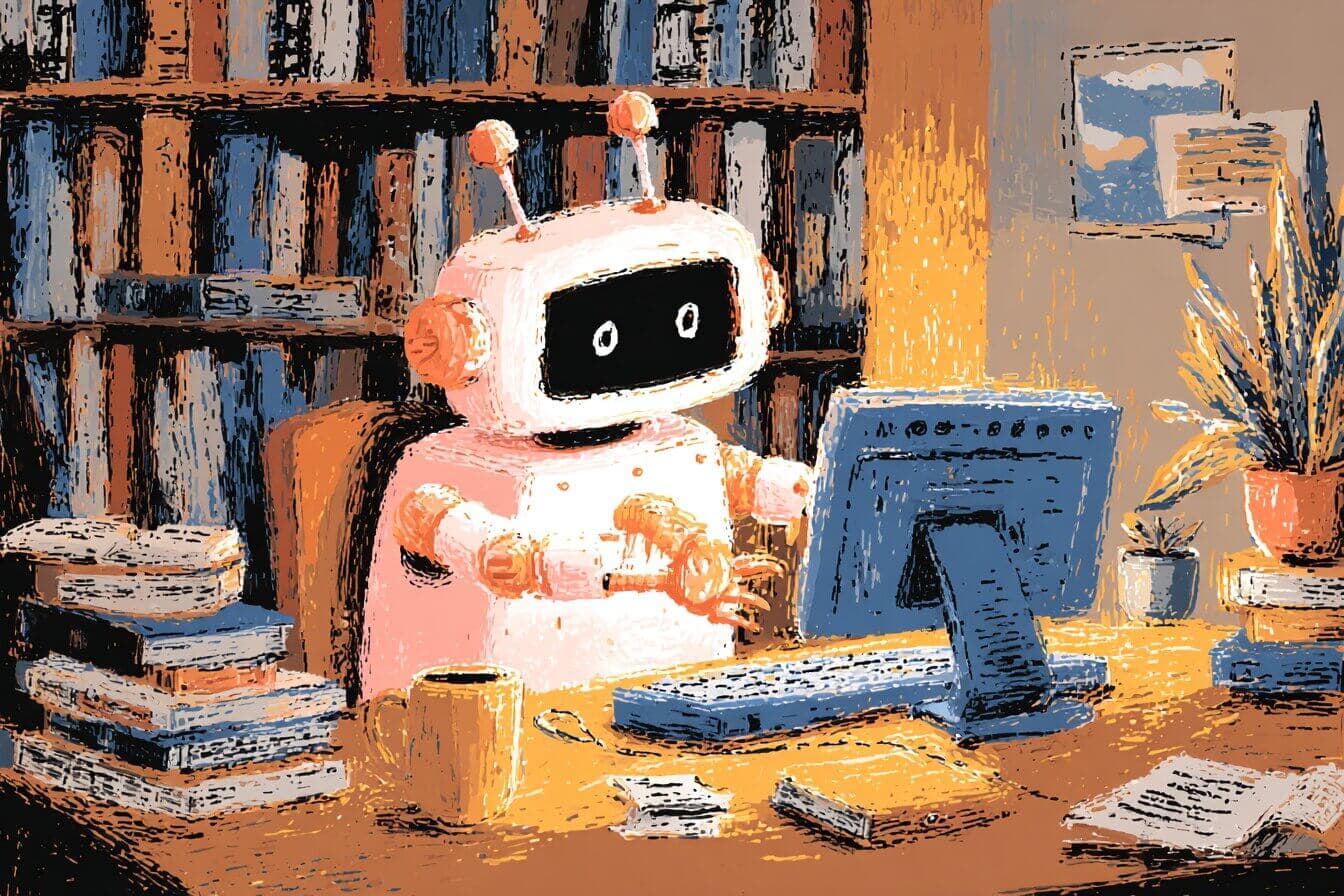
There is something about the soft click of a puzzle piece falling into place that mirrors the feeling of eyelids growing heavy at the end of a long day. In tonight's story, a girl named Ruby builds a silver robot puppy at her local workshop, bumps into a few funny mistakes, and slowly teaches her creation to do something truly kind. It is one of our favorite coding bedtime stories, blending the quiet logic of instructions with warmth that settles right into the chest. If your child would love a version with their own name, pet, or setting, you can create one for free with Sleepytale.
Why Coding Stories Work So Well at Bedtime
Coding, at its core, is about putting things in order, and that gentle rhythm of step, test, adjust mirrors the way children wind down before sleep. A bedtime story about coding gives kids a sense of control: problems are small, solutions come one patient tweak at a time, and the world inside the story responds exactly as you ask it to. That predictability feels safe when the lights are low.
There is also something naturally calming about watching a character slow down and think before acting. Instead of big dramatic battles, coding stories offer small satisfying clicks of progress. A command works, a tail wags, a box lands safely. Each tiny success feels like a warm blanket being pulled a little higher, and by the end, both character and listener are ready to rest.
Ruby and the Robot Puppy 6 min 40 sec
6 min 40 sec
Ruby loved Saturday mornings because that was when Mom let her visit the Inventor's Workshop at the community center.
The big room smelled like sawdust and something faintly metallic, the way a new battery smells if you hold it close to your nose. Sunlight poured through the skylights and landed on tables piled with wheels, wires, and half-finished contraptions nobody had bothered to label.
On this particular Saturday, Ruby spotted a brand new station.
A cardboard sign, slightly crooked, read "Build a Robot Pet." She bounced on her toes so hard her braids swung and smacked her own cheeks.
Underneath the sign, a smaller note said: "Remember, coding is like giving instructions to a robot friend who does exactly what you say."
Ruby whispered the sentence to herself. She liked the way the words fit together, neat and satisfying, like snapping Lego bricks onto a baseplate.
She picked up a silver puppy frame, screwed on four little wheels for paws, and plugged in a tiny circuit board shaped like a heart. It glowed once, then waited.
Now came the part she had been thinking about all week.
She typed her first line into the screen: walk Forward.
The puppy shot across the floor and bonked into a table leg with a hollow clang that made two kids at the next table look up, startled.
Ruby covered her mouth, half-laughing, half-embarrassed. She had forgotten to tell it when to stop. That was like telling someone to walk to the store without mentioning which store.
She added: walk Forward 3 seconds.
This time the puppy glided three seconds and stopped. Just stopped, perfectly still, like it was waiting for applause.
Ruby clapped anyway.
She tried sit next. The puppy wobbled, leaned sideways, and tipped over with a sad little thud.
She had not told it how long to hold the position, so it just kept lowering itself until gravity won.
Each small failure was a riddle, not a disaster.
She learned that commands needed to be clear, orderly, and complete. Like the recipes in her grandmother's cookbook, where "a pinch" always meant a specific pinch, and "stir until smooth" meant you did not stop early just because your arm was tired.
After a dozen tweaks, the puppy could sit, stand, wag its tail in a jerky little arc, and bark a gentle beep beep that sounded more like a microwave timer than a real dog. Ruby did not mind. She thought it was perfect.
Other kids had drifted over to watch.
The workshop leader, Mr. Patel, knelt beside her. He had a bit of solder on his thumb, which he did not seem to notice.
"Great job," he said. "Now imagine if your puppy could help someone. What would you ask it to do?"
Ruby bit her lip.
Her eyes swept the room and landed on elderly Mrs. Chen, who was trying to carry a heavy box of craft sticks to the storage shelf at the far end of the hall. The box kept shifting in her arms, and she kept pausing to re-grip it.
Ruby's fingers were already moving on the keyboard. She added a new block of code: when you hear the word help, follow the person carrying something and stay close in case they drop it.
She pressed upload. The little silver dog stood up, wheels humming.
She called Mrs. Chen over and explained the upgrade, talking fast, the way she always did when she was excited.
Mrs. Chen raised an eyebrow but smiled.
She picked up the box and started walking. The robot puppy trotted beside her, tail wagging in a steady tick, tick, tick like a tiny clock keeping pace.
Halfway down the hall, the box slipped.
It happened fast. The sticks started to slide, the cardboard buckled, and for one second everything was about to scatter across the floor.
But the puppy's sensors caught the shift in weight. It scooted underneath and braced itself, and the box landed on its flat back with a soft whump.
Gasps first. Then cheers.
Mrs. Chen laughed, a surprised and relieved kind of laugh, and reached down to scratch the puppy's metal ears. The puppy did not feel it, of course, but its tail wagged faster anyway because Ruby had programmed a response to gentle touch.
Ruby hurried up, steadied the load, and together they carried everything to the shelf.
When they returned, Mr. Patel handed Ruby a badge. It read "Junior Coder and Kindness Helper" in slightly uneven handwritten letters.
She fastened it to her jacket and pressed it flat with her palm.
She spent the rest of the hour teaching other kids how to adjust numbers to change speeds, how to add wait blocks for pauses, and how to loop wag Tail five times for, as she put it, "extra happiness."
One boy accidentally set his robot cat to spin in circles forever, and everyone had to chase it around the room before someone thought to unplug it.
Ruby discovered that good instructions were kind instructions. They kept metal paws from bumping walls and metal tails from knocking over paint jars. Careful code meant a careful friend.
By lunchtime, the workshop buzzed with robot cats that purred in Morse code, a robot bird that chirped the alphabet slightly out of order, and Ruby's own puppy, now sporting a ribbon that read "Service Pet in Training."
She knelt and hugged it. The servo inside hummed against her shoulder, a low warm buzz, almost like purring.
Mom arrived at the door, smiling before she even knew what had happened.
On the walk home, Ruby talked so fast she kept tripping over her own sentences.
She wanted to program the puppy to recognize sadness and respond with gentle nose nudges. She wanted it to deliver notes between neighbors. She wanted to add solar panels so it could recharge in sunshine and help all day long.
Mom just squeezed her hand and let her talk.
That night, Ruby placed the robot puppy on her dresser.
Its eyes glowed softly, casting little star shapes across the ceiling. They shifted when the breeze moved the curtain.
Before sleep, Ruby whispered one more command: dream Good Dreams.
The puppy blinked twice, slow and deliberate, as if it understood.
Then it settled into standby. The hum faded to silence.
Ruby closed her eyes. Somewhere in the house, the fridge hummed its own low note, and outside a cricket started up, and the two sounds braided together into something that felt like the world's quietest lullaby.
She did not think about tomorrow's inventions just yet. She thought about the sound the box made when it landed safely, and Mrs. Chen's surprised laugh, and the way a few careful lines of code had turned a pile of metal into something that could help.
Moonlight moved slowly across her quilt, and Ruby slept.
The Quiet Lessons in This Coding Bedtime Story
Ruby's story is built around patience, generosity, and the idea that mistakes are not failures but puzzles waiting to be solved. When her puppy crashes into a table leg, she does not get upset; she laughs, looks at her code, and tries again, which gently shows kids that errors are just part of figuring things out. The moment she chooses to help Mrs. Chen rather than simply show off her creation introduces the idea that skills become meaningful when we use them for someone else. These themes land especially well at bedtime because they leave a child feeling reassured: tomorrow you will try things, some will wobble, and that is perfectly fine.
Tips for Reading This Story
Give Ruby a quick, excited voice that speeds up whenever she is explaining something, and let Mr. Patel sound calm and slightly amused. When the box slips in the hallway, pause for a full beat of silence before describing the puppy catching it, so your child has a second to gasp. At the very end, when Ruby whispers "dream Good Dreams," drop your own voice to barely above a whisper and slow way down; it is the perfect cue for real eyes to close.
Frequently Asked Questions
What age is this story best for?
It works well for children ages 4 to 8. Younger listeners enjoy the robot puppy's funny mistakes, like bonking into the table leg, while older kids connect with the idea of writing commands and tweaking code. The language is simple enough for preschoolers but the problem-solving thread keeps early readers engaged.
Is this story available as audio?
Yes. You can press play at the top of the story to hear it read aloud. The audio version brings out the little sound effects naturally, like the bonk of the puppy hitting the table and the beep beep bark, and it captures the shift from the busy, bright workshop to the quiet hum of Ruby's bedroom in a way that really helps listeners wind down.
Does my child need to know anything about coding to enjoy this?
Not at all. Ruby learns as she goes, and the story explains each concept through her actions, like discovering that a command needs a number to tell the puppy when to stop. Kids who have never seen a line of code will follow along just fine because the ideas are framed as giving instructions to a friend, something every child already understands.
Create Your Own Version
Sleepytale lets you build a personalized story inspired by the same idea, a child teaching a robot something kind, but shaped around your family. Swap Ruby for your child's name, trade the puppy for a robot kitten or a little wheeled owl, or move the workshop to a backyard garage on a rainy afternoon. In just a few moments you will have a cozy, one of a kind story ready to read or play at bedtime.
Looking for more educational bedtime stories?

Folklore Examples
Discover short folklore examples through a library night where Anansi the spider, a loyal crane, and a clever hare teach timeless lessons.

Children's Fable
A fast fox loses to a steady turtle in this short children's fable about patience, ripe pears, and the quiet power of one step at a time.

Science Stories For Kids
Leo and his mom explore twinkling stars with a flashlight and a jar of water in one of our coziest short science stories for kids.

Small Stories With Moral
A girl gives her red umbrella to a classmate in the rain, one of the best short small stories with moral for bedtime.
Short Christian Stories With Moral Lessons
Discover short christian stories with moral lessons like Pastor Eli's unplanned outdoor sermon that teaches kids faith grows in unexpected places.

Quick Stories With Moral Lesson
Marcus copies a science test but discovers short quick stories with moral lesson show that honest effort feels better than a perfect stolen score.