
City Bedtime Stories
By

Dennis Wang, Bedtime Story Expert
7 min 5 sec
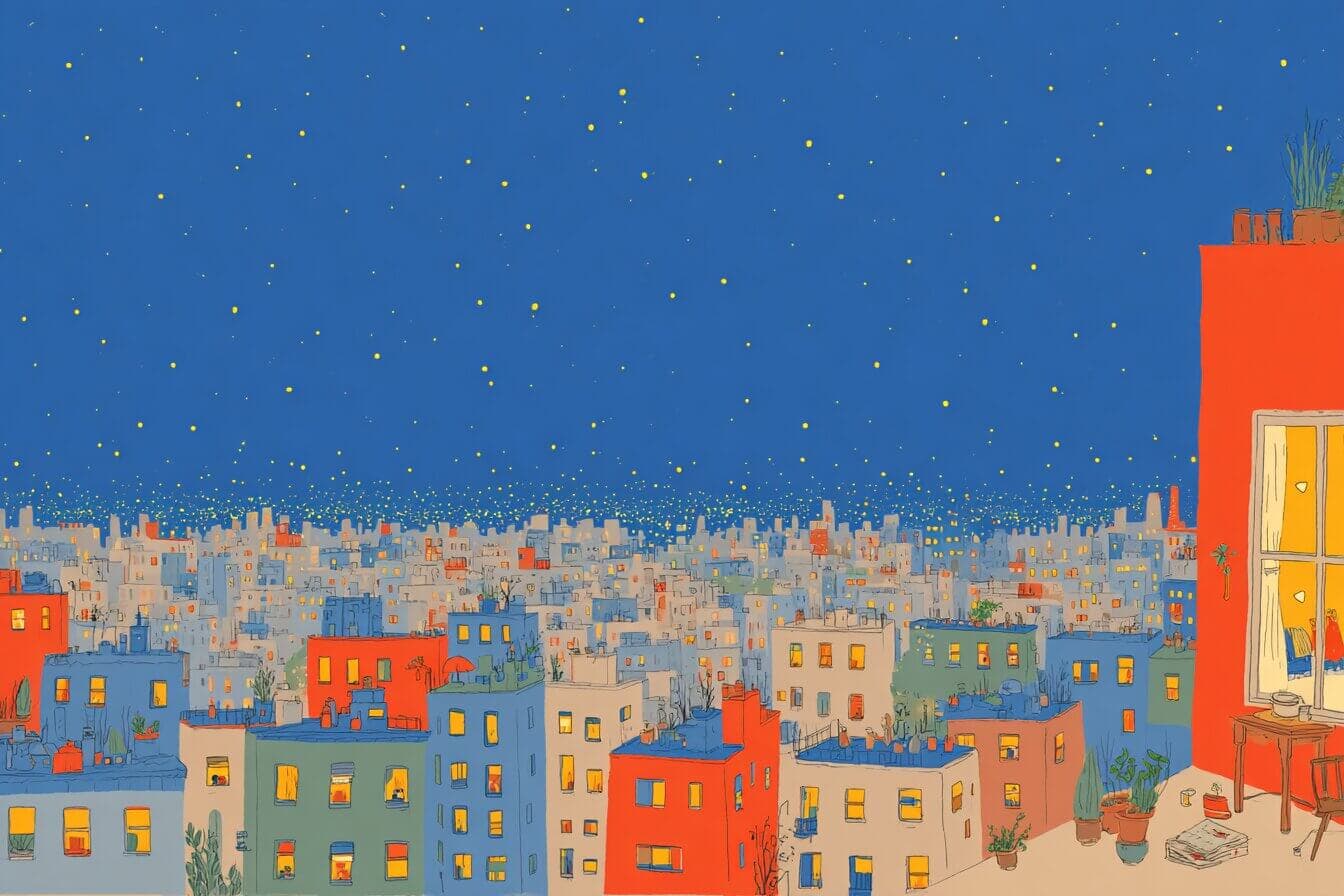
There is something about the glow of apartment windows at night that makes a child feel like the whole world is quietly telling secrets. In this gentle tale, a girl named Mira follows a paper bird made of moonlight across rooftops and past windows full of tiny, glowing scenes, each one a story waiting to be noticed. It is exactly the kind of city bedtime story that turns the hum of streetlights into something magical before sleep. If your little one loves the idea of nighttime adventures above the skyline, you can create your own version with Sleepytale.
Why City Stories Work So Well at Bedtime
Cities at night carry a rhythm that is almost musical: the distant sound of a bus, the low hum of a building settling, the faint buzz of a streetlight flickering on. For children who live in or near cities, a bedtime story set among glowing windows and quiet rooftops transforms familiar sounds into something safe and story-shaped. Even for kids in the countryside, the idea of a city sleeping feels like discovering a secret world.
There is also something deeply comforting about the way city lights come on one by one, like a slow count that mirrors the body slowing down for rest. A story about a city at night gives kids permission to notice the quiet underneath all the noise, and that shift from busy to still is exactly what bedtime asks of them. It helps them understand that even big, loud places eventually tuck themselves in.
The City of Twinkling Stories 7 min 5 sec
7 min 5 sec
In the heart of a city where lights dotted the skyline like fallen stars, a girl named Mira pressed her nose to the cool glass of her bedroom window. Every apartment glowed a different color. She was sure each one held a story nobody had told yet.
Tonight the moon hung round and bright, painting silver ladders across the rooftops.
Mira whispered to the glass, "Show me one."
The window shimmered. Her room filled with a faint smell of cinnamon and something like rain on warm pavement, the kind that comes in July and disappears before you can prove it happened. A tiny paper bird folded itself out of the moonlight and hovered in front of her face, turning its head the way a sparrow does when it is deciding whether you are interesting.
It tapped the pane once, flew upward, and left behind a trail of glowing letters: Follow the lights.
Mira pulled on her red boots. She tiptoed past her sleeping cat, who opened one eye, judged her, and closed it again.
The fire escape sang under her feet, each iron step ringing a slightly different note.
Down below the streetlamps swayed and bowed, as if inviting her into their circle.
On the roof the paper bird waited, larger now, the size of a real gull. Its wings were made of sky and story, and they rustled when the breeze caught them.
It lowered its head. Mira climbed onto its back and brushed her fingers along the soft edges of its feathers. They felt like the pages of a book left open in the sun.
Together they rose above the city, gliding between chimneys crowned with curls of evening smoke. From up here the windows did not look like rectangles anymore. They looked like tiny books, each one cracked open and glowing from within.
The bird swooped toward a round porthole that blazed emerald.
Inside, a teddy bear in a boat sailed across a bathtub ocean. He waved at Mira with a paw that was missing a button. She laughed, and the sound turned into a string of stars that wrapped around his little sail.
"Nice boat!" she called.
The bear saluted.
The bird carried her past more windows. Toy trains chugged through mountain ranges of pillows. Rubber ducks held a tea party with plastic dinosaurs, and one duck wore a monocle that kept falling off. Glowing numbers danced like fireflies, spelling out words Mira could not quite read, maybe tomorrow's dreams, maybe grocery lists. She was not sure, and that was fine.
Each scene lasted only a heartbeat, but she felt every story settle inside her chest like a warm marble dropped into a pocket.
She tucked them away.
The city breathed beneath her, a gentle giant made of bricks and lullabies and someone somewhere frying onions at eleven o'clock at night.
At the tallest building the bird circled a window blazing ruby red. Inside, an old man sat at a desk writing in a book whose pages turned themselves. Words floated out like butterflies, rearranging into constellations that spelled Mira's name.
She reached out. The words landed on her palms, tingling the way your fingers tingle when you hold a mug that is almost too hot but not quite.
The man looked up. His eyes twinkled. He nodded once, the way someone does when they have been expecting you and you are right on time.
Then the paper bird folded itself smaller and smaller, tucking wing over wing, until it became a silver pencil that dropped neatly into Mira's pocket.
The city lights dimmed. The moon pulled a cloud over itself like a blanket. And Mira found herself back on the fire escape, boots damp with dew, heart full.
Inside, her cat purred with his tail curled into a question mark.
Mira took the pencil and drew a tiny window on her wall. It opened at once. The teddy bear waved from his boat, still missing that button.
She smiled, closed the paper window, and climbed into bed.
Outside, the city kept twinkling, each light holding a different story, each story patient enough to wait for her to visit again. She dreamed of paper birds and floating words, of cinnamon rain and the specific sound the fire escape made on the third step, the one that rang like a tiny bell.
When morning came the silver pencil had become a necklace that glowed softly against her collarbone.
She knew that whenever she wanted, she could draw a new window and step into another tale.
At breakfast her mother asked why she smelled of cinnamon.
Mira just smiled. She touched the necklace and watched the steam from her cocoa curl into the shape of a paper bird, wings and all.
The cat meowed and tapped his tail on the floor, keeping time with some rhythm only he could hear.
Through the kitchen window a neighbor waved, completely unaware that a miniature dragon made of toast crumbs was perched on his shoulder, looking pleased with itself.
Mira sipped her cocoa. The stories swirled inside her like something warm and sweet and a little bit fizzy.
She could hardly wait for night again, for the lights to bloom, for the windows to open their soft glowing mouths. But she also noticed something new. The stories were not only outside anymore.
They lived in her now, folded behind her ribs like bright paper cranes.
She carried them to school, where math problems became riddles told by talking clocks and spelling lists grew wings and fluttered around the room. Friends asked why her laughter sounded like tiny bells. She did not have a good answer for that, so she handed each of them a silver pencil shaving that shimmered when touched.
One boy drew a door and found himself in a garden where flowers sang lullabies in languages he had never heard. A girl drew a circle and discovered a moon pool where her own reflection waved hello before she did.
Soon the whole class was drawing windows and doors and tiny arches and round portholes. Stories spilled out like marbles, bouncing down the hallway, rolling into the principal's shoes, turning an ordinary Tuesday into something none of them would forget.
Teachers smiled and let the magic linger. Some lessons, they figured, are best taught by moonlight and cinnamon rain.
When the final bell rang children raced home clutching paper birds that folded themselves into pockets, already waiting for bedtime. Mira walked slowly, savoring the hush between streetlamps, the pause between heartbeats, the space where new stories have not started yet but are about to.
She stopped at the corner where the lights began their nightly dance. She pressed her fingers to the necklace and whispered thank you to nobody in particular, and to everyone.
Somewhere above, the old man in the ruby window closed his book, smiled, and turned to a fresh page. He wrote a name at the top.
Lights came on, one by one. Each window held a story. Each story held a star. Each star held a dream.
Mira breathed them in, gave them back as quiet laughter, and ran inside where cocoa steamed and the cat purred the moon to sleep.
The Quiet Lessons in This City Bedtime Story
Mira's adventure weaves together curiosity, generosity, and the comfort of returning home. When she whispers "Show me one" to her window, children absorb the idea that wonder is something you can ask for, not something you have to wait for permission to find. Later, when she hands silver pencil shavings to her classmates and watches their own stories spill out, the moment gently shows that the best things grow when you share them. And the story's quiet loop, out into the night and safely back to bed, reassures kids that exploration always ends with a familiar pillow and a purring cat. These are exactly the kind of feelings that settle well right before sleep, when a child needs to believe the world is generous and their own bed is the safest place in it.
Tips for Reading This Story
Give the old man in the ruby window a slow, warm voice, the kind that sounds like it has read ten thousand books and remembers every one. When Mira's cat opens one eye on the fire escape, pause and give your child a look, as if you and the cat are sharing the same opinion about midnight adventures. At the part where the teddy bear salutes from his bathtub boat, let your little one salute back before you keep reading.
Frequently Asked Questions
What age is this story best for?
This story works well for children ages 3 to 8. Younger listeners love the visual scenes like the teddy bear's bathtub boat and the toast-crumb dragon, while older kids connect with Mira's choice to share her pencil shavings and the idea that stories can live inside you. The looping structure, out and safely home, keeps it reassuring for any age.
Is this story available as audio?
Yes. Press play at the top of the story to listen along. The audio version brings out details that reward the ear, like the fire escape ringing under Mira's boots and the shift from the busy rooftop flight to the hush of her bedroom. Character moments like the cat's judgmental eye-open also land beautifully when heard aloud.
Why does Mira smell like cinnamon in the morning?
The cinnamon scent is one of the first signs that Mira's nighttime adventure was real, not just a dream. It drifts into her room when the window shimmers, and it lingers on her even after she returns to bed. It is a small, cozy detail that tells both Mira and the listener that the magic left a trace, something you can almost smell yourself if you close your eyes.
Create Your Own Version
Sleepytale lets you reshape this rooftop adventure into something that fits your child perfectly. Swap Mira for your little one's name, trade the paper bird for a glowing lantern or a friendly pigeon, move the whole story to your own neighborhood skyline, or change the cinnamon scent to whatever your kitchen smells like at bedtime. In a few moments you will have a cozy, personal tale ready to play whenever the city lights come on.
Looking for more kid bedtime stories?
Bedtime Poems For Kids
Discover short bedtime poems for kids through a story where a boy says goodnight to kettles, slippers, stars, and a goldfish named Planet.

Scary Story Ideas For Kids
Looking for short scary story ideas for kids that feel cozy, not overwhelming? Meet Sir Boop, a bow tie wearing ghost who judges spooky slips from an Idea Jar.
Interactive Children's Stories
Discover short interactive children's stories where a girl named Wren makes choices guided by a paper fox bookmark called Flip.
Ghost Stories For Kids
The scariest thing about Puddle the ghost is his giggle, not his boo, in one of the sweetest short ghost stories for kids.
Adventure Stories For Kids
A folded map hidden inside a library book sends two friends a treasure hunt in one of our favorite short adventure stories for kids.

Native American Stories For Kids
Discover short native american stories for kids through a fireside tale of geese, gratitude, and a grandfather's gentle wisdom.