
Cancun Bedtime Stories
By

Dennis Wang, Bedtime Story Expert
12 min 35 sec
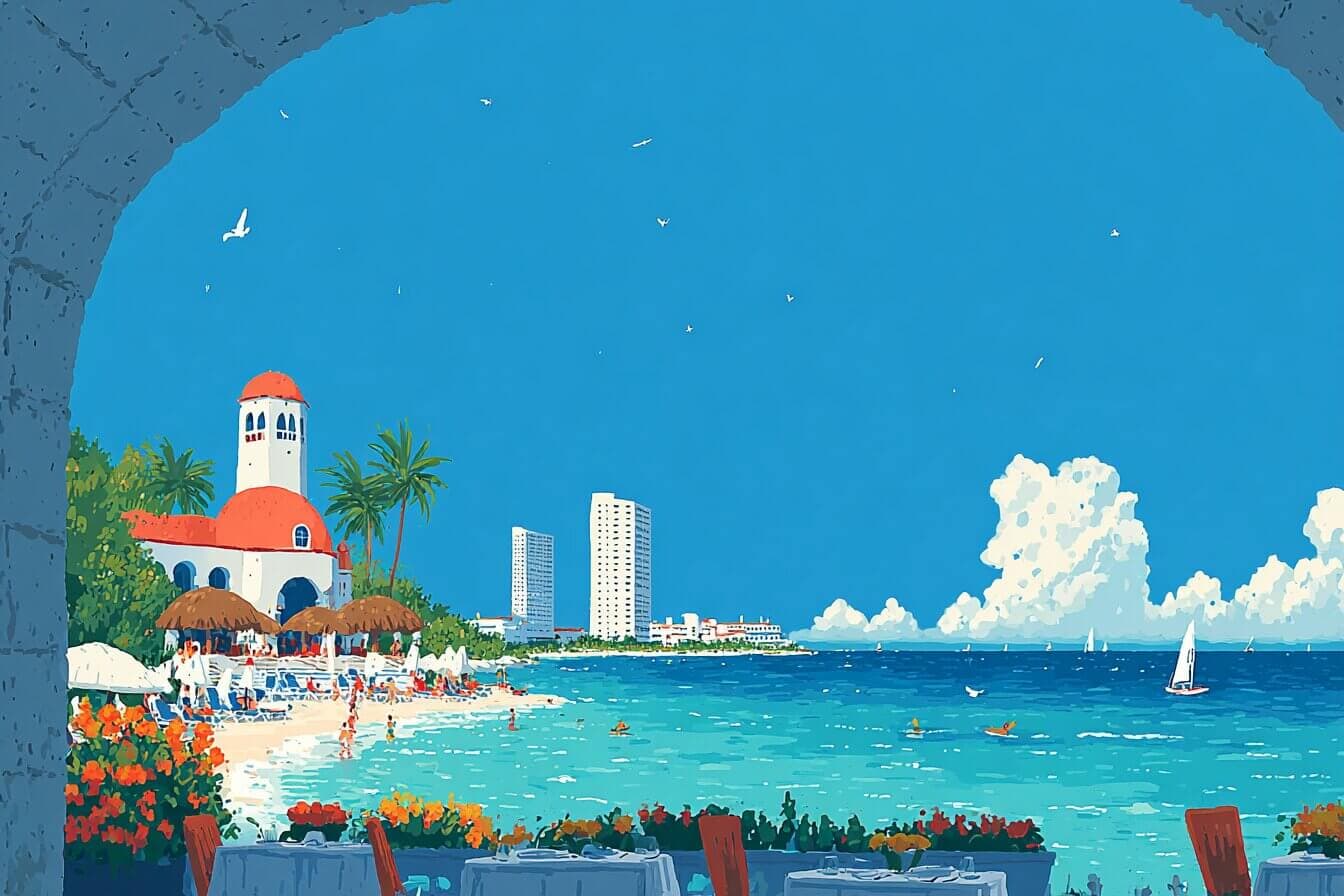
There's something about warm salt air and the hush of distant waves that makes a child's whole body loosen right before sleep. In this gentle tale, a tiny sandpiper named Pico discovers a moon shaped shell on the shore and carries its soothing song from cove to cove, calming every worried creature he meets along the way. It's one of those Cancun bedtime stories that turns the ocean into a lullaby your child can almost hear. If you'd like to shape a version around your own family's favorite details, you can build one in minutes with Sleepytale.
Why Cancun Stories Work So Well at Bedtime
Few settings quiet a busy mind the way a tropical shoreline does. The steady rhythm of waves, the softness of sand, the way moonlight turns water into something that looks like it belongs in a dream: these images give children a place to put their restless energy down. A bedtime story set in Cancun doesn't need to try hard to feel calm, because the setting does half the work just by existing.
There's also something reassuring about a landscape that repeats. Cove after cove, wave after wave, the same gentle pattern tells a child's brain that nothing surprising or scary is about to happen. That predictability is exactly what kids need when they're winding down. The warmth of the coast becomes a kind of emotional blanket, and the creatures who live there feel both exotic enough to spark wonder and gentle enough to feel safe.
The Turquoise Lullaby of Cancun 12 min 35 sec
12 min 35 sec
Cancun has beaches so blue you'd swear the sky tripped and spilled into the ocean. On the softest of those shores lived a sandpiper named Pico, no bigger than a child's fist, with legs like two bent twigs and a beak that clicked faintly when he was thinking.
Every dawn he pattered across the cool sand, leaving arrow shaped footprints beside the tide line. He loved the way the water curled forward, then sighed back. Like the sea itself was breathing.
One morning, something caught his eye near a dune where sea grass leaned sideways in the breeze: a single pale shell, shaped like the moon, half buried and warm from the sun. He tugged it free with his beak. It was lighter than he expected.
Then the breeze shifted, and the shell hummed.
Not a loud hum. More like the sound your chest makes when you sigh after a good meal. A lullaby that seemed to come from inside the shell and from very far away at the same time. Two crabs froze mid scuttle. A gull circling overhead dipped lower, curious.
Pico tucked the shell beneath his wing. A gift like this, he decided, wasn't meant for one bird. He set off along the twelve quiet coves that curve around the Cancun shore like beads on a necklace.
In the first cove, he found Lita the green turtle hatchling sitting at the waterline, flippers gripping the wet sand. She was staring at the reef in the distance like it was another continent.
"It's so far," she said.
"Maybe," Pico said. He lifted the shell. The lullaby drifted over her, slow and warm, and her flippers loosened. She blinked. Then she slipped into the water and glided outward with strokes so steady they barely left a ripple.
Pico trotted on, feeling lighter himself, as if the song stitched something bright into his own feathers each time he shared it.
By the time the sun stood straight overhead, throwing silver coins across the surface of the sea, he reached the second cove. Tall coconut palms bent low, shading a hermit crab named Carlito who was wedged under a piece of coral, eyeing an empty spiral shell ten body lengths away across open sand.
"I've outgrown this one," Carlito muttered, shifting uncomfortably. "But a gull could spot me in two seconds out there."
Pico perched beside him, breathed with the shell's song, and felt the crab's grip on the coral relax. When a gull's shadow swept past, Carlito bolted. His legs made a sound like someone tapping a tiny drum very fast. He reached the spiral shell and sealed himself inside with a soft click.
"Not bad," Carlito said from inside, his voice muffled and happy.
Pico left him there and kept walking.
The third cove hid behind a curtain of morning glory vines so thick the light turned purple. The hush felt heavy, the kind of quiet you could almost lean against. There Pico found Marisol the manatee calf pressed against her mama's side, both of them grazing on sea grass that swayed in the current like slow green hair.
"I don't like when the water gets dark," Marisol whispered.
Pico set the shell on a flat rock and let the lullaby slide through the salty air. Marisol's eyes went half shut. She nuzzled deeper into her mama's side, and her mama let out a long, rumbling sigh that made the water vibrate.
Pico tiptoed away, certain that tonight the dark would feel more like a blanket than anything to worry about.
The afternoon sun began to lean, turning the waves the color of honey, when Pico reached the fourth cove. Fiddler crabs waved oversized claws, dozens of them, like conductors running rival orchestras nobody could hear. Among them sat Tiko, a small crab whose big claw had cracked near the joint. He held it still against his body.
"I can't drum anymore," Tiko said. He said it flatly, the way someone says it when they've already said it too many times to themselves.
Pico placed the shell on a smooth stone. The lullaby wound through the cove. Tiko closed his eyes. Then, without opening them, he started tapping his good claw against the sand, slowly at first, then steadier. The rhythm matched the lullaby like they'd rehearsed it. One by one the other crabs joined, clicking softly, and the whole cove filled with a whispering concert that sounded like rain on a tin roof.
Pico listened until his own feet wanted to tap, then slipped away.
Golden light poured across the fifth cove, where sea grape leaves rattled like quiet maracas. A pelican named Paloma sat on a weather worn piling, beak resting heavy on her chest. Her flock had flown south without her.
"They didn't wait," she said.
Pico fluttered up and tucked the shell beneath her broad wing. The lullaby rose through the breeze. Paloma blinked slowly, the way someone does when they realize the thing they were afraid of isn't actually as sharp as they thought.
She spread her wings. They were enormous up close, blocking out the sun for a moment. Then she pushed off, caught the wind, and soared toward the horizon without looking back.
Pico watched until she shrank to a tiny dark speck against the glow, then turned and kept going, his footprints stitching a thin seam along the shoreline.
Twilight painted the sixth cove in shades of lilac and rose. Shallow tide pools caught the last light and held it like scattered coins. In one pool Pico found Estrella the starfish gripping a smooth stone, all five arms rigid.
"The tide's shifting," Estrella said. "What if it leaves me here?"
Pico dipped the shell into the water. The lullaby rippled outward in rings. Estrella's arms softened, one by one, until she let go of the stone entirely. The incoming tide lifted her and carried her toward deeper water. She waved one ray, slowly, the way you wave to someone from a train window. Then she drifted out of sight.
Night's first star appeared above the seventh cove. Below it, luminescent plankton shimmered in the shallows so thickly the water looked like it had swallowed the Milky Way. A baby dolphin named Nico circled in tight loops, squeaking.
"I can't find them," he said. "I can't find my pod."
Pico set the shell on the water's surface. It floated like a tiny ivory boat, singing. Nico's clicks slowed. He stopped circling. And then, from around the rocky point, came the familiar whistles of his family: three short, one long, the call he'd known since before he opened his eyes.
Nico leaped. Water and light exploded around him in rings that looked like necklaces made of stars. He didn't say goodbye, but he didn't need to.
The moon climbed higher. Pico's wings felt heavy now, but his chest felt warm.
In the eighth cove he found Ixchel the iguana draped across a driftwood log, twitching in her sleep. Distant thunder grumbled somewhere past the horizon.
Pico nestled the shell beside her spiny back. The lullaby smoothed over the sound of the storm the way a hand smooths a wrinkled blanket. Ixchel's twitching stopped. Her breathing deepened. Whatever she was dreaming about now, it wasn't wind.
Pico waited until the clouds broke apart and moonlight returned, then slipped away so quietly even the sand crabs barely noticed.
The ninth cove sat tucked beneath a limestone cliff where moonlight painted pale stripes across the beach. In a still lagoon, a seahorse named Sirena clung to a blade of turtle grass, tail curled tight.
"I've never seen the open reef," she said. "I want to. But also I don't."
Pico balanced the shell on a root that stuck out over the water. The lullaby threaded through the lagoon.
Sirena's tail uncurled a little. "Maybe tomorrow," she said, and it sounded like she meant it. She gave Pico a small wave with her dorsal fin, then tucked herself back against the grass and closed her eyes.
Near midnight Pico reached the tenth cove, a secret sandy pocket where phosphorescent waves washed in like slow green fireworks. A turtle nest had just begun to stir. Tiny heads poked through the sand, blinking.
Pico placed the shell beside the nest and hummed along. The hatchlings paused, calmed, and then emerged in a steady stream instead of a panicked burst. They crossed the sand together, guided by moonlight and the shell's song, their flippers making a sound like dozens of small hands patting a table.
Pico watched until the last one vanished into the shimmering surf.
The eleventh cove lay beneath a wooden pier. Moonbeams slipped through the cracks between the planks like silver pencils drawing lines on the sea. An octopus named Odette peered out of a broken bottle, her skin mottled an anxious brown.
"Shadows," she said. That was all.
Pico rested the shell at the bottle's mouth. The lullaby curled inside like smoke in reverse. Odette's tentacles loosened. Her color shifted, brown to dusty rose to a calm, deep teal. She inked a tiny heart in the sand, which struck Pico as an unexpectedly fancy goodbye, and then she glided toward the coral garden without looking back.
At last, Pico reached the twelfth cove. The quietest one. The sky pressed so close to the water it was hard to tell where one ended and the other began.
He was tired. Really tired. The kind of tired where the sand already feels like a bed before you even lie down.
He settled into a small hollow, feathers puffing against the cool night air, and lifted the shell one final time.
The lullaby had changed.
It still hummed, but now it carried other voices: Lita's steady strokes, Carlito's quick drumming legs, Marisol's deep sigh, Tiko's good claw tapping, Paloma catching the wind, Estrella drifting, Nico's joyful splash, Ixchel breathing slow, Sirena's quiet "maybe tomorrow," Odette's inked heart, and all those tiny turtle flippers patting the sand. Every friend, woven into one chorus as gentle as the first light before sunrise.
Pico closed his eyes. The blended lullaby rocked him like a cradle.
The sky, listening, blushed the faintest pink. The sea kept breathing its slow breath. And Pico, the sandpiper who carried a moon shaped shell from cove to cove, slept, while all around him the quiet waves repeated the song, carrying it from shore to shore, from heart to heart, on and on.
The Quiet Lessons in This Cancun Bedtime Story
Pico's journey from cove to cove is really a story about what happens when you offer calm instead of solutions. He never fixes anyone's problem; he just sits with them long enough for the worry to loosen on its own. When Tiko starts tapping with his good claw, children absorb the idea that losing one thing doesn't mean losing everything. When Sirena says "maybe tomorrow" and means it, they learn that bravery doesn't have to happen all at once. And the final moment, where Pico discovers every friend's voice woven into the lullaby, shows kids that generosity circles back without anyone keeping score. These are the kinds of reassurances that settle deepest right before sleep, when a child's mind is open and still.
Tips for Reading This Story
Give Pico a light, quick voice, almost breathless, and let each of his friends sound different: Carlito mutters from inside his shell, Marisol whispers, and Nico squeaks with rising panic before his pod answers. When you reach the cove descriptions, slow your pace and lower your volume a notch each time, so the story itself feels like it's winding down alongside Pico. At the final cove, pause after "The lullaby had changed" and let your child wonder for a second before you continue.
Frequently Asked Questions
What age is this story best for?
This story works best for children ages 3 to 7. Younger listeners love the repeating pattern of Pico visiting one cove after another, because the structure feels safe and predictable. Older kids in that range connect more with the individual characters, like Tiko figuring out he can still drum or Sirena deciding she'll be brave tomorrow.
Is this story available as audio?
Yes, you can press play at the top of the story to listen. The audio version works especially well here because Pico meets so many different characters, and hearing each one with a distinct voice brings the coves to life. The wave like rhythm of the lullaby sections also sounds beautiful read aloud, almost like the story is rocking the listener to sleep alongside Pico.
Why are ocean settings so calming for kids at bedtime?
The sound of waves follows a slow, repeating pattern that naturally slows breathing and heart rate, which is exactly what children need when they're winding down. In this story, each cove adds another layer of that rhythm, so by the time Pico reaches the twelfth shore, the steady pace has done much of the settling work. It's one reason beach settings and characters like Pico, Lita, and Estrella feel so right for a nighttime read.
Create Your Own Version
Sleepytale lets you reshape this coastal lullaby into something that fits your child perfectly. Swap Pico for a seahorse or a hermit crab, move the journey from sandy coves to a moonlit lagoon, or dial the tone from calm to gently adventurous. In just a few taps you'll have a soothing shoreline story ready to read again whenever bedtime needs a little extra warmth.
Looking for more travel bedtime stories?

Washington Dc Bedtime Stories
Ellie steps into bright marble streets and learns how big ideas become kind choices in short washington dc bedtime stories. A calm tour turns curiosity into comfort.

Tokyo Bedtime Stories
Looking for short tokyo bedtime stories that feel calm, magical, and easy to read aloud? Want a gentle tokyo bedtime story you can replay at bedtime.

Singapore Bedtime Stories
Lily arrives in Singapore and discovers rooftop gardens that float between towers in short singapore bedtime stories. She follows a humming seed to a gentle riddle and a citywide bloom.

Shanghai Bedtime Stories
Looking for short shanghai bedtime stories that feel calm and magical for kids? Read a gentle shanghai bedtime story and learn how to make your own cozy version in Sleepytale.

Sf Bedtime Stories
A foggy bridge becomes a quiet portal where a child rescues drifting dreams. Read short sf bedtime stories that glow with wonder and end in calm.

Seoul Bedtime Stories
Soothe bedtime with short seoul bedtime stories that blend gentle city sights, kind choices, and cozy calm for kids. Read a quiet Seoul adventure that settles little minds fast.