

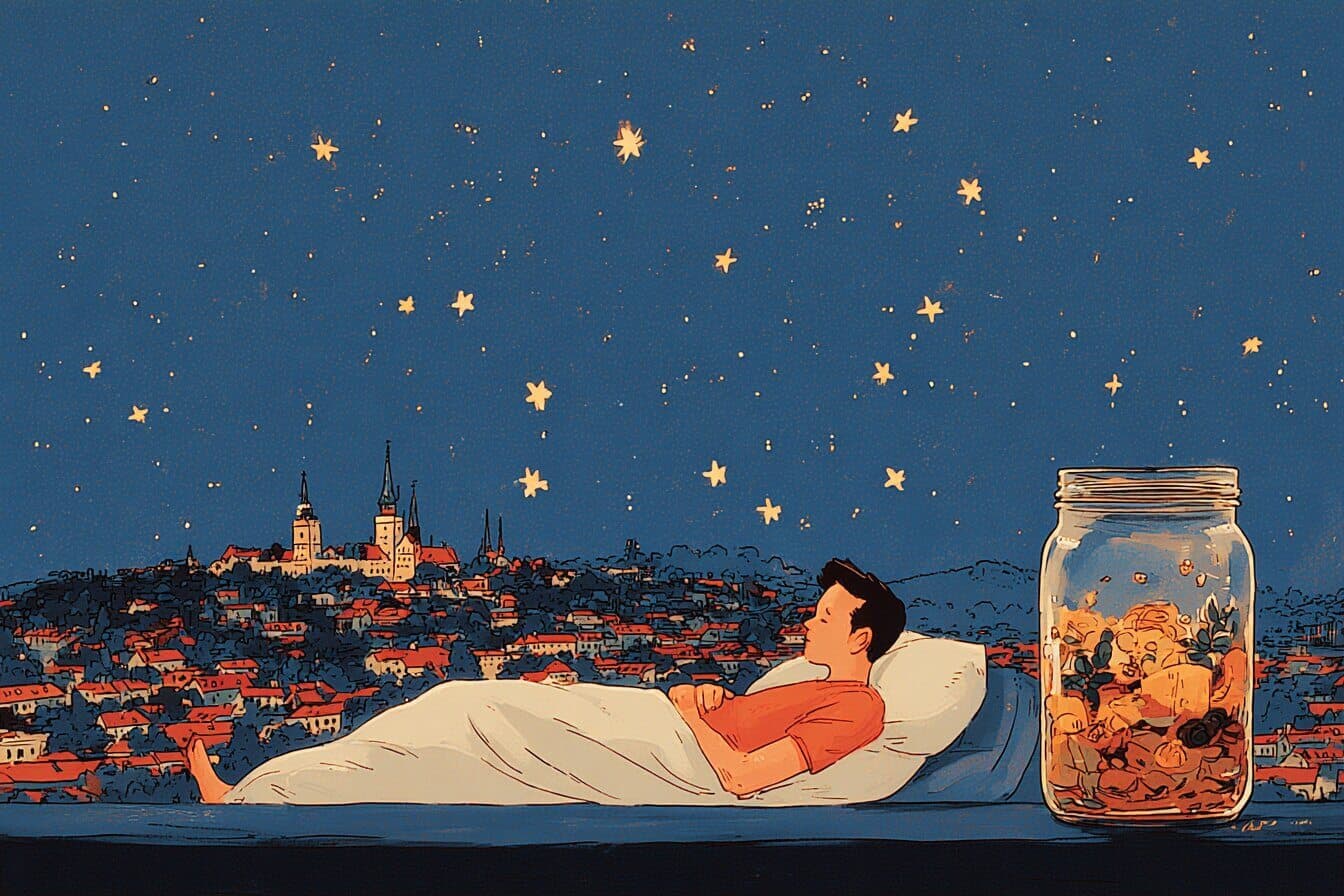
There is something deeply tender about words written in the quiet dark, meant only for one person to find come morning. In The Pillow Poems, a man named Rowan folds single lines of love into tiny paper boats and leaves them on Mara's pillow while she sleeps, filling a glass jar with months of whispered affection. This short bed story for boyfriend is the kind of gentle, hushed tale that turns an ordinary evening into something warm and unforgettable. You can even create your own version with Sleepytale.
Why Bed For Boyfriend Stories Work So Well at Bedtime
Stories about quiet love have a special power at bedtime. The rhythm of someone caring for another person in the stillness of night mirrors the very act of being read to sleep. A bed story for boyfriend to read online works so well because it wraps listeners in the feeling of being noticed and cherished, even when the world goes dark. That sense of safety is exactly what we all crave before closing our eyes. In The Pillow Poems, Rowan's nightly ritual of folding tiny paper boats and tucking them beside Mara's cheek creates a hushed, repeating pattern that feels almost like a lullaby. The candlelit scenes and soft kitchen moments slow the heart rate naturally, making this the kind of story that leaves you warm, still, and ready to drift.
The Pillow Poems 5 min 3 sec
5 min 3 sec
Mara always fell asleep first.
Her breathing would slow, her fingers uncurl, and the room would settle into the hush that meant tomorrow had already begun for her.
Rowan would lie still until her elbow stopped twitching against his ribs, then slip from the bed like a thief.
He kept paper squares in the nightstand drawer, scraps from grocery receipts and old homework, anything with a blank side.
His pen scratched softly while she dreamed.
One line.
Never more.
He folded each note into a paper boat no bigger than a thumbnail and left it on her pillow where her cheek would find it.
She found the first one by accident.
Morning light slanted through blinds and there it was, white against white.
She read it while Rowan breathed beside her, still pretending to sleep.
The words were simple: “You laughed in your sleep like you’d found a secret door.” She tucked the note into her pajama pocket before he stirred.
That day she carried the sentence around the house, unfolding it while the kettle hissed, smoothing it while socks mated in the laundry basket.
When night came she pretended to drift off first, waited until his breathing evened, then opened the drawer.
Empty.
She smiled into the dark.
The jar appeared on the third morning, an old pickle jar she’d washed and peeled the label from.
She lined the first three boats along its glass bottom like fragile shells.
Rowan noticed nothing except that she seemed to hum more while brushing her teeth.
He wrote: “Your hair smells of thunderstorms.” She read it at dawn, shivering though the room was warm.
She pressed the paper to her lips before dropping it in with the others.
The glass clinked, a tiny sound that felt louder than shouting.
Months passed this way.
The jar grew heavy.
Some mornings she shook it just to hear the paper rattle, a private rainstorm.
Rowan began writing lines that felt like questions: “If we could fold time like these boats, where would we sail?” She never answered aloud.
Instead she left him a banana with the peel split into a grin, or stacked his books spine-out so their titles formed a crooked poem.
He never mentioned the notes, only kissed her longer when he thought she was still drowsy.
One night the power failed.
The neighborhood plunged into black, the kind of dark that makes cats walk into walls.
Mara lit a candle stub and set it on the windowsill.
Rowan sat cross-legged on the floor, tearing paper.
He looked smaller in the flicker, younger.
She wanted to tell him she knew, had always known, but the secret had become a soft thing between them, like the quilt his grandmother once stitched from old flannel shirts.
Instead she said, “Tell me a story.” He blinked, surprised.
She never asked.
He cleared his throat.
“There once was a man who tried to catch moonlight in a jar.” His voice cracked on jar.
She lay down, cheek against the cool sheet, and pretended to drift.
He kept talking, voice low, making it up as he went.
When her breathing slowed, he wrote the next line on a scrap that glowed orange in the candlelight: “She pretends to sleep so he can pretend she doesn’t know.” He folded it, smaller than ever, and tucked it not under her pillow but into the jar itself, sliding it between the paper boats where it settled like a fish hiding in reeds.
Morning came gray and still.
Mara reached for the jar first thing, as always.
Her fingers met glass, then nothing.
The jar was gone.
She sat up fast, heart knocking.
Rowan’s side of the bed was empty, sheet thrown back.
She found him in the kitchen holding the jar, turning it so the paper inside slid from side to side.
He looked up.
Neither spoke.
The kettle began to whistle, a thin, urgent sound.
He turned off the burner.
Still quiet.
Finally he said, “I ran out of lines.” His voice was raw.
She took the jar from his hands, unscrewed the lid, and poured the boats onto the table.
They fluttered like white moths.
She picked one at random, read aloud: “Your feet chase dreams I almost remember.” She picked another: “I love you more than the silence after rain.” Her voice wobbled only once.
When she finished, the table was snowdrifted with paper.
She looked at him.
“I read them every morning before you wake up.” The words came out smaller than intended.
He nodded, eyes shining.
“I know.” She blinked.
“You know?” He shrugged, a half grin lifting one side of his mouth.
“You hum while you read.
Different tunes for different lines.” She laughed then, a startled sound that bounced off the fridge.
He laughed too.
They stood in their pajamas amid the scattered poems, laughing until the neighbor’s dog began to bark.
Later, when the boats were gathered and the jar placed on the windowsill where sun could strike it, they wrote a line together on a single scrap, folding it into a boat big enough for two.
They slid it into the jar last, a quiet ceremony.
The paper read: “Tomorrow we’ll both pretend to sleep, and neither of us will.
The Quiet Lessons in This Bed For Boyfriend Bedtime Story
This story gently explores patience, unspoken devotion, and the courage to be vulnerable. Rowan's months of writing a single line each night shows how love grows through small, consistent acts rather than grand gestures, while Mara's quiet choice to collect the boats in a jar instead of revealing what she knows reflects deep respect for the tender things people build together. The kitchen scene where they finally read the poems aloud rewards that patience with honest, joyful connection. These lessons settle into a listener's heart most naturally at bedtime, when the world is still enough to feel them.
Tips for Reading This Story
Give Rowan a low, slightly hesitant voice when he tells Mara the story about catching moonlight in a jar during the power outage, and pause for a full breath after each poem Mara reads aloud at the kitchen table. Slow your pace during the candlelit scene so listeners can feel the flicker and warmth, and let your voice wobble just a touch when she reads “I love you more than the silence after rain.“ Brighten your tone and pick up speed when Mara and Rowan start laughing in their pajamas, so that burst of joy feels as surprising and real as it does in the story.
Frequently Asked Questions
What age is this story best for?
This story is best suited for older listeners, around ages 13 and up, as the themes of romantic devotion and quiet emotional honesty resonate most with teens and young adults. Younger readers may enjoy the imagery of paper boats and the glowing candle scene, but the deeper layers of Rowan and Mara's unspoken connection are best appreciated by more mature audiences. It also works beautifully as a story to share between partners at the end of a long day.
Is this story available as audio?
Yes, you can listen to the full audio version by pressing play at the top of the page. Hearing Rowan's voice crack on the word “jar“ during the candlelit moonlight story adds a layer of tenderness that print alone cannot capture. The audio also brings out the contrast between the hushed nighttime scenes and the bright, startled laughter that fills the kitchen when Mara and Rowan finally share their secret.
What do the paper boats in the story represent?
Rowan folds each love note into a tiny paper boat no bigger than a thumbnail and places it on Mara's pillow while she sleeps. Over time, Mara collects them in a cleaned pickle jar, where they accumulate like fragile shells and become a symbol of their quiet, shared ritual. By the story's end, they fold a single boat together that is big enough for two, marking the moment their private devotion becomes something openly celebrated.
Create Your Own Version
Sleepytale turns your own romantic ideas into personalized bedtime stories in moments. You can swap paper boats for pressed flowers, change the pickle jar to a wooden music box, or set the whole tale in a cozy mountain cabin instead of a city apartment. In just a few clicks, you will have a calm, cozy story ready to read tonight.
Looking for more couples bedtime stories?

Funny Short Bedtime Stories For Girlfriend
Ben retells Shrek so loudly the neighbor's dog barks back in this short funny short bedtime stories for girlfriend favorite.
Funny Short Bedtime Stories For Boyfriend
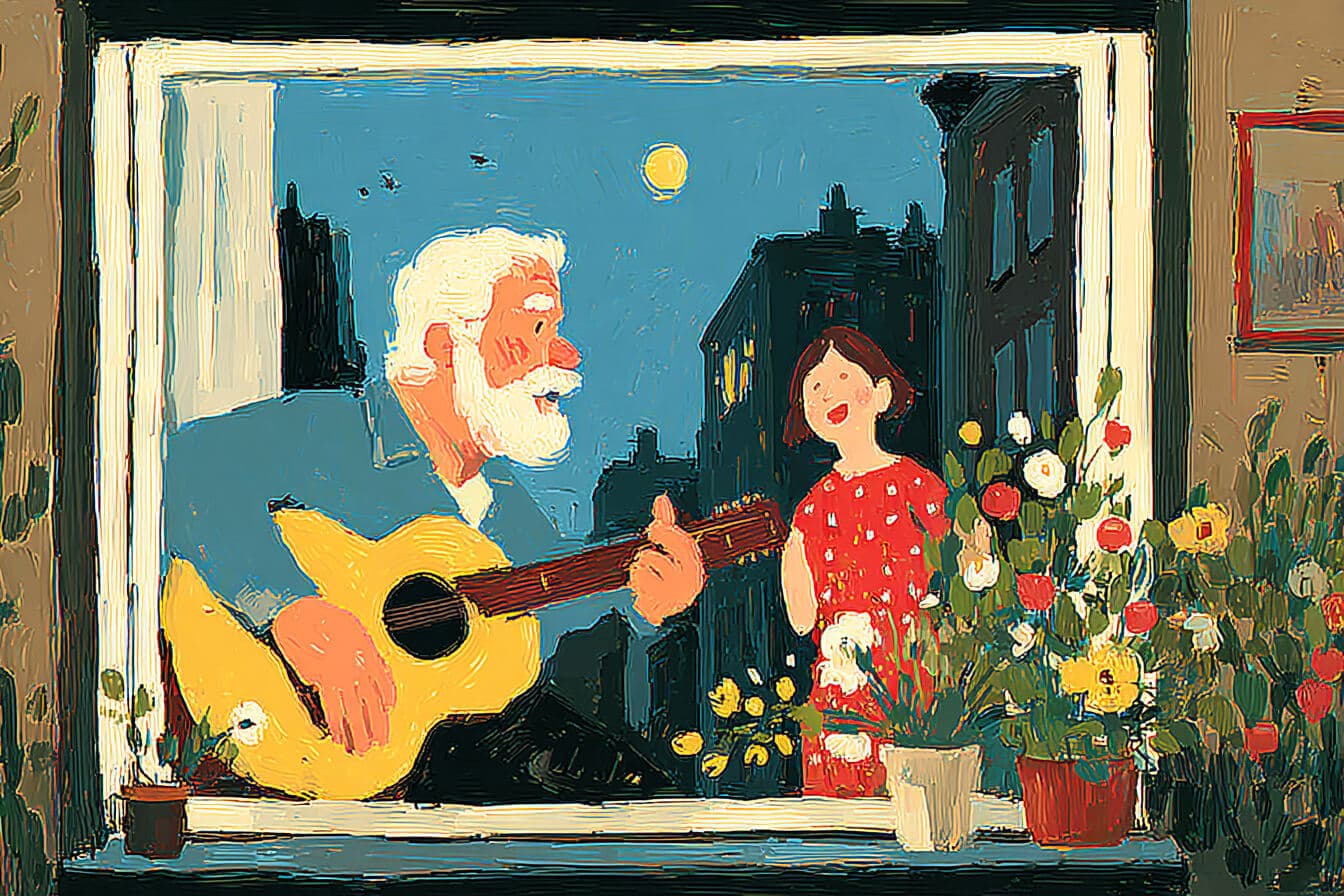
A guitar serenade drifts to the wrong window in this short funny short bedtime stories for boyfriend tale about Mateo and a bearded neighbor.

Cute Short Bedtime Stories For Girlfriend
Discover short cute short bedtime stories for girlfriend featuring Mia waiting for Oliver's goodnight text under the stars.

Cute Short Bedtime Stories For Boyfriend
Forget grand gestures; a silver marker and a tiny heart a wrist say everything in this short cute short bedtime stories for boyfriend gem.
Bedtime Love Story For Your Girlfriend
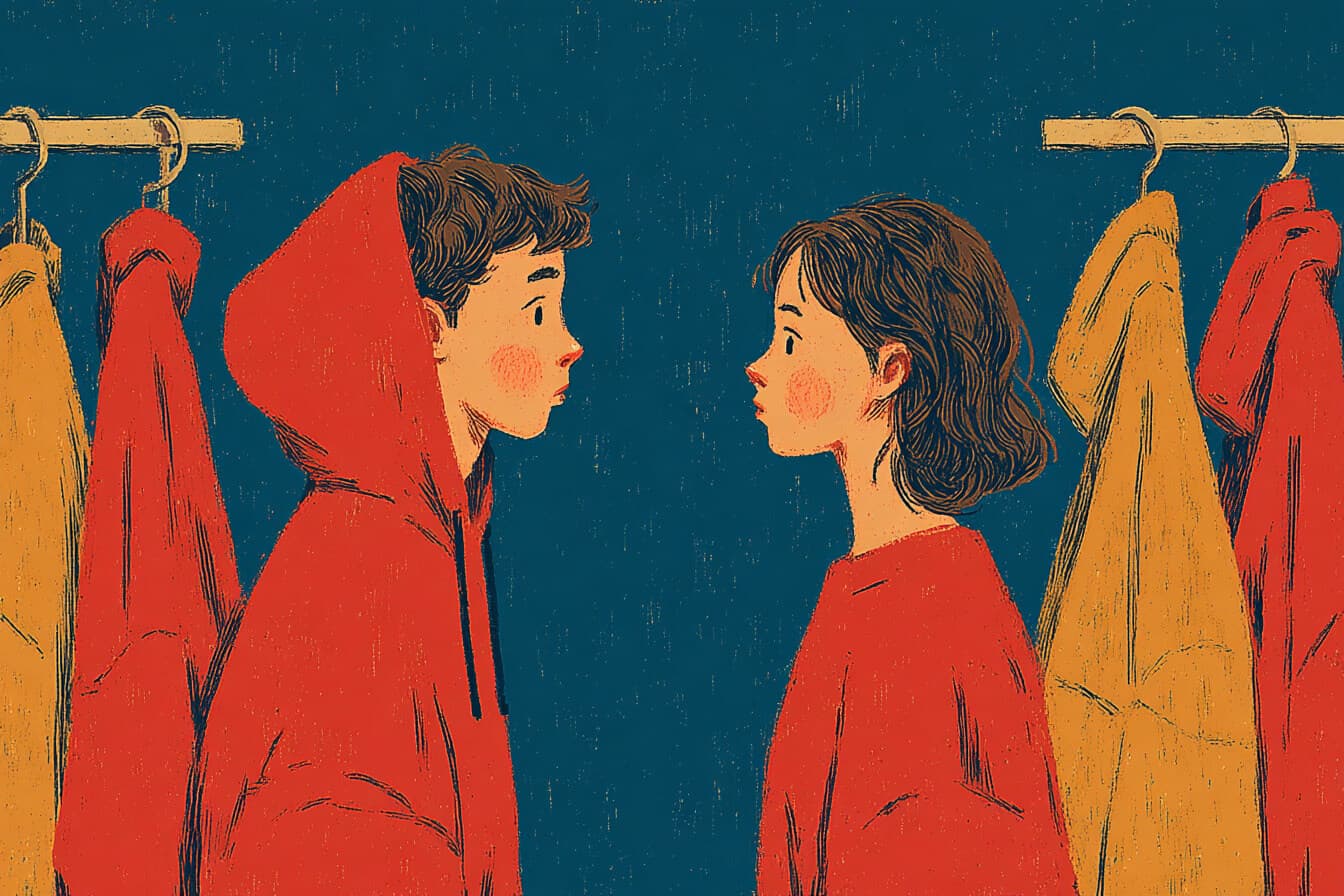
This short bedtime love story for your girlfriend centers two blue hoodies, a pinky promise, and the gentle joy of learning to share.

Bedtime Love Story For Your Boyfriend
A short bedtime love story for your boyfriend winds through back roads, peach stands, and three quiet hand squeezes that say everything.