
Beach Bedtime Stories
By

Dennis Wang, Bedtime Story Expert
8 min 32 sec
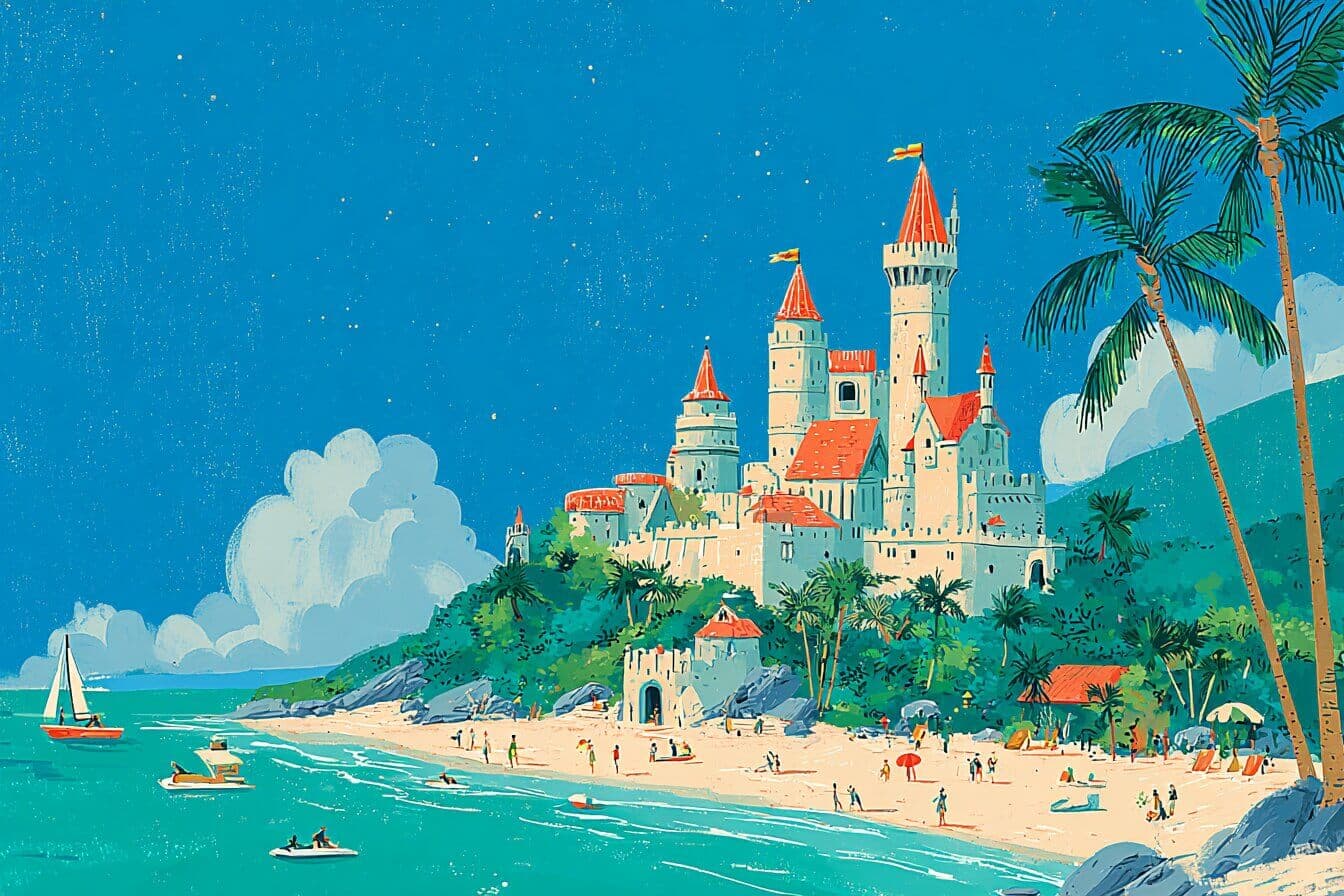
There is something about the sound of waves at night that makes everything else go quiet, even a busy little mind that does not want to stop spinning. This beach bedtime story follows Milo, a boy who builds sandcastles so carefully that one morning his newest creation sighs and asks to become real, pulling him through a hidden doorway into a kingdom of golden sand. It is the kind of tale where salt air, warm cookies, and gentle magic do the heavy lifting while your child's eyes get heavier with every paragraph. If you would like to reshape the story with your own names and seaside details, you can build a custom version in Sleepytale.
Why Beach Stories Work So Well at Bedtime
The beach already lives in most children's minds as a place where time stretches out and the rules soften. Sand does not have to be anything in particular; it can become a castle, a road, a dragon's back. That openness mirrors the way a child's imagination loosens right before sleep, drifting between what is real and what might be. Even kids who have never visited the ocean respond to the rhythm of waves, because it echoes the slow breathing we naturally settle into when we feel safe.
A bedtime story about the beach also carries built-in sensory detail that parents barely have to work for. Warm sand, cool water, the smell of salt, gulls calling overhead. These images ground a child in something physical and calm without requiring action or conflict to hold attention. The setting does a lot of the soothing on its own, which means the story can move gently and still feel alive.
Castle of the Golden Sand 8 min 32 sec
8 min 32 sec
On the edge of Crescent Bay, where the tide tickled the toes of anyone patient enough to stand still, lived a boy named Milo who believed sandcastles could dream.
Every dawn he packed wet sand into tall towers, carved arched windows with the edge of his thumbnail, and pressed tiny moats that filled with seawater when the waves rolled back.
He decorated the walls with broken shells for shields and crowned the tallest turret with a strand of sea grass that curled at the tip like a question mark.
Then he would sit cross legged beside his creation, rest his chin on his hands, and listen.
Milo swore that if he breathed slowly enough, he could hear the castle humming.
Most mornings it was nothing more than that, a low note like a jar when you blow across the top. But one bright morning, after finishing a castle grander than any he had built before, he heard something new.
A sigh. Small and sandy.
It sounded like the word "more."
The grains trembled beneath his fingers.
He whispered back, "What do you want to be?"
A breeze curled through the turrets, carrying one word: "Real."
Milo's heart thumped so hard he could feel it in his ears.
He sprinted to the lifeguard tower, borrowed a bucket of white paint the pier crew had left behind, and painted a silver key on the drawbridge. His hand shook a little, so the key came out slightly crooked, but he decided that made it look more like a real one anyway.
"This will open the way," he declared, though he did not know where the way might lead.
As the paint dried, the castle shuddered, and a doorway appeared where none had existed.
Through it he glimpsed a courtyard paved with golden sand bricks and guarded by two seahorses made of coral.
Their eyes blinked. Kindly, but slowly, the way someone blinks when they have been waiting a very long time.
They beckoned with spiral tails, and Milo stepped inside.
The doorway closed behind him like a gentle exhale.
The air smelled of salt and warm cookies, which was a combination Milo had not expected and could not explain.
Overhead, gulls flew in patterns that spelled words: "Welcome, Architect."
He laughed out loud, because he had never thought of himself as anything more than a boy who loved the shore. The seahorses knelt, and he climbed carefully onto one's back. Its coral ridges pressed into his legs, not quite comfortable but not painful either, just strange enough to remind him this was actually happening.
Together they trotted toward the central keep.
Banners of seaweed fluttered from every window, and starfish clung to the ramparts like living constellations. One of them waved a single arm at Milo, then went back to doing whatever starfish do.
Inside the throne room sat a king and queen carved from driftwood. Their faces were smooth and kind, but their eyes were closed, and dust lay thick on their shoulders, the kind of dust that gathers when centuries pass without anyone opening a door.
The seahorse guide explained, in bubbling tones, that the royal pair had been waiting for a child with believing ears to wake them.
Milo remembered his grandmother once telling him that wishes needed voices to live.
So he cleared his throat and spoke the stories he imagined whenever he built castles: tales of dragons who sneezed clouds, mermaids who taught fish to dance, and pirates who traded treasure for bedtime stories because treasure is boring when you have already counted it twice.
With every word, the dust lifted. The driftwood grew warm. Color returned to the thrones, first in patches, then all at once.
The king opened his eyes. The queen smiled. Together they sang a single note so clear that the walls turned to stone and the sand bricks hardened into gold.
The castle had become what it dreamed.
Yet something felt incomplete.
The queen knelt before Milo and asked if he would stay as their royal architect of dreams. Milo liked the sound of that, the title, the endless adventures, all of it. But he thought of his parents packing lunch on the beach right now, probably arguing gently about whether the cheese sandwiches needed mustard. He thought of his dog barking at gulls she would never catch. He thought of the kite he had not finished painting.
"Home is another kind of castle," he said.
The king nodded and removed a tiny hourglass from his cloak. The upper bulb held grains of the very sand Milo had shaped that morning. "Take this. When you turn it, you may return here for the length of one tide. You are always welcome, and you are always needed."
Milo accepted the gift, hugged the seahorses goodbye, patted the starfish who had waved at him, and walked back through the doorway.
He found himself kneeling beside his castle on the beach. The tide was still out. The sun had moved only a finger width higher.
Inside his bucket the hourglass glimmered. He tucked it into his pocket, finished painting his kite, and ran to his parents.
That night, while the moon painted silver ladders across the waves, Milo twisted the hourglass.
The doorway reopened, and he spent the hours until midnight attending a banquet where jellyfish juggled bubbles and crabs played harps strung with fishing line. One crab kept missing the same note, and nobody seemed to mind.
Each day that followed, he helped the kingdom grow. He planted gardens of sea glass flowers, built a library where starfish wrote stories by wriggling across sand pages (slowly, because starfish are not fast writers), and taught the seahorses to dance in spirals.
Word spread along the coast that the beach was a place of wonders.
Children visited. They built their own castles and listened.
Some heard only the hush of waves. But others, the ones with believing ears, heard castles singing.
Milo never revealed the doorway, yet he showed every child how to shape towers with gentle hands and whisper dreams into the walls. Over time the shore became a constellation of tiny castles, each one humming with possibility.
One evening a storm rolled in, wild and roaring.
Lightning stitched the sky to the sea. Thunder shook the sand.
Milo raced to the beach, fearing the kingdom might wash away. He turned his hourglass and stepped through.
Inside, the kingdom was dark. Banners hung in tatters. The seahorses were trembling, pressed together in a corner.
The king and queen stood on the battlements, watching waves crash against barriers that flickered like candle flames.
"The storm is trying to wash away belief," the queen said quietly. "Without it, we fade."
Milo thought of all the children along the shore who had learned to listen.
He asked the king for a conch shell, raised it to his lips, and blew a note that traveled through every shell on the beach.
Children woke. They hurried into the rain, barefoot and blinking, and placed their hands on the sand.
They whispered every dream they had ever imagined: rockets made of seashells, turtles who taught geography, pearls that granted giggles.
The combined belief blazed like a sunrise.
Storm clouds thinned. Waves calmed. The kingdom shone brighter than before.
The king declared Milo Keeper of the Sand Keys, guardian of every doorway that might ever appear along the shore. Milo thought that sounded like a lot of responsibility, but also like exactly the kind of job he would have invented for himself.
Seasons turned. Milo grew taller, but the doorway always fit him perfectly.
New kings and queens visited from distant dunes, bringing gifts of moon snails and songs. Milo traded them for stories, sending them home with pockets full of believing sand.
On the last day before school started, Milo stood on the beach at sunset. The sky was the color of peach skin. He turned his hourglass, but instead of stepping through, he set it gently inside a fresh castle and covered it with a shell.
"Next time, someone else will find you," he said.
The seahorses nodded from the waves. The king and queen waved from the tower. The doorway shimmered shut.
Milo walked back to his family, kite in hand, knowing that somewhere, sometime, another child with listening ears would discover the castle that dared to dream. And whenever that child twisted the hourglass, Milo would be there in the stories the walls remembered, ready to help sandcastles figure out how to be real.
The Quiet Lessons in This Beach Bedtime Story
When Milo hears the castle's small sigh and chooses to answer it instead of walking away, children absorb the idea that paying attention to quiet things is a kind of bravery. His decision to go home instead of staying in a golden kingdom shows that loving where you already are is not the same as giving up on adventure, and that tension between longing and contentment is something kids feel more often than adults realize. The scene where children press their hands into wet sand and whisper dreams during the storm plants a gentle seed about how communities hold each other up when things get scary. These are exactly the kind of reassurances that settle well right before sleep, when a child's mind is sorting through what the day asked of them.
Tips for Reading This Story
Give the seahorses a slow, bubbly voice, almost like they are talking through water, and let Milo sound a little breathless after he sprints to the lifeguard tower for paint. When the castle first sighs the word "more," pause for a full breath before continuing, because that silence is what makes the moment feel real to a child listening in the dark. At the banquet scene, you can tap lightly on the bedframe or a nearby surface to mimic the crab missing its note on the harp, which usually gets a sleepy giggle.
Frequently Asked Questions
What age is this story best for?
Children between about 4 and 8 tend to connect with it most. Younger listeners love the seahorse characters and the sensory details like the cookie scent inside the castle, while older kids are drawn to the idea of Milo choosing home over a golden kingdom and eventually leaving the hourglass for someone else to find.
Is this story available as audio?
Yes. Press play at the top of the story to listen. The audio version works especially well for this tale because the pacing mirrors the rhythm of waves, and scenes like the conch shell blast and the jellyfish banquet come alive when you can hear the shifts in tone. It is a good one to let play while your child is already lying down with eyes closed.
Can building sandcastles really help kids wind down before bed?
It can, in a quieter way than you might expect. Milo's careful process of packing sand, carving windows, and pressing moats is basically a focus exercise, and talking through those steps with your child after the story gives their mind something gentle to picture. If you are near a beach, try building one together in the afternoon and referencing the story at bedtime. The real sand and the story sand start to blur in a cozy way.
Create Your Own Version
Sleepytale lets you reshape this seaside tale to fit your child's world in just a few taps. Swap Crescent Bay for the beach your family actually visits, turn the seahorses into dolphins or turtles, or replace Milo with your child's own name so the doorway opens for them. You can adjust the tone, the length, and even the ending, so every night at the shore sounds a little different.
Looking for more nature bedtime stories?
Sun Bedtime Stories
A valley stays chilly at dawn until a brave sunbeam gathers shared promises that warm the forest again, inside short sun bedtime stories. A sunrise seed becomes the twist that lingers.

Earth Bedtime Stories
Mira follows a soft blue glow to a space bus and joins a kind crew to help the ocean sing again in short earth bedtime stories.

Winter Bedtime Stories
Drift off with cozy short winter bedtime stories that soothe with gentle wonder and warm cocoa calm. Read a quiet tale and learn how to create your own with Sleepytale.
Windy Day Bedtime Stories
A breezy town turns into a gentle game day as one child follows the wind home. Discover short windy day bedtime stories that end with cocoa and a lullaby.

Wildflower Bedtime Stories
Moonlight slips through a window as a brave seed dreams of color beyond tidy gardens in short wildflower bedtime stories. Petal and a playful pebble spark a gentle parade of blooms.

Waterfall Bedtime Stories
Looking for short waterfall bedtime stories that feel calm, magical, and easy to read aloud? Discover a gentle tale set at a rainbow mist waterfall, plus tips to create your own.